Epigraphs
“If you will it, it is no dream.”— Theodor Herzl, Vienna, eighteen ninety-six
“We had no alternative but to win.”— Shlomo Lev, New Jersey, eighty years later
“All we had to do was stay alive.”— George Levy Mueller, Bergen-Belsen, nineteen forty-five
Dedication
To Gal, and to all of the men and women of the Israel Defense Forces: fighting Hamas, the Houthis, Hezbollah, Iran, and the ignorance of the world. To those who sacrifice their careers, their marriages, and their lives to protect the Jewish nation: remember that the ground beneath your feet was won by pioneering freedom fighters: an "army" of Palestinian Jews and refugees from Europe and Arab countries who had to beg, borrow, and make their own weapons for their own defense.
All they had going for them was a lust for life and no alternative. In no way should they have been able to defeat a colonial superpower and beat back five Arab armies attacking at once. What should have been bloodbaths, and the end of the Jewish state, turned into impossible victories.
You are the legacy of their bravery in the face of existential threats, their creativity, their resourcefulness to overcome the impossible, and their will to do what needs to be done. One of those pioneering freedom fighters was Shlomo Lev. His story is your story.
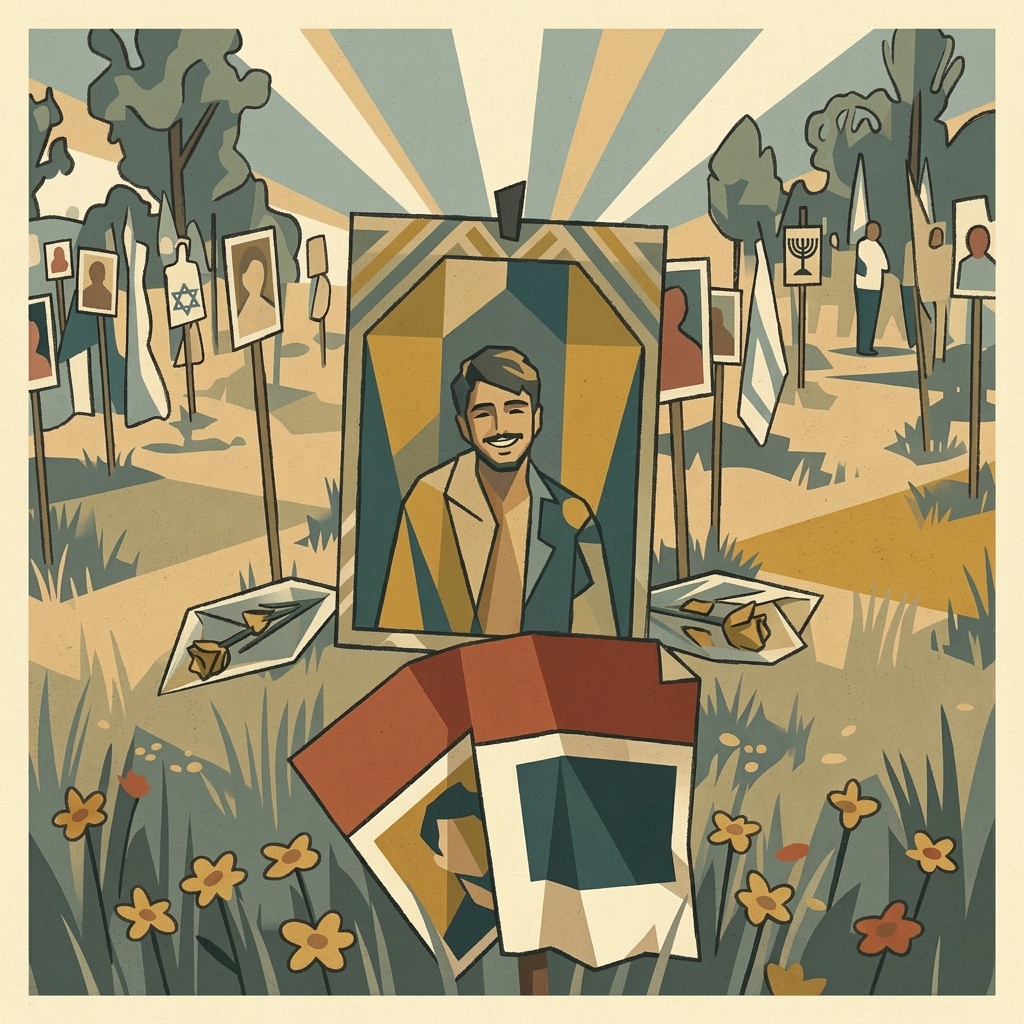
This book is dedicated, also, to the memory of Hersh Goldberg-Polin.
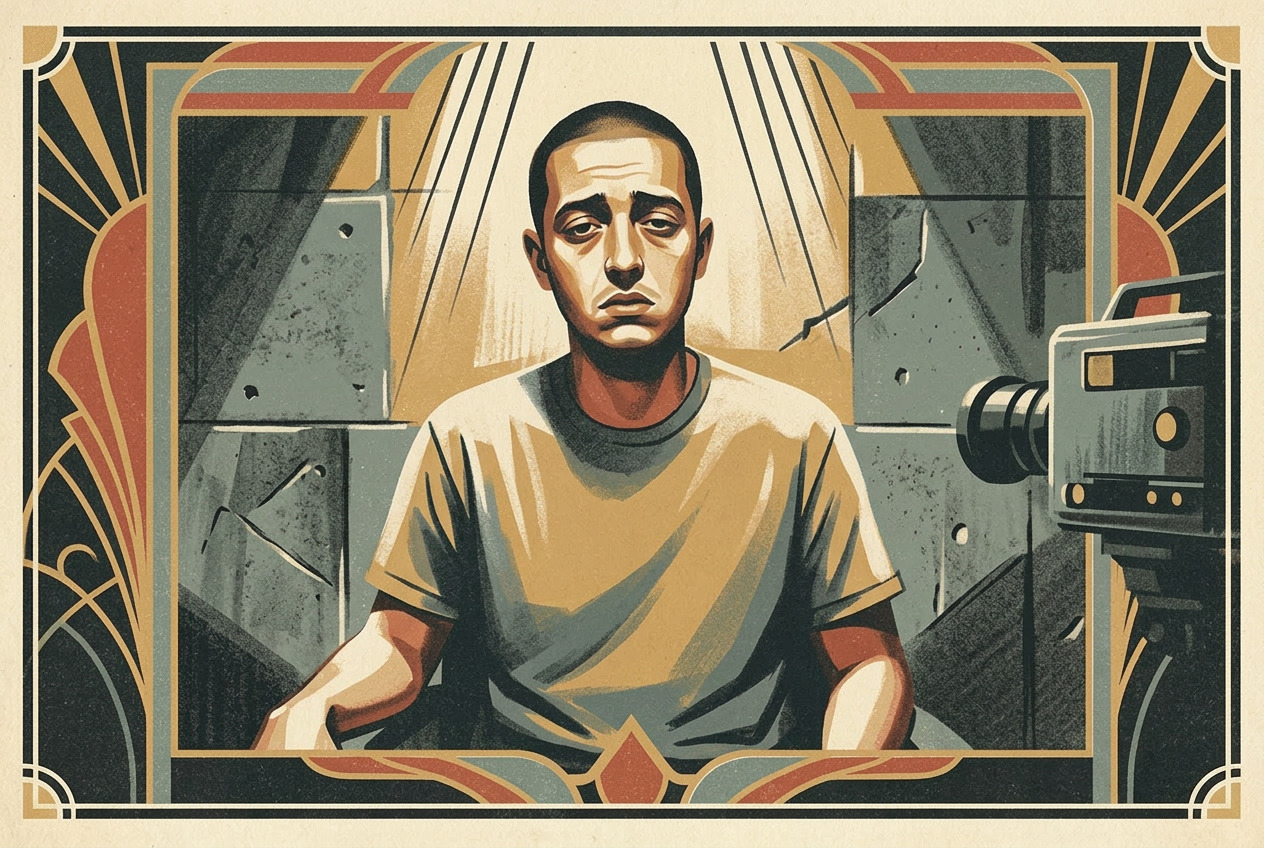
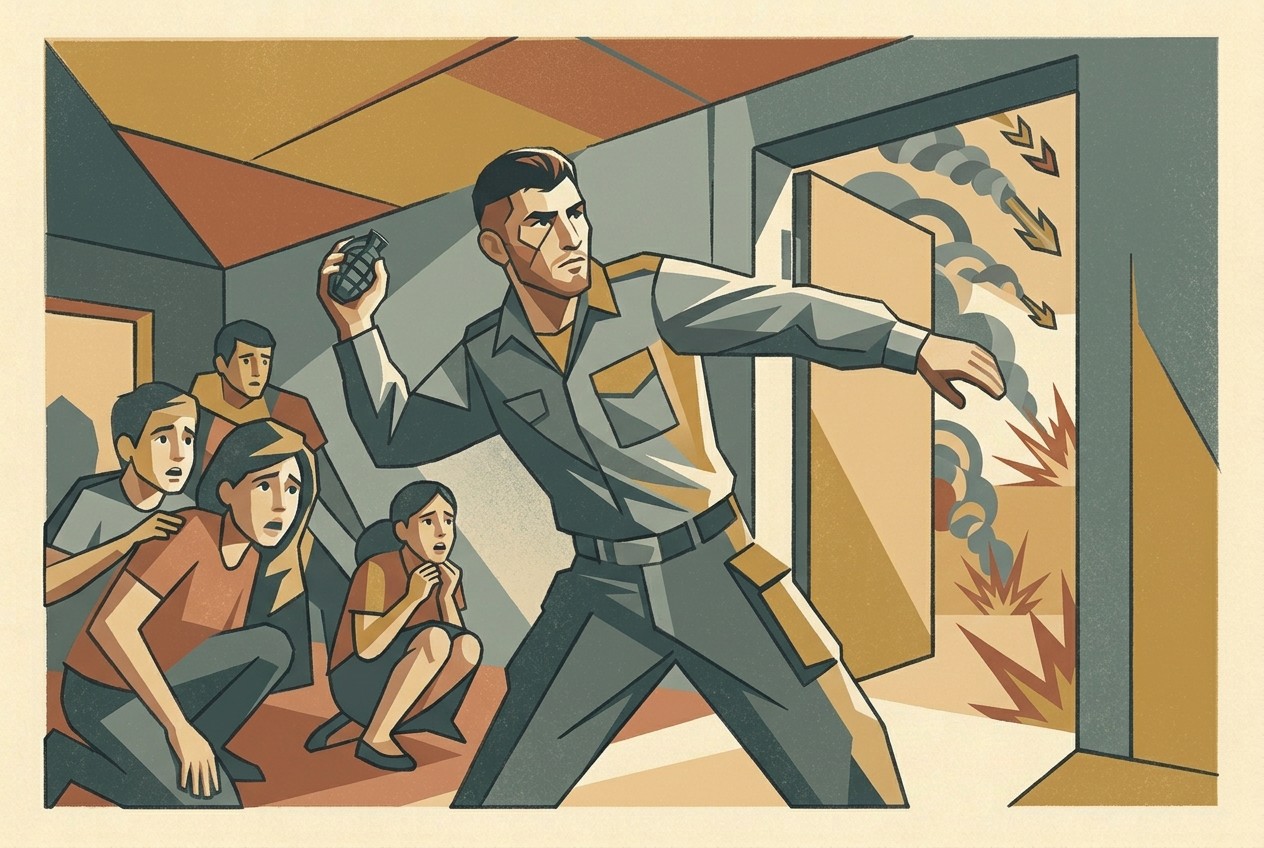
He was twenty-three years old: an American-Israeli, born in California, raised in Virginia, and brought home to Israel as a child. He was a young man who spent his days working on a project that used soccer to bring Israeli and Palestinian children onto the same field, and who had painted across his bedroom wall, in English and in Hebrew and in Arabic, a single sentence: Jerusalem is everyone's. On the morning of the seventh of October, twenty twenty-three, he was at the music festival in the fields near Re'im. When the gunmen came, he took shelter in a small roadside bomb shelter with his closest friend, Aner Shapira, and a crowd of other young people, and the killers threw grenade after grenade in among them. Aner threw seven of those grenades back out before he was killed. One of them tore away Hersh's left arm below the elbow. Bleeding, he tied his own tourniquet, and he was filmed being loaded, alive, onto a truck and driven into Gaza. He was held underground for nearly eleven months, while his mother stood before the United Nations and the world and would not stop saying his name. And then, at the end of August, twenty twenty-four, days before he was to have been brought home, Hersh and five other young hostages were murdered by their captors, at close range, in a tunnel beneath Rafah.
There is a private thread that binds this book to him. The author of these pages had come to know Hersh's grandmother, Marcy, through family friends, and had given her a necklace, set with Hersh's birthstone, and a Star of David, to wear while he was still alive, while he was still a hostage, while his name was still a prayer with a future tense. The author landed in Israel, in that late summer of twenty twenty-four, on the very day that Hersh and the others were killed. The last time the author saw Marcy was at the memorial for Hersh: held not in Jerusalem but in Skokie, Illinois, a few miles from the town where George Levy Mueller has lived out his long life, and from the museum where George still goes to tell his story. The chain this book describes is not a figure of speech. It runs through that room. May his memory be a blessing. May his memory be a revolution.
A Note to the Reader
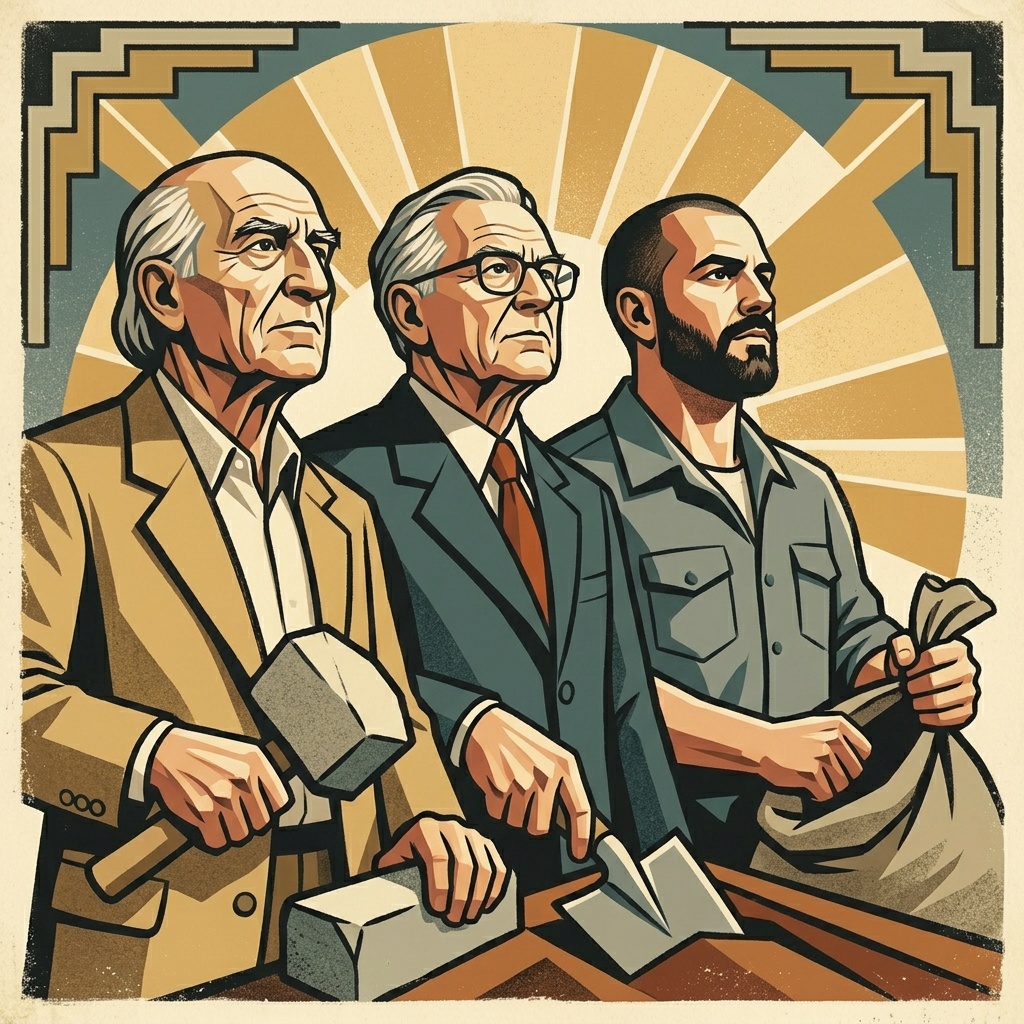
There are three men at the center of this book. For most of their lives none of them knew that the other two existed. Two are very old. The third is in the middle of his life. All three are real.
The first is Shlomo Lev. He is ninety-nine years old and he lives in New Jersey. He is small-boned and wiry and still muscular under a black sleeveless shirt. His white hair wisps out from under his Palmach beret. His face is gentle and his speech is slow. When he tells a story his eyes go somewhere else, to the Galilee or the Gulf of Suez or a Ukrainian shtetl, and then they come back amused, as though he has just remembered that he is not supposed to still be here.

The second is George Levy Mueller. He is ninety-five and he lives in a quiet suburb west of Chicago. He is a retired pharmacist. He flew his own small airplane for the pleasure of it well into his later life. He plays the piano every day, by ear, the way his mother taught him in Germany before the war that killed her. He plays the harmonica backwards, because that is how his murdered uncle Pawel once handed it across a table to him. George was a child in three concentration camps. His face has decided to be at peace, and it decided that against the evidence.
The third is Gal Sharon. He is in his forties and he lives in Tel Aviv. He takes his children to the playgrounds along the Yarkon and drinks his morning coffee at the café on his corner. He is an agronomist by profession and a captain in the reserves of the Israel Defense Forces. On the morning of the seventh of October, twenty twenty-three, the second of those facts reorganized his life.
For most of a century the three lives ran in parallel and never touched. They touch now. Gal Sharon has met George Mueller face to face, in Illinois. Gal and Shlomo Lev have spoken across the same telephone line. That did not happen by accident. The three men were brought together deliberately, by the author of these pages, who is a friend of Gal Sharon’s, and the bringing- together is one of the stories this book has to tell. The reader will find it near the end, because it could not have happened until everything before it had already happened.
This book tells the Jewish story through three lives, in as much detail as the record allows, and sets that telling inside the larger story of how the State of Israel came to exist and why it had to. Each man belongs to a different chapter of that story. Shlomo is of the founding generation, the one that willed the state into being. George is of the Holocaust generation, the one that learned in the most terrible classroom ever assembled what it costs to have no state at all. Gal is of the October generation, the grandchildren, the ones holding the line now.
Here is the fact that made the book necessary. Shlomo Lev and George Levy Mueller are not men of different eras. They are the same generation. Shlomo was born in nineteen twenty-seven and George in nineteen thirty, into the same people, the same century and the same catastrophe. As boys they were very nearly the same boy: small, quick, stubborn, fearless in the way of children who do not yet know what the world has in store. The difference between them was never in the boys. It was the ground under their feet. One grew up in the Land of Israel, inside a homeland being born, and at sixteen he picked up a rifle bigger than he was and helped build it. The other grew up in Germany, inside a homeland that was expelling him, and at twelve he was put behind barbed wire because no homeland anywhere on earth was obliged to take him in. One spent the war years pulling the survivors of the camps out of the sea. The other spent the war years inside the camps. They were working on the two ends of the same problem, and neither of them knew it.
Israel was an idea before it was a country. In retrospect it looks inevitable. It was not. It was made. It was fought for and paid for and willed into existence by men and women whose names you have never heard. It exists, and George Mueller’s grandchildren are alive, and Gal Sharon’s children are asleep in Tel Aviv tonight, because specific people made specific choices, against the odds, with no alternative but to win.
What follows is their story. Three lives braided into one, told in their own voices as far as the record allows, carried on the current of history that took a boy out of a wooden drawer in Ukraine, a boy off a burning street in Westphalia, and a soldier from a kibbutz on the edge of Gaza, into one unbroken chain.
The Idea Transformed
Israel was an idea before it was a country. For two thousand years it lived in words.
Jews in Morocco and Poland and Yemen and Vienna ended every Passover Seder with the same four words. L’shana ha’ba’ah b’Yerushalayim. Next year in Jerusalem. They said it in Marrakesh, where they had lived since before Islam. They said it in Vilna, where the Lithuanian frost crusted the synagogue windows. They said it in Sana’a, in Salonica, in Kazimierz, in Aleppo. They said it whether or not they ever intended to go. They said it because their grandfathers had said it, and their grandfathers’ grandfathers, back to the destruction of the Second Temple by the Roman general Titus in seventy of the Common Era.
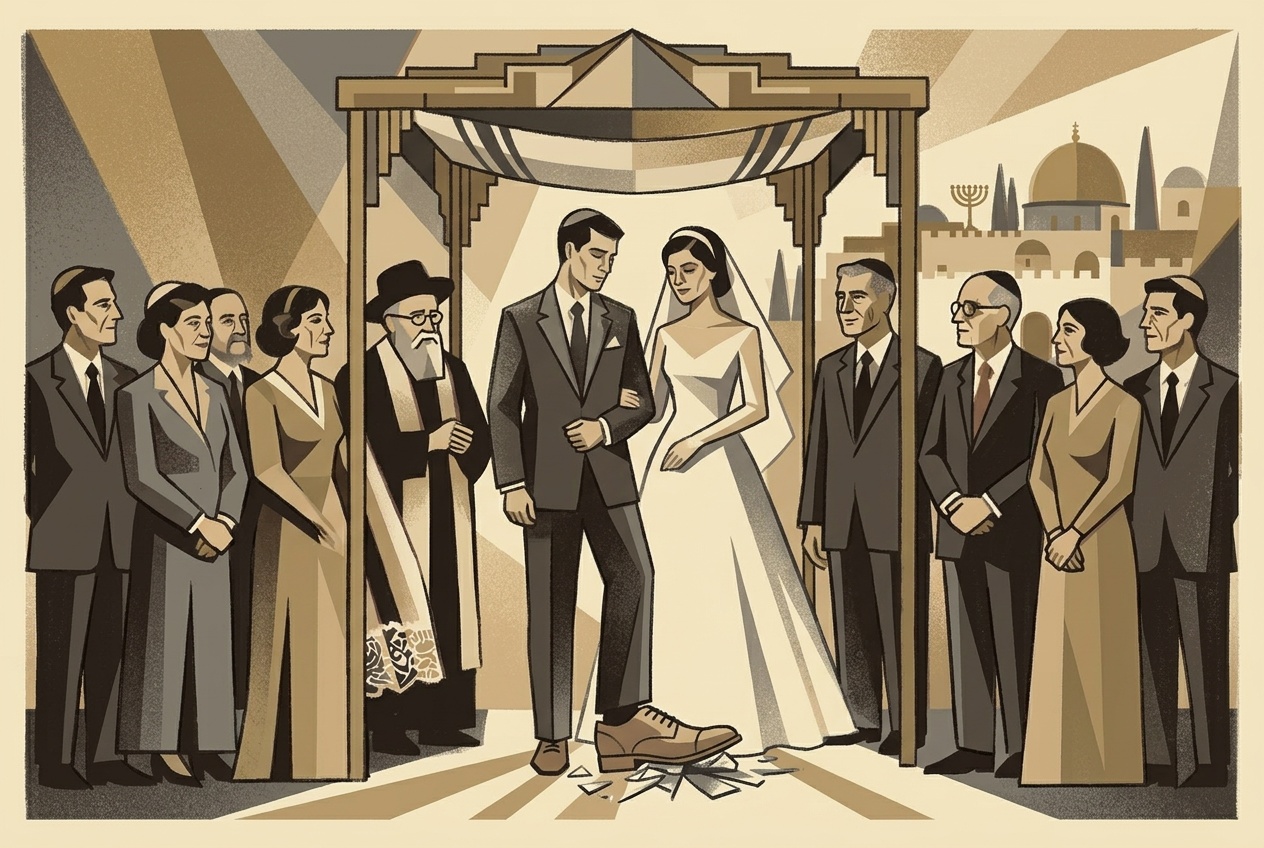
At every wedding the groom broke a glass under his foot, to remember the Temple at the moment of greatest joy. At Tisha B’Av the whole community sat on the floor and read the Book of Lamentations by candlelight, the way mourners sit shiva. The mourned one was a city. The exile was not a metaphor. It was the air the Jewish people breathed, and it defined them as completely as language and Sabbath and kosher law.
The longing held for two thousand years. They waited in the Pale of Settlement, where the Tsar’s edict of seventeen ninety-one had crammed the Jews into a strip of empire running from Kovno to Odessa. They waited in the mellahs of Morocco and in the Jewish Quarter of Jerusalem, which had never been quite empty of Jews. They waited through expulsions and crusades and pogroms and quotas. They waited.
And the waiting did not wear the thing down. Every expulsion sharpened it. The First Crusade came through the Rhineland in ten ninety-six and emptied the Jewish communities of Worms and Mainz. England expelled its Jews in twelve ninety, France in thirteen ninety-four, Spain in fourteen ninety-two. Chmielnicki’s men killed tens of thousands across Ukraine in sixteen forty- eight. The Russian Empire wrote the Pale into law and then let the pogroms run inside it, at Odessa and Kishinev and Bialystok. The conclusion went on arriving long after anyone had started acting on it. In Baghdad, on the first and second of June, nineteen forty-one, a mob murdered something near two hundred Jews in the two days that came to be called the Farhud, in a community that had been in that city for two and a half thousand years. Pogrom, farhud, mass slaughter, alienation, injustice. Each one made the same case, and each one made it faster than the last. There was no country on earth in which a Jew was safe as of right. There was one place where that might be changed.
Exile and Return
A timeline of the dispersion — from the fall of the Second Temple to a people half at home again.
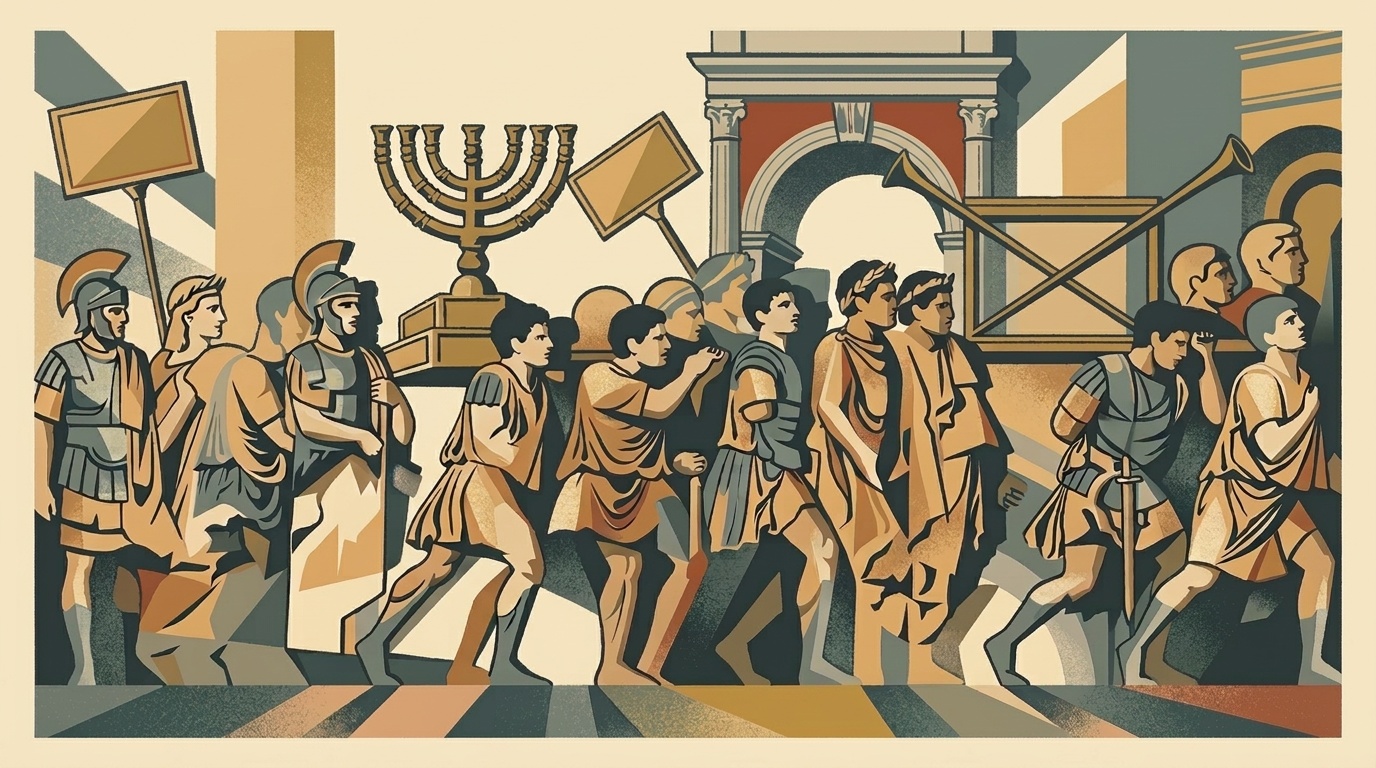
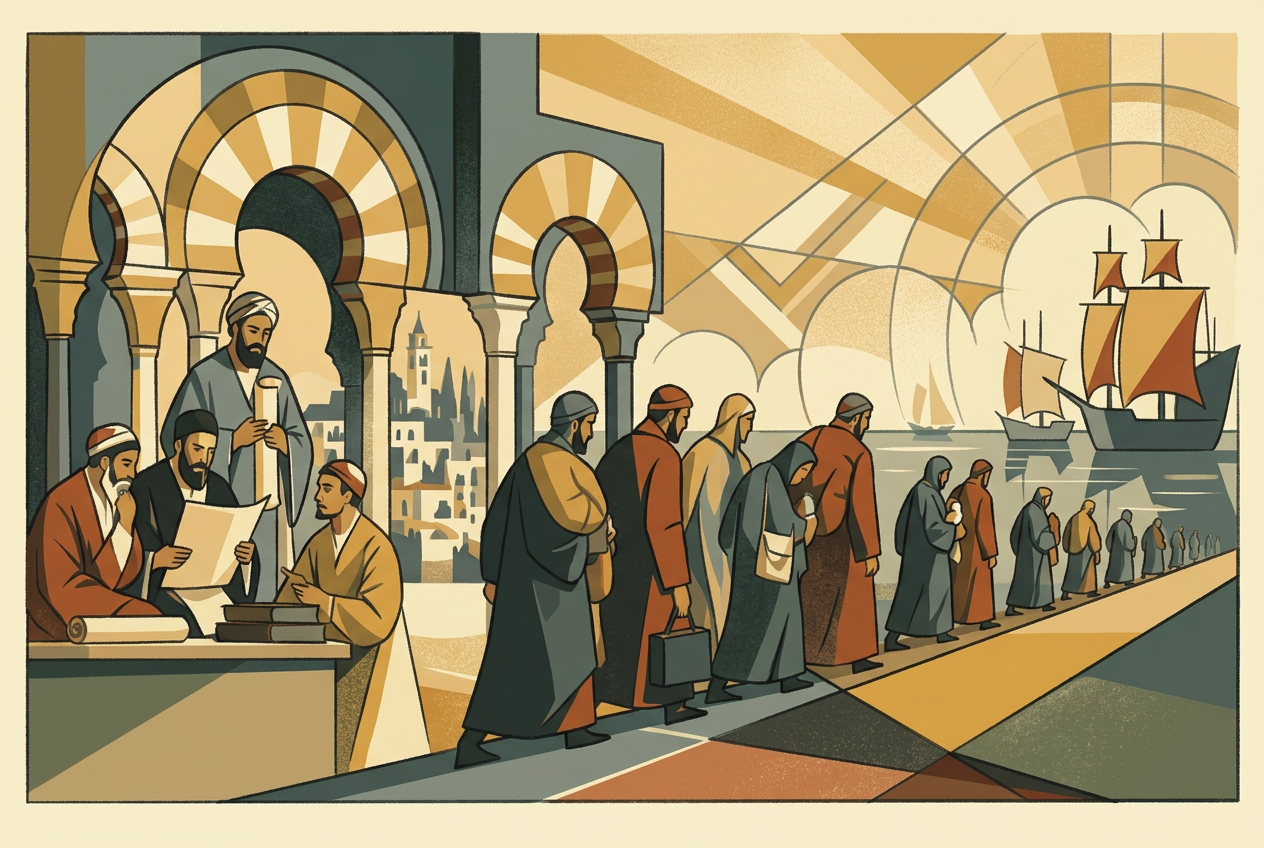
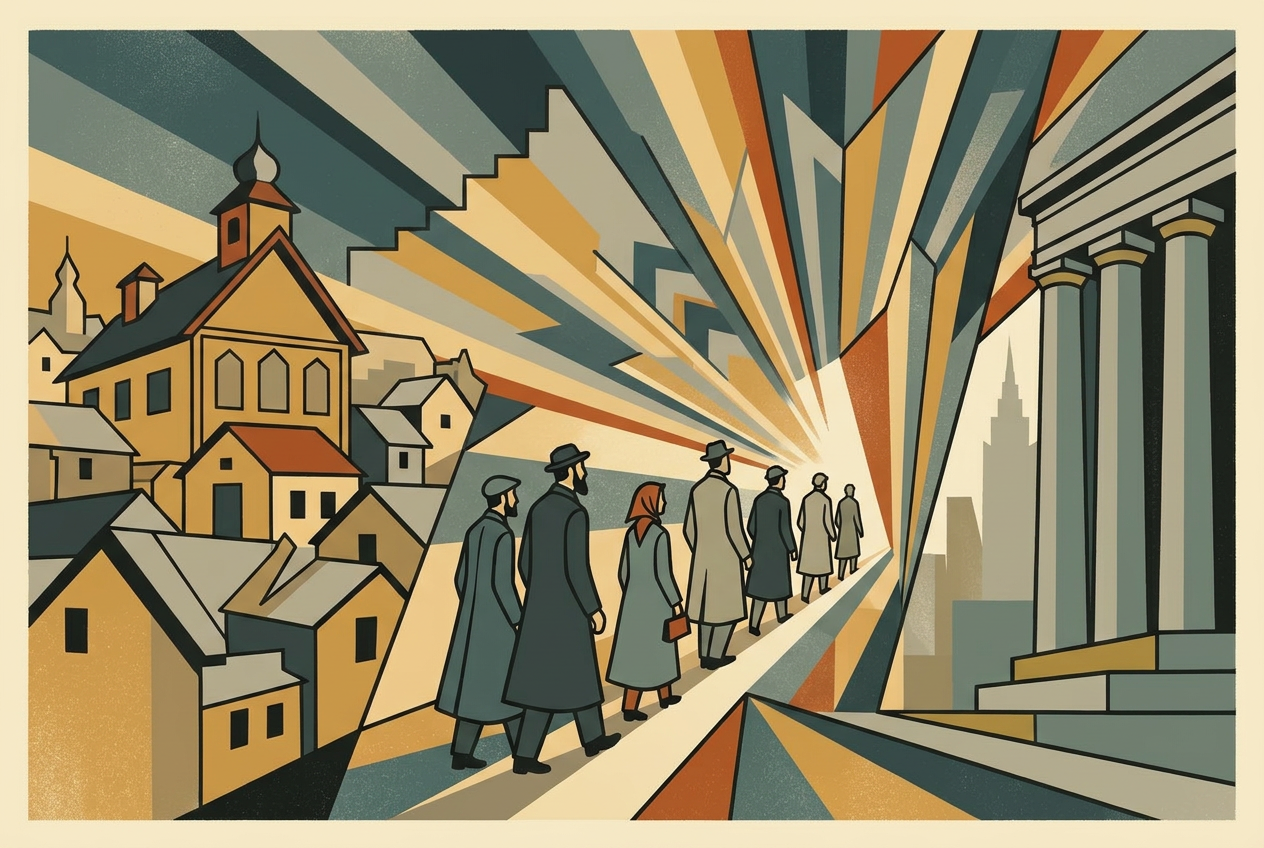
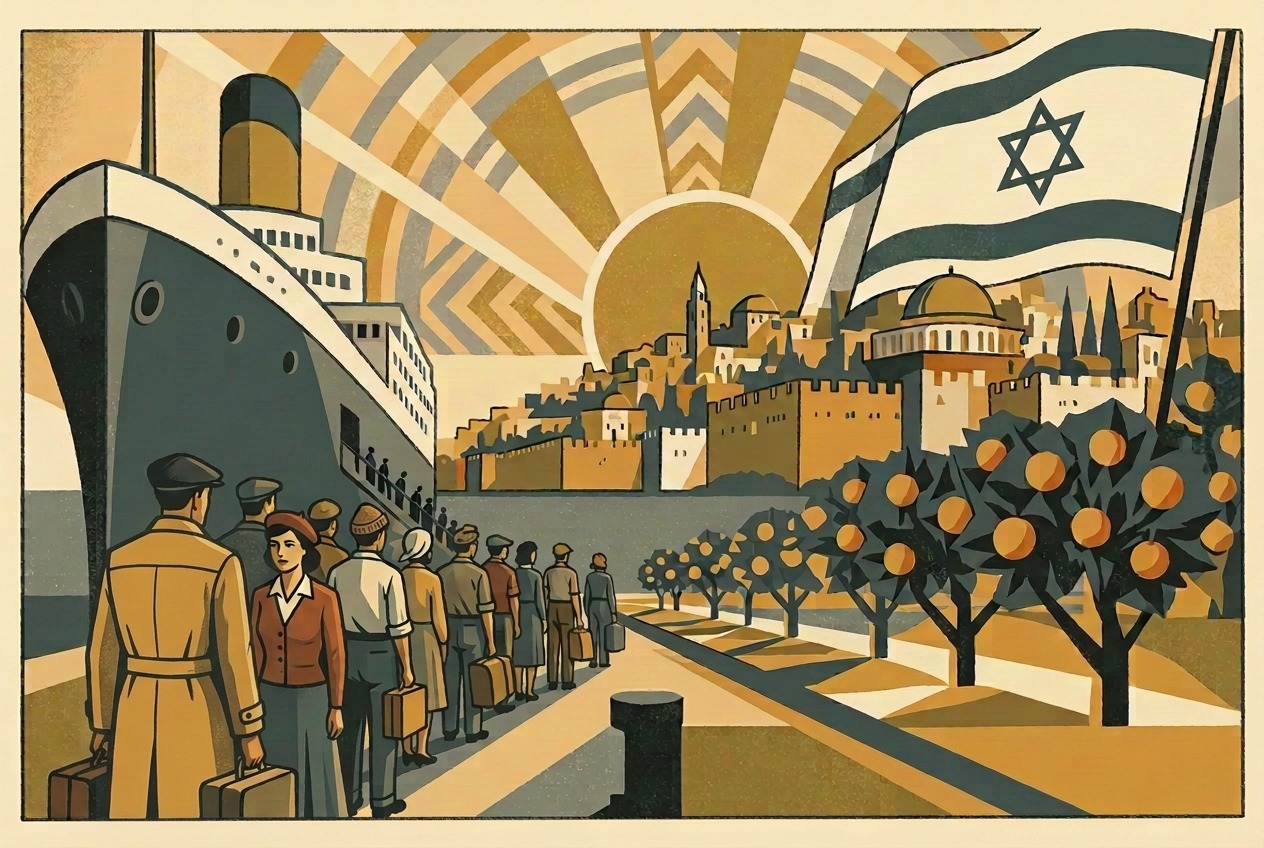
Then a journalist in a Vienna café wrote a book that turned the prayer into a plan.
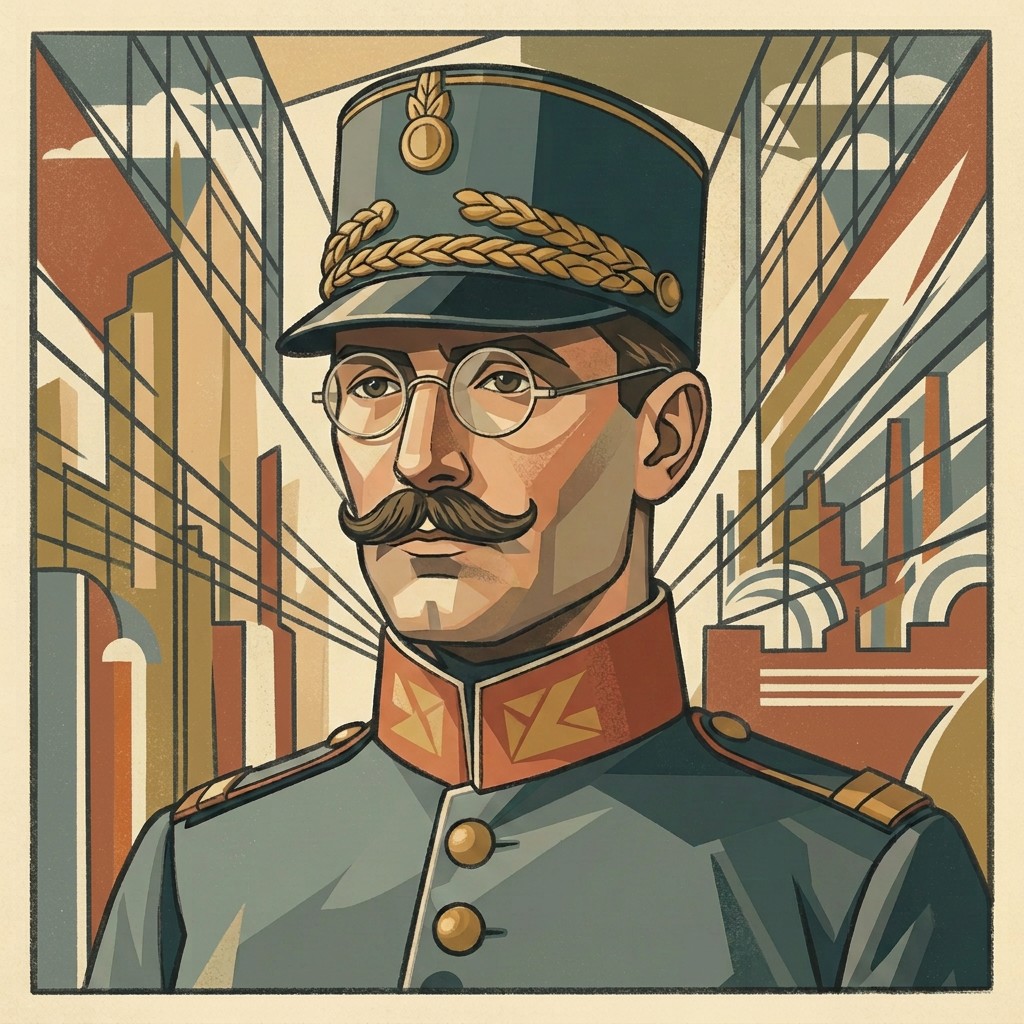
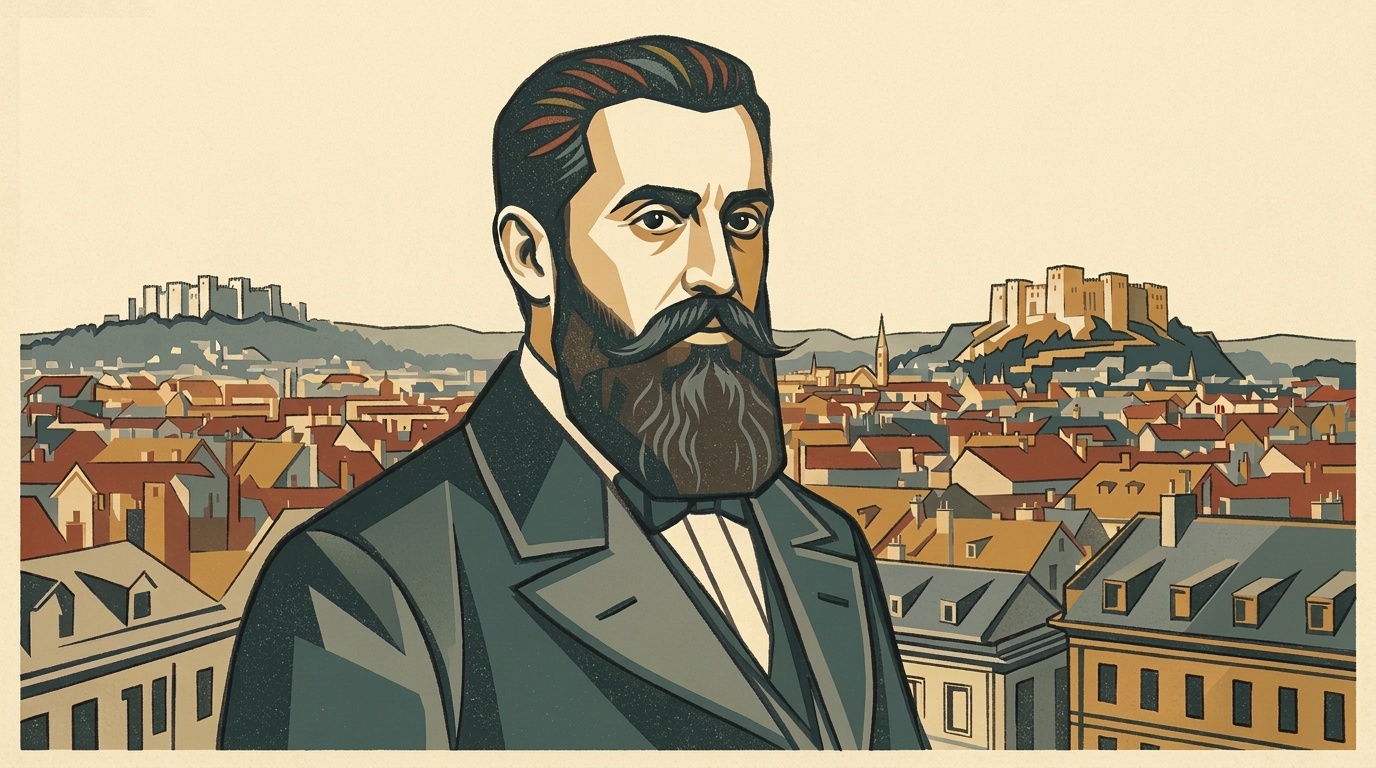
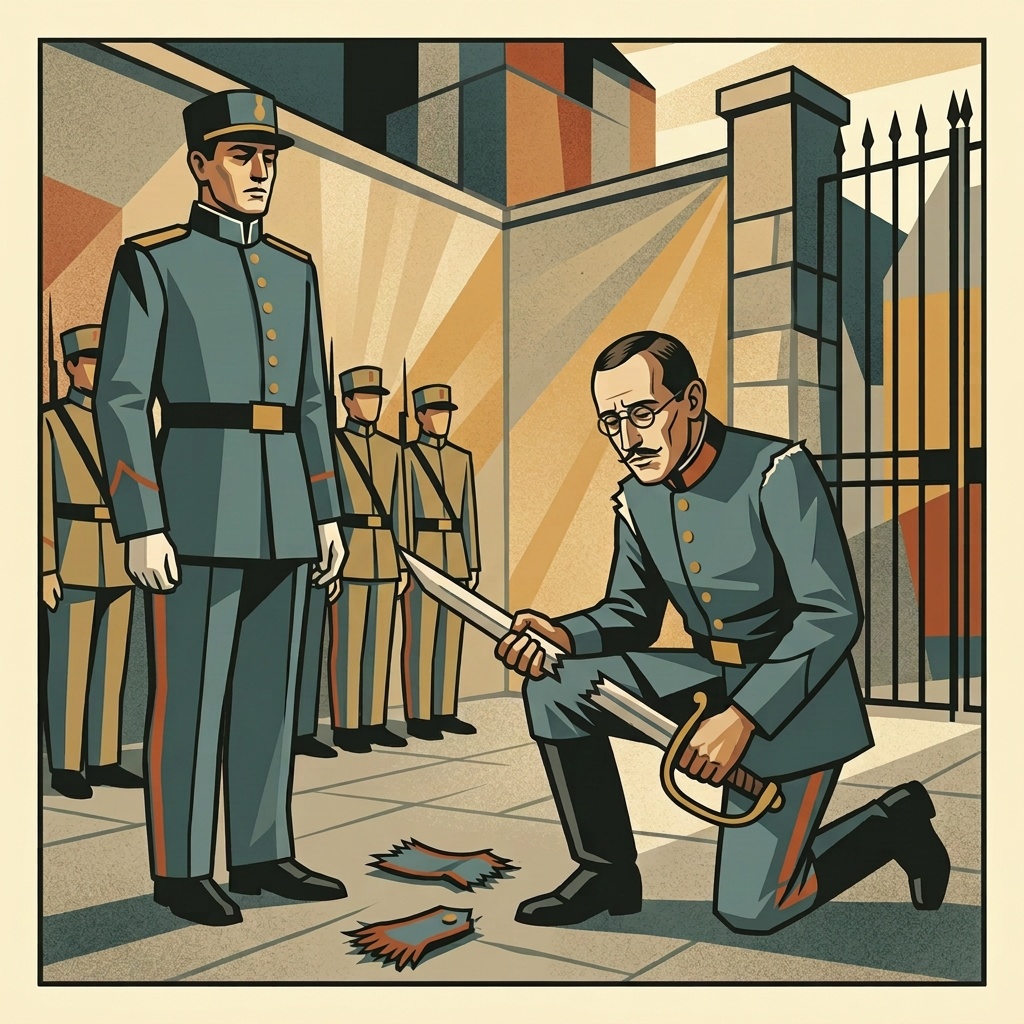
His name was Theodor Herzl. He was Hungarian-born and Vienna-raised, assimilated to the point of indifference. He grew up speaking German. He dueled in his university fraternity. He wrote light comedies for the theater. In eighteen ninety-four the Neue Freie Presse sent him to Paris to cover the trial of an artillery captain named Alfred Dreyfus, the only Jewish officer on the French general staff, accused of selling secrets to the Germans. Herzl watched the captain marched into a courtyard, his sword broken over a knee, his epaulets torn away. He listened to the crowd outside scream Mort aux juifs. Death to the Jews, in the streets of the capital of the Enlightenment, eighty years after the Emancipation. He went back to his hotel and began to think.
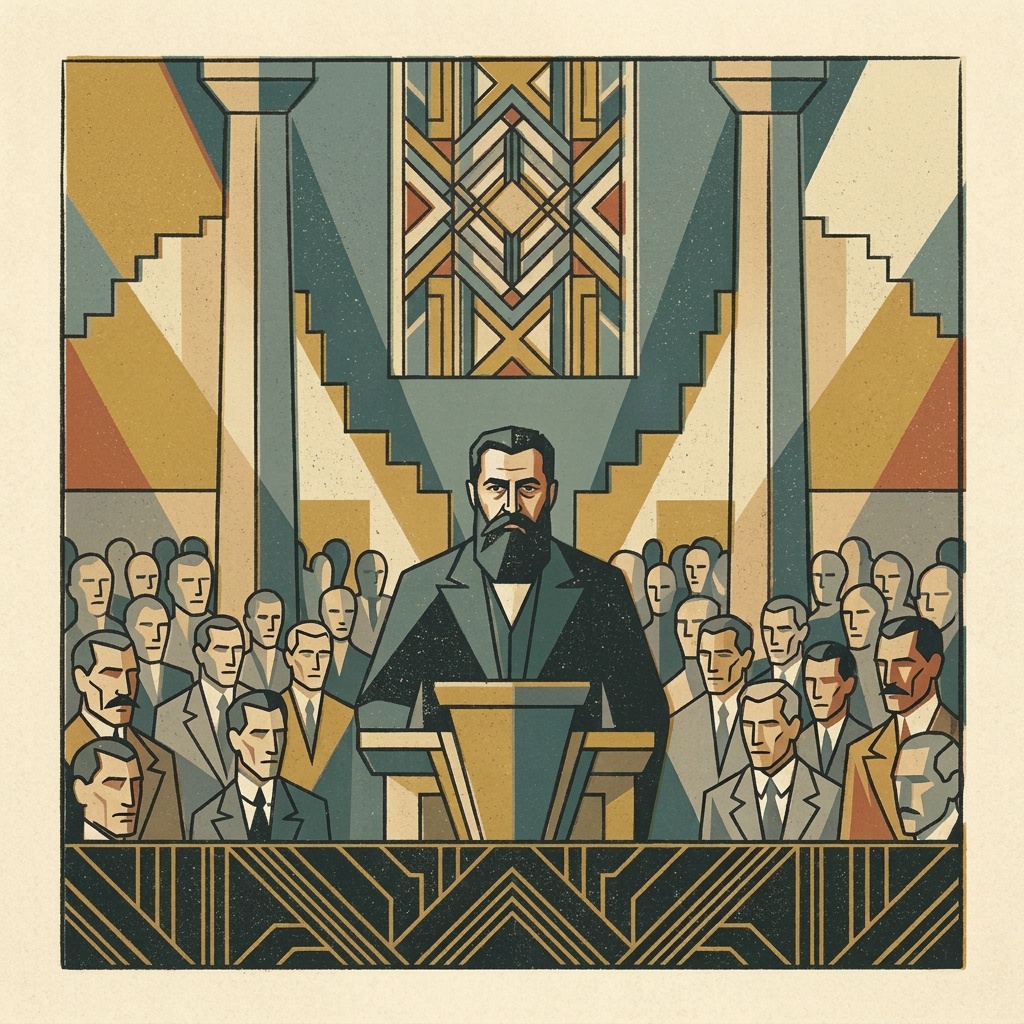
Two years later, in eighteen ninety-six, he published a hundred-page pamphlet called Der Judenstaat. The Jewish State. The Jews did not need to convert and did not need to assimilate, he argued, because conversion and assimilation would not save them. The hatred was not religious. It was not even rational. It was the hatred of strangers by people who had decided that the Jews would always be strangers. The only answer was for the Jews to stop being strangers. They needed a state of their own.

The Jews of Vienna laughed. We waited two thousand years, the joke went, and it had to happen to me. The rabbis of Eastern Europe called him a madman. The radicals called him a bourgeois. The assimilationists called him a traitor to their hard-won citizenship. He convened the First Zionist Congress at Basel in eighteen ninety-seven anyway, gaveled it open in a hall hung with the new blue and white flag of the movement, and wrote in his diary that night that at Basel he had founded the Jewish State, and that he would guard against saying so out loud.
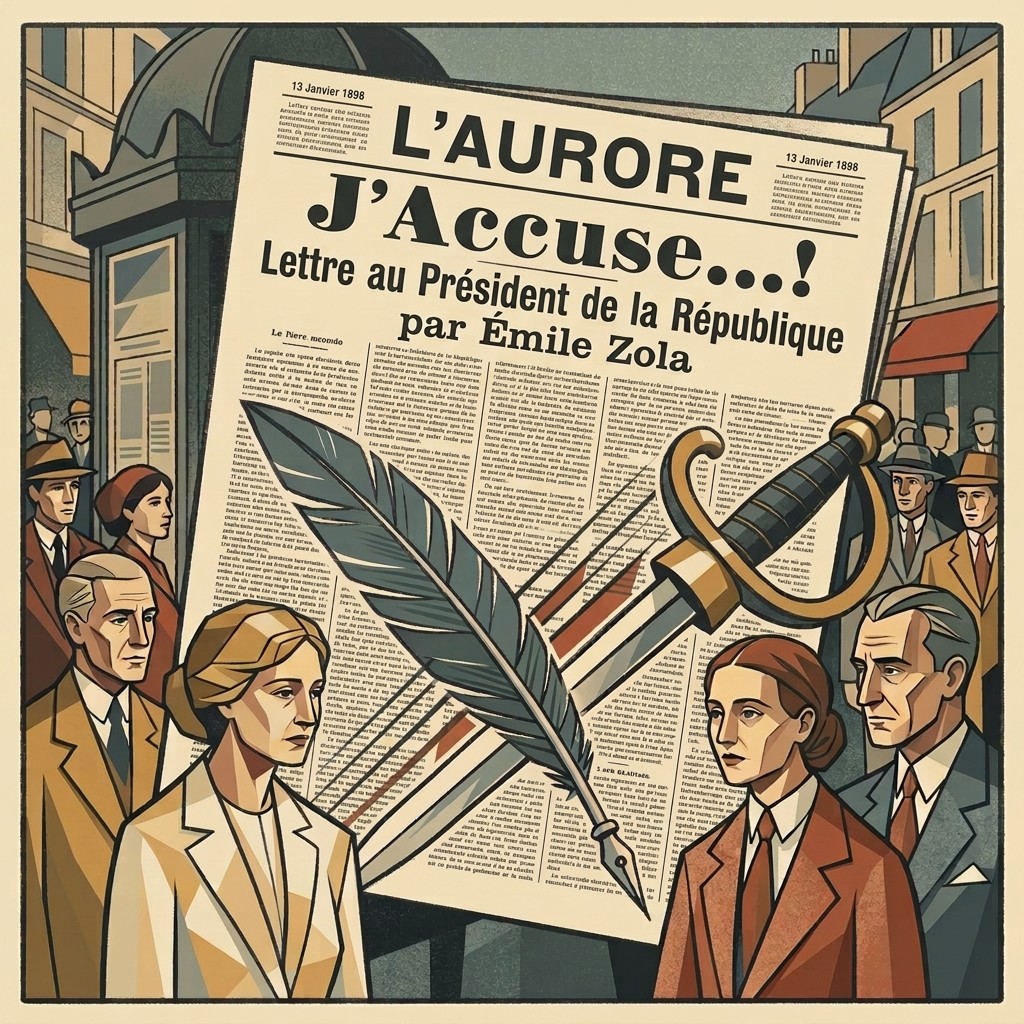
He was right. He died seven years later, before any of it came to pass. The idea outlived him. It moved through the shtetls and the seminaries and the cafés, and young Jews began to do the impossible thing he had described. They began to leave.
Zionism is the national liberation movement of the Jewish people. It is an indigenous people returning to its ancestral homeland after thousands of years of statelessness and persecution. It is not a colonial enterprise. It is not religious extremism. It is not racism, or apartheid, or settler ideology.
It is also entirely ordinary, and that is the part almost always left out. Go back and read what the Zionists wrote, in their own words, and the movement turns out to be the Jewish version of what every other people around them was doing at the same hour. The nineteenth century was the century in which the great multi-ethnic empires came apart and nations climbed out of the wreckage. The Greeks fought free of the Ottomans in the eighteen twenties. The Italians made a country out of a peninsula in eighteen sixty-one. The Germans made one out of a collection of principalities ten years later. At the Congress of Berlin in eighteen seventy-eight, Serbia and Romania and Montenegro walked out with their independence, and Bulgaria with the promise of it. Herzl wrote Der Judenstaat into the middle of all that. He did not invent a category. He applied a category the whole continent had already accepted for everyone except the Jews. Einat Wilf, the former member of Knesset whose work returns later in this book, has made the point as plainly as it can be made.
The Ottoman Empire had not thought in those terms for six hundred years. It sorted its peoples by faith rather than by nation, under the millet system, which bound them by religion and by loyalty to the Sultan rather than to any flag. Herzl began as a supplicant rather than a rebel. He spent years seeking a charter from Sultan Abdul Hamid the Second, sat with him in Constantinople in nineteen oh one, and was refused. Only when the empire itself fell did the Jewish claim become what it had to become, one national claim among several rising out of the same collapsed geography. Turks, Arabs, Kurds, Armenians, Jews. What the Jews asked for was a sovereign state in a small corner of a disintegrating empire, and the corner they asked for happened to be, alone among all the available corners of the earth, their ancestral homeland. The same settlement produced Poland and Czechoslovakia and Finland and Yugoslavia out of the Romanov and Habsburg lands, and Syria and Lebanon and Iraq and Transjordan out of the Ottoman ones, and the Mandate for Palestine out of the same stroke of the same pen. No one has ever thought to call Poland a settler colonial project.
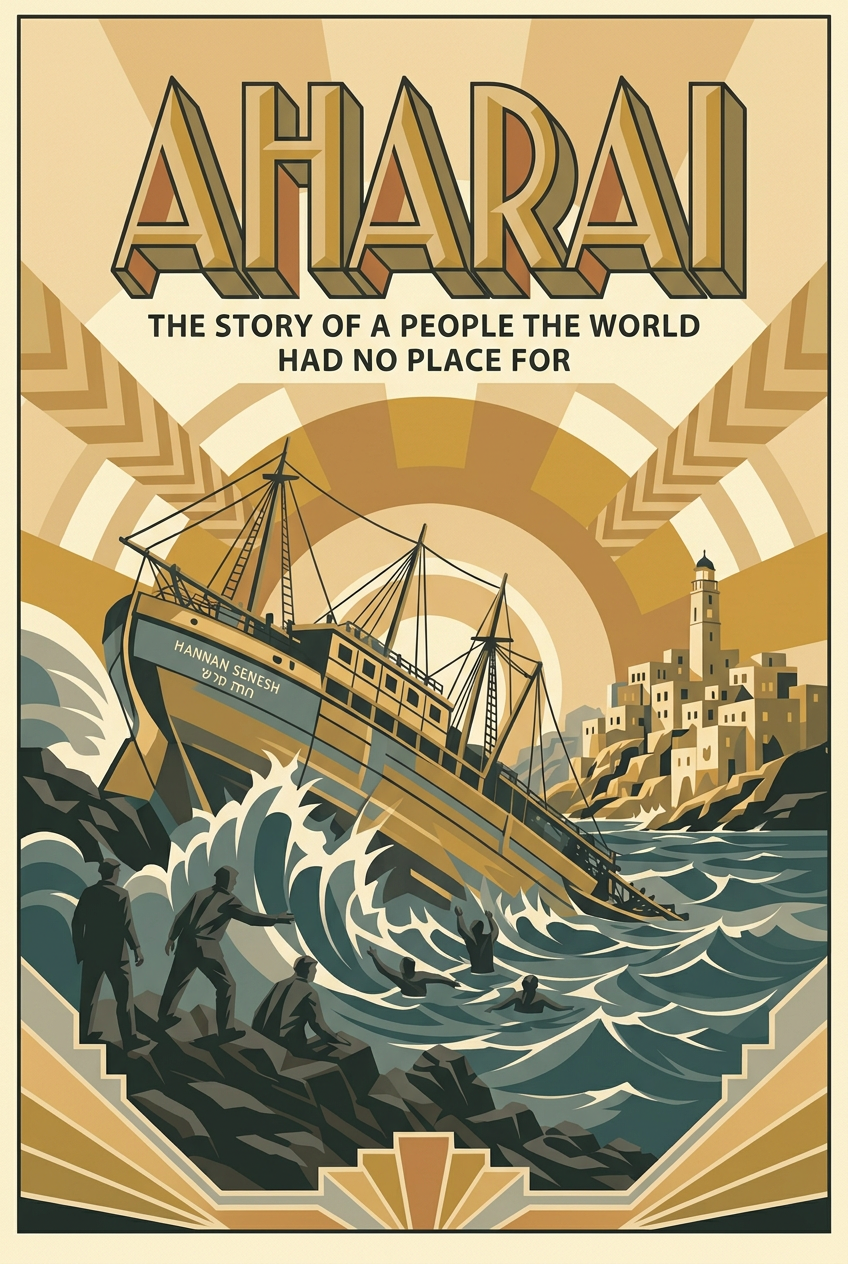
Israel does not exist because the Jews were dumped into the Middle East after the Holocaust as a European guilt offering. Israel exists because the Jews willed it into existence, in waves, over the half century before the Holocaust and through it and after it. They got on boats. They walked from Poland and from Yemen. They cleared malarial swamps with their bare hands at Hadera. They resurrected a language out of an ancient text and made it a tongue spoken in nurseries and machine shops. They built an army out of fifteen-year-olds with hunting rifles and a slogan. Aharai. After me. They paid for every square meter in blood and sweat and disbelief that what they were doing could possibly work.
The word colonial deserves its own moment, because almost everything else is built on it, and it falls apart on contact with the plainest facts. A colony is an outpost of a mother country. A metropole plants settlers abroad, takes the wealth, and ships it home. Israel has no metropole. There is no older, larger Hebrew-speaking power anywhere on earth of which the Jewish state is a distant province, for the simple reason that Hebrew is spoken nowhere else on earth. That absence is the tell. Set it beside a language that did travel by conquest. Arabic is the official tongue of more than twenty countries, from the Atlantic coast of Morocco to the Persian Gulf, because in the seventh century the armies of the Arabian Peninsula carried it outward by the sword, across the Middle East and North Africa, over Berbers and Copts and Assyrians and Jews alike. That was colonization, on a scale the later European empires never matched. The Jews did the opposite. They came home. The clue is in the words. A Jew is a person of Judea. An Arab is a person of Arabia. The words have not moved. And when the returning Jews took back Hebrew names, when a coastal town reclaimed the name it had carried before Rome, when a family set down the surname the diaspora had pinned on it and took up a Hebrew one, that was not the erasure of an indigenous culture. It was a people unwriting what conquest had written over them. There is a word for that, and colonization is not it.
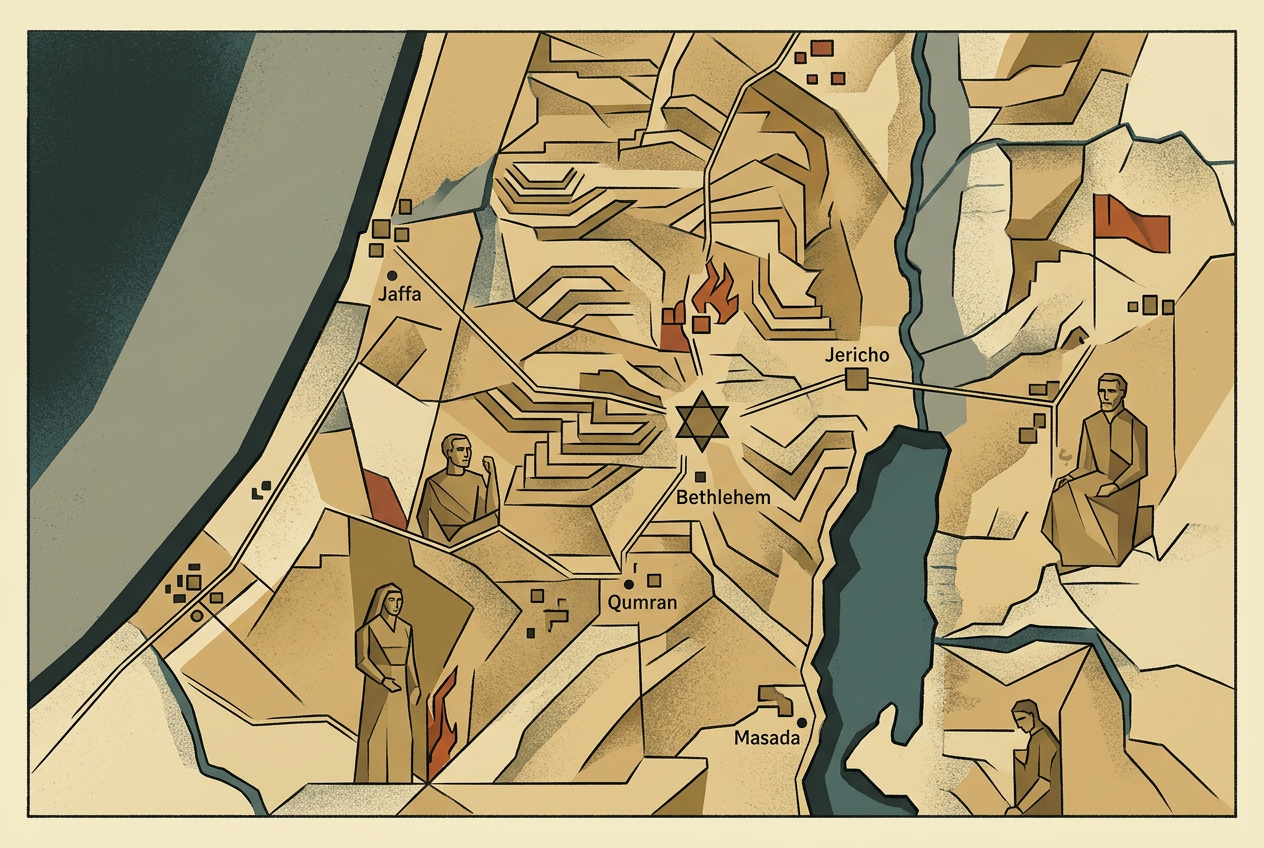
Even the famous near-misses make the case. Critics like to recall that the early Zionist congresses briefly entertained sites other than the Land of Israel, a tract in British East Africa that history remembers as the Uganda Plan, and before it passing mentions of Argentina, and they offer this as proof that the whole enterprise was a rootless scheme that could have been set down anywhere. The history runs the other way. The Uganda proposal came in nineteen oh three, in the raw aftermath of the Kishinev pogrom, while Jews were being murdered across the Russian Empire. Herzl floated it as a night shelter and not as a homeland, a place to put Jewish bodies that were being killed that year, while the slow work of return went on. The Congress fought over it and said no. The Jews did not want an empty refuge that happened to be available. They wanted home. They had turned toward one city in prayer for two thousand years and broken a glass at every wedding to mourn its ruin, and the city was not in Africa.
Here is the part the argument always leaves out. Herzl did not build his movement so that it would never happen again. He built it so that it would never happen at all. The tragedy stitched through this book is that the state he called for came too late. Some forty years after the Uganda Plan was refused, the doors of the world slammed shut, and there was still no Jewish state to open its own. Six million people, for whom a passport and a port would have been the difference between life and death, did not have one.
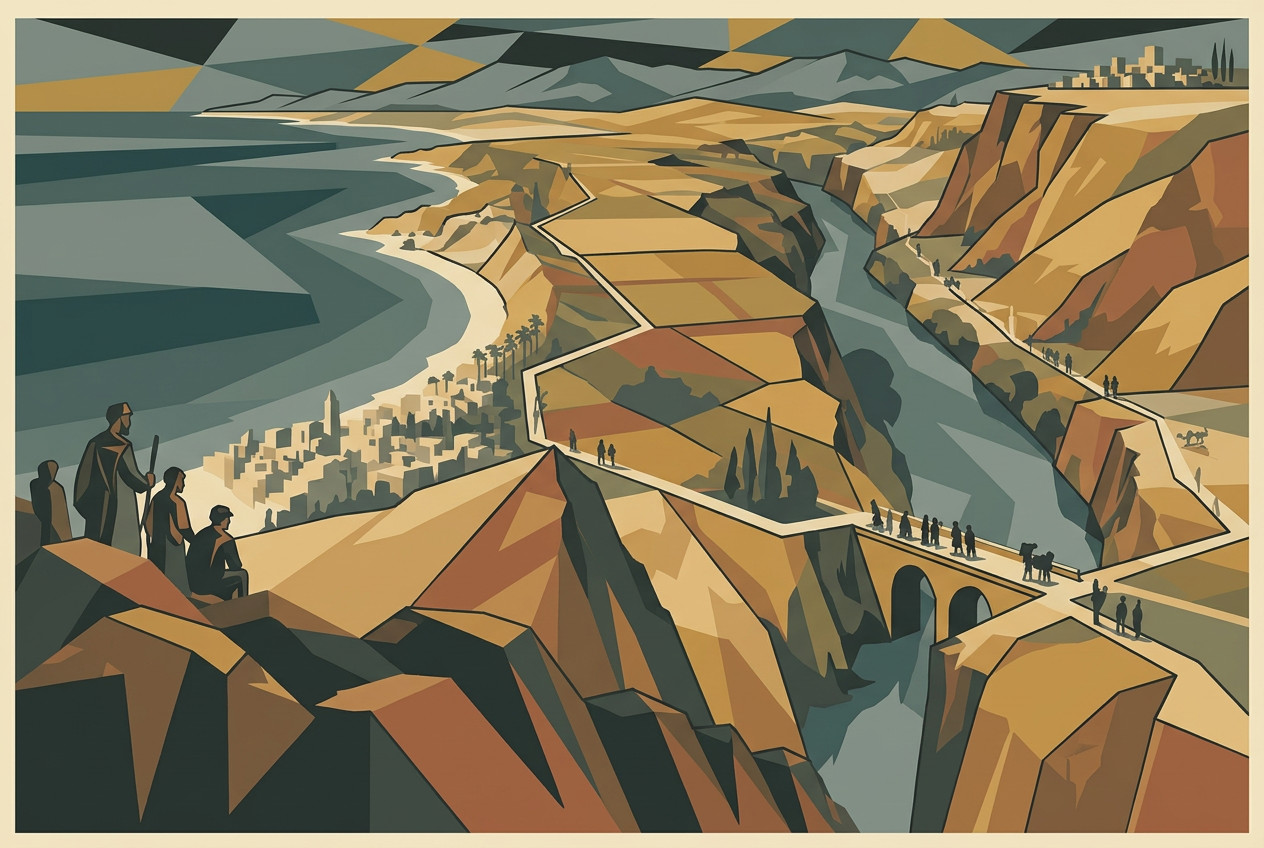
The convulsion that broke the Ottoman Empire is worth following out, because each of the peoples inside it met a different fate, and the differences are instructive. The Turks, under Mustafa Kemal Atatürk, fought their way to a secular republic and came out in nineteen twenty-three with a state larger than anyone had planned to grant them. The Arabs had risen against the Ottomans under Sharif Hussein on British promises and expected a single great kingdom in return. They were handed the mandate system instead, the territory parceled out by Britain and France along the lines of their secret Sykes-Picot map into Syria, Lebanon, Iraq and Transjordan, and the bitterness of that broken promise became a permanent feature of Arab political life. The Armenians wanted a nation of their own. They were subjected to genocide, more than a million murdered in the years from nineteen fifteen, and what little survived was folded into the Soviet Union. The Kurds were dangled the possibility of a state at Sèvres in nineteen twenty and written off the map at Lausanne three years later, divided among Turkey, Iraq, Syria and Iran, where they remain stateless to this day. Hold on to that last one. It could as easily have been the fate of the Jews: a people recognized, promised, and then quietly erased.
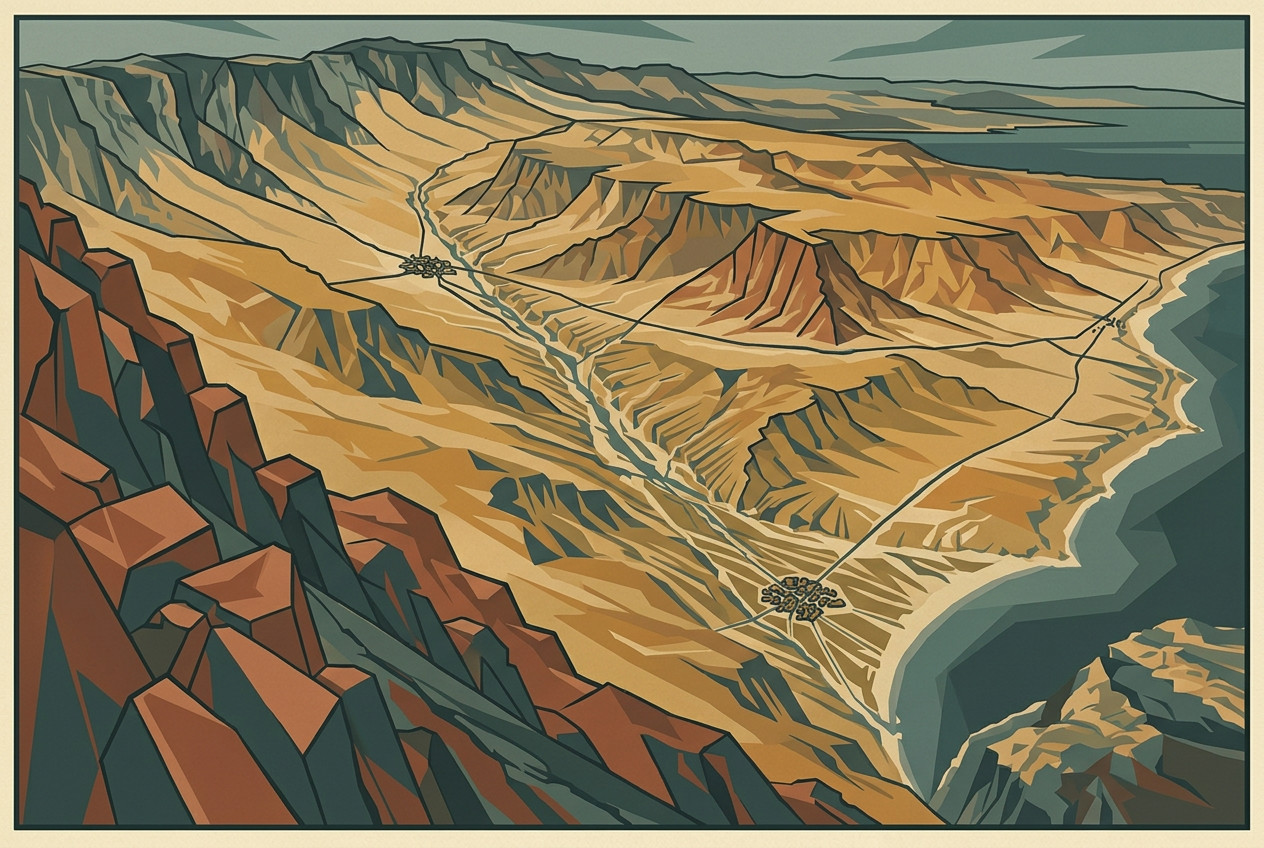
The Jews came through, almost alone among the stateless peoples of the fallen empire. Herzl had founded the movement at Basel a generation earlier. In nineteen seventeen the Balfour Declaration committed Britain to a national home for the Jewish people in Palestine. The League of Nations wrote the historic connection of the Jews to the land into the text of the Mandate itself, unanimously.
Now the proportion, which the word colonial is designed to make you forget. The former Arab provinces of the Ottoman Empire, something close to two million square kilometers, became more than twenty Arab states in the decades that followed. The share set aside for a Jewish state under the partition plan of nineteen forty-seven was about fifteen thousand square kilometers. The Israel that emerged inside the armistice lines of nineteen forty-nine was about twenty thousand seven hundred. That is well under two percent of the former Ottoman Arab lands. That was the colonial enterprise the world learned to denounce. A hunted, cast-out people taking their place on the earth at last, on the one sliver of ground that had ever been theirs, claiming a fraction of a single percent of a region the Arab national movement inherited almost whole, and being told by the same world that had bolted every other door against them that even the sliver was a theft. This is the story of three of those Jews, and through them of the people they belonged to. None of the three is a Founding Father in the sense the Americans use the term. There is no Mount Rushmore in Tel Aviv, no marble forehead overlooking the Negev. They are something rarer and harder to memorialize, and in some ways more important. They are the ones who actually lived it. One helped make the state. One survived what the absence of the state had cost. One is defending it at this hour. The first is the youngest son of a chain of rabbis running back five centuries to the Spanish Inquisition. A skinny, blond boy who climbed water towers in nineteen thirties Jerusalem, and who, when his country was nothing but a dream guarded by a few thousand half-armed teenagers and ragged Holocaust survivors in the dark, picked up an Italian carbine bigger than he was and went hand over hand down a rope into the future. His name is Shlomo Lev. The second is the son of a decorated German soldier, born into a family that had been German for two hundred years and believed it. A boy who boarded a train with his little sister in Westphalia and watched his mother on the railway platform grow smaller and smaller until she was gone, and who learned in three concentration camps, before he was fifteen, what it means for a people to have nowhere on the earth that is theirs. His name is George Levy Mueller. The third is the descendant, on one side, of the Jews of Babylon, carried out of Iraq as children by way of a long sojourn in Iran and sent ahead on the trains to the new state, and on the other, of the stubborn families who came back to farm the Land of Israel in the last years of Ottoman rule, before there was a state to come home to. A captain in the reserves who, on a Sabbath morning in October, packed a bag and drove to his base without waiting to be called. His name is Gal Sharon. One was the missing link between the idea of Jewish self-determination and the fact of it. One was the living proof of why the idea could not be allowed to fail. One is the inheritor, holding the line his grandparents’ generation drew. Their three lives do not run one after another. They run alongside one another, and underneath one another, and into one another. That is how this book will tell them, braided, the way they truly happened, into the single chain of a single people.
Three Families
Two Thousand Years of "Next Year in Jerusalem"
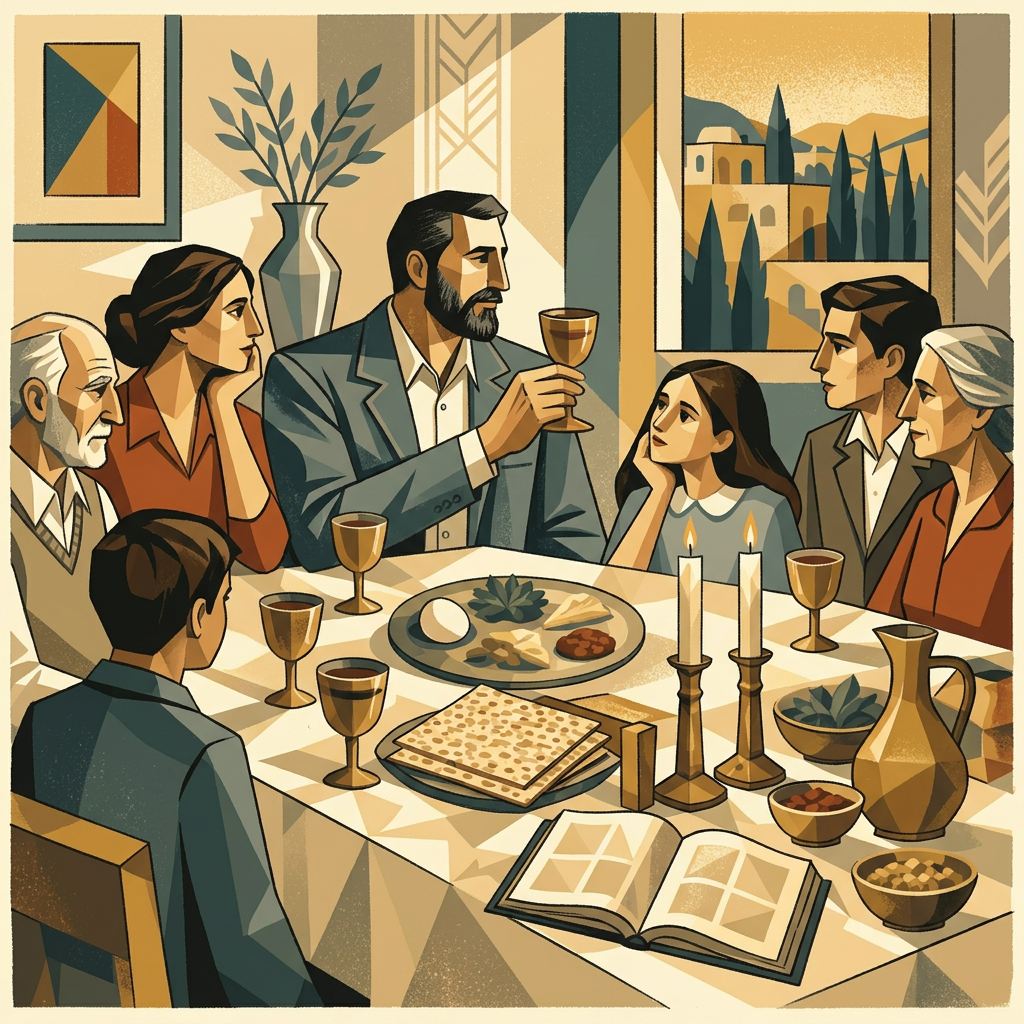
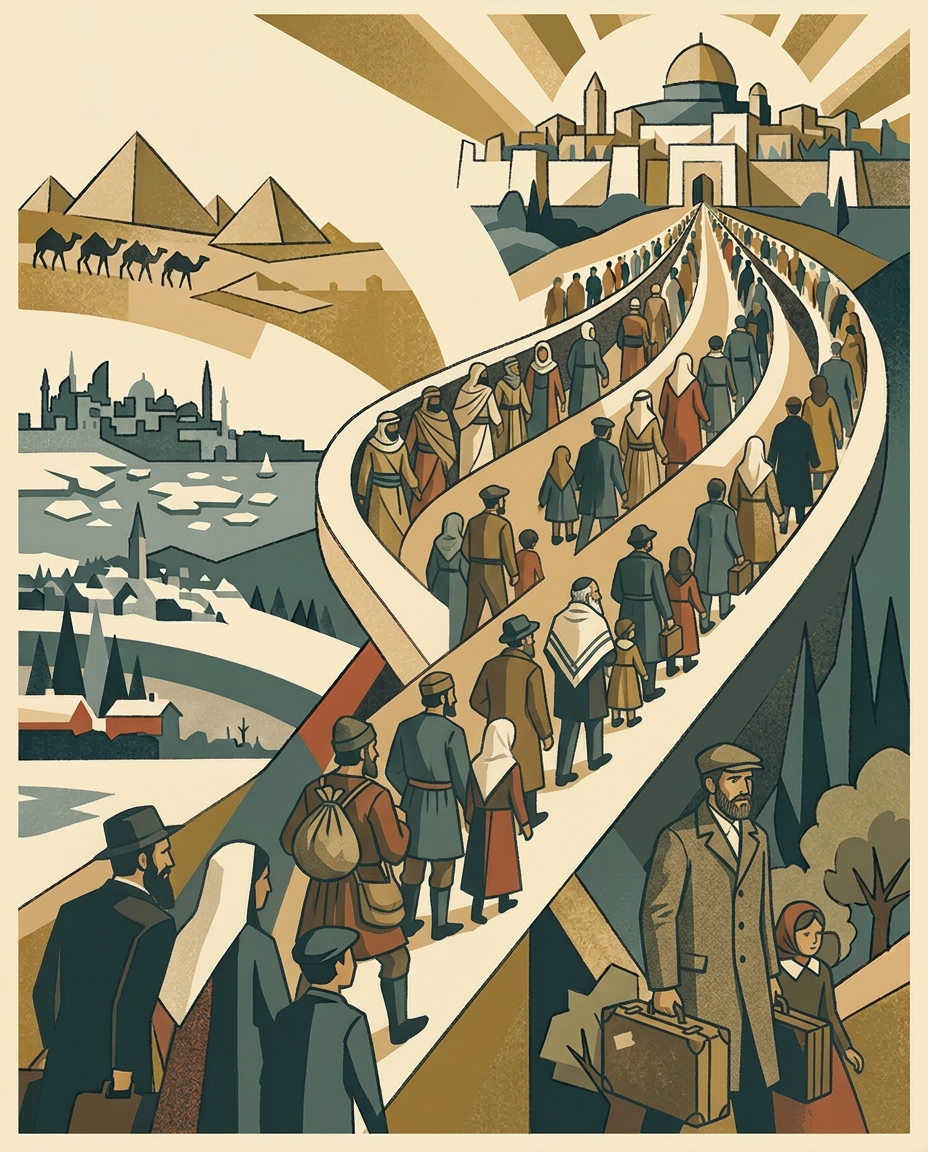
Two thousand years. It is worth saying the figure slowly, because it is the number this entire book stands on, and almost nobody who hears it actually takes it in.
The dispersion was not a drift. It had a date, and a cause, and a policy behind it. In the year sixty-six of the Common Era the Jews of Judea rose against Rome, and four years later the legions under Titus broke into Jerusalem and burned the Second Temple, and the plunder of that day was carved in relief onto an arch in the Roman Forum, the seven-branched menorah going away on Roman shoulders, where anyone who wants to can still walk up and look at it. Sixty years after that they rose again, under Bar Kokhba, and the Emperor Hadrian put the second revolt down with a thoroughness that the ancient world thought worth remarking on. And then he did something more deliberate than killing. He set out to sever the connection between the people and the place. Jerusalem was rebuilt as a Roman colony and renamed Aelia Capitolina, and Jews were forbidden to enter it on pain of death. The province of Judea, the province named for the Jews, the word from which the word Jew itself descends, was struck off the map and renamed for the Philistines, a people who had been the enemies of Judea when they existed at all and who had been extinct for centuries by then. Syria Palaestina. It is difficult to read that as anything other than what it looks like, and it has rarely been read as anything else: you cannot be from here, and we have taken the name of the place off the place.
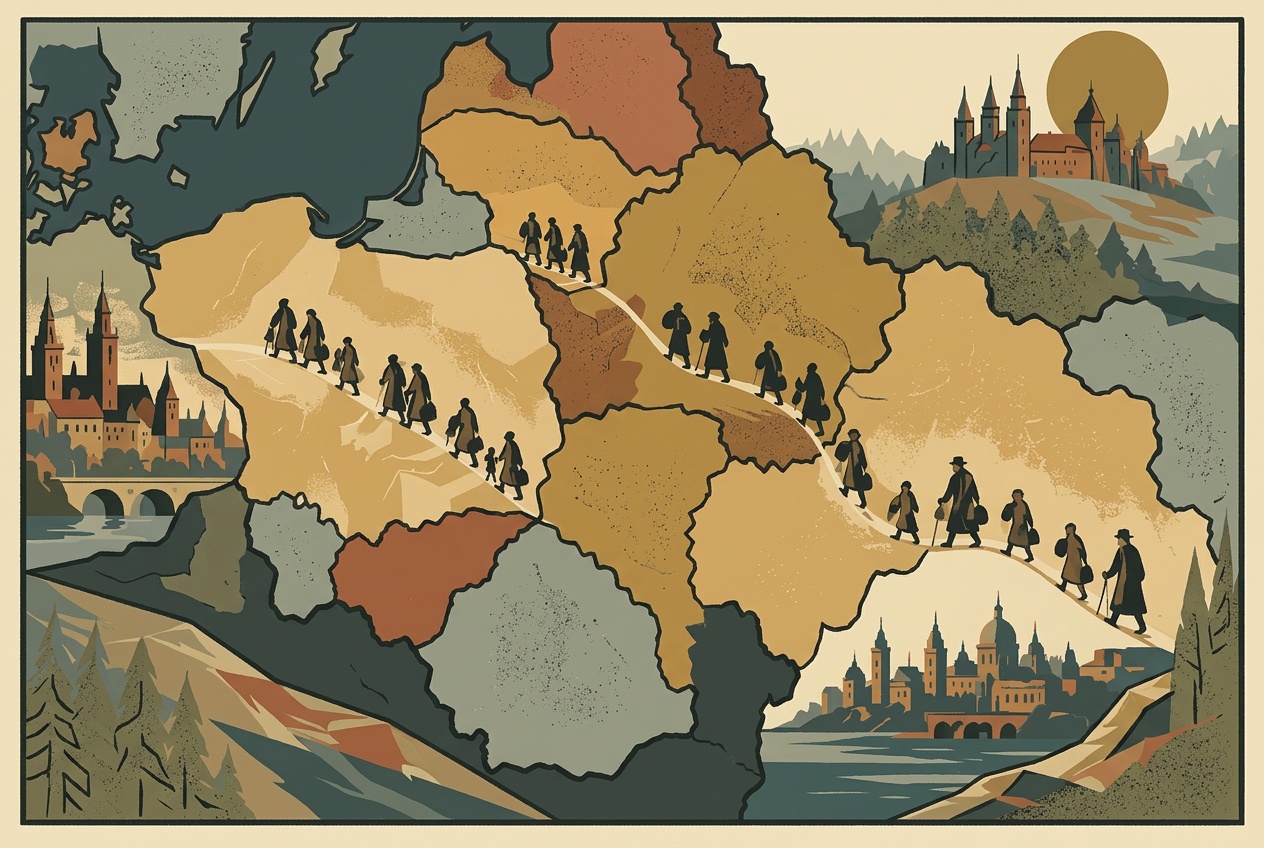
And then the people went out. To Babylon and Alexandria, to the Roman ports along the North African coast, to Spain, to the towns of the Rhine, to Poland and Lithuania and Ukraine, to Yemen and Persia and the Malabar coast of India and the highlands of Ethiopia. They went out and they became the places they landed in. They took on the languages and the food and the music and the bearing of a hundred different countries, until a Jew from Sanaa and a Jew from Vilna could stand in one room and find almost nothing in common to look at.
Almost nothing. They prayed facing the same city. They ended the same meal with the same four words. They broke a glass at the height of the same ceremony. They sat on the floor on the same summer night and read the same book of lamentations over the same ruin. For two thousand years, across every continent a person can live on, the Jewish people kept a forwarding address.
Call it nostalgia and you have missed it. Nostalgia is what a people feels about something it has agreed is finished. A hundred generations said next year in Jerusalem and were wrong. The next spring they said it again. Being wrong a hundred times running never once turned the sentence into a figure of speech. It stayed what it had always been, which was a plan without a date. That is what came down the centuries, hand to hand, and it is the only reason there was anything for Theodor Herzl to organize when he sat down to organize it. He did not have to give the Jews a destination. They had been holding one for nineteen hundred years.
What follows is a single thread pulled out of that two thousand years: one family, which can be followed with any confidence only across the last quarter of it, and which ends in a small apartment in New Jersey with a man of ninety-nine in a black sleeveless shirt who happened to be standing there on the morning the waiting stopped.
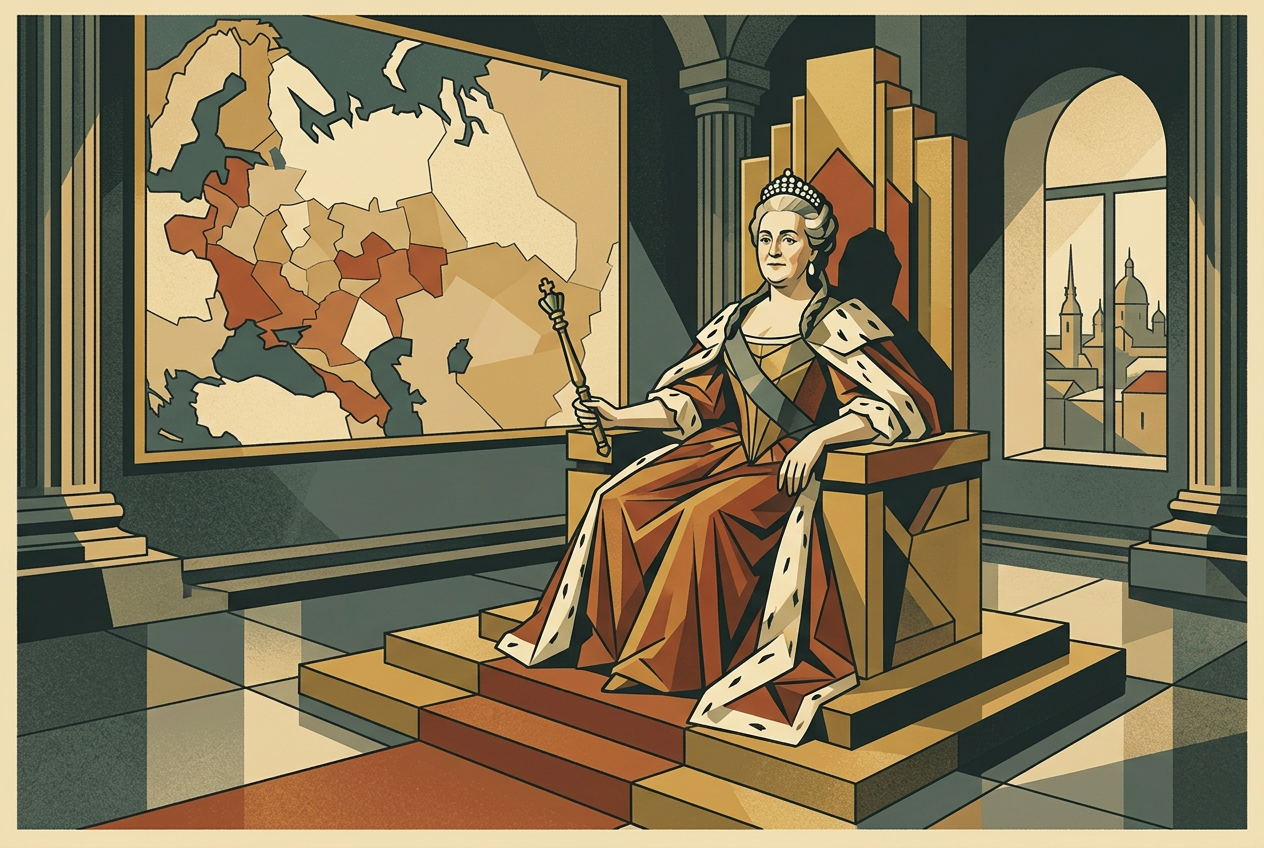
Long before there was Shlomo Lev, there was a chain of rabbis. It stretched back five hundred years, from New Jersey in twenty twenty-six all the way to the candlelit chambers of the royal court of Castile in the late fourteen hundreds, where one of his ancestors served as a financial advisor to the Queen of Spain.
This part of the story is family tradition. There is no notarized record. There is no document with a wax seal. There is what was passed down from father to son around Friday-night tables for twenty generations, in Ladino and then Yiddish and then Hebrew and now English. The fact that the details are now lost to history is itself the historical record: Jews have always carried their genealogies on their backs.
The Jewish presence on the Iberian peninsula was already, by the fourteen nineties, more than a thousand years old. Sepharad, the Hebrew name for Spain, had been one of the great civilizations of the Jewish exile. Under both Islamic and early Christian rule, Jewish poets, philosophers, physicians, astronomers, and merchants had flourished. The works of Maimonides, born in Cordoba in eleven thirty-eight, were studied from Cairo to Tudela. The Jewish translators of Toledo had carried Greek and Arabic learning into Latin, midwifing the European Renaissance. There were Jewish moneylenders to kings and Jewish tax-collectors and Jewish wine merchants and Jewish silver smiths, and there were villages whose Jewish populations had lived in the same stone houses since before the Visigoths had arrived.
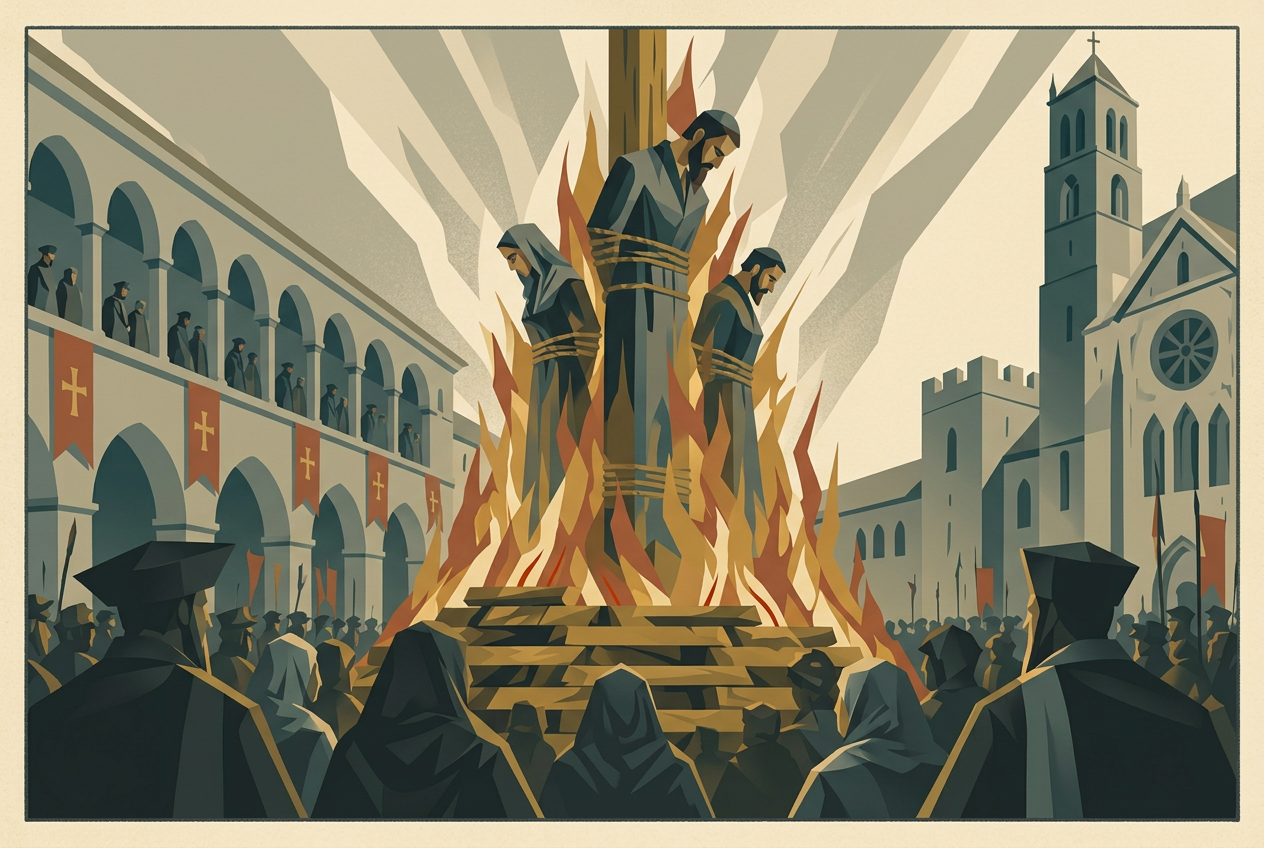
Then the Christian reconquest closed in. Granada fell in January, fourteen ninety-two. Ferdinand and Isabella, the Reyes Catolicos, finished the work of reuniting the peninsula under the Cross. They had begun something else, too, a generation earlier: the Spanish Inquisition, founded in fourteen seventy-eight to root out conversos, the Jews who had been forced to convert to Christianity in earlier waves of persecution and were suspected of secretly continuing to practice their old faith. The inquisitors burned their suspects in autos-da-fé, acts of faith, public spectacles in city squares that drew crowds the way executions and bullfights did. On the last day of March, fourteen ninety-two, the Catholic Monarchs signed the Alhambra Decree. Every Jew in their kingdoms had four months to convert to Christianity or to leave. Their houses, their olive groves, their bakeries, their books: all of it had to be sold or abandoned. They were forbidden to take gold or silver out of Spain. By the end of July, somewhere between forty thousand and two hundred thousand Jews: historians still argue about the figure: were on the roads, on the ships, on the docks of Cadiz and Tarragona and Valencia, looking for somewhere in the world that would take them. Many crossed into Portugal, where they were expelled five years later. Many sailed for Morocco and the Ottoman Empire: the Sultan Bayezid the Second, in a famous remark, supposedly thanked Ferdinand for sending him such excellent subjects. Many died on the road. Shlomo Lev's family tradition holds that one of his ancestors did not wait for the decree. He was a financial advisor to the Queen: a man who saw the books, who knew the temper of the court, who had perhaps overheard the inquisitors lobbying. The Queen herself, the story goes, warned him. Take your tribe. Go east. She gave him an escort of Spanish soldiers, and he gathered his clan and left. For the next century the family moved across Europe, paying off princes and kings, leaving small chains of cousins in each country as security and welcome, settling some families in Poland, some in Lithuania. Eventually one branch pushed all the way into the great forests and pasturelands of Ukraine. There, on the eastern frontier of what would become the Polish- Lithuanian Commonwealth, a great Christian landowner welcomed the rabbi he found at the head of the caravan. The landowner needed people. He needed people who could read and write. He needed people to keep his ledgers, to run his mills, to translate his correspondence with the markets of Krakow and Lviv. The rabbi's son was Yaakov, like the patriarch in Genesis. The landowner's son was Ivan. Together their fathers founded the town of Ivankov, named after Ivan, and the rabbi opened a yeshiva. It was the seventeenth century. The Polish-Lithuanian Commonwealth was the most cosmopolitan state in Christendom: a vast realm stretching from the Baltic almost to the Black Sea, ruled by an elected king, populated by Catholics and Orthodox Christians and Calvinists and Muslims and Jews. Jewish life flourished in a way unimaginable elsewhere in Europe. By the sixteen sixties more than half of the world's Jews lived in this single state. The Council of the Four Lands governed the internal affairs of the Jewish communities like a kind of parliament. There were yeshivas in every town with more than a few dozen Jewish families. There was a Yiddish printing industry, a Hebrew literary culture, a network of merchants who could send a letter from Vilna to Constantinople and trust it would arrive. For two centuries Yaakov's chain of rabbis was unbroken in Ivankov. The yeshiva produced sons who became rabbis, who married the daughters of other rabbis from Berdichev and Zhitomir, who raised more sons who became rabbis. The Ukrainian peasants worked the land. The Polish nobles collected the rents. The Jews ran the inns and the mills and the small businesses that wove the fabric of small- town economic life. Then, in seventeen seventy-two and seventeen ninety- three and seventeen ninety-five, the three great Partitions of Poland tore that world apart. Russia, Prussia, and Austria carved the Commonwealth into pieces. The vast majority of its Jews, including the Levitsky line, found themselves overnight under Russian rule. The Tsarina Catherine the Great, who did not want her Christian Russian subjects exposed to Jewish economic competition, restricted the Jews to a band of territory along Russia's western frontier called the Pale of Settlement. There they would remain for the next century and a quarter, prohibited from moving to the heartland, prohibited from owning farmland in many districts, prohibited from a long list of professions, prohibited from a long list of universities. And then there were the conscriptions. In eighteen twenty-seven, Tsar Nicholas the First introduced what the Jews would remember as one of the cruelest decrees of all. Jewish boys, as young as twelve and sometimes younger, were to be drafted into the army for twenty-five years of service. Twenty-five years. They would be taken from their homes, marched east, often beaten until they accepted baptism, and almost never come back. The Jewish community devised systems to satisfy the quota: poor families' sons were sent in place of rich families' sons. Orphans were sent in place of children with parents. Khappers, child-snatchers, roamed the shtetls. Mothers hid their boys in cellars. Some maimed their own sons to make them unfit for service, an amputated finger, a bullet to the foot, a deliberately blinded eye, because the alternative was worse.
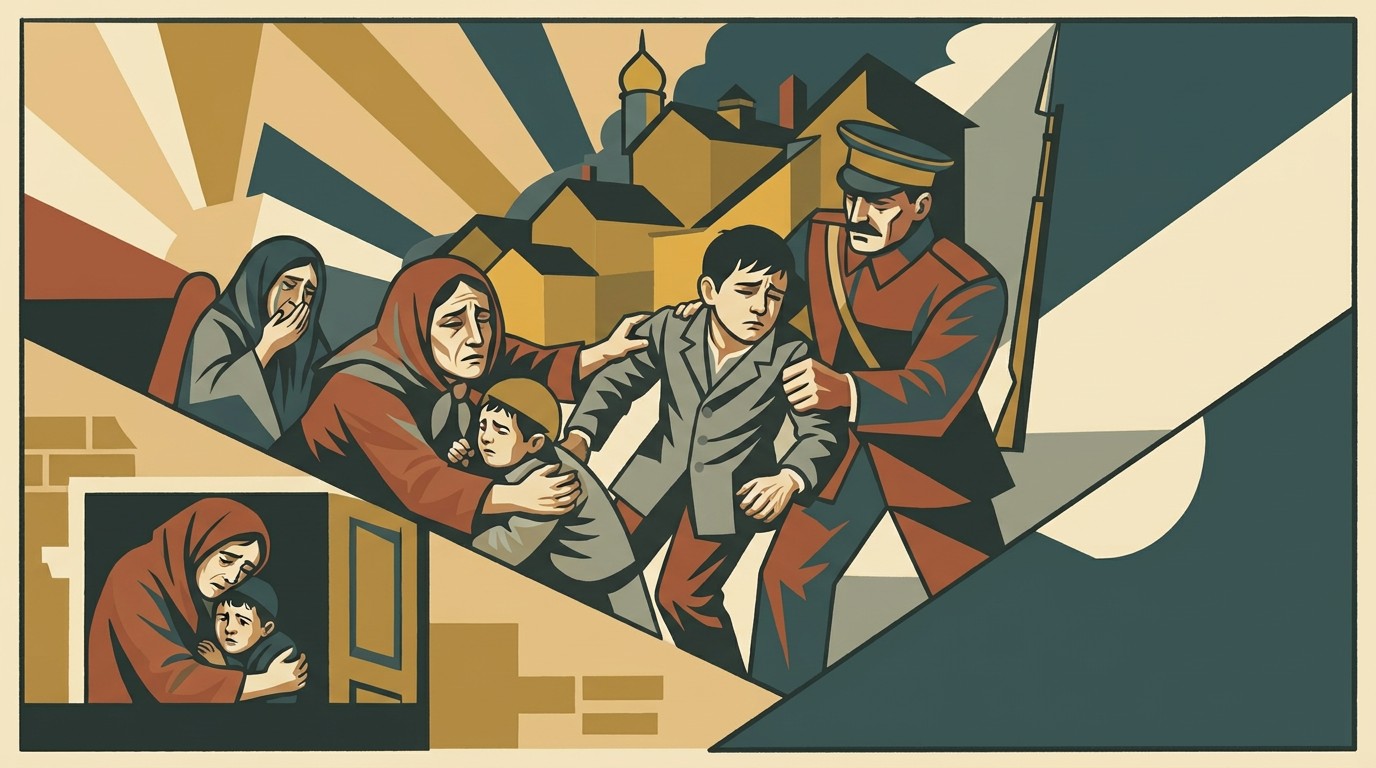
When the khappers came for the Levitsky boys, the Christian landowner who had once welcomed their ancestor stepped in. He had grown up with Yaakov's descendants. He had played with them as a child. He understood, as the Tsar's officials in Petersburg did not, that his town would die if its Jews were carted away. He told the soldiers that the rabbi's children were his own. Take my name, he said to the rabbi. Take Levitsky. So that when the soldiers come back, they will see my name on the children, and they will believe me.
That is how the family of rabbis came to be known as Levitsky. The name was worn first as a disguise. It was the gift of a Christian patron to a Jewish friend, and for nearly two centuries it allowed the rabbinic line to continue.
Shlomo Lev would be born Shloime Levitsky in nineteen twenty-seven. He would carry the name like a passport. Eventually, much later, when he raised an Italian carbine over his shoulder and joined a clandestine Jewish army in British Mandatory Palestine, the name worn first as a disguise would become the name of a soldier of Israel.
And then, in the nineteen sixties, in a country that by that point existed, he set it down. The name a Christian landowner had lent a rabbi's children so that the Tsar's soldiers would pass them by had done everything that had ever been asked of it. It had carried the line through two centuries of borrowed safety, and in a Jewish state it was no longer a name anybody needed. He took a Hebrew one in its place, and the one he took was Lev. It means heart. This book calls him Shlomo Lev throughout, because that is his name and because he chose it. Levitsky belongs to his family and to the history that made the family need it, and it is kept here for both.
There is another line in the family, on his mother's side, and it is worth pausing for. Her father, Shlomo's maternal grandfather, was a wealthy landowner, an unusual position for a Jew in the Pale. He had a country house, he had servants, he had every advantage. He buried child after child. They came out small, or they came out blue, or they did not come out at all. There is no record of what killed them. Most of them probably died in the first weeks of life: Russian infant mortality among Jews in the late nineteenth century was catastrophic by modern standards, with as many as a third of all Jewish children dying before their fifth year.
After a string of small graves the grandfather went, in despair, to the Grand Rabbi of his region, a Hasidic master whose name has not been preserved. The Rabbi heard him out. When the next child is born, he said, give her a name that sounds like bubbe. The angel of death will hear it and look for an old woman. He will pass over your daughter. The next child was a girl. They named her Babel. It is a Yiddish nickname. It means, more or less, "Grandma." She lived. She lived to be a grandmother in fact. She would, in time, become the mother of Shlomo Lev. In the years of the Russian Revolution she would befriend, as a girl, a Bolshevik named Sasha: Sasha the legendary young Communist commander, the kind of figure who rode at the head of cavalry columns and chased the White Russian army across the Ukrainian steppe. Later, in the nineteen thirties, when Sasha was no longer chasing anyone but managing a vital Soviet automobile factory in Russia, that same Sasha would receive a visit from Shlomo's eldest brother Mayer: a young Jew showing up at the factory gates, in the middle of Stalin's purges, looking for an apprenticeship under the dangerous name Levitsky. Sasha remembered his childhood friend Babel. He hired the boy. He protected him. He saved his life. These were the women and men whose blood Shlomo inherited. The financial advisor who left Spain before the door closed. The rabbi who walked his caravan across Europe and founded a town with a Christian landowner. The unnamed grandmother who outwitted the angel of death. The Bolshevik who remembered an old friend forty years later. They were the clever ones. They were the ones who survived.
Living in the Miracle
By the time the chain of generations reached Shlomo's father, the world was ending.
It is worth understanding what was happening in Ukraine in the year of his father's young manhood, because the rest of Shlomo's life unfolds in the shadow of it. Yaakov Levitsky, also a Yaakov, named for the patriarch as every other firstborn son in the line had been, came of age in the second decade of the twentieth century, in a small town in central Ukraine where his father served as rabbi. He grew up reading Torah in the morning and Talmud in the afternoon. He memorized the cantillation of the Five Books of Moses. He was being trained, as the eldest son, to inherit his father's pulpit and his father's library and his father's place at the head of the community's Sabbath table.
Then the world cracked open.
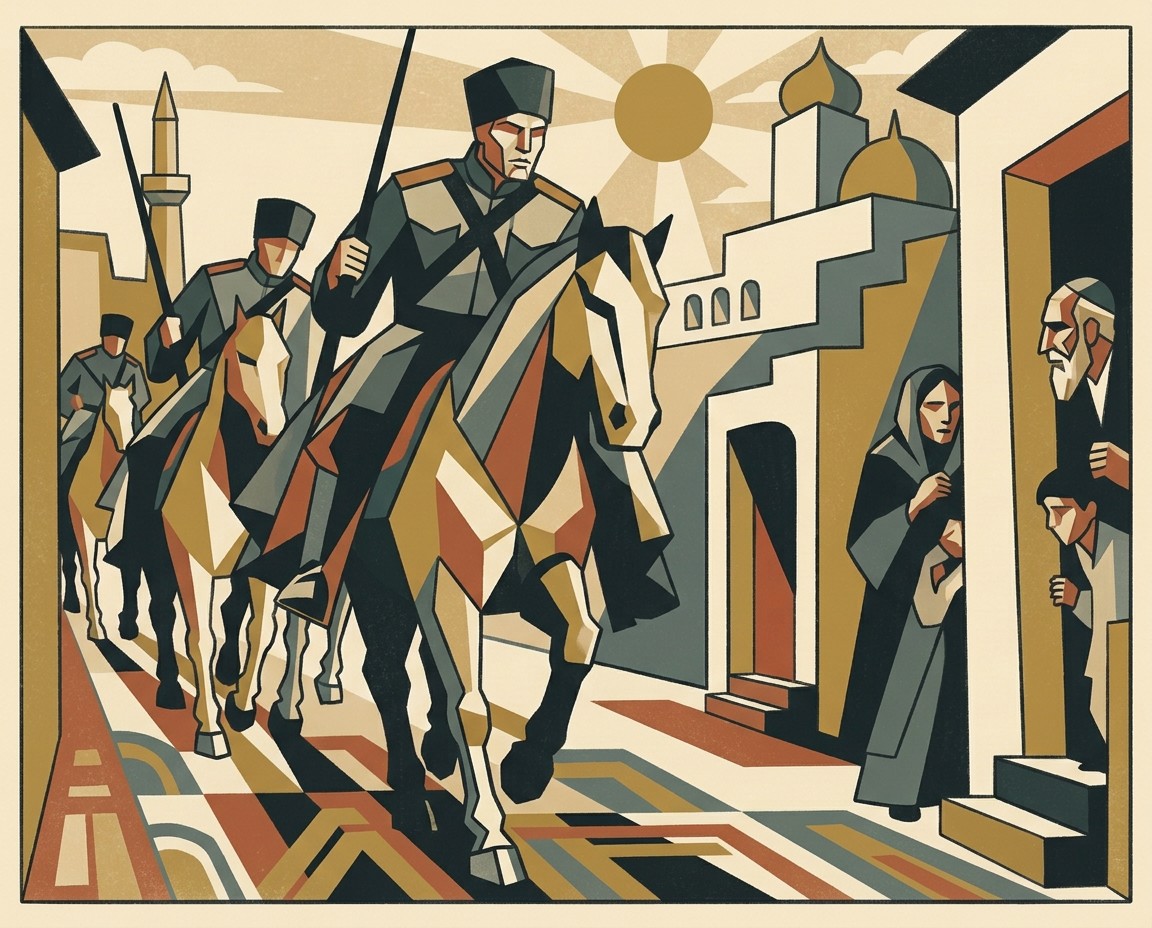
The First World War began in August, nineteen fourteen. By autumn the front had reached the Pale of Settlement, and within weeks the territory in which most of the world's Jews lived had become one of the most violently contested pieces of land on earth. The Russian Imperial Army accused the Jews of spying for the Germans. The German and Austro-Hungarian armies, sweeping east, accused them of nothing in particular but did not protect them either. Cossack units burned synagogues. Hundreds of thousands of Jews were forcibly deported from the border zones by the Russian high command, packed onto trains in winter and sent east into the interior, where their families starved or scattered. By the war's end perhaps half a million Jews of the Pale were dead from disease, hunger, and direct violence.
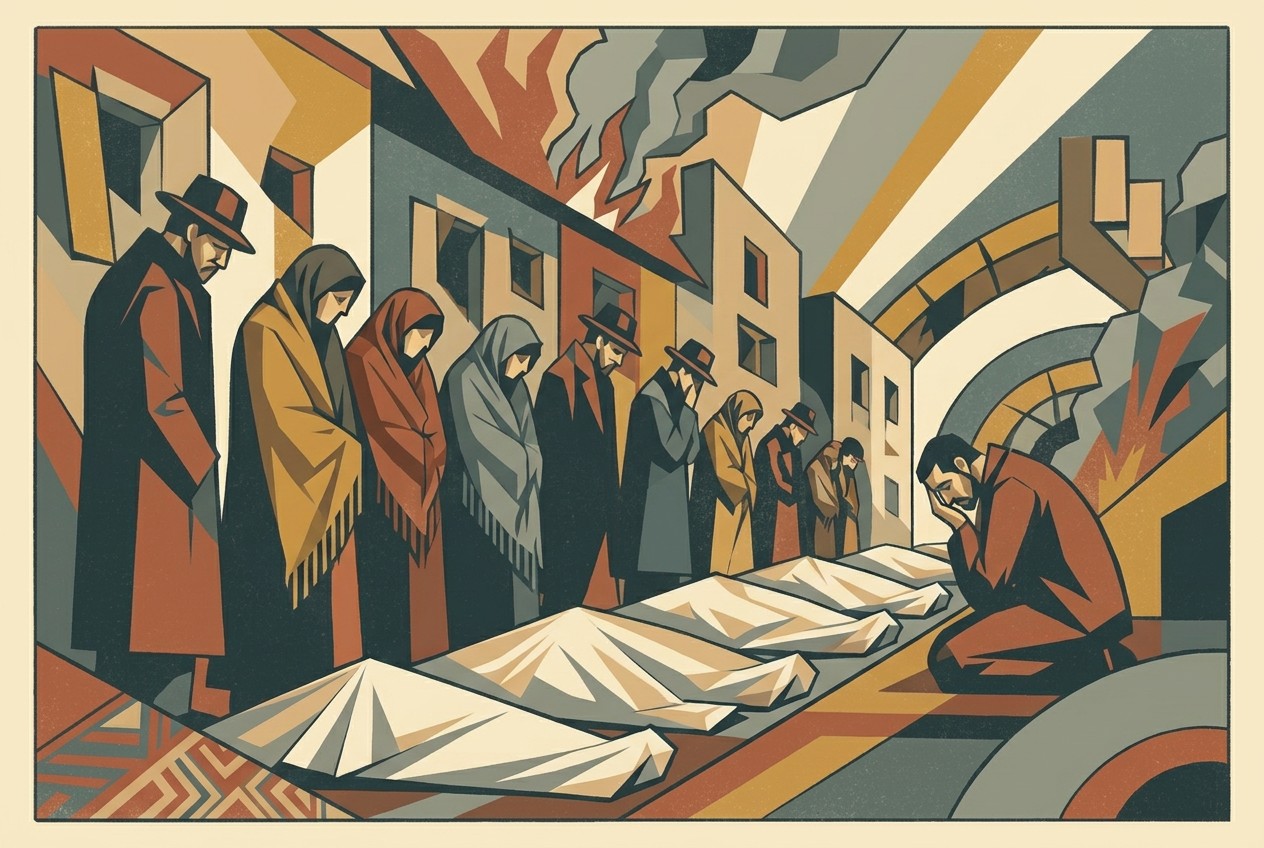
Then in October, nineteen seventeen, the Bolsheviks seized Petrograd, and Russia collapsed into civil war. For the next four years Ukraine became one of the bloodiest pieces of geography in human history. White armies, Red armies, Green peasant militias, German troops, Polish legions, French expeditionary forces, the Don Cossacks, the Black Hundreds, the Makhnovshchina anarchists, and Ukrainian nationalist forces under the commander Symon Petliura all fought across the same towns, in some places six or seven times in a single calendar year. The Jews, as always, were caught in the middle and accused by all sides.
The Petliura forces were the worst. The Ukrainian People's Republic, of which Petliura was first the military commander and later the head of state, claimed to be a modern nationalist movement. In practice, its troops carried out the largest wave of anti-Jewish massacres seen in Europe between the Khmelnytsky uprising of sixteen forty-eight and the Holocaust. Modern historians estimate that between thirty thousand and a hundred and fifty thousand Jews were killed in the pogroms of nineteen eighteen to nineteen twenty-one, across more than a thousand separate incidents, in nearly every town and village of central and western Ukraine. The killings followed a pattern: a band of armed men would ride into a Jewish neighborhood, demand a "contribution" from the community, take whatever they wanted, kill those who resisted or those they decided looked Bolshevik or those whose women they wanted, and ride on.
This is the world into which Yaakov Levitsky stepped, freshly ordained, to take up his post as rabbi of a small town in Ukraine.
The pogrom in his town followed the script. A column of horsemen, they may have been Petliurists, they may have been independent bandits operating under the Petliurist banner, the survivors never agreed, rode in one afternoon and headed straight for the rabbi's house. They knew the protocol. The rabbi was the moral center of the Jewish community. He was the man who could open the safes and the dowry boxes and the burial-society funds. They tied a rope around him.
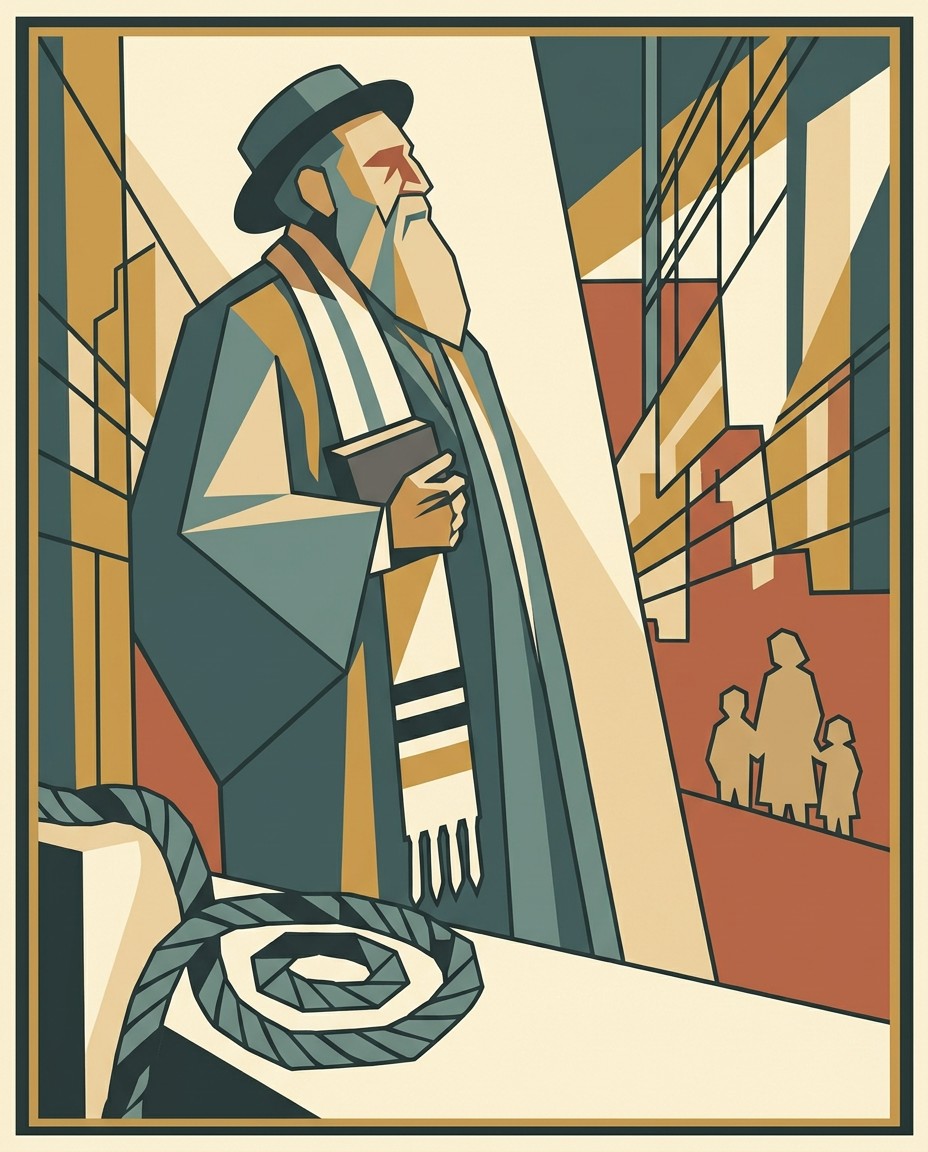
What followed was an extortion ritual that played out a thousand times across Ukraine in those years. They walked him from house to house at the end of the rope, like a goat being led through a market. At each door they demanded that the rabbi tell his congregants to give up their valuables. Silver Sabbath candlesticks. Hidden gold coins. The brass kiddush cups passed down from a great-grandmother. The Polish prayer book bound in leather. Anything.
The Jews of the town gave what they had. The rabbi was their rabbi. They hoped that if they were generous enough, the bandits would take their loot and leave.
The bandits did not leave. They took the loot, walked the rabbi out of town to the bridge over the river, and tied a heavy stone to the rope around his neck. He had never learned to swim. He would, all the rest of his life, through Soviet rule, through immigration, through old age in Jerusalem, be terrified of water. He could not stand to bathe in a tub. He could not bear to wade in the sea. His youngest son, growing up in the holy city, would never see his father step into a body of water that was deeper than his knees.
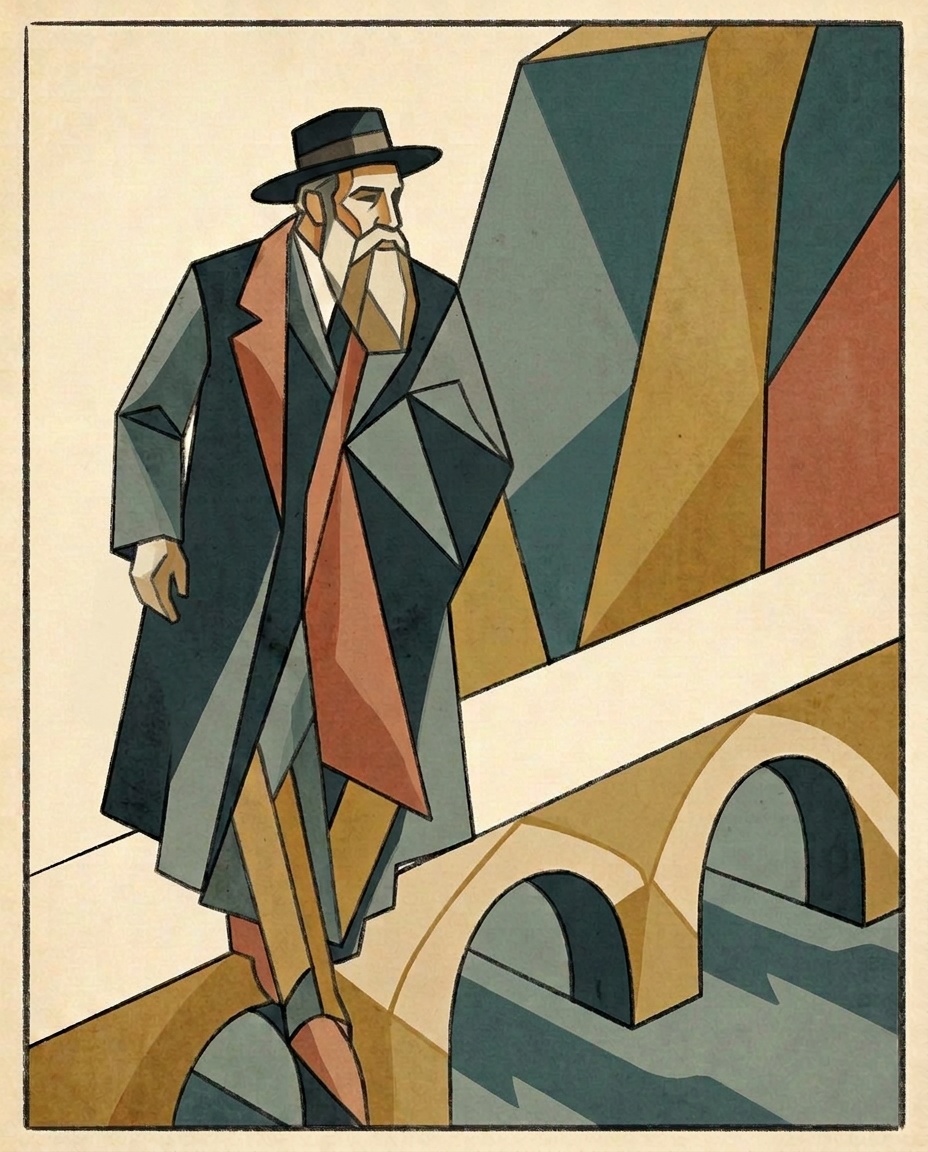
The bandits prepared to throw him in.
Then, and this is the part of the story that Shlomo would, eighty years later, tell with a particular small smile, a horseman came riding hard from the east, shouting that the Reds were just over the hill. The Bolshevik cavalry was coming. The bandits dropped the rabbi at the foot of the bridge, scooped up their stolen silver, and fled. The rabbi was untied by a passerby. He walked home. He sat down in his synagogue. He kept being a rabbi. He would tell that story for the rest of his life. He would tell it to his children at the Sabbath table, his voice quiet, his hands folded in his lap. There was no grand moral, no triumphalist conclusion. There was only the bridge, the rope, the stone, the rider, and the fact that he was, against everything, alive. "We live in the miracle," he would say. "One miracle." It is the same sentence, almost word for word, that Shlomo would later say about his own life. A boy in a drawer. A blond Palmach trainee on a kibbutz water tower. A bleeding fighter walking five kilometers through an orange grove. A captain walking into the worst prison in Cairo with his shoulders back. One miracle. Always exactly one. It is the lesson the rabbi left him. It is also, in a deep sense, the lesson the Jewish people themselves had been carrying for two thousand years.
The Levys of the Rhineland
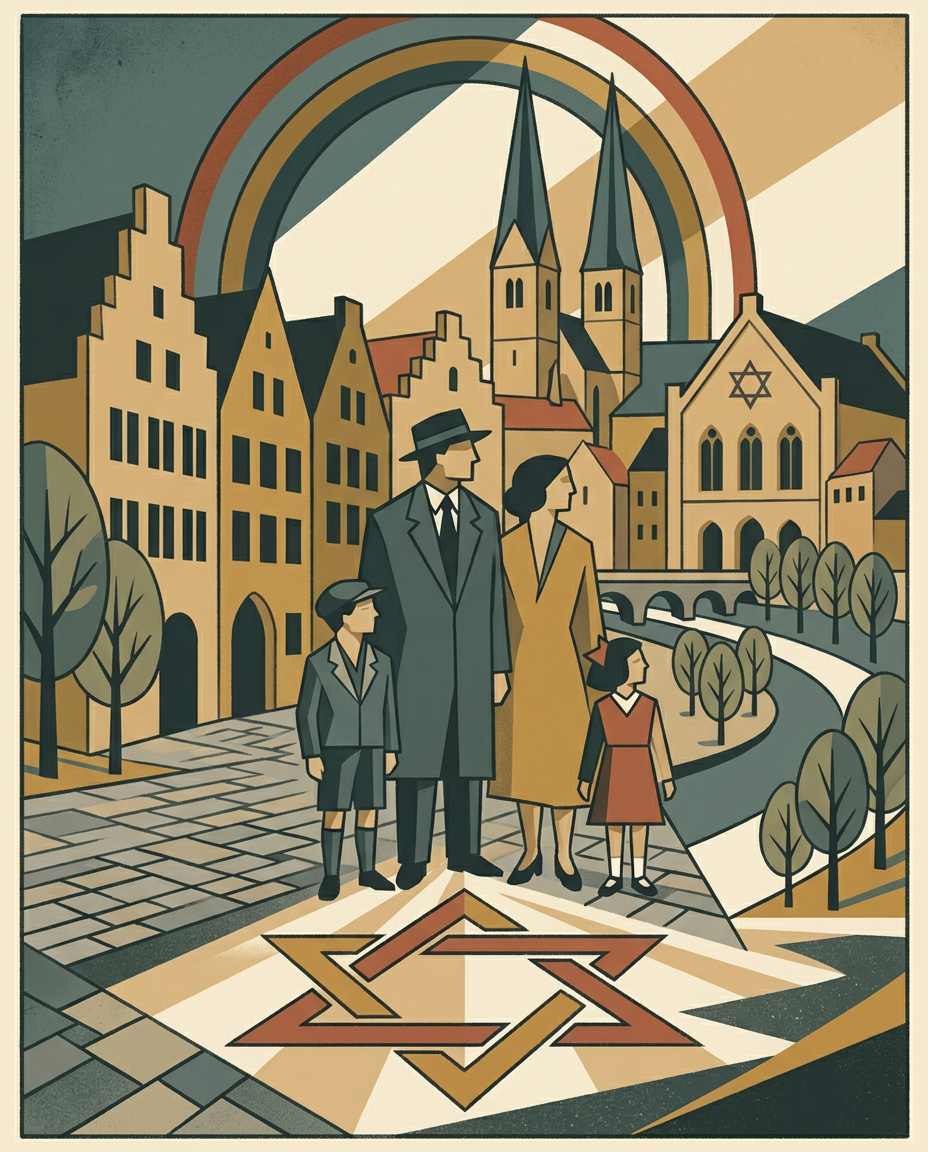
Shlomo Lev's family had carried its genealogy on its back across five centuries of exile. The Levy family of Westphalia had done the opposite. They had, over the better part of two hundred years, set the genealogy down. They had stopped being exiles. They had become Germans.
This is the second of our three families, and in nineteen thirty it was, by every visible measure, the most fortunate of them. To understand what happened to it, you have to understand what German Jewry was, because German Jewry was, for a century and a half, the great experiment of the modern Jewish world, the test case for the proposition that a Jew could simply be a citizen like any other.
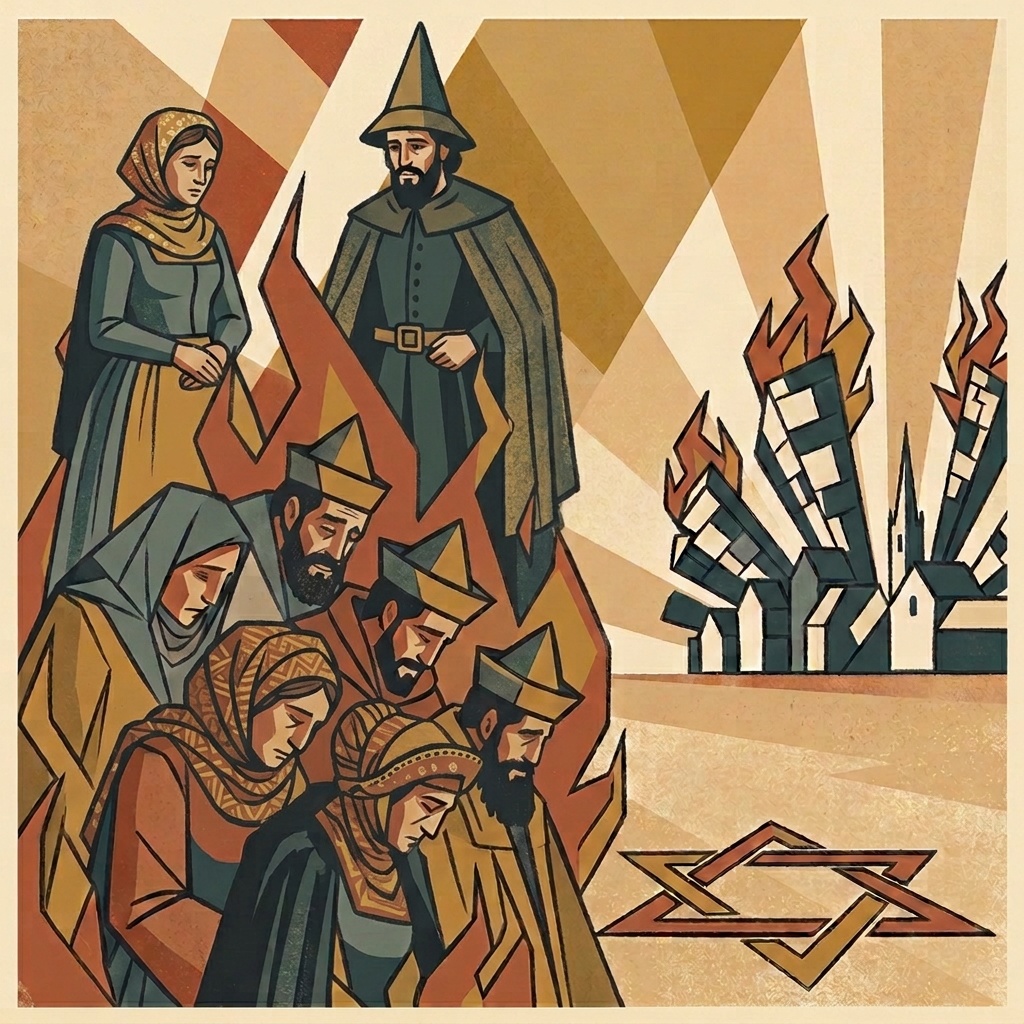
The Jews had lived in the Rhineland for a very long time. There had been Jewish communities in the Roman city of Cologne in the fourth century of the Common Era, before there was a Germany at all. They had been massacred by the Crusaders in the spring of ten ninety-six, in the river towns of Speyer and Worms and Mainz, in the first great mass killing of the Jewish Middle Ages. They had been blamed for the Black Death in thirteen forty-nine and burned for it. They had been expelled, readmitted, taxed, ghettoized, and expelled again, in the same cyclical rhythm that governed Jewish life everywhere in Christendom. The Levy line, like most German-Jewish families that could trace themselves at all, surfaced into the documentary record in the seventeen hundreds, in the small towns and villages of Westphalia and the North Rhineland, where Jews had lived as cattle dealers and peddlers and small traders, tolerated and confined, for as long as anyone could remember.
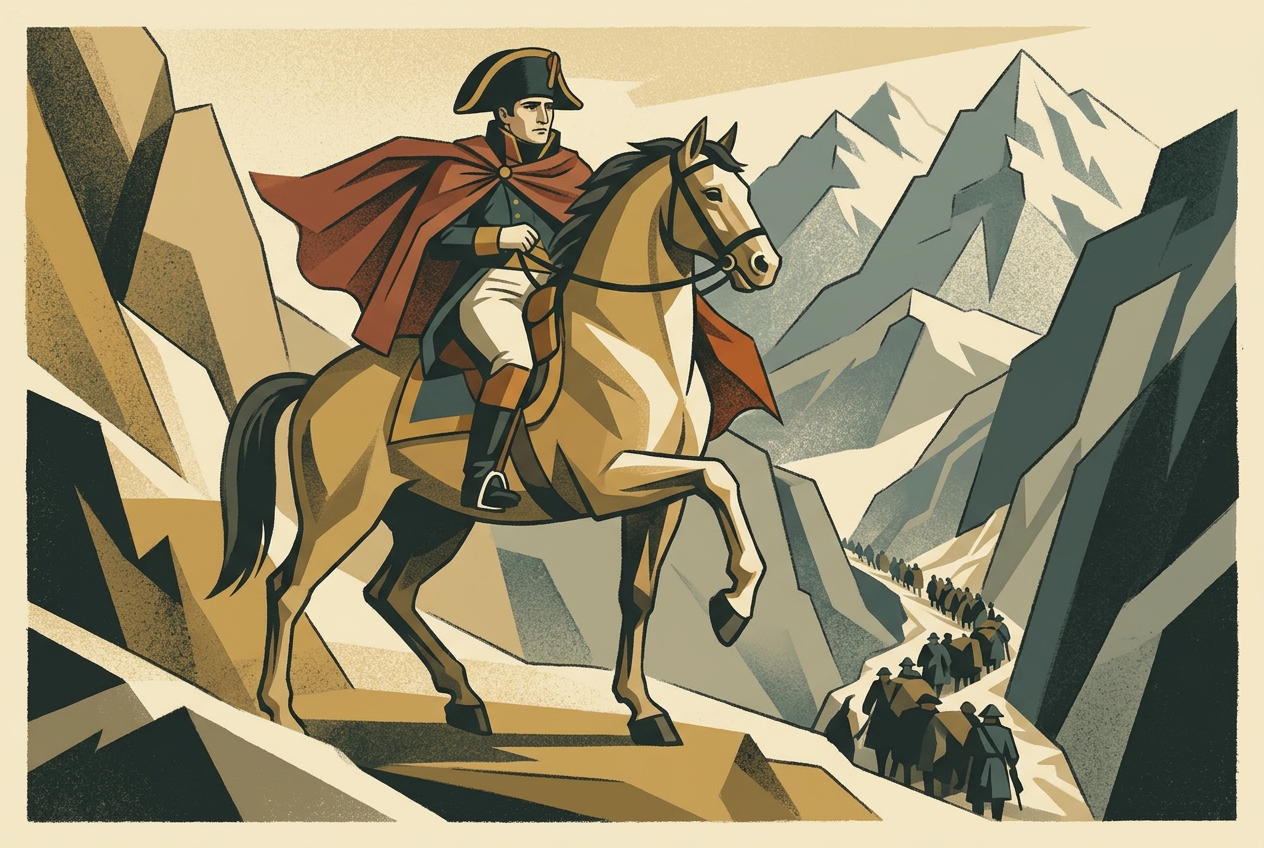
Then came the emancipation. It came slowly, in fits and reversals, across the whole of the nineteenth century. Napoleon's armies carried legal equality into the German lands, and the German princes mostly rolled it back after Waterloo. But the direction of travel never fully reversed. Piece by piece: the right to own land, the right to enter a university, the right to practice law and medicine, the right to vote, the right to hold office: the walls of the ghetto came down. When the German Empire was founded in eighteen seventy-one, full legal equality for Jews was written into the law of the new nation. A German Jew was, at last, a German.
And the German Jews did something with that freedom that has few parallels in history. They poured themselves into German life with an ardor that the word "assimilation" does not capture. They did not merely blend in. They fell in love. They fell in love with the German language, with German poetry, with German music and German philosophy and the German idea of Bildung: the cultivation of the self through learning. They produced, in the space of three generations, an astonishing share of the country's scientists and physicians and jurists and composers and industrialists. They called themselves, in a formula that was meant with complete sincerity, "German citizens of the Mosaic faith." The faith was a detail. The German was the substance. By the nineteen twenties a great many German-Jewish families attended synagogue, if at all, the way a great many German Protestant families attended church: three times a year, out of respect, on the days the calendar required.
The Levys of Lippstadt were exactly this kind of family.
Lippstadt was a modest town in Westphalia, in the region the modern map calls North Rhine-Westphalia, set in the flat agricultural country between the Ruhr industrial belt and the open farmland to the east. It had been founded in the Middle Ages. It had a market square and church spires and a small river running through it. It had a small, settled, unremarkable Jewish community of the ordinary German kind: a synagogue, a Hebrew teacher for the children, a cemetery, a handful of families who had been in the town and the towns around it for as far back as the records ran.
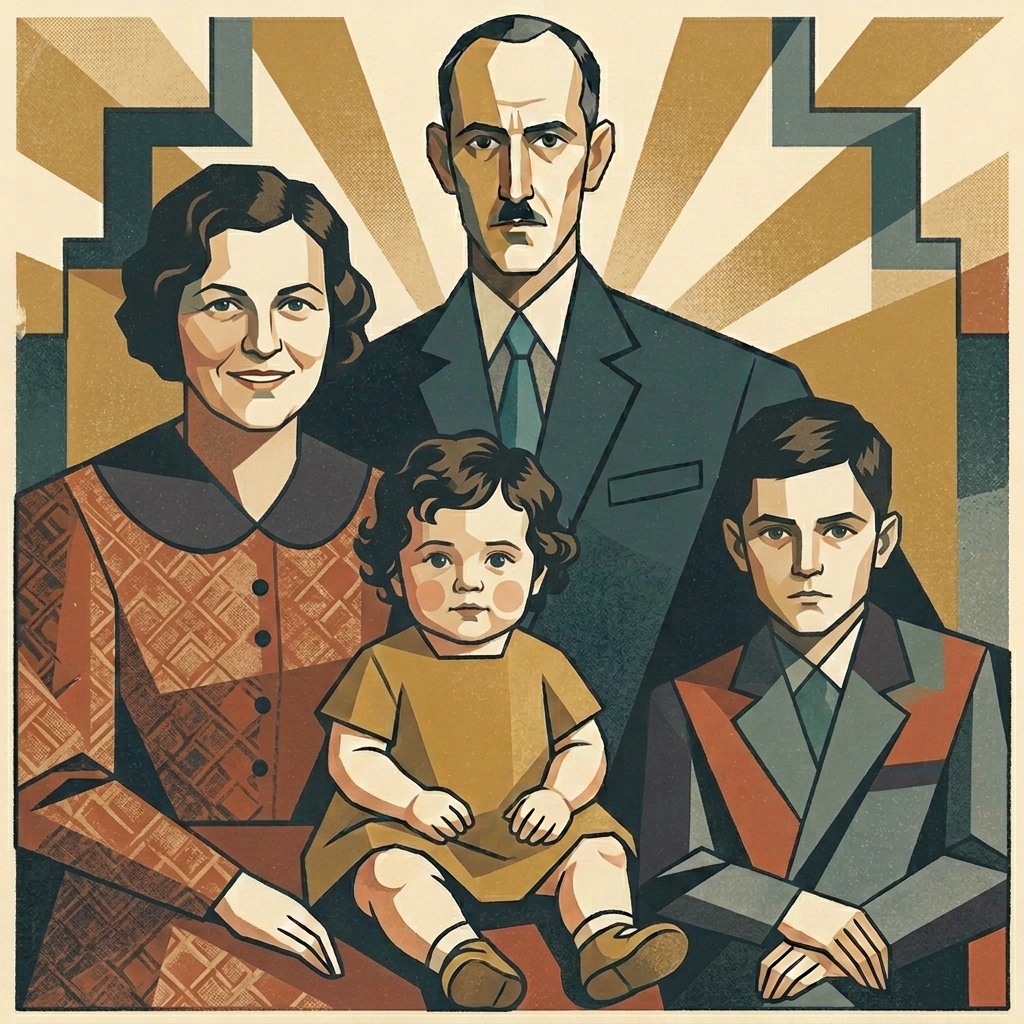
Max Levy was a Lippstadt merchant. He owned a store, a clothing and dry- goods store, on the ground floor of a large building in the town, and the family lived in comfort above it. It was, by the standards of the place and the time, an upper-middle-class life, the life of a respected local businessman. Max's parents, George's grandparents, lived upstairs in the same house. Max's brother Ludwig lived with the family as well. The household was full and prosperous and entirely ordinary.
Max Levy had also, as a young man, gone to war for Germany. When the First World War came in nineteen fourteen, the Jews of Germany had volunteered and been conscripted in the same proportions as their Christian neighbors, roughly a hundred thousand German Jews served, and some twelve thousand of them were killed. Max served, and survived, and was awarded the Iron Cross. It is worth pausing on what that decoration meant to a man like him. It was not a trinket. It was the proof, pinned to the chest, witnessed, official, that he had bled for Germany and that Germany had recognized it. It was the visible token of the whole German-Jewish bargain: we belong here. We have earned it. We are home.
Max married a woman named Lucie. Her name was spelled in the French manner, L-u-c-i-e, the way a certain kind of cultured German family liked to spell things in those years. Lucie had a sister, Irmgard, and Irmgard had married a man named Joseph Mueller. That marriage, and that surname, Mueller, will matter a great deal later in this story, in a way no one in the family could possibly have foreseen in nineteen thirty. For now it is enough to know that the Mueller name existed, on the edge of the family, attached to a brother-in-law who had gone to America.
George Levy was born in Lippstadt on the third of September, nineteen thirty. His sister Ursula was born about five years after him, in nineteen thirty-five. They were the children of that large, warm, prosperous house: the store below, the grandparents above, the uncle down the hall. George grew up speaking German, the only language he knew. He played soccer. He ran on the school track team. He was, by his own later description, a regular little kid, and the regularity was the point: he was a German boy, in a German town, in the only country his family had ever thought of as theirs.
There is a temptation, looking back from the far side of what is coming, to read the Levys' Germanness as a kind of blindness, to think that they should have known, should have packed, should have run. It is the wrong way to read them. The Levys were not naïve. They were the opposite. They were the success story. They were the living proof of the most hopeful idea the modern world had offered the Jewish people: that the long exile could simply end, not by going home to Zion, but by being accepted, fully and finally, as citizens of the country where you already lived. Max Levy had the Iron Cross to prove it.
That was the idea. Within a decade of George's birth it would be tested to destruction, and the testing would teach the Jewish people a lesson written in the blood of a third of their number: the same lesson, exactly, that Theodor Herzl had tried to teach them from a Vienna café forty years before, and that a chain of rabbis in Ukraine, and a clan of Jews who would soon be put on trains out of Baghdad, were learning at the same hour by other roads. The lesson was that a Jew without a state of his own is a guest, and that a guest remains in the house only as long as the host permits.
The Levys did not yet know they were guests. They thought they were home.
Babylon, Basra, and the Old City
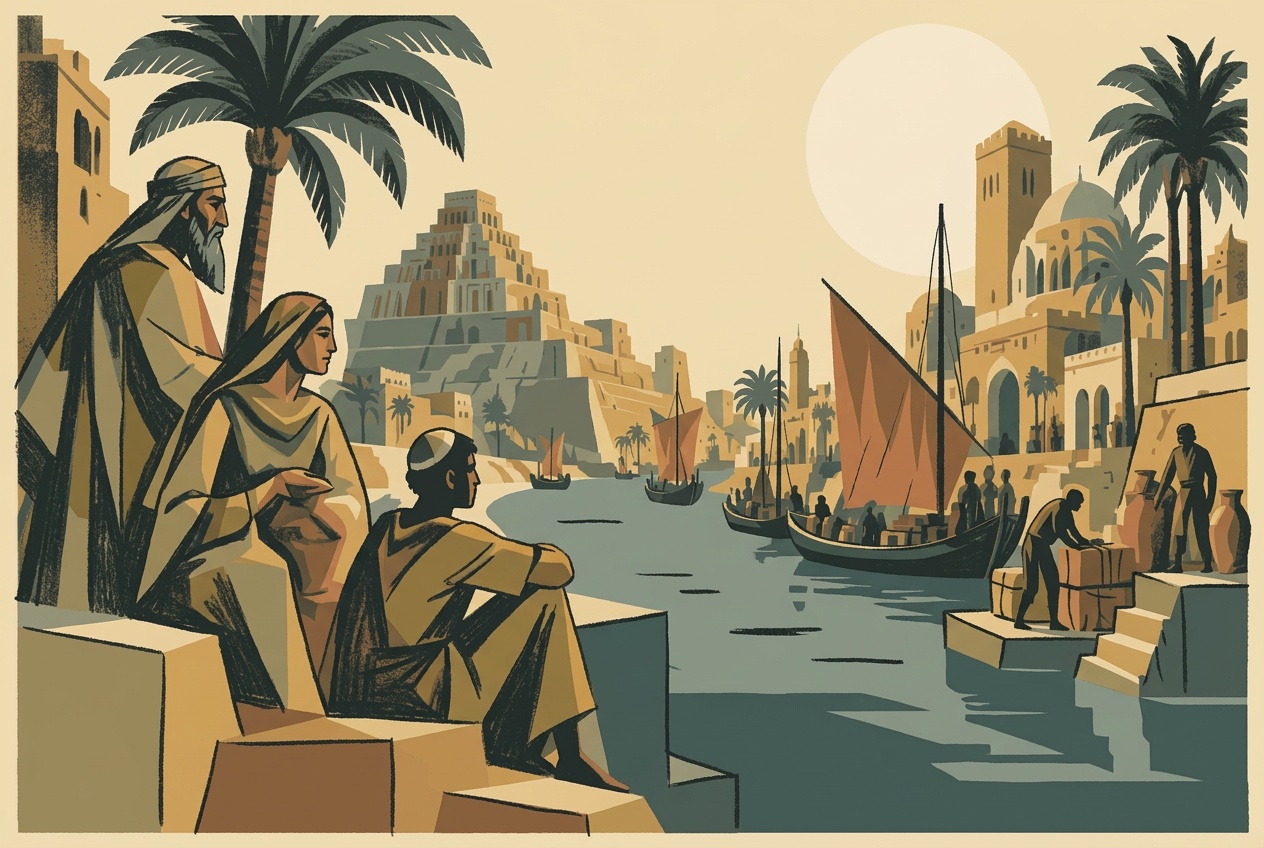
The third of our three families would not produce its subject for another half-century. Gal Sharon was born in Tel Aviv in the early nineteen eighties, two generations after Shlomo Lev and George Levy. But a family does not begin at a birth, and Gal's genealogy belongs here, beside the chain of rabbis and the Levys of the Rhineland, because it is the genealogy of the State of Israel itself in miniature. Two ancient rivers of the Jewish people met to make him. One of them ran out of Babylon. The other had put down roots in the Land of Israel, on the same ground, in the last years of Ottoman rule: a full generation before the State.
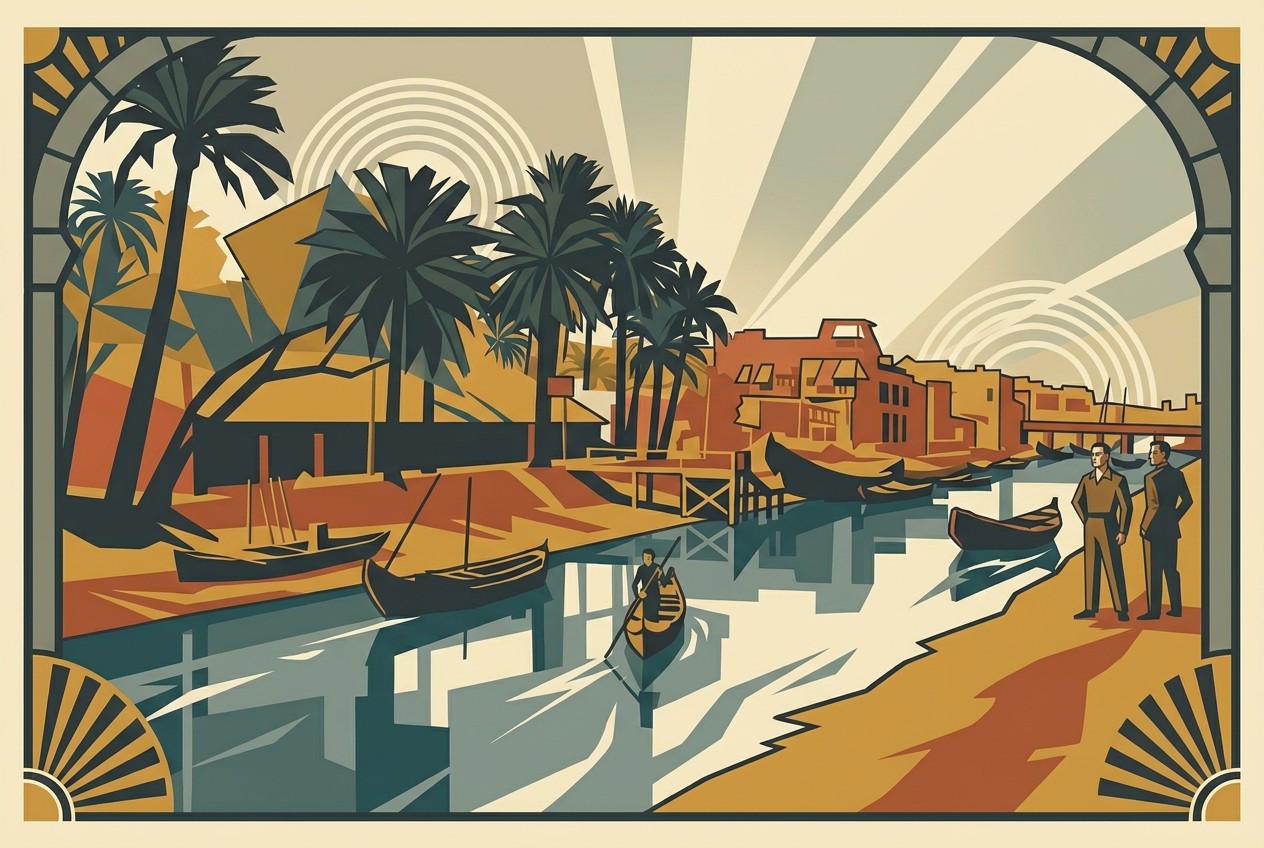
Gal's father's people were Iraqi Jews: Babylonian Jews, members of the oldest community of the Jewish exile anywhere on earth. The Jews had been carried to Mesopotamia after the destruction of the First Temple by the army of Nebuchadnezzar in five hundred eighty-six before the Common Era. They had wept by the rivers of Babylon, as the psalm records, and then they had dried their eyes, and stayed, and built, for twenty-six centuries. It was in Babylon that the great academies of Sura and Pumbedita produced the Babylonian Talmud, the central text of rabbinic Judaism, between the third and the seventh centuries of the Common Era. Babylonian Jews had been physicians and bankers and astronomers to the Abbasid caliphs of Baghdad. They had built merchant houses that reached from Bombay to Shanghai to Manchester. Theirs was not a community that had wandered into Iraq. Theirs was a community that had been in Iraq since before there was an Islam, before there was an Arabic, before there was a Baghdad for the caliphs to rule.
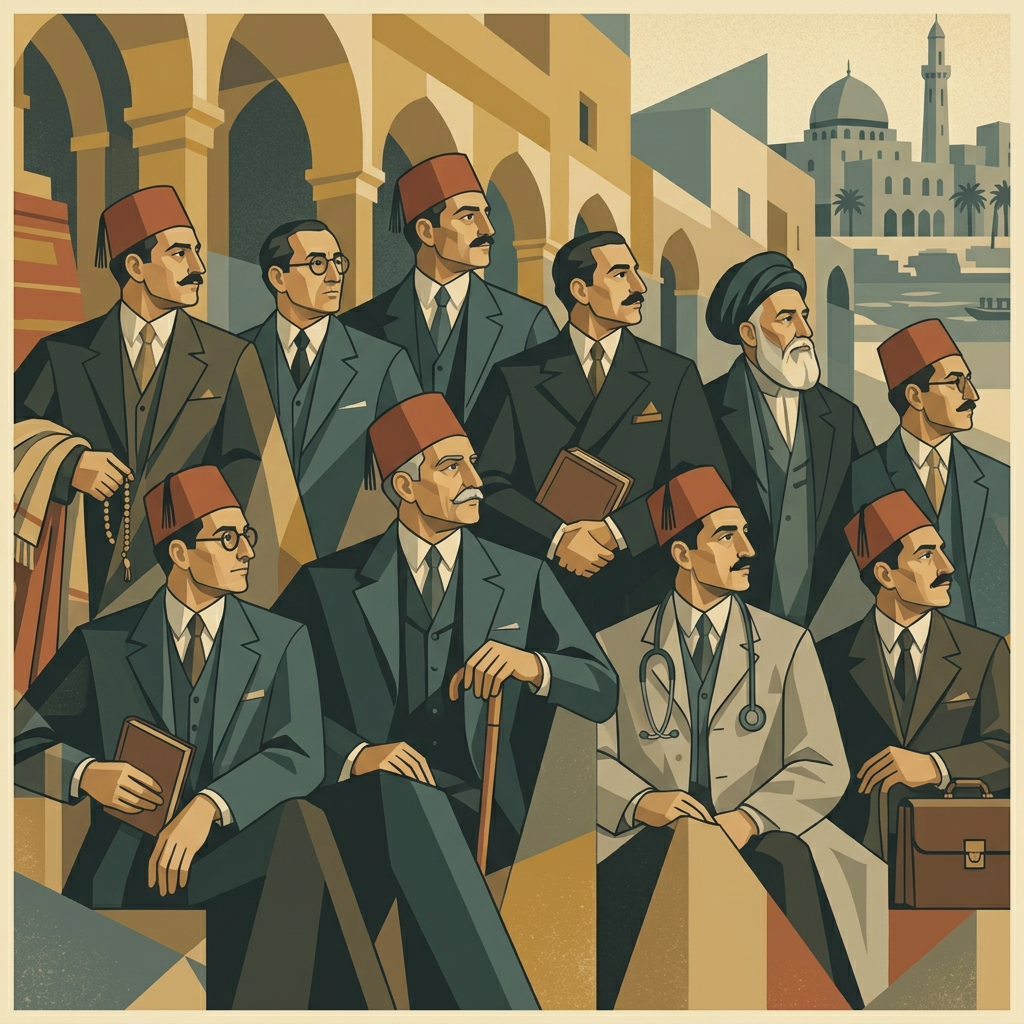
By the early twentieth century the Jews of Iraq were one of the most established and deeply rooted Jewish communities in the world: more than a hundred and thirty thousand people, some ninety thousand of them in Baghdad, where they made up something close to a quarter of the city, and another ten thousand in the southern port of Basra, where they made up a comparable share. They were its merchants and its money-changers, its musicians and its physicians and its clerks. The first finance minister of modern Iraq was a Jew. They spoke Arabic as their mother tongue. They thought of themselves, most of them, as Iraqis, as Arab Jews, at home in a country their ancestors had lived in for two and a half thousand years. It was, in its confidence, the very same at-homeness that the Levys felt in Germany. And it would be taught the very same lesson.
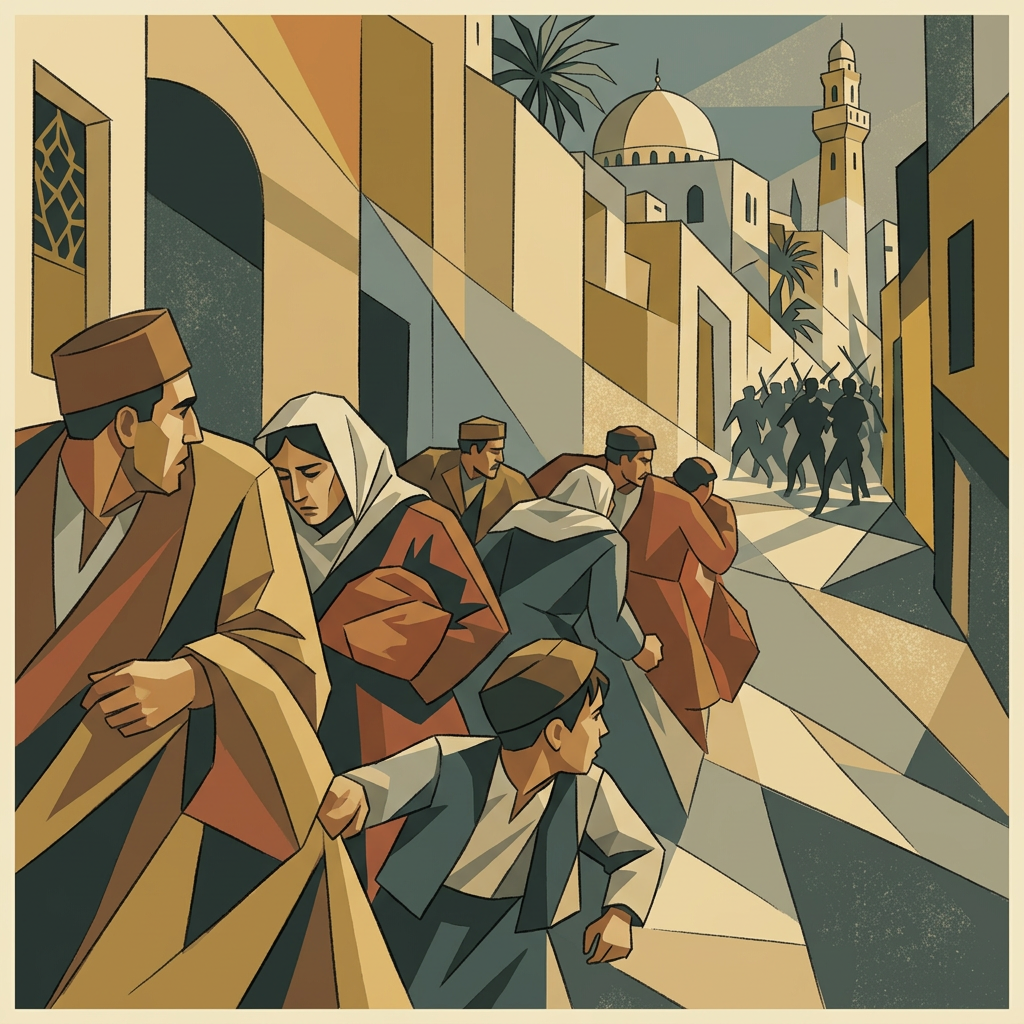
The lesson came, for the Jews of Iraq, on the first and second of June, nineteen forty-one, in two days that the community would afterward call the Farhud. A pro-Nazi government had briefly seized power in Baghdad, and as it collapsed, a pogrom swept the Jewish quarters of the city. Mobs murdered something like a hundred and eighty Jews, wounded many hundreds more, left hundreds of children orphaned, and looted and burned thousands of Jewish homes and shops. The Farhud lasted two days. It ended twenty-six centuries of a certain kind of confidence. It told the Jews of Iraq, in the plainest possible language, what Kristallnacht had told the Jews of Germany three years before, and what the pogroms had told the Jews of Ukraine across the generations before that: that a Jewish community living as a guest in a country not its own remains in the house only so long as the host permits, and that the permission can be withdrawn in a weekend.

After the Farhud, the young Jews of Baghdad did two things at once. They resolved never to be left defenseless again, and they began to look for the way out. Emissaries from the Yishuv, agents of the same clandestine arm of the Jewish leadership that would later crew the Aliyah Bet boats Shlomo Lev sailed, were smuggled into Iraq, and out of their work an underground was built. Its members did not give it a grand name. They called it, simply, the Movement. It had three faces. One was a defense wing that gathered and hid weapons, in cellars and behind the false walls of synagogues, against the day of another Farhud. One was a migration wing that forged passports and exit papers and mapped escape routes. And one taught modern Hebrew, and the geography of a country most of its students had never seen, in secret rooms. The whole of it was built in cells of three to five people, each cell blind to the others, so that no single arrest could unravel the network.
Then came nineteen forty-eight. The State of Israel was declared in May. The surrounding Arab states went to war against it, and Iraq, which had sent an army to that war, turned on the Jews who had lived among its people since antiquity. Zionism was made a capital crime. There were arrests, the seizure of Jewish property and businesses, the public hanging of prominent Jews. To leave Iraq legally became, for a Jew, impossible. So the Movement built an escape route instead: an underground railroad that carried Jews north and east, out of Iraq and across the frontier into Iran, and from Tehran onward by air to the new Jewish state. By nineteen forty-nine it was moving something on the order of a thousand people a month. Within two years that clandestine trickle would swell into a flood the new state called Operation Ezra and Nehemiah: the great airlift that, across nineteen fifty and nineteen fifty-one, carried almost the entire Jewish community of Iraq, some hundred and twenty thousand people, out of the country and into Israel, all but ending twenty- six centuries of Jewish life in Babylon in the space of two years. And parents, watching the country they had thought was theirs become a country that wanted them gone, began to send their children ahead of them down that route, the older children first, alone or in small groups, into the hands of the network, meaning, themselves, to follow.
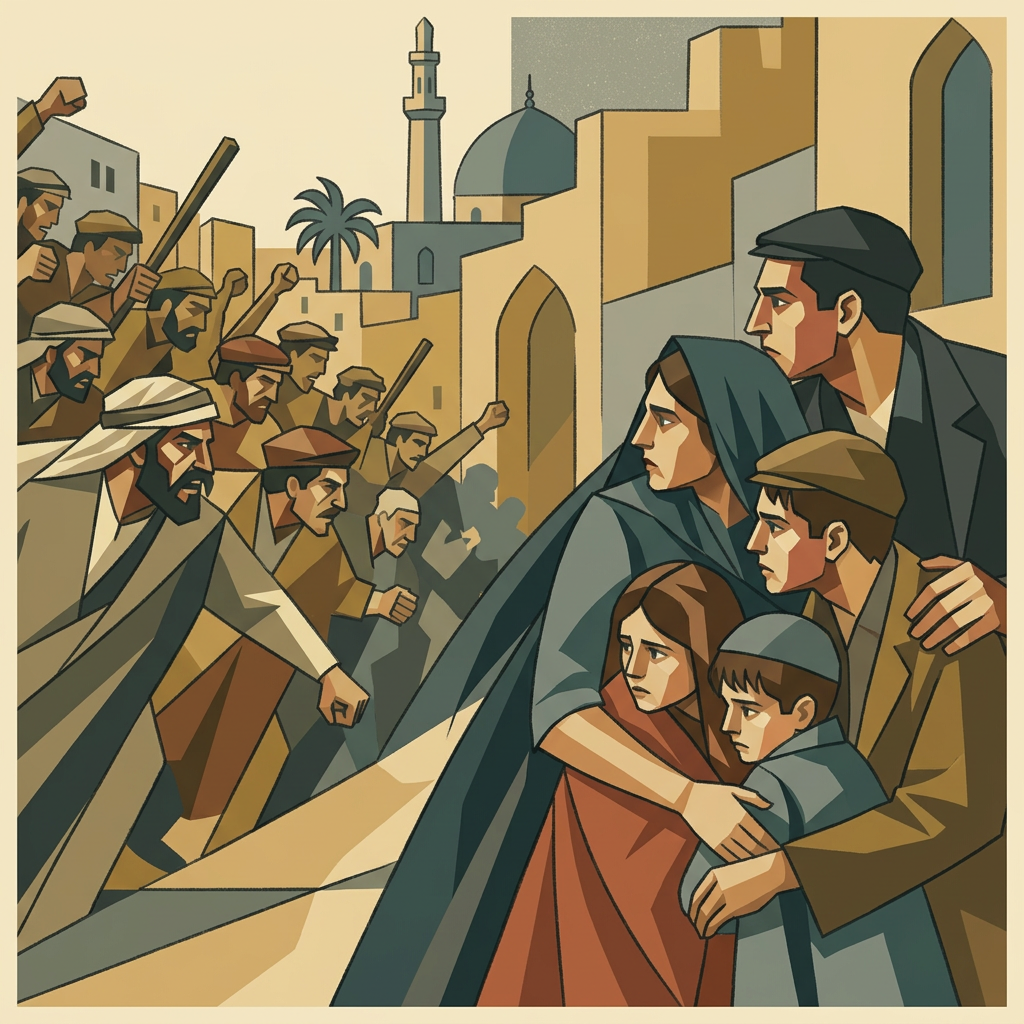
This is the point at which the wide story narrows to a single family, Gal Sharon's father's family, and names can be put to it. Gal's paternal grandfather was a man named Salman. His grandmother, a woman named Victoria. They were Shaharbanis, and they were, in the way of old and careful families, distant cousins of one another. They came not from Baghdad but from Basra, the great southern port on the Shatt al-Arab where the Tigris and the Euphrates run together toward the Gulf, and where the Jewish community was among the most ancient in all of Iraq. Victoria was born into the Alfi family, a clan wealthy and prominent enough that a square in Iran carries its name. Out of that same family would later come Yossi Alfi, who grew up to be one of the best-known storytellers and men of the theater in Israel. Salman kept a fabric shop. By the early nineteen forties they had two small sons: Yehezkel, born in nineteen thirty-nine, and Avraham, born in nineteen forty-one. They were, before the century turned on them, exactly the kind of settled, comfortable Iraqi Jewish family that assumed it would always be Iraqi. And then the Farhud reached even Basra. Its organized massacre fell on Baghdad to the north, but its violence rippled south to the port, where mobs turned on Jewish shops, and Salman, stubborn against Victoria's pleading that he stay behind his own door, went out anyway to open his store. He was stabbed in the street. He made it home bleeding, and he lived, but the lesson had been written into his own body, and the family understood that the Iraq they had thought was theirs was finished.
Not long after, Salman and Victoria left. They crossed the Shatt al-Arab into Iran, to the refinery city of Abadan a few miles downriver, meaning to wait out the danger, a year, perhaps two, and then to see. They stayed ten. In Abadan they slowly built a life again, in a large compound set around a central courtyard, where the children of many such refugee families played through the long days while the adults waited for the world to settle. Iran became, against every intention, the place where much of the family's life was lived for a decade, and it left its mark in the most intimate way a place can mark a family: in the languages its children spoke. The parents and the two oldest children went on speaking the Arabic of Basra to one another. The younger children, raised across those years in Iran, grew up speaking Farsi. It was a single household divided, by the border it had crossed, into two mother tongues.
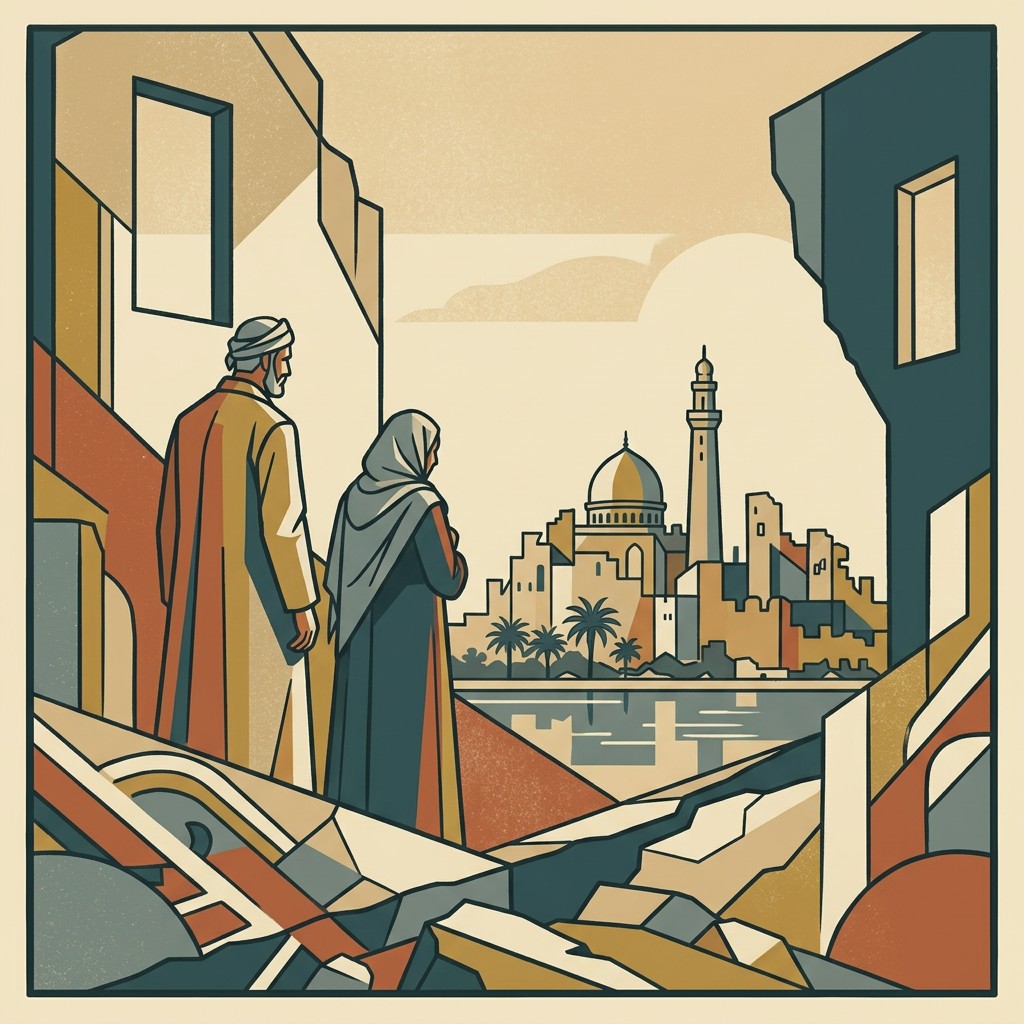
It was during those years in Iran that Victoria became something more than a mother waiting out a danger. She joined the work of the Movement. The Iraqi Zionist underground had followed its people across the frontier, and from inside the refugee world of Iran it carried on the same labor it had done in Baghdad, and one of the things it did was send Jewish children onward to Israel. Victoria helped with that work. And when the moment came, she did it for her own: in nineteen forty-eight, the year the State was founded, she put her two oldest sons, Yehezkel, then nine, and Avraham, then seven, onto the route to the new state, a train to a bus station inside Iran, the rest of the long journey coordinated from there by the Jewish Agency. They were children, and they went without their parents, ahead of their parents, because the whole purpose was to get them to Israel and to trust that the rest of the family would follow.
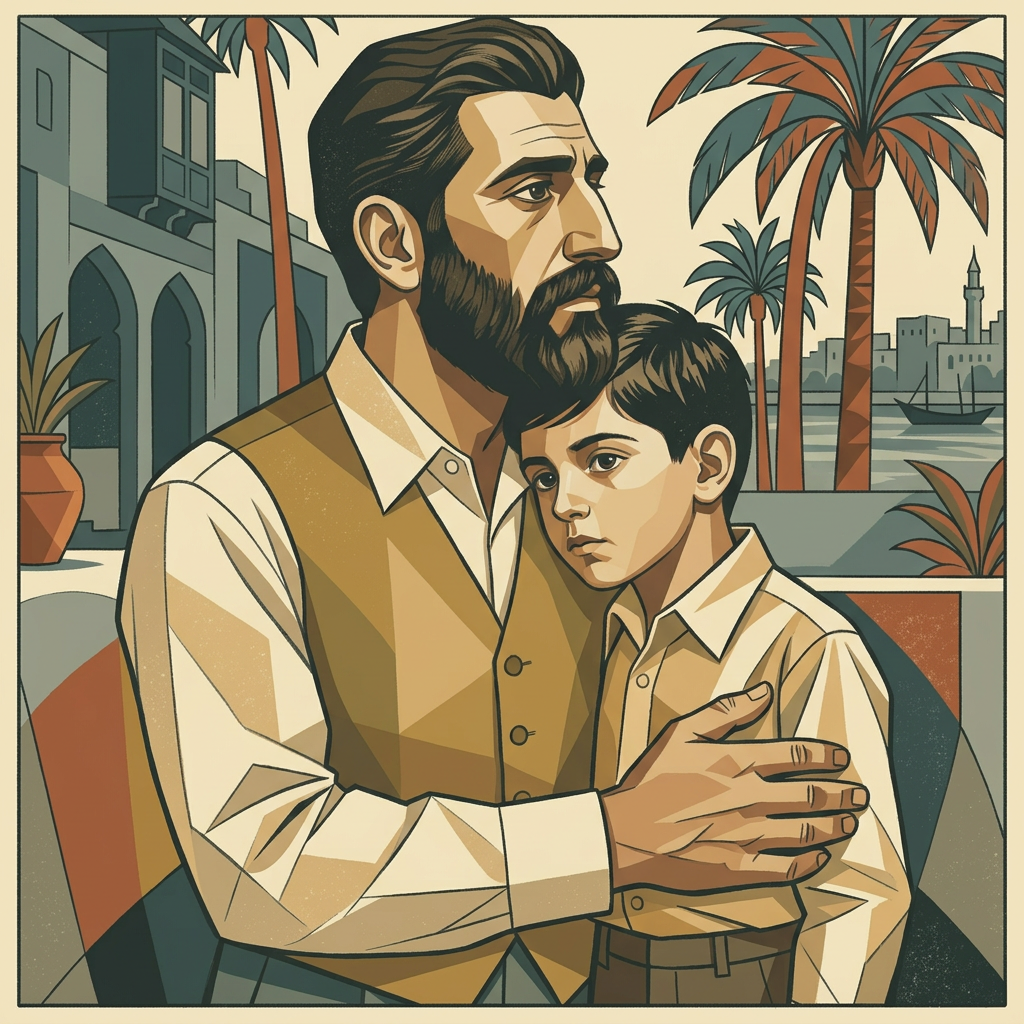
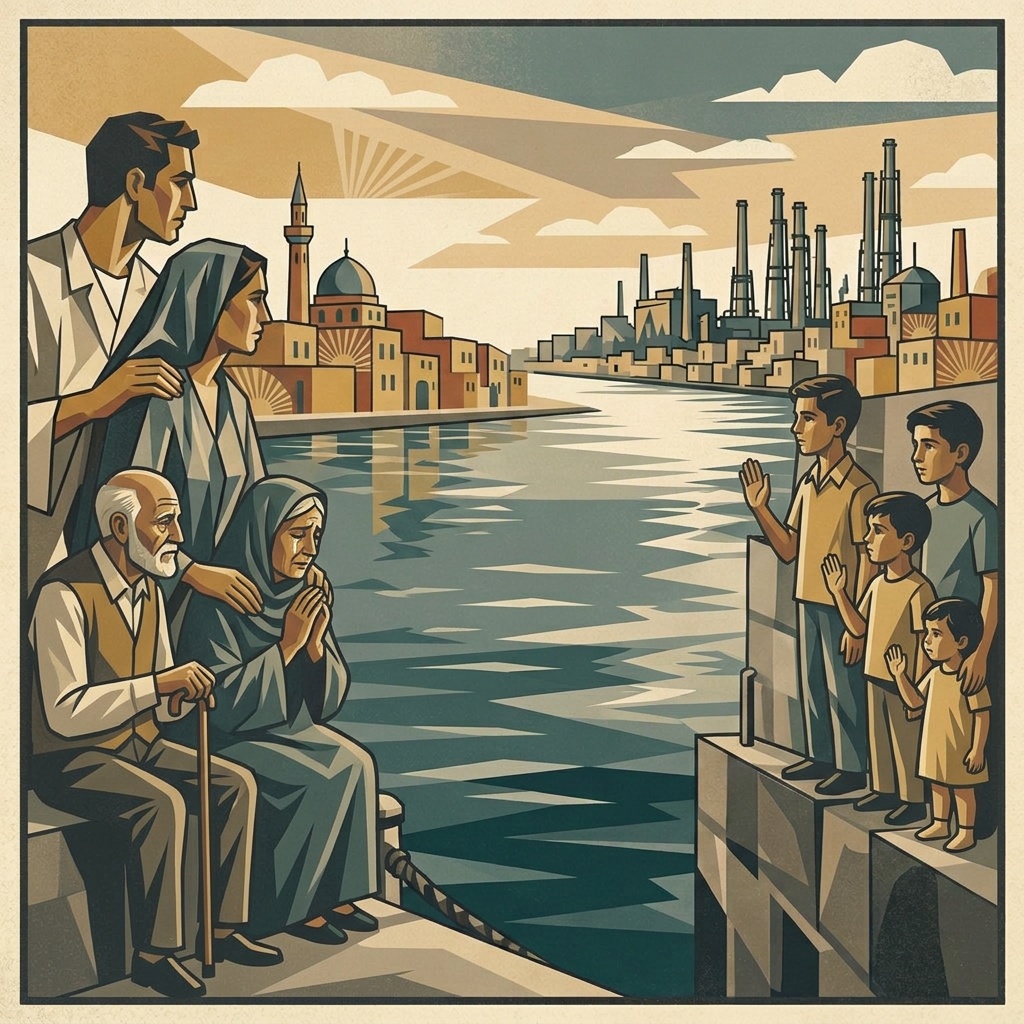
This is the second time in this book that a mother has put her children on a train in order to save them, and the two trains deserve to be set side by side. A decade before Victoria's children rode out toward Israel, and two thousand miles to the northwest, George Levy's mother, Lucie, had taken her son and her small daughter to a railway platform in Lippstadt and put them on a train out of Germany, and had stood on the platform and waved, and not been able to follow, and been murdered. The act was the same: a mother sending her children ahead, alone, down a railway line, because the country around them had become a thing to escape. But the two trains ran toward two different worlds. Lucie's train, in nineteen thirty-nine, ran toward a Holland with no Jewish state standing behind it, a Holland that would itself be overrun within the year. She had nowhere on earth to send herself, and no one was coming for her. Victoria's children rode toward a Jewish state that now existed: declared, defended, its doors thrown open to exactly these children by its very first laws, its agents working the route at the risk of their lives. That is the whole of the difference between the two trains, and it is the difference this entire book exists to describe. Because there was an Israel, Victoria could follow her children. And she did.
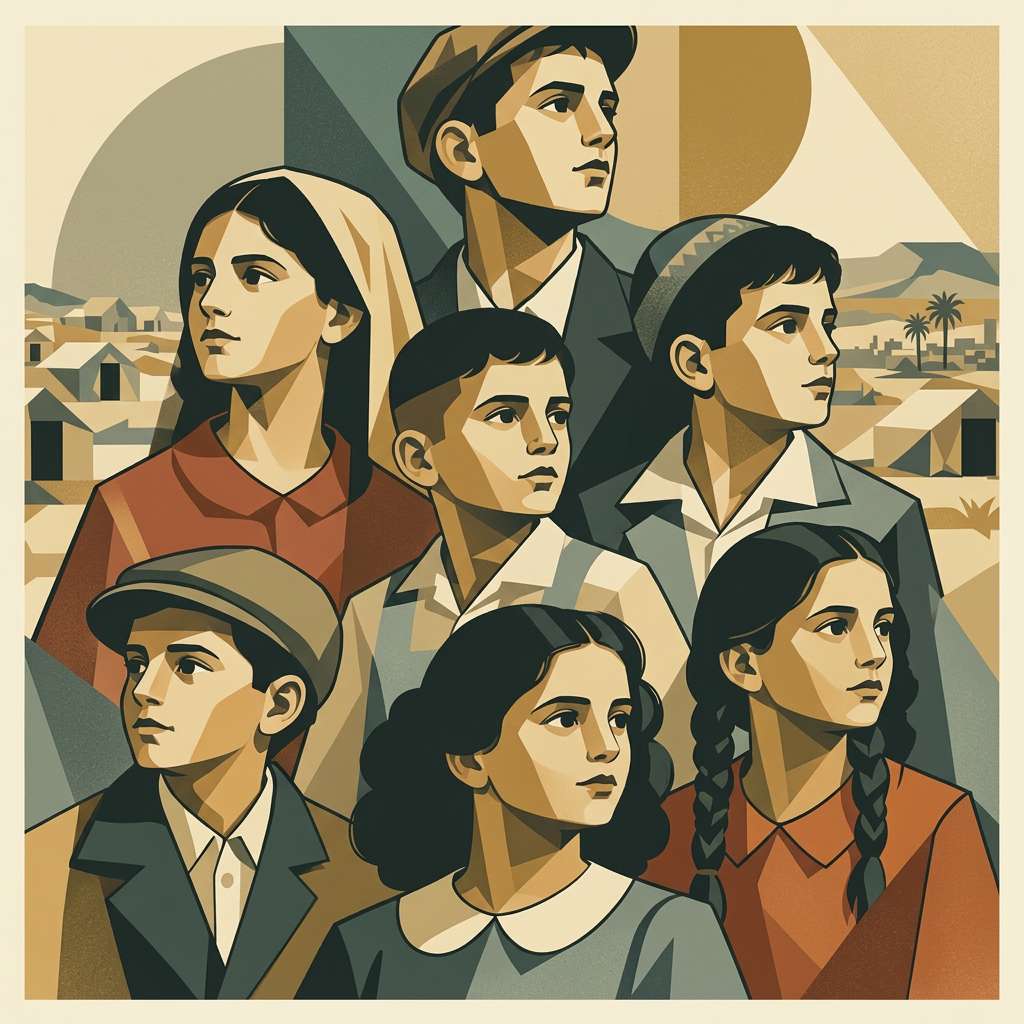
She came out of Iran afterward, by a different road, in nineteen fifty-two, four years behind her children. Making that last aliyah, Salman and Victoria were allowed to carry almost nothing out with them: a single suitcase, and the wedding ring on Victoria's hand. Salman managed one act of quiet defiance: he smuggled out a silver kiddush cup, and over that cup the family still recites the blessing of the wine to this day, a single whole object of home carried out across the wreck of a world. She reached Israel some time after her children had, and she did not know where they had been placed. The Jewish Agency had received them and set them on a kibbutz, but no one had told her which one. So she walked. She went from kibbutz to kibbutz, gate to gate, asking at each the same question: are there children here who came from Iran, out of Iraq, without their parents? It took her the better part of a month. And at one of them, at last, the answer was yes. The family began to reassemble itself on the soil of the new state, out of the pieces the century had scattered. In time the household settled into ordinary Israeli lives: Victoria kept the home, as she always had, and Salman, who had kept his fabric shop in Basra, took work in a flour mill and stayed there until he retired. One of their sons would, years later, set the whole journey down in a book of his own. The family no longer has a copy, but they know that it was written, which is its own kind of record.
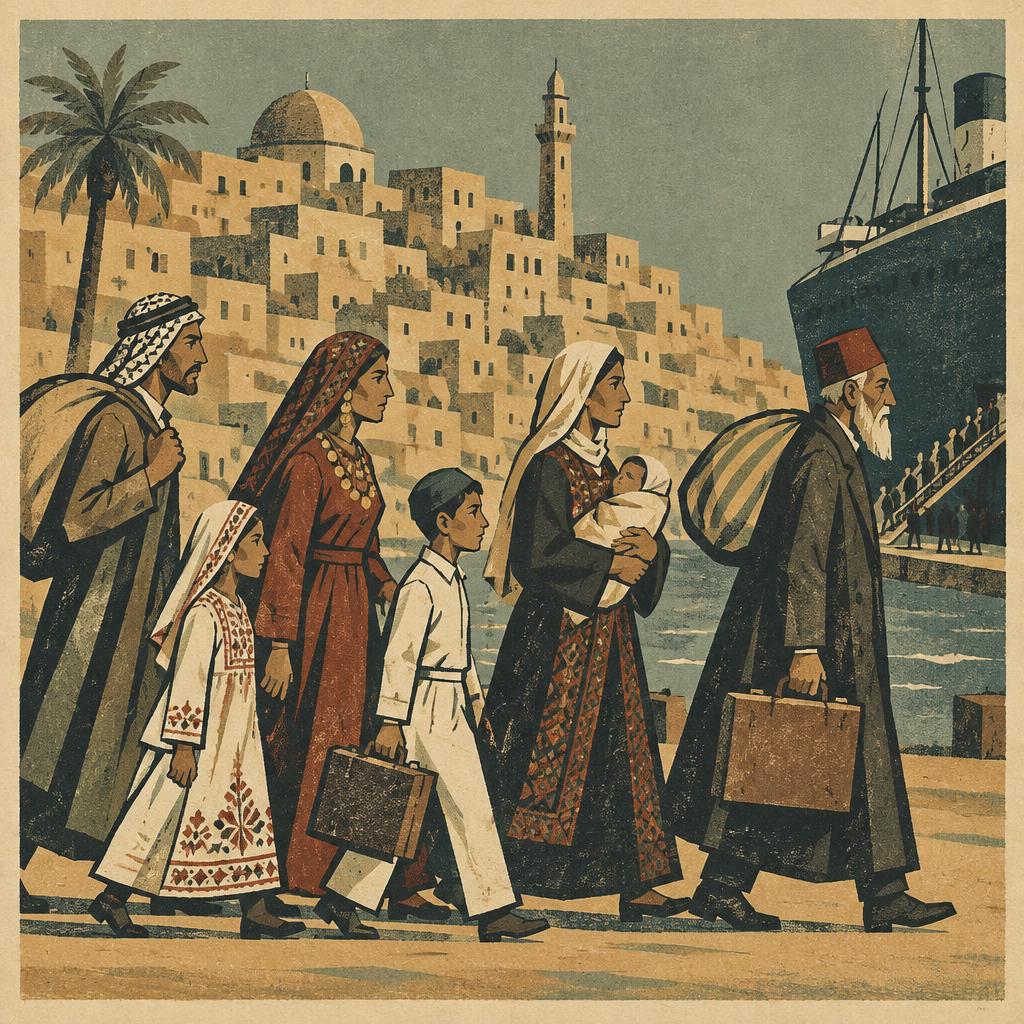
The kibbutz was where a great many of these children landed, and where Victoria's eldest were raised the rest of the way into Israelis. The Ashkenazi families already settled there taught them what the young country expected: agriculture and the work of the fields, modern Hebrew, and, in the smaller, sharper lessons, how to carry themselves, how to behave, how to be "civilized" in the European sense, which they believed was superior to the ways of the primitive brown Jews from the Arab countries. It was, beyond any question, a rescue, but a complicated one. The state was European in its leadership, secular, and in a desperate hurry, and it set about turning the children of Baghdad and Basra into Hebrew-speaking Israelis as fast as it could: Arabic discouraged, old names exchanged for new ones, the deep Mesopotamian inheritance quietly folded away. It cost something real.
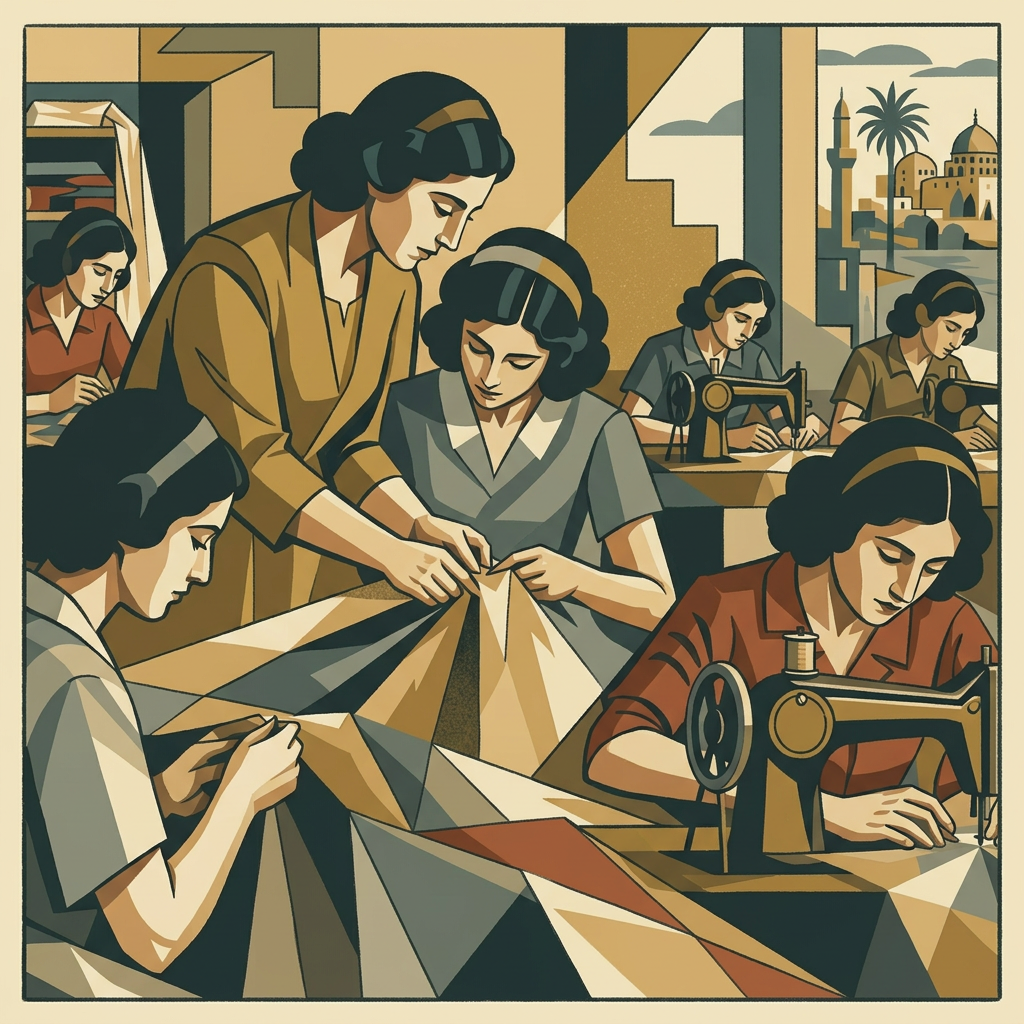
There is a piece of that exchange the family takes care to get right, because the easy version of the story gets it wrong. The grandparents' name was Shaharbani: a surname that means, simply, a person from Shareban, the small town in the Diyala country northeast of Baghdad that the Kurds call Şareban and the maps now label Miqdadiyah, where Salman's people had come from generations before they were ever settled in Basra. It was not a name anyone had chosen. It was a label of origin, the diaspora's way of fixing a family to a place. And the turn to Hebrew names, when it came, was not, whatever the sad version suggests, a matter of embarrassment. It was closer to the opposite of erasure. For most of their history the Jews had carried no fixed surnames at all. A man was so-and-so ben so-and-so, son of his father, in the old Hebrew way, until the European empires, Austria first, in seventeen eighty-seven, then Prussia and Russia, compelled the Jews under them to take permanent family names so that they could be taxed and conscripted and counted. To shed a surname the diaspora had imposed and take up a Hebrew one on the soil of Israel was, for a great many families, not the burying of an identity but the reclaiming of an older one. The clearest proof of it is in Gal's own family. Several of Salman's sons did not reach for an invented name at all. They became Ben Shlomo, son of Shlomo, the Hebrew form of their father Salman, which is the ancient patronymic itself, ben, son of, restored. Others took Sharony, a Hebrew word close in sound to the old Shaharbani but unmistakably Israeli.
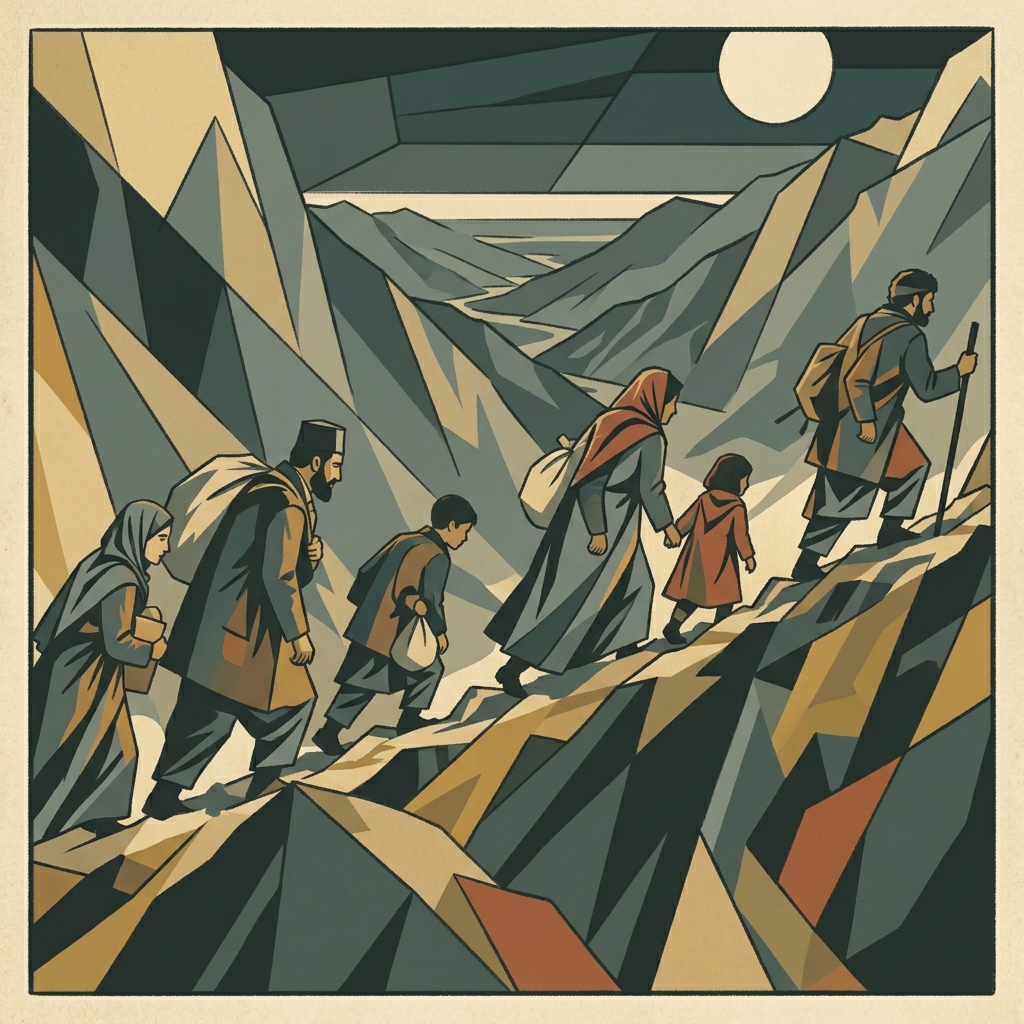
Gal came to it last, and by a different road. He kept Shaharbani through his childhood and through his army service, and only afterward, around two thousand nine, did he change it. He had wanted to since high school and had put it off for years, the way people put off the paperwork of their own lives. He wanted an Israeli name. He did not want to go through life labeled a man from Shareban: a town in Iraq he had never seen, could not have found on a map, and felt nothing for, while he himself was an Israeli and a Zionist who had just given the country years in uniform. In his own blunt formulation: "Shaharbani always felt too long, too Arabic, and said nothing to me." What he was looking for was a Hebrew name with an international touch, something that would work in Tel Aviv and also in a conference room in Europe, something a stranger could spell on the first attempt. He chose Sharon for no grander reason than that it was a shorter, cleaner form of the Sharony his uncles had taken. He is, to this day, the only Sharon in the family. His father and his brother are the last two who still carry Shaharbani.
There is a coda to the name that belongs here rather than later, because it is about Salman and Victoria and not about Gal. Whatever the exchange of Shaharbani for Sharon cost the family in memory, the grandparents themselves were never in any doubt about what the trade had bought. Asked, many years afterward, whether the family story, Basra, the Farhud, his grandfather stabbed in the street, his grandmother's hidden years in the Movement, had sat anywhere in his mind while he wore the uniform, Gal was honest enough to say that it had not. Army service in Israel is not an act of remembrance. It is a fact of life, universal and compulsory, done at eighteen by everyone you went to school with. "I never appreciated that as a soldier," he said. But he was clear about what it had meant to the two people who had come out of Iraq with a suitcase and a wedding ring. For them the sight of a grandson in that uniform was, in his word, the biggest pride, "the fact that we finally have such a strong army and we're defending ourselves." Salman had been stabbed in a street in Basra for the offense of opening his own shop, and there had been no one on earth whose job it was to come for him. Two generations later there was an army, and it was theirs, and their grandson was in it. That is the whole distance this book is trying to measure, and the family measured it without needing a book.
And then, in nineteen sixty, on the soil of Israel, Victoria had the child she had wanted all along. From the first her goal had been a Sabra, a child born in the land itself, native to it, belonging to no country but this one, and the boy born to her in nineteen sixty was exactly that. He was Gal's father, Arie. He grew up inside a household still divided among its languages: his parents and his oldest siblings in the Arabic of Basra, the middle children in the Farsi of Iran, and he himself, the Sabra, in Hebrew and Hebrew alone. He was, in a way the older children could never quite be, simply Israeli. And like a great many children of his moment, in the Israel of the nineteen sixties, he was faintly ashamed of the rest of it, of how old his parents were, of the Arabic they spoke in the street, of the unmistakable foreignness of a family carried out of another world. So he turned from the Arabic, and let it go. It is one of the quiet costs of the ingathering, repeated in a hundred thousand households: that the price of becoming wholly Israeli was so often the loss of where one had come from. There is a coda to Victoria's story, and the full shape of it surfaced only at the very end of her life. The family had always understood that she had helped get children out, that much was known. But when the soft-spoken old woman they had simply called Safta died, and they gathered at her grave, her cousin rose to speak: Yossi Alfi, of the same Basra Alfi family, by then one of the best-known storytellers in Israel, a man who had himself been carried out of Iraq as a small child. He had come to honor a hero. And what he told the mourners, what Gal heard for the first time standing at his grandmother's graveside, was how far it had gone: that she had not merely helped a few children onto the route, as the family had always pictured it, but had been one of the Movement in full, trusted with its work, exposed to its dangers, and had carried the whole of it in silence across an entire lifetime in Israel, never breathing a word, not to her children, not to her grandchildren.
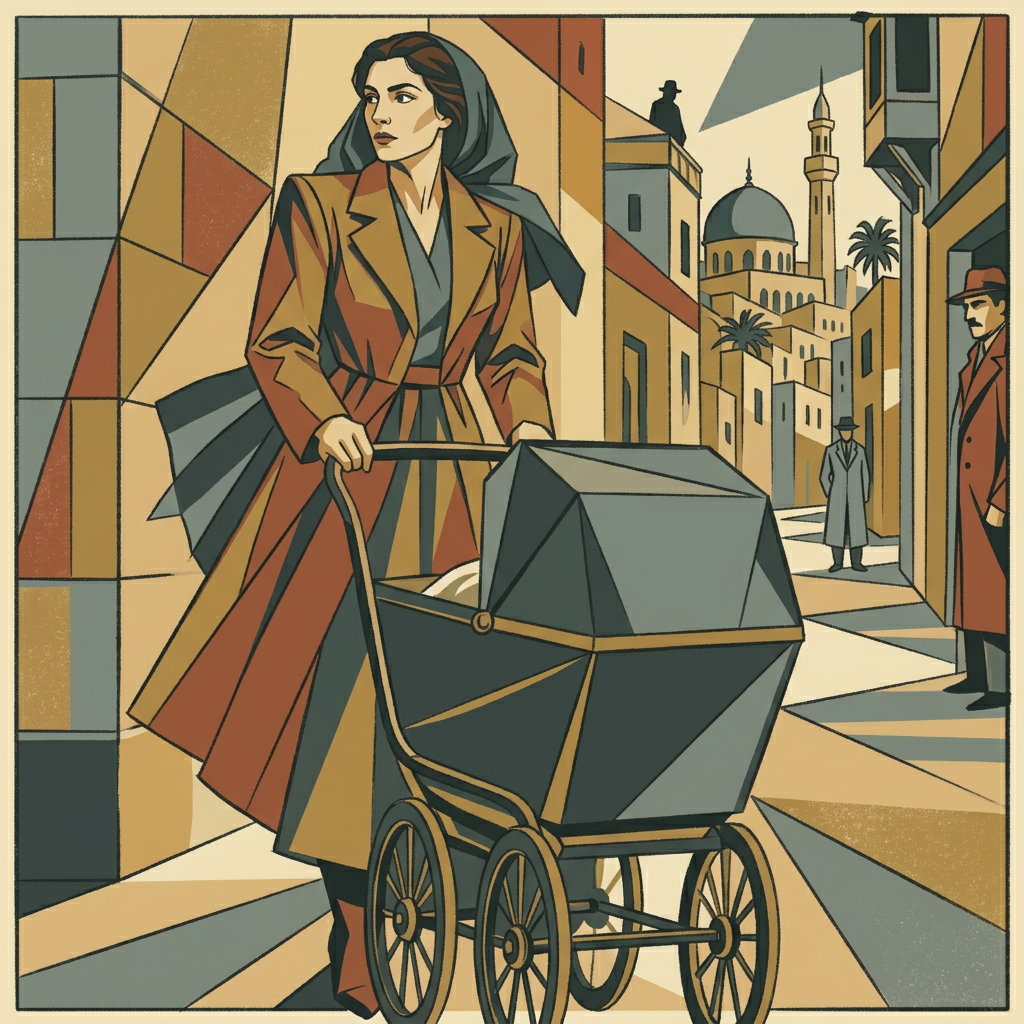
What, exactly, she did, the family has never learned, and most likely never will. That is not so much a gap in the record as it is the record itself: the Movement was built, deliberately and from the first, to leave no trace: its cells of three kept blind to one another, its members' names never written down, its work designed to be invisible even to the next room. What can be known is the general shape of what a young mother could do for the underground, because young mothers were among its most useful people, for the simple reason that the police, Iraqi or Iranian, did not think to search them. A woman pushing a pram could carry, beneath the blankets and the infant, a codebook, a forged exit visa, the dismantled parts of a shortwave radio. A household with a young family in it could host a cell meeting behind the ordinary cover of relatives coming to visit. The thin, telltale whine of a clandestine transmitter signaling Tel Aviv could be lost beneath the everyday noise of a child. A mother with a toddler on her hip, stopped and questioned, was only a mother with a toddler on her hip. Whatever Victoria's particular part was, it belonged to that hidden architecture, and it is enough, for the purposes of this book, to know that the old woman her grandchildren grew up beside had once been one of the people who held the escape route open.
Gal's mother's side came from the other river entirely. Her family had not arrived in any of the great twentieth-century waves of refugees, from Europe or from the Arab world. They had come up to the Land earlier and by their own lights: around nineteen sixteen, in the last years of Ottoman rule, before the Balfour Declaration, before the British Mandate, before the State of Israel was anything but a hope. They were among the small, stubborn, pious Jewish families who made their way back to the Land of Israel out of conviction rather than flight, when the country was a neglected province of a dying empire and Jerusalem was a dust-blown town of mixed religious quarters. They farmed. They endured Ottoman taxation and malaria and drought and the upheavals of two world wars. They were there, on the land, when the State was declared in nineteen forty-eight. By the time Gal was born, his mother's family had been rooted in the same earth for the better part of seventy years.
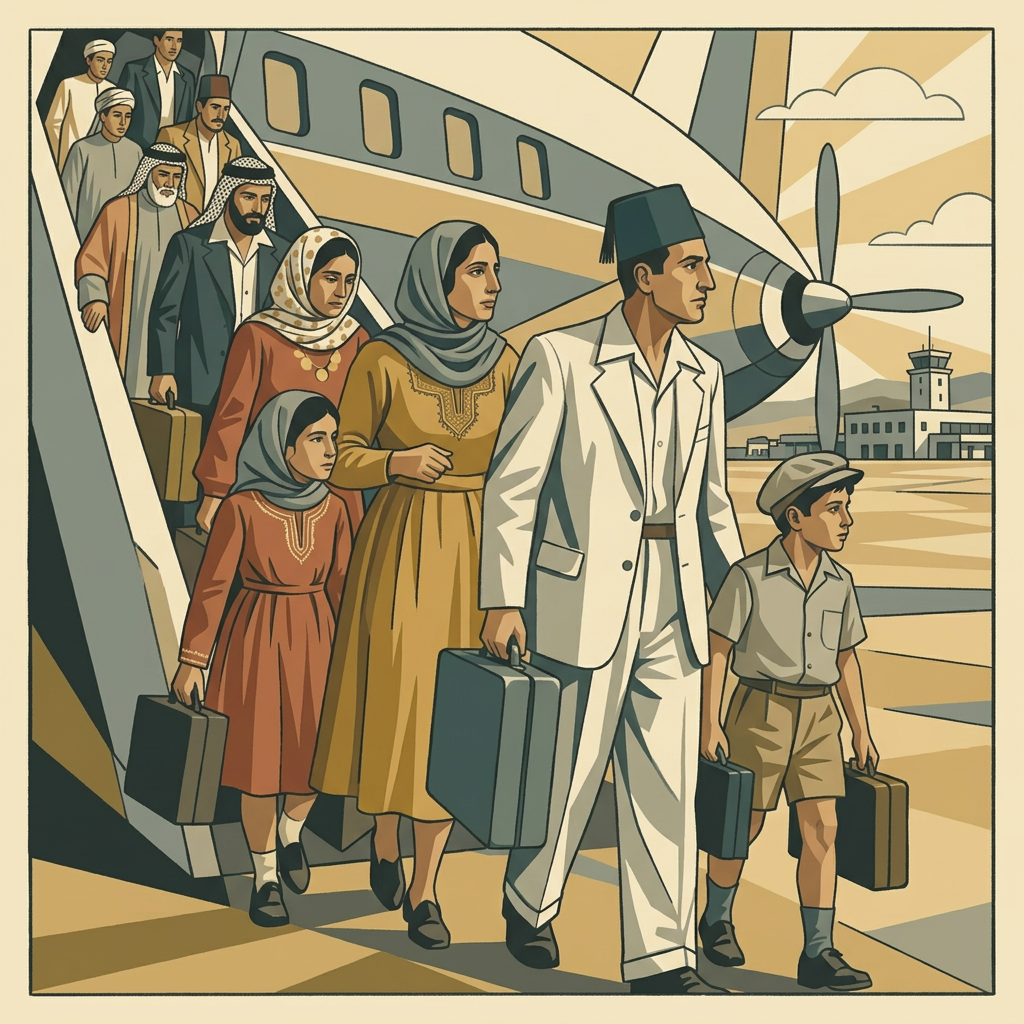
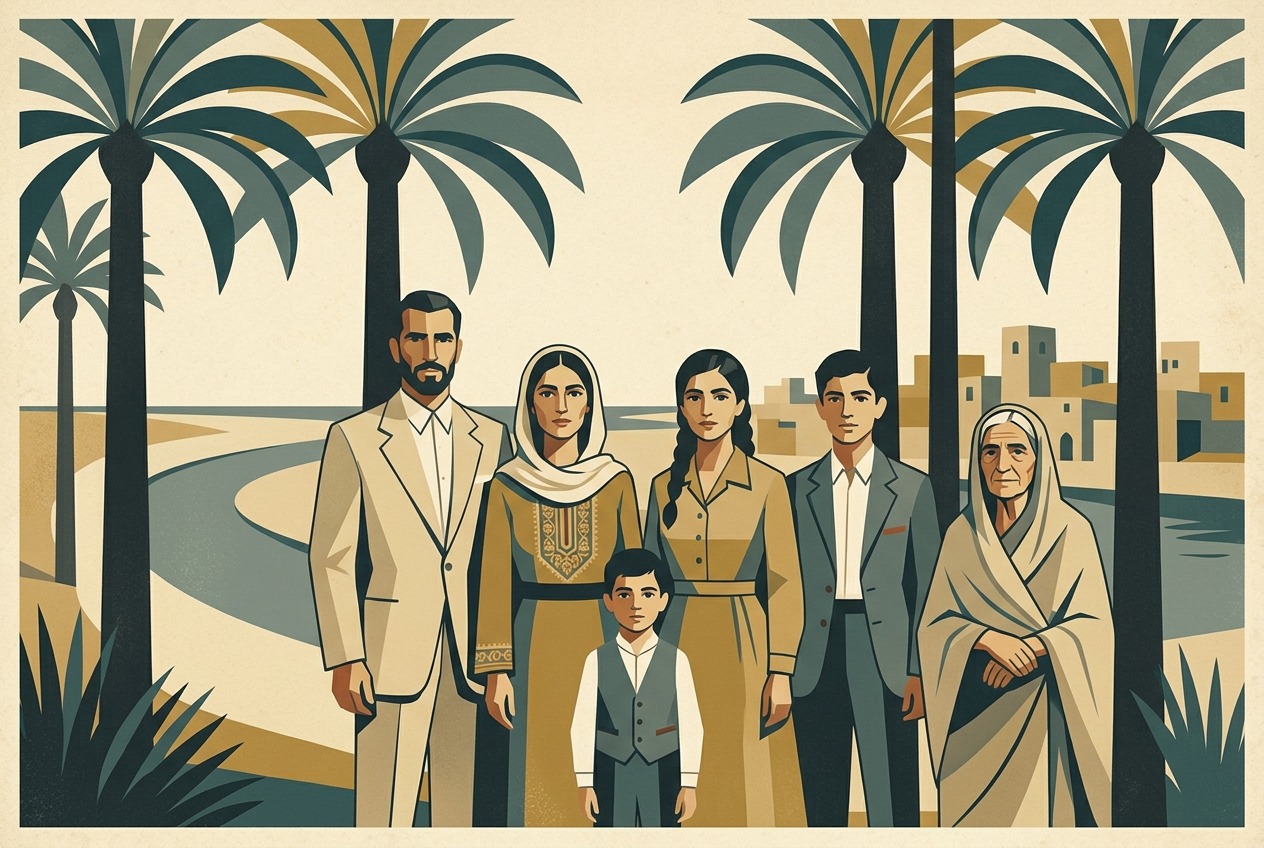
This is the meeting of histories that would, in the early nineteen eighties, produce a child in Tel Aviv. The Babylonian line and the old Yishuv line. The academies that redacted the Talmud and the stone houses of late-Ottoman Jerusalem. One side carried out of Iraq as children, by way of a decade in Iran. The other already home, and waiting, when the trains and the ships began to arrive. Three families, then, stand at the head of this book. A chain of rabbis who carried the name of a Christian patron as a disguise. A Westphalian merchant with the Iron Cross on his chest. A grandmother out of Basra, by way of ten years in Iran, who walked from kibbutz to kibbutz until she found her children, and who carried a secret out of the underground and all the way to her grave. Each of them was, in the middle of the twentieth century, living a different answer to the oldest Jewish question: the question of where, on the surface of the earth, a Jew is permitted simply to exist. Within a single generation all three answers would be tested in fire. And out of the three families, across the generations, would come the three lives this book has set out to braid: Shlomo, and George, and, the grandchild of that whole embattled generation, Gal.
Three Childhoods
The Boy in the Drawer
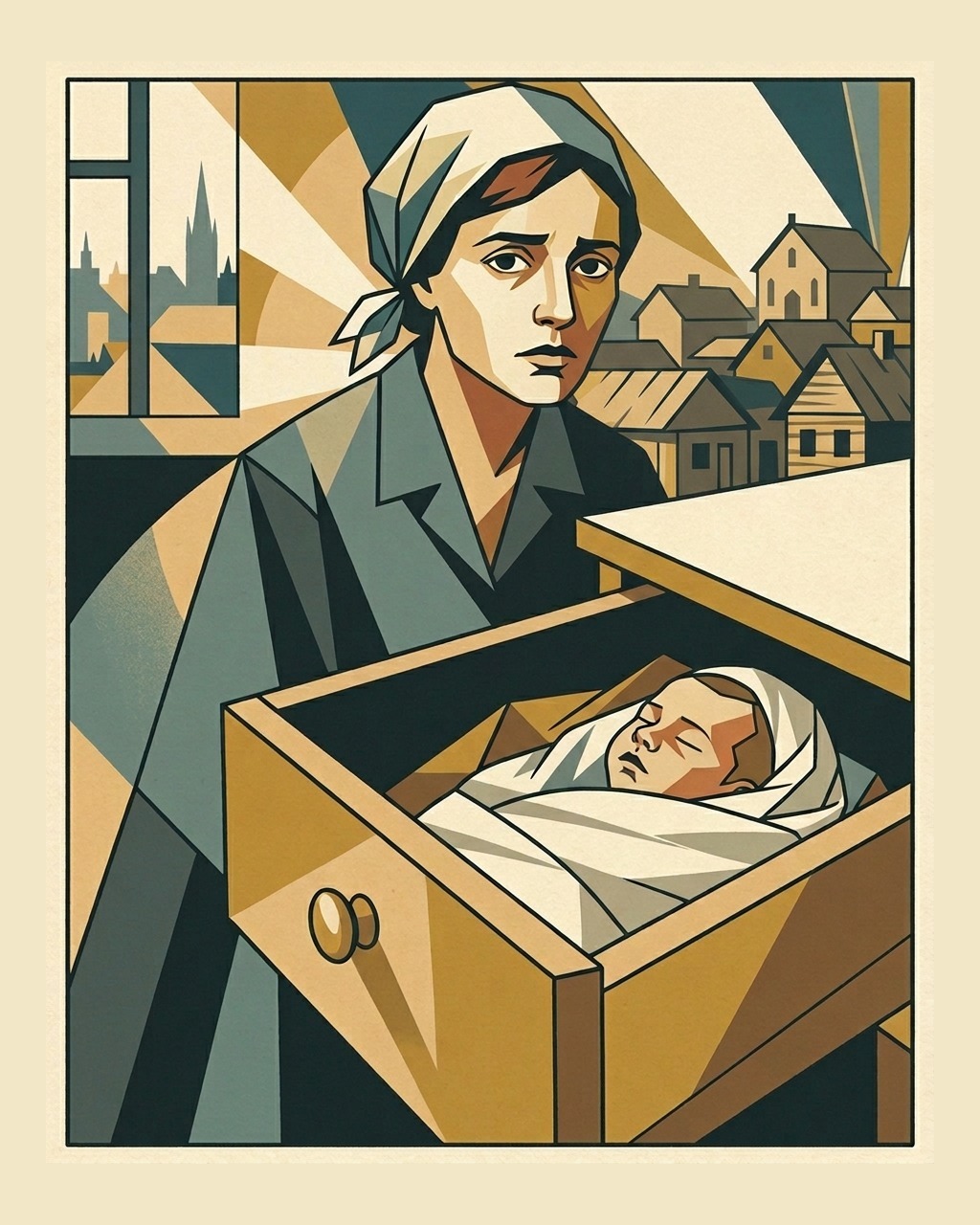
After the bridge, Yaakov did not go back to being a small-town rabbi. He had been changed. He could not stop thinking about water, and not just the water under the bridge. He thought about the Mediterranean. He thought about the harbor at Jaffa, where, he had been told, Jews from across Europe were arriving. He thought about a city up on a hill called Jerusalem, where his ancestors had prayed, where the wall of the Temple still stood. He decided, with the slow certainty of someone whose only weapon is faith, that he would not die in Ukraine.
The family, Yaakov, his young wife Babel, and the first of their children, fled to Kiev for safety. The pogroms there had been slightly less catastrophic than in the countryside, and the city was now nominally under Bolshevik control, which meant a certain rough order had returned. Yaakov took work where he could. He read. He waited.
It was now the early nineteen twenties. The Soviet Union was solidifying its grip. Lenin had legalized Jewish cultural life, Yiddish was officially supported, secular Jewish schools were established, anti-Semitism was prohibited by law, but Hebrew was banned as a "clerical" language, Judaism as a religion was steadily suppressed, and rabbis like Yaakov were viewed, fairly enough from the Bolshevik point of view, as ideological enemies. The emigration door, which had been wide open in the Russian Empire after the pogrom of eighteen eighty-one, was beginning to close. From nineteen twenty onward, leaving Russia would require Soviet permission, and Soviet permission was harder to get with each passing year.
Yaakov made his first attempt at emigration alone. He could not get visas for the family. He left Kiev for the border with foreign currency hidden in his socks, currency that was forbidden under Soviet law, currency he had saved or scrounged from European cousins for exactly this purpose. He intended to slip across, reach Constantinople, and from there to Palestine, and then send for the family.
He got as far as the town of Olevsk, in the Volyn region near the Polish frontier. There he was arrested by the local Soviet police. The currency in his socks made him, formally, a smuggler. The fact that he was a rabbi made the situation worse.
They put him in a cell. From his cell window, and this part of the story has the quality of a Yiddish folk tale, but it is what happened, he saw a Jewish boy playing in the courtyard of the building next door. He could tell the boy was Jewish from the way he wore his cap. He called down to him in Yiddish, the language no policeman in Olevsk would understand: Bring someone from the community.
The boy did.
Within hours the elders of Olevsk had arrived at the police station, in their dark coats and their long beards. They went to the commissar in charge. They told him, with grave dignity, that the Jewish community of Olevsk had been without a rabbi for some time. They had heard, they said, that a rabbi had been picked up by mistake. He was the rabbi they had been waiting for. Could he be released to them?
The commissar, who was new to his post and did not want to start his career by arresting a holy man on a paperwork technicality, agreed. The Jews paid no bribe and signed no papers. They simply walked Yaakov out of the police station. He became, that same week, the rabbi of Olevsk. He did not reach Palestine that year, or the next, or for a decade. The family stayed twelve years.
Olevsk was a small town near Kiev with a vibrant Jewish community, vibrant despite everything. By the late nineteen twenties it had four synagogues, including two Hasidic shtiebls. A Jewish secular school for children, founded in nineteen twenty-two. A marketplace where Jews and Ukrainian peasants traded under the same stalls. There had been pogroms in living memory: nine years before Shlomo's birth, in nineteen eighteen, the Jews of Olevsk had been forced to pay a "contribution" of thirty thousand rubles, and dozens of community members had been arrested. But by Shlomo's childhood the town had stabilized into a fragile rhythm. The men prayed in the morning. The women baked challah on Thursdays. The children learned the aleph-bet in the Jewish school in the morning and Russian arithmetic in the Soviet school in the afternoon. It was a doomed life, although nobody knew it yet. Within a generation almost every Jew in Olevsk would be dead, shot in the ravines outside town in nineteen forty-one by Einsatzgruppe C, on the orders of officers writing their reports in cool bureaucratic German. None of the people in this part of the story knew that yet. They were busy living.
Yaakov and Babel had eight children. The first ones came in Ukraine before the war. Several of them died: from infections, from epidemics, from the diseases of malnutrition that swept the Pale during and after the First World War. Of the early children, two, perhaps three, were buried before they were old enough to walk. Babel, who had been named to outwit the angel of death, watched the angel work on her own babies anyway. She and Yaakov kept trying.
On the second of January, nineteen twenty-seven, on her ninth live birth, Babel bore Shlomo.
The labor was bad. She had been weakened by years of grief and by the cold Ukrainian winters and by the particular exhaustion of being a rabbi's wife who was also a mother who was also a survivor. The baby came out blue. He had been deprived of oxygen for too long in the birth canal. He was not crying. He was not pink. Babel herself was hemorrhaging. The midwife. There were no doctors in the Jewish quarter of Olevsk that night, only the bobbe with her sterilized scissors and her boiled rags, had to choose. The baby looked dead. The mother might still live if the midwife concentrated on her.
She put the baby in a wooden drawer pulled out of the dresser, the way she would have set down a bundle of laundry to be dealt with later. There is a phrase in Yiddish for this kind of laying-aside: opgeleygt af tsuzeyts, set aside for later. The midwife turned back to Babel and worked to save her.
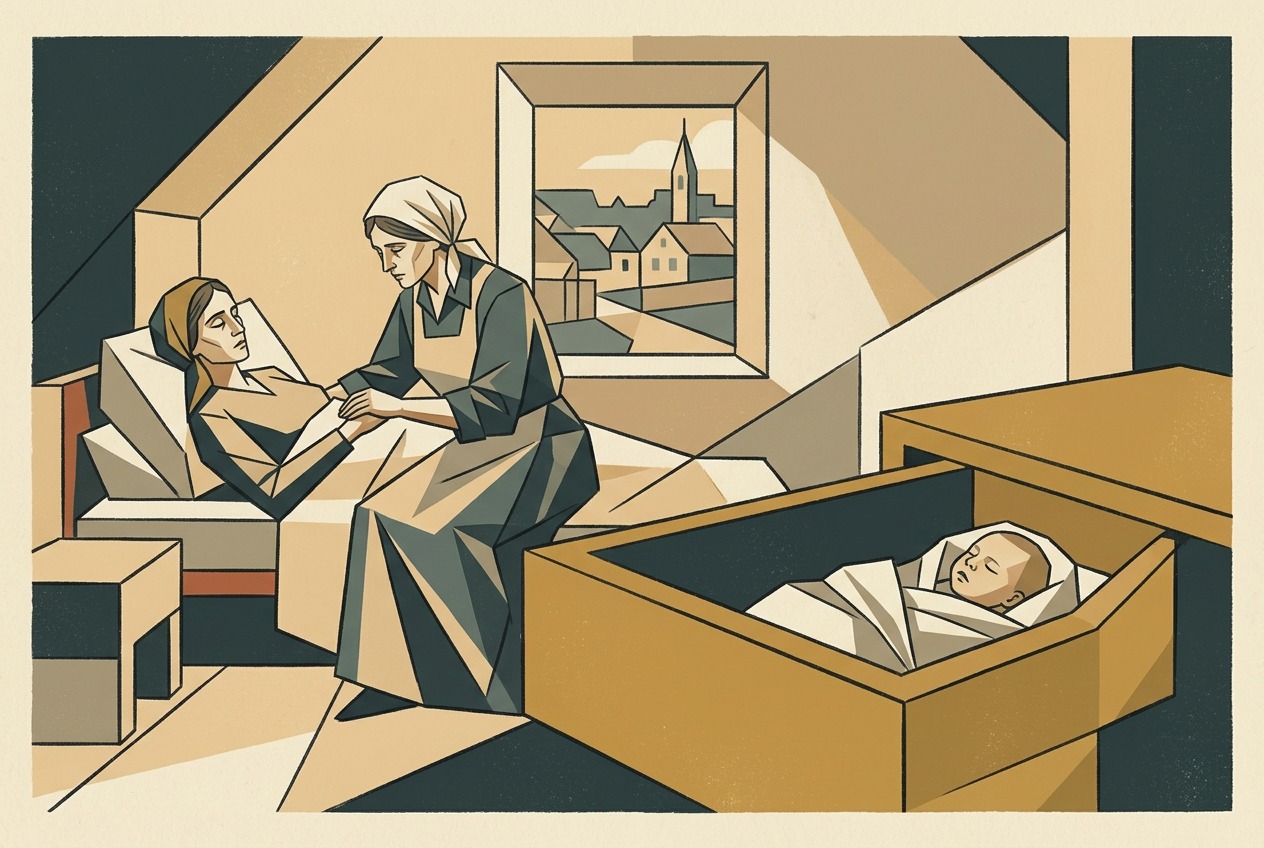
In the corner, in the drawer, the baby continued to breathe in small, uneven gasps. Someone, perhaps Babel's mother, perhaps a neighbor who had come in to help, leaned over the drawer and put a wet rag of sugar-water to his lips. They dribbled it in. They warmed him.
He turned pink. He cried.
Babel lived. The baby lived. His mother nursed him back over the weeks that followed, holding him on her own diminished body. He grew into a small but determined infant. He never stopped being small for his age. He never stopped being determined.
"This," Shlomo Lev would say, eighty years later, eyes fixed far away: "This was fate."
The drawer is, in retrospect, the central image of his life. To be set aside. To be presumed dead. To survive anyway, on sugar water and the inattention of luck, while the people in the room concentrated on what they thought was more important. To climb, eventually, out of the drawer and run.
There was an episode he remembered from very young, he was perhaps five, that became, in family lore, the moment that fixed his temperament. He had been playing outside the rabbi's house in winter, in the thick blue snow that piles up in central Ukraine. Something, a shadow, a sound, a movement at the edge of the field, frightened him so badly that he ran inside paralyzed, unable to speak. His mother could not get a word out of him. The fear had locked his jaw.
His grandmother sent for an old village woman, one of those women who in every shtetl knew the remedies the rabbis officially disapproved of but always quietly tolerated. The old woman came with a small wad of dough and a few sprigs of something dried. She muttered words over the child. She passed the dough three times in a circle around his head and tossed it into the fire. She spoke a phrase in Yiddish, kein eyin hara, kein eyin hara, no evil eye, no evil eye. The dough sizzled and was gone. The child's jaw unlocked. He took a deep breath. He started to cry. And from that day forward, Shlomo Lev would say, he was afraid of nothing.
It is impossible to know how literally to take this story. But it is also impossible, having met him, to disbelieve it. Some quality of fearlessness was already in the child by the time he was a small boy in nineteen thirties Ukraine. It would carry him up cemetery walls and water towers in Jerusalem. It would carry him into the dark with a charge of TNT on his back. It would carry him across hostile borders, through machine-gun fire, into a Cairo prison and back out again. It was, in some sense the foundation of everything that followed.
In nineteen thirty-three, when Shlomo was six, the visas came at last.
It is hard, in retrospect, to overstate how fortunate the timing was. The Stalinist deportations of Soviet Jews were a few years away. The Great Famine in Ukraine, the Holodomor, in which between three and seven million Ukrainians starved to death between nineteen thirty-two and nineteen thirty- three, was already gathering force in the countryside around Olevsk. The Nazis had just come to power in Germany. The window for a Jewish family to walk out of the Pale was closing fast. It would, within ten years, close entirely.
Yaakov got the family's papers from a relative in Palestine, who pulled strings with the British Mandate authorities. They packed what they could. They sold what they could not. They traveled by train from Olevsk south to Odessa, the great Black Sea port from which generations of Jews had emigrated, where Sholem Aleichem had once sat in cafes and where Isaac Babel had walked the docks. From Odessa they boarded a ship bound for Palestine.
The ship sailed through the Bosphorus and through the Dardanelles and into the Aegean. It crossed the Mediterranean. Twenty-five years earlier, Yaakov's father had read the prayer for the Tenth of Tevet, the fast day commemorating the siege of Jerusalem by Nebuchadnezzar, to a congregation of stooped men in a synagogue in central Ukraine. Now Yaakov stood on the deck of a third-class steamer and watched the white hills of Jaffa rise out of the morning haze.
They had come home, after five hundred years, to the Land of Israel.
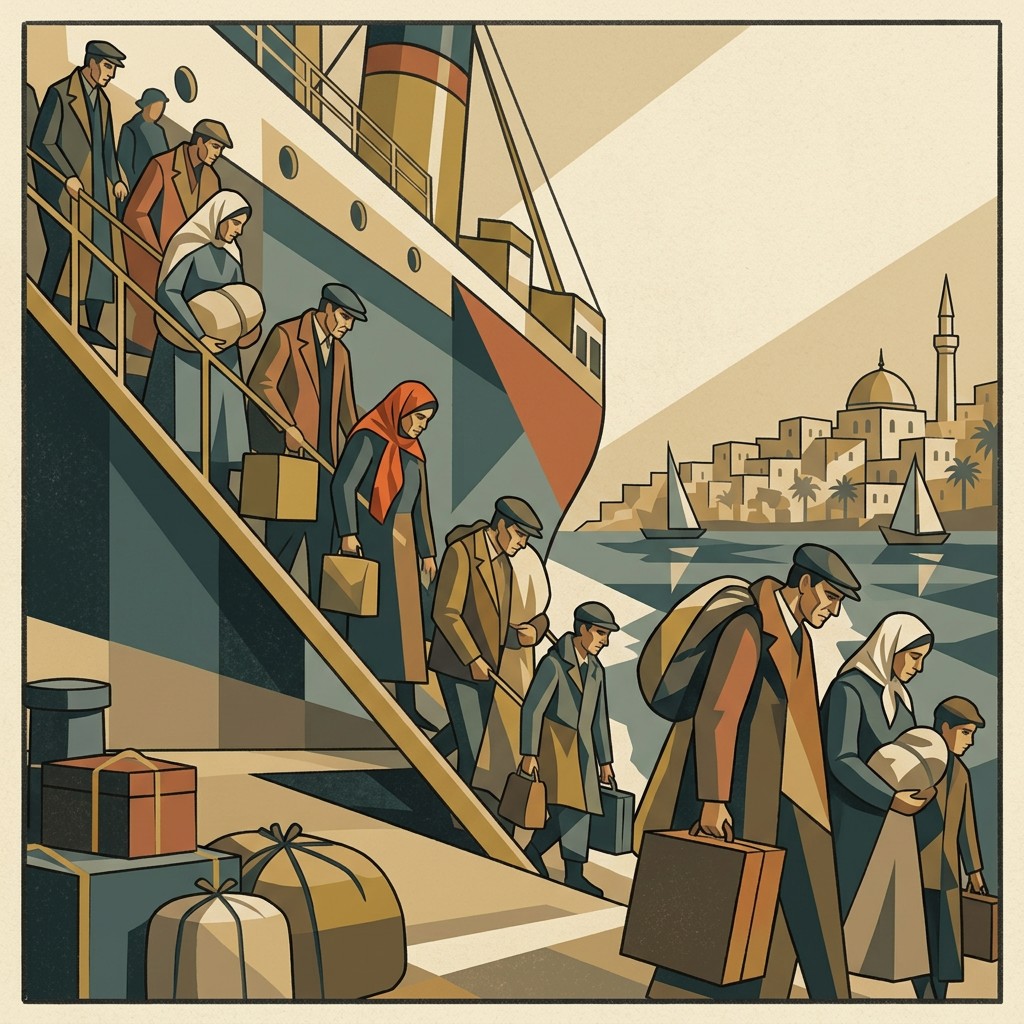
They were a single plotline in what was becoming the most extraordinary immigration story in modern history. The First Aliyah, in the eighteen eighties, had brought tens of thousands of Eastern European Jews to Ottoman Palestine, mostly farmers and idealists fleeing the Russian pogroms of eighteen eighty-one. The Second Aliyah, between nineteen oh-four and nineteen fourteen, had brought another wave: younger, more secular, more radical, many of them socialists who would build the first kibbutzim. The Third Aliyah, after the First World War, came in fleeing the Russian Civil War. The Fourth Aliyah, in the mid-nineteen twenties, came from middle-class Polish Jews squeezed out by anti-Semitic economic legislation. The Fifth Aliyah, which the Levitsky family was joining in nineteen thirty-three, was driven by the rise of the Nazis in Germany and the deteriorating conditions across Eastern Europe. By the end of the decade it would bring more than a quarter of a million Jews into the country, doubling the Jewish population of Palestine.
In Hebrew, the word for immigration to the Land of Israel is Aliyah, ascendance, going up. It is the same word used for being called to read from the Torah in synagogue. It is not a neutral movement, like the English "emigration." It is an ascent. To leave for Israel is, in the language of the people, to rise up.
Yaakov disembarked at Jaffa with his wife and his surviving children, carrying everything they had in trunks, kissing the ground in the half-comic, half-serious way of Jews from the diaspora who have read about doing so in old books. Israel is the only nation in the world founded around the idea that immigration is not a problem to be managed but an ascent to be celebrated.
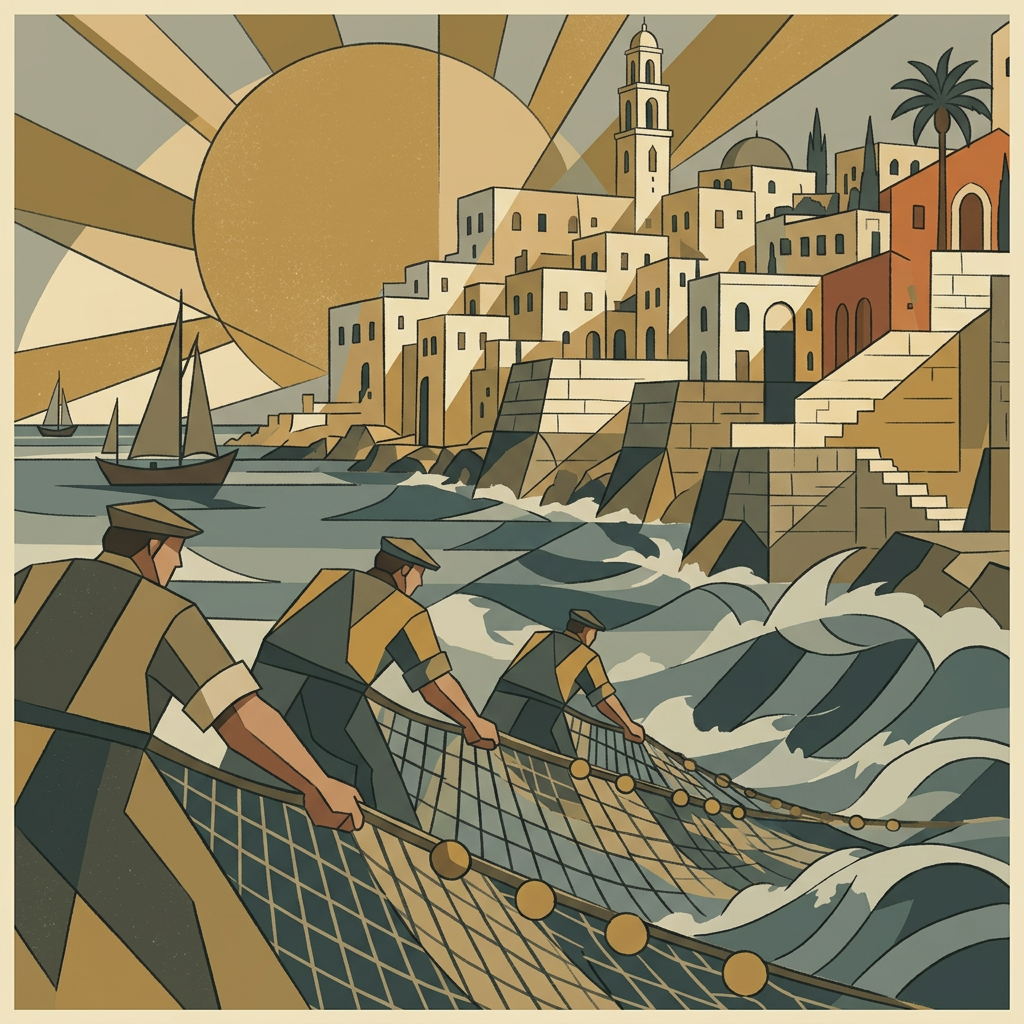
They settled in the new Jerusalem neighborhood of Givat Ram, on the western edge of the city. Yaakov opened a small print shop: the trade he had taught himself in Kiev, where Hebrew printing had been one of the few legitimate Jewish trades under the early Soviets. He kept doing rabbinic work on the side. People came to him with questions of kashrut and marriage and bereavement. The family settled into the rhythm of life in British Mandatory Palestine: ration cards and Hebrew lessons, the long Sabbath afternoons, the eucalyptus trees the early Zionist pioneers had planted to drain the malarial swamps.
The chain of rabbis was, for the first time in five hundred years, home.
Free-Range in Givat Ram
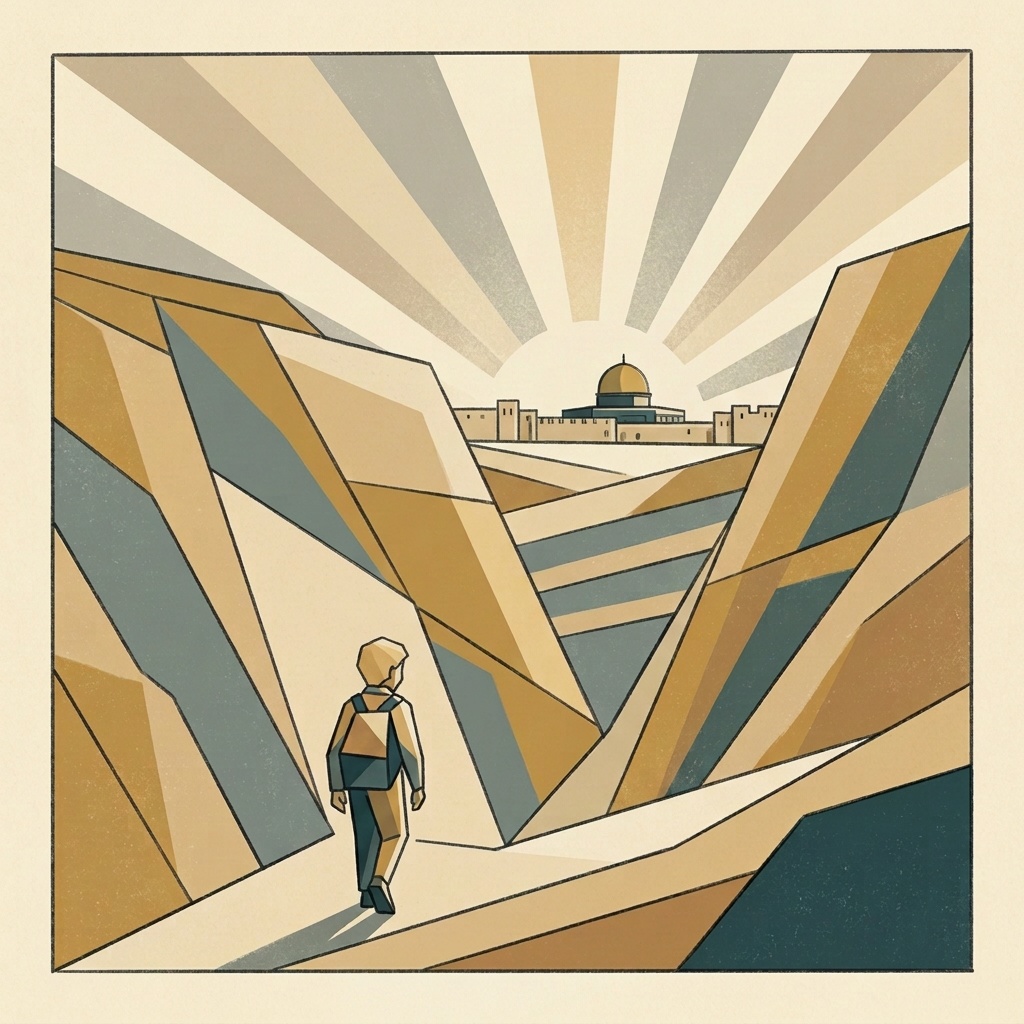
The Palestine into which Yaakov Levitsky and his family stepped in nineteen thirty-three was not, despite the maps later drawn by enemies, an Arab country occupied by foreign invaders. It was a piece of the rotting Ottoman Empire that the British had taken in nineteen seventeen after General Edmund Allenby's army marched into Jerusalem, the Holy City surrendering to him on foot, the British general entering the Damascus Gate humbly so as not to ride in higher than Christ.
The British held the territory under a League of Nations mandate that was, formally and explicitly, designed to fulfill the Balfour Declaration of November, nineteen seventeen: the famous letter from the British Foreign Secretary Arthur Balfour to Lord Rothschild stating that "His Majesty's Government view with favour the establishment in Palestine of a national home for the Jewish people." The mandate's preamble, ratified by the League in nineteen twenty-two, included the Balfour language word for word. The Jews of Palestine, the Yishuv, the "settlement", were therefore, in international law, the legitimate beneficiaries of an internationally sanctioned project. They were not occupiers. They were the intended occupants.
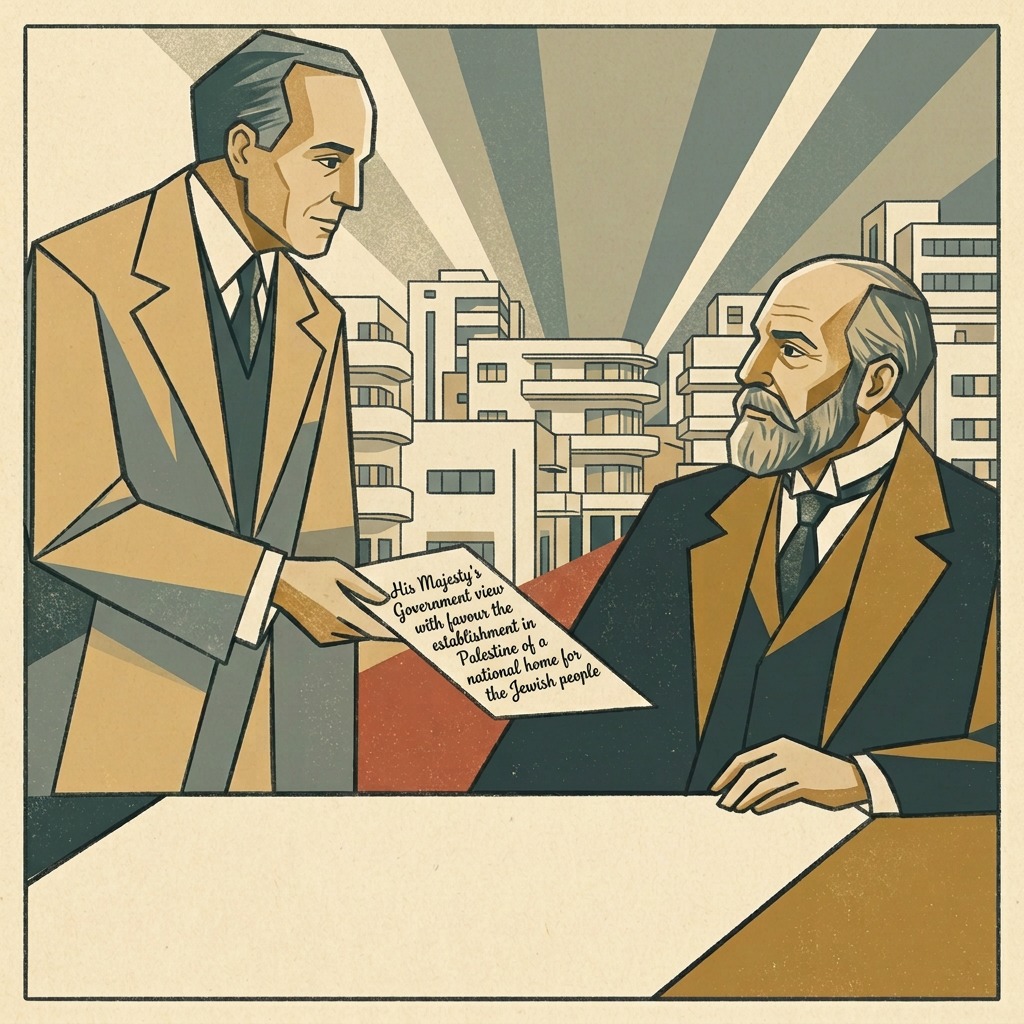
But law is one thing and reality is another. The British, by the time Shlomo arrived as a six-year-old, had been governing the territory for fifteen years and had grown allergic to the contradictions of their own promise. They had also promised the Arabs a great Arab state stretching from the Hejaz to Damascus, and they had reneged on that. They wanted oil. They wanted access to the Suez. They wanted, above all, quiet, and quiet in Palestine was increasingly elusive.

The Jews of the Yishuv, when the Levitsky family arrived, numbered perhaps two hundred and fifty thousand. They were concentrated along the coast, in Tel Aviv, the new white city of Bauhaus apartment buildings rising out of the dunes north of Jaffa, and in Jerusalem, which had been Jewish-majority since the eighteen sixties. They were a tiny minority in a land of about a million Arabs. But they were a living minority. They had drained the malarial swamps of the Hula Valley. They had planted citrus orchards along the Sharon plain. They had revived Hebrew, a language that had been dead in the mouth, kept alive only in written word, for nineteen centuries, and turned it into a tongue spoken by children on the playground. The poet Hayim Nahman Bialik had written Hakhnasini tahat knafekh, Take me under your wing, in Modern Hebrew in nineteen oh-five, and now an entire generation of children, Shlomo among them, would grow up taking the language for granted. Givat Ram lay on the western fringe of the city, on a low ridge above the Valley of the Cross. To the south, you could see the Monastery of the Cross, said to be built on the spot where the tree was cut from which the Crucifix was made. To the north, the new buildings of Hebrew University were rising on Mount Scopus. To the west, the hills falling away toward the coast. Today the Knesset and the Israel Museum stand in Givat Ram, but in the nineteen thirties it was scrub and scattered houses and a cemetery and a single tall water tower. The Levitsky house was at the edge of the cemetery. Its garden wall ran along the cemetery a single brick wide. There were seven children at home now: Shlomo's older brothers and sisters, and Shlomo himself the youngest. Yaakov, between the printing press and the rabbinical responsibilities he could not stop himself from continuing to take on, was the central figure of the household. He was a small, intense man with a black beard who would, before the decade was out, suffer a stroke that left him unable to walk properly. Babel did most of the actual raising of the children. She had not had much girlhood. She had not had much rest. The eldest were now teenagers. The youngest, Shlomo, was six. With seven mouths to feed and a husband whose health was beginning to give way, she did not have the surplus attention to monitor where the youngest child went on any given afternoon. He grew, he would say later, like a free-range chicken. The cemetery wall was the first of his amusements. It was a real Jewish cemetery, with gravestones leaning at the slight angles old stones acquire, and the kind of dry vegetation that springs up between Jewish graves where you are not supposed to plant flowers. The wall was just wide enough for a child's foot. He ran along it as if it were a sidewalk. The neighbors would see the small blond shape: he was very blond as a small child, blond enough that strangers sometimes thought he was a Polish goy who had wandered into the Jewish neighborhood, flickering along the cemetery wall, and they would shout up at him to come down. He never came down. He had taken the measurement of the wall with his feet and trusted his feet. The water tower was the second of his amusements. It was a five-story municipal water tower, an iron lattice with a great round tank on top, perched on the highest point of Givat Ram. The municipality had blocked off the iron ladder with little windows and warning signs, on the theory that this would deter the children of Jerusalem from climbing. The municipality was wrong.
He found a way through the windows. He climbed the ladder. He ran around the rim of the tank, where you could see, on a clear day, all the way to the hills behind Bethlehem.
The neighbors below would scream up at him. He could see their mouths moving. He could not, at that height, hear the words. He would wave.
Once he fell, badly. He came home with his arm bent at an angle. His mother did not raise her voice. She was, by then, fluent in the small disasters of being Shlomo's mother. She wrapped the arm. The bone set crooked but well enough that he could keep climbing.
He was, his older siblings noticed, fearless in a particular way that did not look like recklessness. He was not trying to impress anyone. He was not trying to outdo a friend on a dare. He was simply, organically, not afraid. The cliff edges did not scare him. The dogs did not scare him. The British soldiers, patrolling Jerusalem in those years in their khaki shorts and their distinct helmets, glancing down at the children playing in the dust, did not scare him.
The fear had been chased out of him at age five by an old village woman in Ukraine. The fear, as he would later say, never came back.
There was, in those years, a great deal to be afraid of, even for a brave child.
The Arab Revolt began in nineteen thirty-six. It would last for three years and would, in many ways, set the stage for everything that came after. The immediate cause was a Jewish refugee crisis. Jewish immigration to Palestine had risen sharply with the Nazi rise to power in nineteen thirty-three: by nineteen thirty-five, more than sixty thousand Jews were entering the territory each year, fleeing Germany and Austria and Poland. The Arab population of Palestine, politically led by a clerical figure named Hajj Amin al- Husseini, the British-appointed Grand Mufti of Jerusalem who would later spend the Second World War in Berlin as a propagandist for the Third Reich, saw this immigration as an existential threat. In April of nineteen thirty-six, a general Arab strike was declared. Within weeks it had become an armed insurrection.
For three years Jewish convoys were ambushed on the roads. Jewish farms were raided. Jewish travelers were pulled out of buses and shot. Bombs went off in Jewish markets in Jerusalem and Haifa. The British eventually crushed the revolt, with great brutality, by nineteen thirty-nine, they killed perhaps five thousand Arabs and imprisoned tens of thousands more, hanged scores in the Acre prison, destroyed entire villages, but the price they extracted from the Jews for that protection was high. In May of nineteen thirty-nine, with another world war looming and the British anxious to keep the Arabs of the Middle East on their side, they issued the infamous White Paper. The document limited Jewish immigration to Palestine to fifteen thousand people a year for the next five years, after which it would cease entirely except with Arab consent. The Jews of Europe, in May of nineteen thirty-nine, were six months away from the German invasion of Poland. The door was being slammed.
Shlomo was twelve when the White Paper was issued. He understood what it meant. Every Jewish child in Mandatory Palestine, in those years, understood. They were reminded of it at school. They were reminded of it at home. They were reminded of it at the underground Hagana meetings their older brothers and sisters were starting to attend.
The Hagana, "the Defense", had been founded in nineteen twenty to protect Jewish communities from Arab attack, in the wake of the riots in Jerusalem the year before. By the nineteen thirties it had become the main underground Jewish military force of the Yishuv. It was illegal in British eyes: the Mandate authorities allowed Jews to bear arms only in officially sanctioned defense units, and the Hagana was not sanctioned. But it operated with the tacit knowledge of nearly every adult in the Jewish community. Boys joined at sixteen. Girls joined too. Training was at night, in citrus groves and abandoned cisterns. By the late thirties, with Jewish refugees being shipped back to Europe and World War Two on the horizon, the Hagana's leadership realized that it would need not just a part-time militia of farmers but a full-time strike force.
That strike force, when it came into being in May of nineteen forty-one, would be called the Palmach. Shlomo would join it before his seventeenth birthday.
But that was still some years away. For now he was a small blond boy in Givat Ram, running along cemetery walls. He went to the local Tahkemoni religious school. He learned Torah and Hebrew grammar and rudimentary English. He learned the Torah the way a child raised in a rabbinical line learns the Torah, as a real geography, where the cave of Machpelah was just down the road in Hebron and Bethel was a hill on the road to Jericho. He learned the Megillot by heart. He learned the names of the kings of Judah and the names of the prophets.
In the afternoons, while his older siblings were beginning to disappear into the underground meetings he was still too young to attend, he went to the cemetery wall. He climbed the water tower. He ran. He was small for his age, skinny, blond, and absolutely fearless about heights. None of the adults in his life could imagine what use that would be. The country itself was about to find out.
A German Boyhood
At the same hour that Shlomo Lev was running along the cemetery wall in Givat Ram, climbing the water tower, growing up free-range and fearless in a city that was becoming more Jewish by the month, George Levy was a small boy in Lippstadt watching his own country take his boyhood apart, one piece at a time.
The two boys never met as children, and for the long span of their lives that followed, each lived without the other. They were born three years apart, Shlomo in nineteen twenty-seven, George in nineteen thirty, into the same people and the same century, and their childhoods ran side by side across the nineteen thirties like two strips of film. On one strip a Jewish boy was climbing toward the sky in a homeland that did not yet officially exist. On the other a Jewish boy was being lowered, week by week, out of a country that had been his family's home for two hundred years. The difference between the two strips of film was not the boys. The boys were nearly the same boy. The difference was the ground under their feet.
For George's first years the ground held. He was, as he would put it himself in his old age, a regular little kid. He played soccer. He ran on the school track team. He lived in the big house over his father's store, with his grandparents upstairs and his uncle Ludwig down the hall and his baby sister Ursula, five years younger, in the nursery. Adolf Hitler had been appointed Chancellor of Germany in January of nineteen thirty-three, when George was two years old, and for a few years after that the catastrophe arrived slowly enough, in a small Westphalian town, that a small child could fail to notice it. His parents noticed. Lucie and Max Levy read the newspapers and watched the laws change and said little in front of the children. But a boy of three, of four, of five does not read newspapers. He plays soccer.
There was music in that house, and it is worth pausing on it, because it turned out to be the only part of the house that survived. George's mother, Lucie, taught him the piano: sitting beside him at the instrument, in the ordinary way a mother teaches a small child, so that he learned entirely by ear and never in his life learned to read a note. And there was an uncle, Pawel, who taught him the harmonica, if teaching is the word for it: an uncle and a boy at a table, the instrument handed back and forth, a few tunes, no lessons in any formal sense.
Pawel handed it across the table the way anyone hands a thing to a person sitting opposite, and so the boy took hold of it turned around, with the low notes where the high notes should be. Nobody thought to correct him. And then the family scattered, and there was no one left to correct him. Pawel got out of Germany to France, which a great many German Jews did and which turned out to save no one. In nineteen forty-two the French police and the German authorities began clearing the Jews of France eastward through the transit camp at Drancy outside Paris, convoy after convoy through that summer, and on the seventeenth of August, nineteen forty-two, Pawel was on one of them. He was murdered at Auschwitz. He was forty-three years old.
George Levy Mueller played the harmonica backwards for the next eighty years.
Then, around nineteen thirty-seven, when George was six or seven and in the first or second grade, the ground began to give way under him in ways a child could feel.
The first thing he noticed was the teachers. The ordinary schoolteachers of Lippstadt began to be replaced by men in uniform: men of the SA, the Sturmabteilung, the brown-shirted paramilitary of the Nazi Party, the street force that in those years was still a power in the land. They were not pretending to be anything other than what they were. They were real Nazis, and they had been handed a classroom full of German children, and one of those children was a Jew.
George was the only Jewish child in his class. He found this out the way a child finds things out, not by being told, but by being treated. He was taken off the soccer team. He was taken off the track team. The games he had loved, the ordinary belonging of a sporting boy, were simply withdrawn. When the class discussed certain subjects he was sent to stand outside the classroom in the corridor, alone, while the lesson went on without him. At recess the other boys called him a dirty Jew and a fight would start, and then, this is the detail that tells you everything about what a German classroom had become, when George came back inside, the teacher would beat him. Not the boys who had started it. George. He was the one who was not supposed to be in a fight. He was the one who was not supposed, really, to be there at all.
There was a sound from those years that George never lost. At night, lying in bed, he would hear men gathered outside in the street, or downstairs, singing. They sang the marching songs of the movement, and one of the songs had a line in it that a Jewish boy, once he has understood it, does not forget: a line about how happy they would be when Jewish blood ran off their knives. George heard that sung, in his own town, in the dark, by grown men, while he lay in his bed a few years old. He asked his mother about it. Lucie told him not to worry. She told him everything was going to be all right. It is what mothers told their children all over Germany in those years, and it was not a lie exactly. It was a wish, spoken aloud in the hope that saying it might help make it so.
It did not help. The laws kept coming. Germany had been legislating the Jews out of national life since nineteen thirty-three, out of the civil service, out of the professions, out of the universities, out of the cultural institutions, and in nineteen thirty-five the Nuremberg Laws had completed the work by stripping Jews of German citizenship itself. Max Levy, who had bled for Germany and worn the Iron Cross for it, was no longer a German citizen. He was now, in the language of the state, a subject of a lesser kind. One day Max was arrested at the Lippstadt train station. Someone had reported him. He had been seen speaking to a non-Jewish woman, an "Aryan," about some ordinary matter, and that was now an offense, and he was taken to the police station over it. He came home. But the lesson of it sat in the house afterward like a piece of furniture: there was nothing, now, too small to be used against them.
Then, in nineteen thirty-eight, the family lost the house.
It was not phrased as theft. In the bureaucratic vocabulary of the Third Reich it was called Aryanization: the orderly transfer of Jewish-owned property and businesses into non-Jewish hands, at prices the Jewish owner had no power to refuse. One day there was a great commotion in the house, and George asked his mother what was happening, and Lucie told him: we have to leave. They were forced to sell the house, George understood, to some high-ranking Nazi. The merchandise in the store below, the clothing, the dry goods, the stock of a respectable family business, was given away and sold off. George remembered, with the terrible clarity children keep, people standing in a line around the corner, waiting their turn to come into the store and carry away the Levy family's goods for nothing, or for next to nothing. He watched his family's life be handed out to the neighbors over a counter.
And then the Levys were no longer the prosperous family in the big house. They were a Jewish family looking for somewhere to live in a country that was busy making sure there was nowhere.
In Poland, in those same years, the Nazis would soon be herding Jews into sealed ghettos. Germany in nineteen thirty-eight did not yet have ghettos in that form. What it had instead was the Judenhaus, the "Jew house." As Jewish families were squeezed out of their homes, they were concentrated, several families to a dwelling, into a shrinking number of houses designated for Jews. The Levys ended up in such a house in Lippstadt, moving in with another Jewish family they already knew, the Lichtenfelds, friends, the kind of friends George's parents had once had over for dinner. Now they shared walls. The house was crowded with families George could not even count, all of them Jewish, all of them displaced. There were other children. George slept in a bed with other children. The big house with the grandparents upstairs was gone. This was nineteen thirty-eight. George was eight years old. Ursula was three.
Not everything had rotted. There were a few non-Jewish families in Lippstadt who would not let go. The Bernicks were one: old friends who stayed friends, who still had the Levys to their home, whose son Hans remained George's friend not only through the nineteen thirties but for the whole of George's long life, until Hans died an old man many decades later and an ocean away. It mattered. In the testimony George would give as an old man, he was careful, always, to say it: that he did not hate the German people, that he had been born one of them, that his quarrel was only ever with the guilty. The Bernicks were part of why he could say that. But the Bernicks were a handful, and a handful cannot hold back a state.
This was the boyhood. Set it beside the other one. In Givat Ram, Shlomo Lev's mother could not keep track of where her fearless youngest son climbed because she had seven children and a sick husband and a country rising around her. In Lippstadt, Lucie Levy could not keep track of much either, but for the opposite reason. Her world was not rising. It was closing. Two Jewish boys, three years apart. One of them was being raised by a homeland. The other was being evicted from a country that had decided he had never really belonged to it.
George did not yet know the word for what was missing under his feet. The word was Israel, and it did not yet exist as a place a boy could be sent. If it had, if there had been, in nineteen thirty-eight, a Jewish state with open doors, the rest of this chapter of George Levy's life would not have had to happen. There was no such state. And so what happened, happened.
It was about to get very much worse, and it was about to get worse on a single night.
The Night of Broken Glass
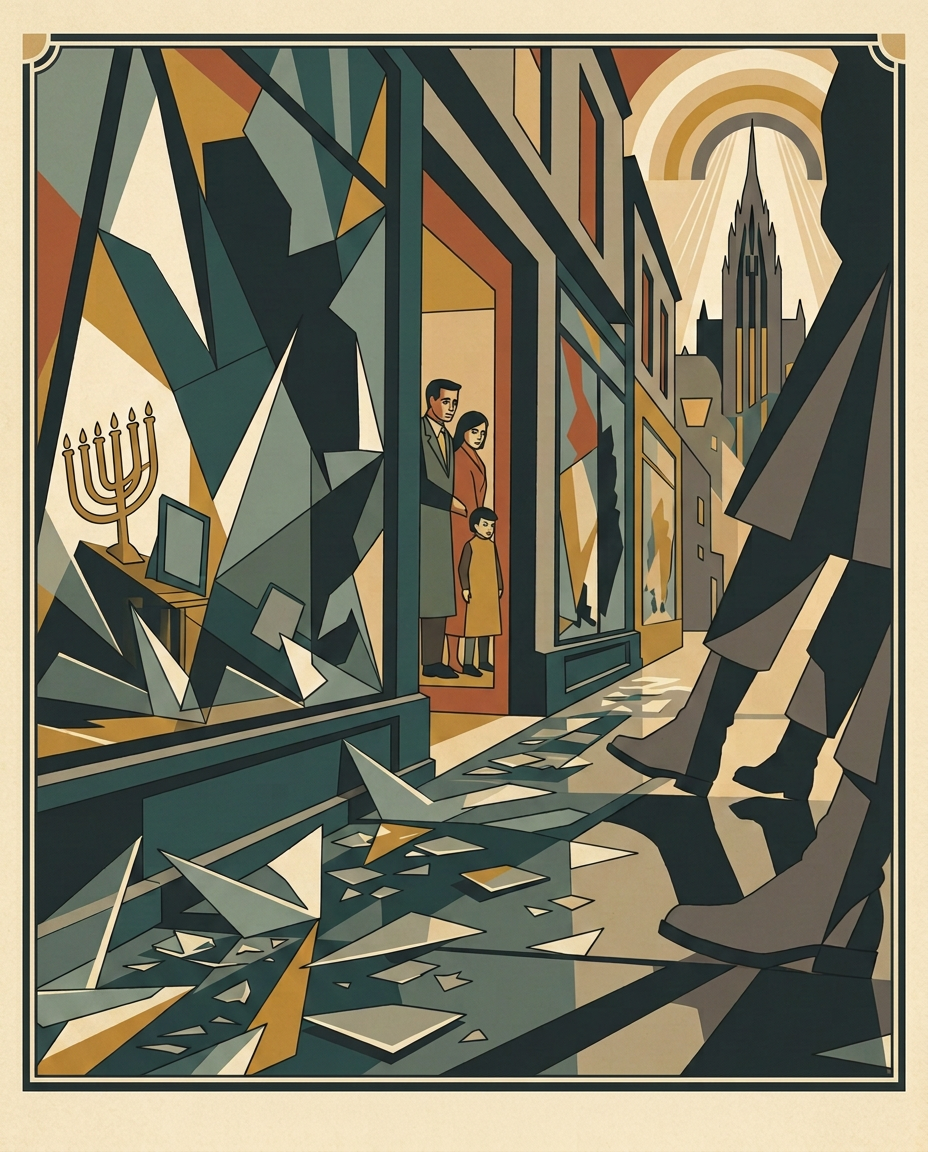
On the night of the ninth of November, nineteen thirty-eight, the German state stopped pretending. For five years the persecution of the Jews of Germany had been a matter of law and paperwork: decrees, dismissals, the slow administrative squeezing-out that George Levy had been living through in Lippstadt. On the ninth of November it became, for one night and across the whole of the country at once, a matter of fire. The pretext was a killing. A seventeen-year-old Polish Jew named Herschel Grynszpan, distraught over the deportation of his family, had walked into the German embassy in Paris and shot a German diplomat named Ernst vom Rath. Vom Rath died of his wounds on the ninth. The Nazi leadership seized on the death as the occasion for something it had wanted anyway. The Minister of Propaganda, Joseph Goebbels, gave the signal, and a "spontaneous" outburst of popular anger, spontaneous in the way a demolition is spontaneous after the charges have been wired, rolled across Germany and Austria through the night and into the next day. When it was over, more than fourteen hundred synagogues across Germany and Austria had been damaged or burned. Some seven and a half thousand Jewish-owned shops had been smashed and looted.

The streets of Jewish neighborhoods all over the Reich were carpeted with broken plate glass, and it was from that glittering wreckage that the night took the name it has carried ever since: Kristallnacht, the Night of Broken Glass. Around a hundred Jews were murdered outright. And some thirty thousand Jewish men were arrested in a single coordinated sweep. About twenty-six thousand of them were imprisoned in the concentration camps at Dachau and Buchenwald and Sachsenhausen. George Levy was eight years old, and he was asleep in the crowded Judenhaus when they came. He did not see the arrests. He was a child. The men came in the dark, and the children were not woken. What George saw was the morning. He came downstairs into a house that had changed in the night, and all the mothers were there, and all the mothers were crying. He asked his own mother what had happened. Lucie told him: in the night they had come, and they had arrested all the men who lived in the house. The same thing, she said, was happening all over Germany. The men were gone.
Among the men taken from that house were George's father, Max Levy, and Max's brother Ludwig, who lived with the family. They were taken, with the other Jewish men of Lippstadt, to the concentration camp at Oranienburg, north of Berlin: the camp the world would come to know by the name Sachsenhausen. George did not know, in November of nineteen thirty-eight, what a concentration camp was. Very few people yet did. The full machinery of murder had not been built. The camps of nineteen thirty-eight were not yet the death factories of nineteen forty-three. They were places of brutal forced labor and terror, and the men swept up after Kristallnacht were, for the most part, held only a few weeks. The Reich had not yet decided what it meant to do with the Jews. It had only decided to make the message unmistakable: there was no future here.
After about six weeks, the men were released and sent home. George was at the Lippstadt railway station to see them come back. He watched the train come in and the men climb down from it. His uncle Ludwig climbed down and could walk. Many of the men could walk.
His father could not.
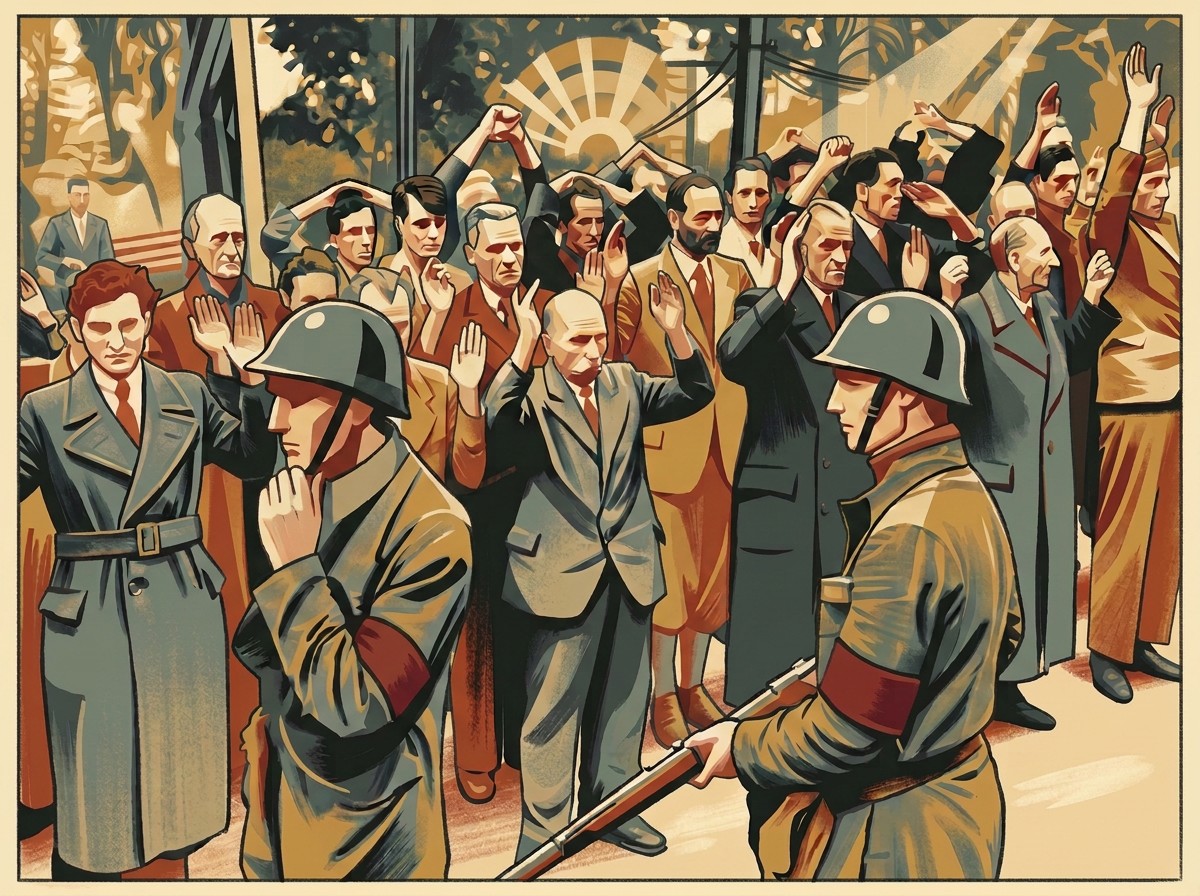
Max Levy came back from Oranienburg on a stretcher. Whatever had been done to him there, or simply allowed to happen to him there in the cold, had ruined his legs: they were, George understood, frozen, and Max could no longer stand on them. They carried him into the Judenhaus and set him down, and he sat. He sat all the time now, because sitting was all that was left to him, and he wept, and he looked, to his eight-year-old son, terrible, broken in his body and broken in some deeper place that a child could see but not name. He was a man who had won the Iron Cross for Germany, and Germany had sent him home on a stretcher, and the stretcher was the whole answer to the whole German-Jewish bargain.
They moved Max to a Catholic hospital in Lippstadt. Lucie took the children to visit him two or three times. George remembered the talk among the adults of amputating his father's legs: whether it had been done, or only discussed, he was never sure. It did not, in the end, matter. Max Levy died in that hospital on the twelfth of January, nineteen thirty-nine, nine weeks after the train had taken him to Oranienburg. He was fifty-four years old: a man who had worn the Iron Cross of the German Empire on his chest and who was killed, in the end, by his own country, slowly, in a bed, over the course of one winter.
And on New Year's morning, the same dark turn of the same dark winter, the family found Uncle Ludwig dead in his room.
Uncle Ludwig had gone first, on the morning of the new year; Max followed him eleven days later. Two men of the household, dead within nine weeks of the Night of Broken Glass, neither of them shot and neither of them formally sentenced to anything. The Levy family had been, in the autumn, a large and prosperous and ordinary German-Jewish family. By the middle of January, nineteen thirty-nine, it was a widow and two small children, in a borrowed room in a Jew house, in a country that had just demonstrated exactly what it intended.
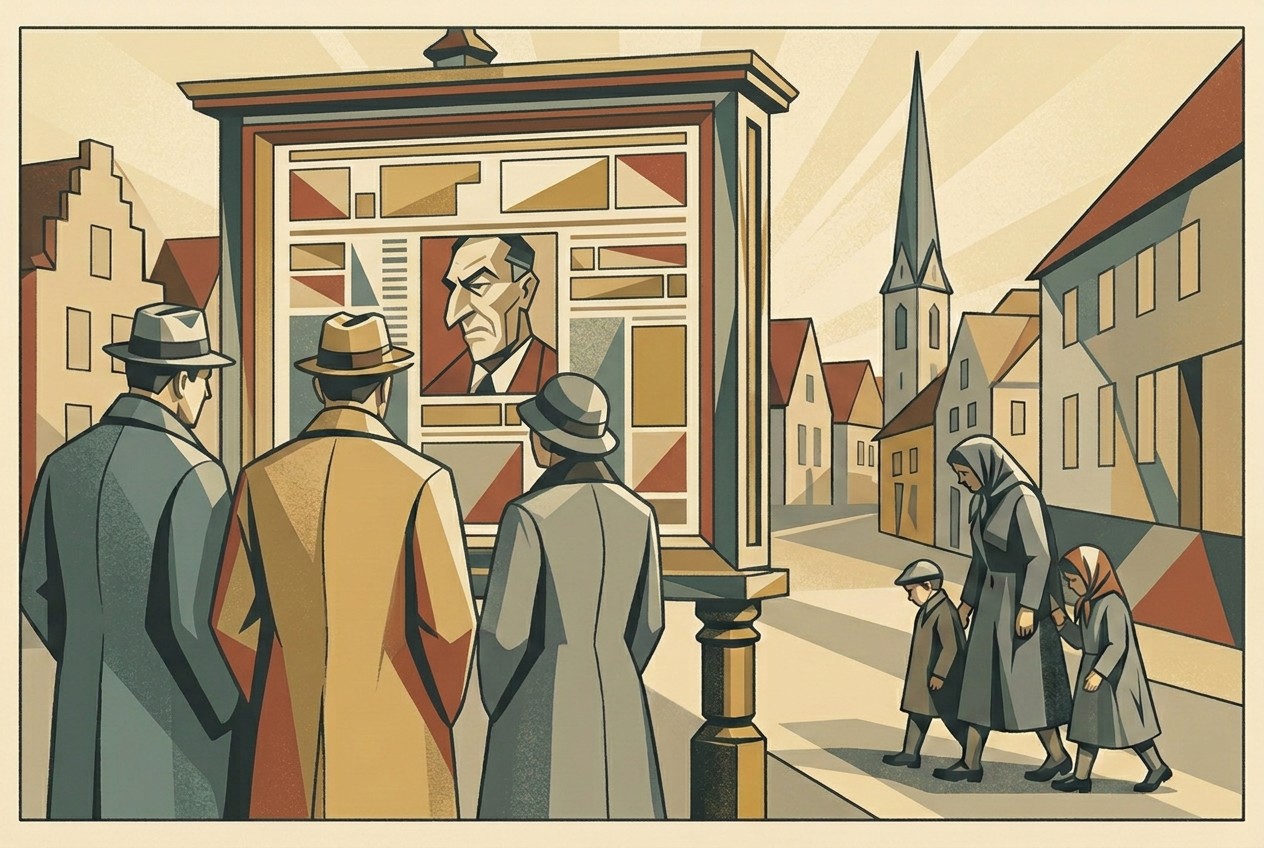
Lucie Levy understood the demonstration. She decided, in that January, that her children had to get out of Germany.
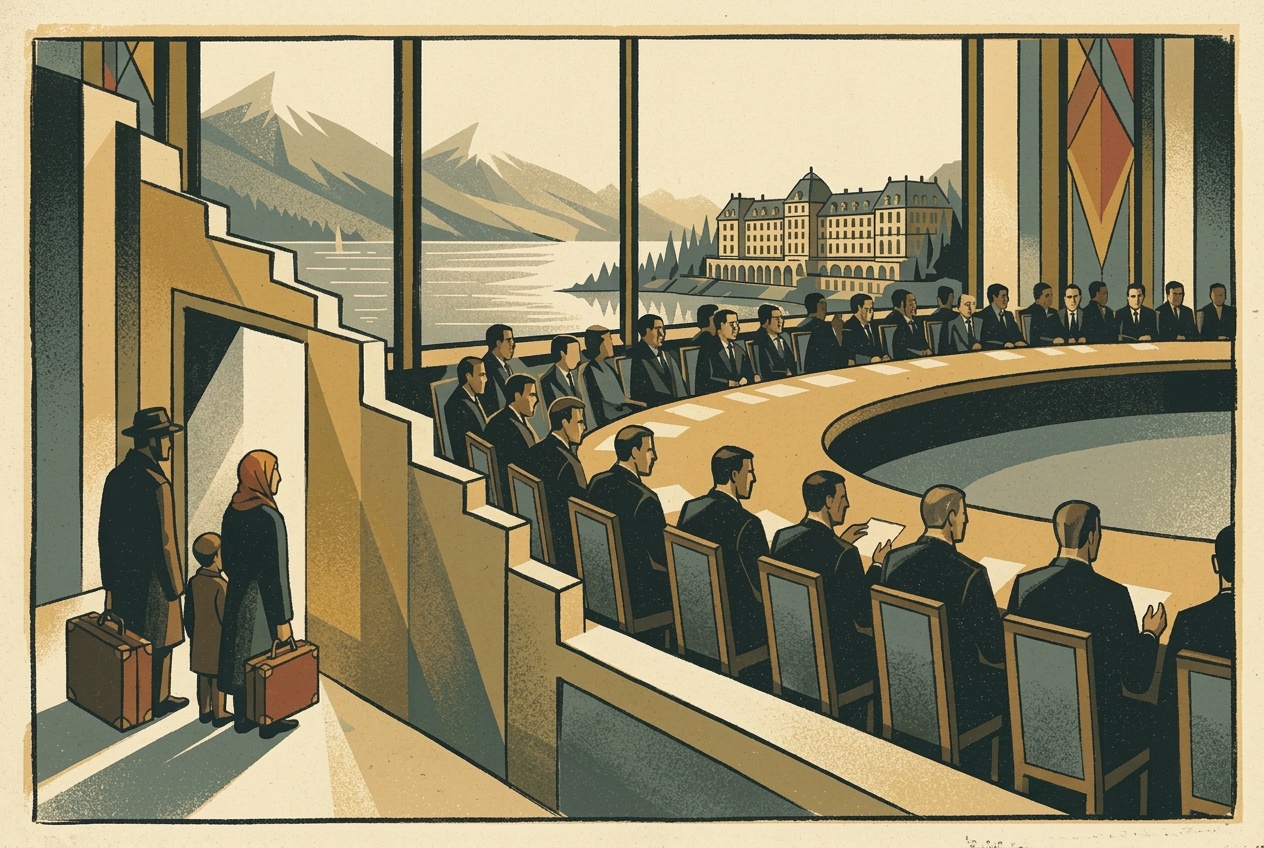
It was not a simple thing to decide, and it was very far from a simple thing to do. The doors of the world were, by the start of nineteen thirty-nine, very nearly shut. Only six months earlier, in July of nineteen thirty-eight, delegates from thirty-two countries had met at the French resort of Évian, on the shore of Lake Geneva, to discuss the Jewish refugee crisis, and country after country had risen to explain, with regret, why it could not take in any meaningful number of Jews. The conference had told the Nazi regime, in effect, that the world did not particularly want its Jews either. And there was, in nineteen thirty-nine, no Jewish state with open doors. There was a British Mandate in Palestine, and the British were in the very act of slamming that door too. Within months they would issue the White Paper that choked Jewish immigration to a trickle. A Jewish mother in Lippstadt who wanted to save her children had almost nowhere on the surface of the earth to send them.
Lucie found one road. She knew a man, some kind of lawyer, a decent person, a non-Jew who had been kind to her, and she went to him and asked him to help her get herself and her two children out of Germany. He could not do it for all three. The truth of nineteen thirty-nine was that the chances of saving a Jewish adult were far worse than the chances of saving a Jewish child. The world had agreed, in a few narrow programs, to take children. What the lawyer could arrange was passage out for George and Ursula. Not for Lucie.
She took it. She gave the lawyer the family's photographs and papers for safekeeping: the visual memory of the Levy family, handed to a Christian acquaintance because there was no longer anywhere safer to put it. Many years later, in the nineteen fifties, George would be a young man in the uniform of the United States Army, and he would travel back and find that man, and the man would still have the photographs, and would give them to him. That is how the few surviving images of the Levys of Lippstadt came down through time: because a mother, in the worst month of her life, understood that she might not survive to carry them herself. So the decision was made. Lucie would send her son and her daughter, alone, out of Germany, and would stay behind, and try to follow, and hope. This is the thing to hold onto, going forward, about George Levy's story, and about why this book argues what it argues. Lucie Levy was not a careless mother or a foolish one. She was a brilliant and a brave one. She did everything a human being could do. And the most that everything could buy, in nineteen thirty-nine, for a Jewish mother who loved her children with her whole life: was a train that would carry them away from her, to a country that was itself about to be overrun, while she stayed behind in the closing dark. That is what the absence of a Jewish state cost, measured in one family. The next chapters are the rest of the bill.
The War
The Last Time He Saw Her
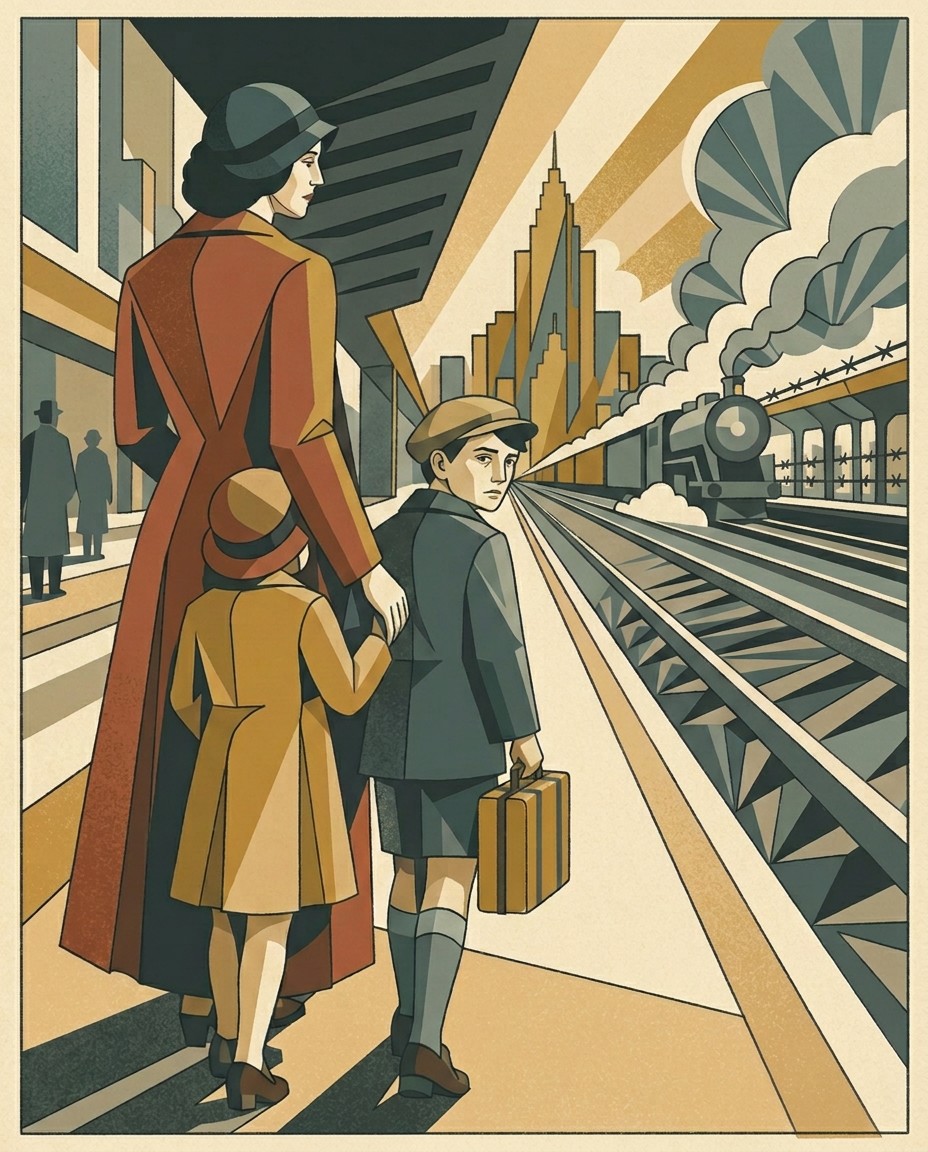
In the late winter of nineteen thirty-nine, Lucie Levy took her two children to the railway station in Lippstadt to send them out of Germany.
George was eight, a few months short of nine. Ursula was not yet four. They were going on one of the children's transports, the Kindertransports, the narrow rescue programs that had opened in the months after Kristallnacht, when a handful of countries agreed to admit Jewish children, unaccompanied, without their parents. Most of the roughly ten thousand children saved this way went to Britain. Some went to the Netherlands, to Belgium, to France. George and Ursula were going to the Netherlands. The train was full of children. It was very crowded. Every child on it was somebody's, and not one of them had a parent aboard.
George remembered the platform for the rest of his life. He remembered it, in his old age, as the saddest day of his life, and he said that as a man who had by then survived three concentration camps, so the ranking should be taken seriously. His mother bent down to him on the platform and gave him the instruction that would organize the next six years of his existence. Take good care of your sister, she said. And she made him a promise: I will come to Holland as soon as I can.
Then the children were aboard, and the train began to move, and Lucie stood on the platform and waved. George waved back. The train pulled away and his mother grew smaller, and smaller, and smaller, and then the platform was gone.
That was the last time George Levy saw his mother.
He did not know it was the last time. That is the particular cruelty built into the scene, that a mother and a son could stand on a platform and wave at each other and neither of them be permitted to know that this was the end, that this ordinary gesture, the waving, was the last thing. Lucie waved her children toward the only safety she could find for them and kept, for herself, the harder country. She had promised to follow. She meant it. She would spend the rest of her letters trying.
The transport carried the children across the Dutch border and into the Netherlands. George and Ursula were taken first to a quarantine center in Rotterdam, and then to a large home crowded with refugee children: children who had fled, as they had, out of Germany, out of the closing dark, and washed up in this flat wet country to the west. From there, after a time, the two of them were sent south, to a small town near the Belgian border called Eersel.
Eersel was a beautiful place: a small village of farmers in the green south of Holland, with a church and a square and quiet lanes. George and Ursula were taken in at a convent there, and lived among the Sisters, alongside other refugee children from Germany and alongside Dutch children who came out from the cities in rotations of a few weeks for the fresh country air. The two Levy children had a legal guardian arranged for them, a man in the regional capital who looked after their affairs, and they were under the care of a Catholic relief committee. George went to the local boys' school in the village. He learned Dutch. He made friends, the ordinary friends of a schoolboy, and the best of them, a Dutch boy named Sjef de Blok, would stay George's closest friend for the rest of his life. George would say, ever afterward, that although Lippstadt was the town he was born in, Eersel was his real hometown: the place his heart returned to, the place his own children and grandchildren would one day go to find their friends. He was an orphan in an institution, far from his mother, and he missed her every day, and he did not like living in a home that was not a home. And still: Eersel was where a boyhood, of a kind, survived.
It survived for a little over a year.
In May of nineteen forty, the German army invaded the Netherlands. The country, small and flat and unprepared, fell in five days. And then everything that had been done to the Jews of Germany began, on a compressed timetable, to be done to the Jews of Holland. The occupation installed pro-German men in positions of power, pro-German mayors in the towns, pro-German officials in the police, and the familiar machinery of anti-Jewish law was imported wholesale. Jewish teachers could no longer teach. Step by step the Jews were ruled out of ordinary life. Jews could not go to the cinema. The village of Eersel had a small cinema, and George and Sjef de Blok and the other boys snuck in anyway, the way boys will, not yet old enough to understand that the rule against them was a rung on a ladder that led somewhere.
The Sisters of the convent understood. As the occupation hardened, the nuns of Eersel became part of the Dutch resistance. When an Allied airman, an American or a British pilot, was shot down over the surrounding countryside, the Dutch underground tried to save him, and a shot-down flier hidden in the neighborhood might be brought to the convent and concealed there for a while before being passed down the line, through Belgium and France and over the Pyrenees into Spain, and home. The Germans answered this the way they answered everything. When they could not find a flier they knew was being hidden, they would seize two young men off the street, men in their twenties, kept for exactly this purpose, and shoot them, so that the population would learn what hiding a pilot cost. The Sisters kept doing it anyway. George was living, without fully knowing it, inside a small node of the war.
And through all of it, the letters came.
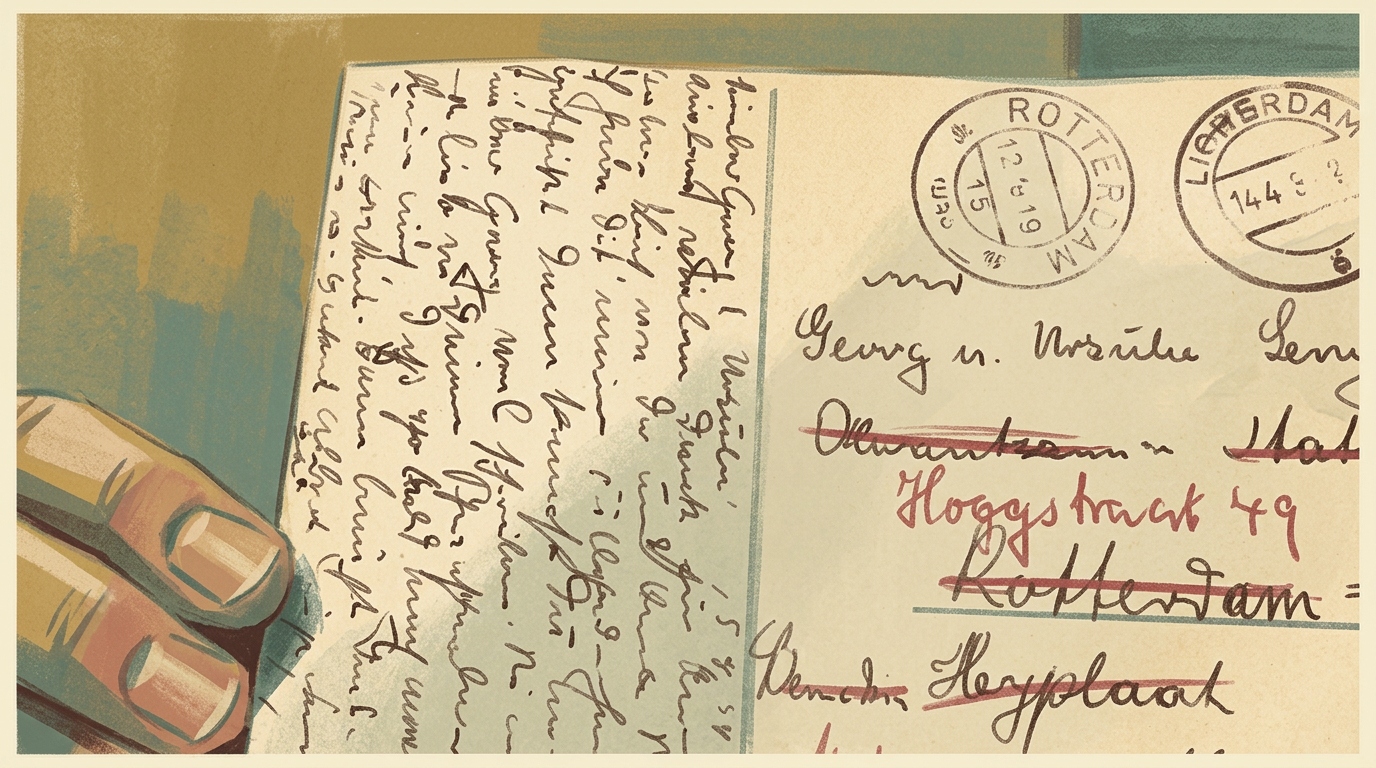
Lucie Levy wrote to her children. From Germany, from wherever the shrinking Jewish world allowed her to be, she wrote to George and Ursula in Holland, regularly, faithfully, for as long as it was possible to write. The letters were the thread. They were the proof that the promise on the platform was still alive, that somewhere a mother was still trying to come.
Then the letters stopped.
What had happened on the German side of the silence, George would only assemble fully in later years, and the assembling took decades, because the record was scattered across archives in three countries. It can now be set down step by step, and it should be, because the steps are the argument.
Lucie was moved first from Lippstadt to Oelde, a small town about thirty kilometers to the west. This was not a move in any sense a person would recognize. It was the last phase of the process this book has already described: the Jews of the Westphalian towns squeezed out of their homes and concentrated into designated Judenhäuser, a few families to a house, so that the local administration could keep them in one place and count them. By nineteen forty-one the Nazi authorities in Oelde were openly working to make the town judenrein, cleansed of Jews. There is a particular horror in that word which the translation cannot carry: a municipal government, with letterhead and a filing system, pursuing the removal of its own neighbors as a matter of administrative housekeeping.
On the tenth of December, nineteen forty-one, the Gestapo arrested the Jews remaining in Oelde, including those, like Lucie, who had been relocated there, and took them to a central assembly point at the Gertrudenhof in Münster.
On the thirteenth of December, nineteen forty-one, a special passenger train left Münster. It stopped at Osnabrück and at Bielefeld to take on more, and when it was full it carried one thousand and thirty-one Jewish men, women and children out of Westphalia and the Münsterland toward Latvia. It is remembered in the region as the erster Westfalenzug: the First Westphalian Train. They were put in third-class carriages, which is a detail worth pausing on, because it tells you what stage of the machinery this was. The cattle cars came later. In December of nineteen forty-one the German state was still deporting its Jews on scheduled passenger rolling stock, with tickets accounted for, through stations where other Germans were waiting for other trains.
It arrived at the Riga ghetto on the sixteenth of December. Room had been made for it. In the fortnight before it came, on two days at the end of November and the beginning of December, the Germans and their Latvian auxiliaries had taken some twenty-five thousand Latvian Jews into the forest at Rumbula outside the city and shot them, in order to empty the ghetto for the transports arriving from the Reich. Lucie Levy and the others from Westphalia were moved into apartments whose previous occupants had been murdered that fortnight, in rooms where the food was sometimes still on the table. The Riga ghetto was not a place the Germans were sending Jews to live. It was a place they were sending Jews to be held until they had been worked to death or shot, and the arithmetic was managed by killing the people already there to make space for the people arriving.
What followed for Lucie was the ordinary course of that place: forced labor, starvation, cold, and the periodic selections: including the operation the Germans called the Dünamünde Action, in the spring of nineteen forty-two, in which several thousand of the elderly and the unfit were told they were being taken to a fish cannery with lighter work, and were driven into the woods and killed. Lucie survived that. Surviving a selection in the Riga ghetto meant only that you had been judged still capable of work.
When the ghetto was liquidated, in the late months of nineteen forty-three, the elderly and the children were sent to Auschwitz and those still fit for work were moved to the Kaiserwald camp on the edge of Riga. Lucie was among the ones judged still fit. She lasted there through the winter and into the following year. Then, in the summer of nineteen forty-four, with the Soviet army coming west and the Germans emptying the Baltic camps ahead of it, Kaiserwald was evacuated and its prisoners were shipped across the sea to the Stutthof concentration camp near Danzig. And there, in nineteen forty-four, Lucie Levy was murdered.
Of the one thousand and thirty-one people who were put on the First Westphalian Train, one hundred and two were alive at the end of the war. Not one of the Jews of Oelde who survived ever went back there to live. The community that had existed in that town was not damaged or reduced. It was ended, on a Saturday in December, by train.
This is what a deportation actually is, and it is why this book keeps insisting on the particulars. It is not a wave of history. It is a date, a town, a collection point with a name, a scheduled departure, two stops along the way to pick up more, and a room that had to be emptied by murder before it could be filled. Every stage of it was carried out by people who went home afterward and had dinner. And at no point in the entire itinerary, Lippstadt to Oelde to Münster to Riga to Stutthof, was there any government anywhere on earth whose job it was to intervene on behalf of a widow from Westphalia and her right to remain alive. She never reached Holland. She never saw her children again after the platform at Lippstadt. The promise, I will come as soon as I can, was a true promise, made by a woman who would have walked the whole distance on her hands if the world had let her, and the world did not let her, and that is the entire point. Lucie did the one thing in her power. She got the children out. She could not get herself out, because she was an adult, and a Jew, and there was no country obliged to take her, and no army of her own people coming for her. Years later George would publish the story of his survival, and he would give the book his mother's name and his mother's purpose. He called it Lucie's Hope. Her hope, he explained, had been to save her children. And she did. The book exists, and George's descendants exist, because the hope held even though the woman did not. Hold this chapter beside the one that runs alongside it. In nineteen forty-four, the year Lucie Levy was murdered at Stutthof, Shlomo Lev was seventeen years old and had been in the Palmach for a year. He would spend the years on either side of that one doing two things. He walked Jewish families out of Syria and out of Lebanon, over the mountains, at night, with the smallest children carried on the fighters' shoulders so that they would not cry. And he stood in the surf in the dark off the beaches of the Land of Israel, lifting the survivors of exactly this catastrophe out of small boats and carrying them ashore. The people Shlomo carried up those beaches were Lucie's people. Some of them were mothers who had managed what Lucie could not manage. Some of them were children who had been, like George, sent ahead alone. The two facts belong in the same sentence and the book will put them there. In the same years, a Jewish mother from Westphalia who had done everything within human power to get her children to safety was worked to death on the Baltic coast, and a Jewish boy not yet out of his teens, on the other side of the same war, was carrying other people's children across a frontier in the dark so that they would live. The difference between them was not courage, and it was not love. Lucie Levy had as much of both as any person in this book. The difference was that one of them had somewhere to carry the children to, and the other had nowhere on earth, and no one coming.
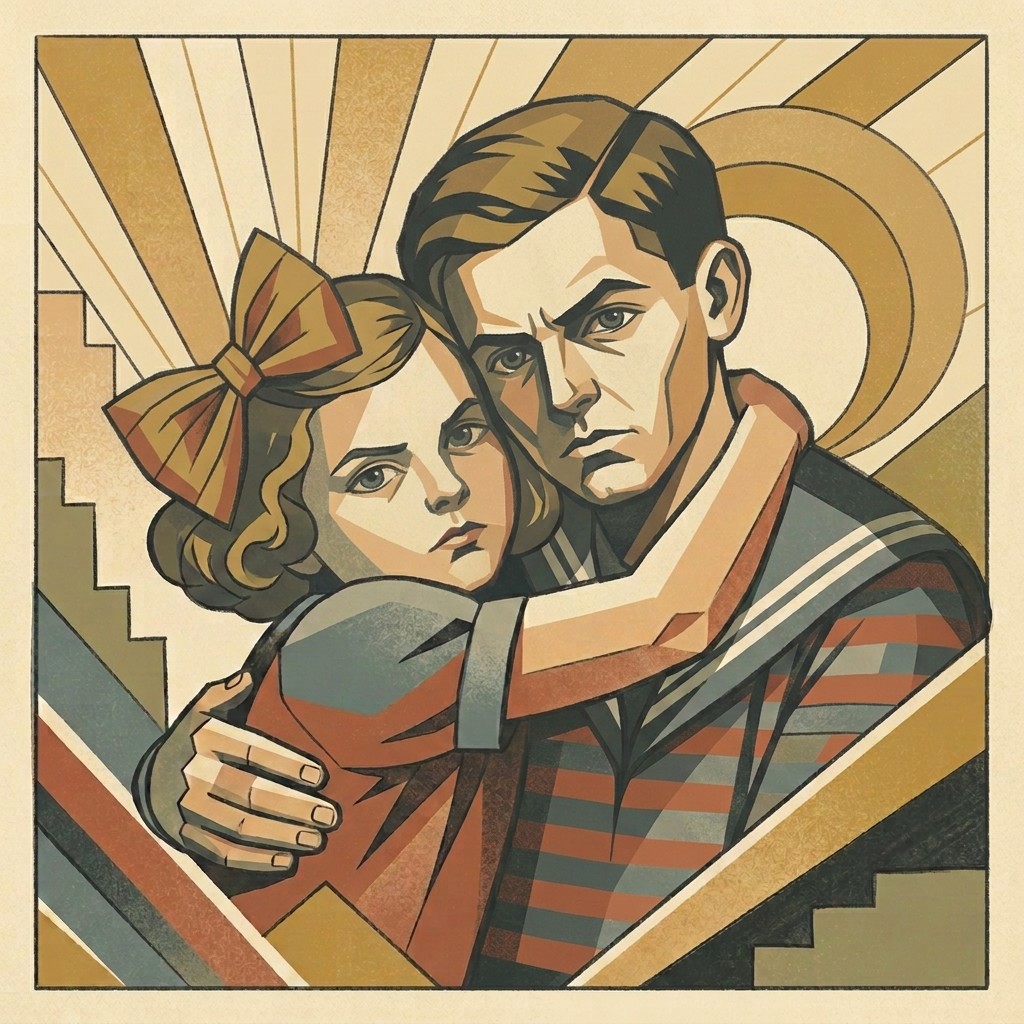
For almost the whole length of their lives, the two strands of this book did not touch. George and Shlomo each lived out the better part of a century without knowing the other was alive, and the account of how, at the very end, they were drawn into a single story waits in the last pages of this book. But they were working, in those years, on the two ends of the same problem. Shlomo was building, with his hands and his back and an Italian carbine, the thing whose absence had killed Lucie Levy. And George: eight years old, then ten, then twelve, in a convent in Eersel, taking good care of his sister as he had been told: was about to find out, in person, what that absence still cost a Jewish child in the heart of occupied Europe.
The danger was closing in on Eersel. By nineteen forty-three almost all of the Jews of the Netherlands had already been deported. There were not many left for the machine to find. George and Ursula were two of them.
Pluga Daled, Be Your Own Messiah
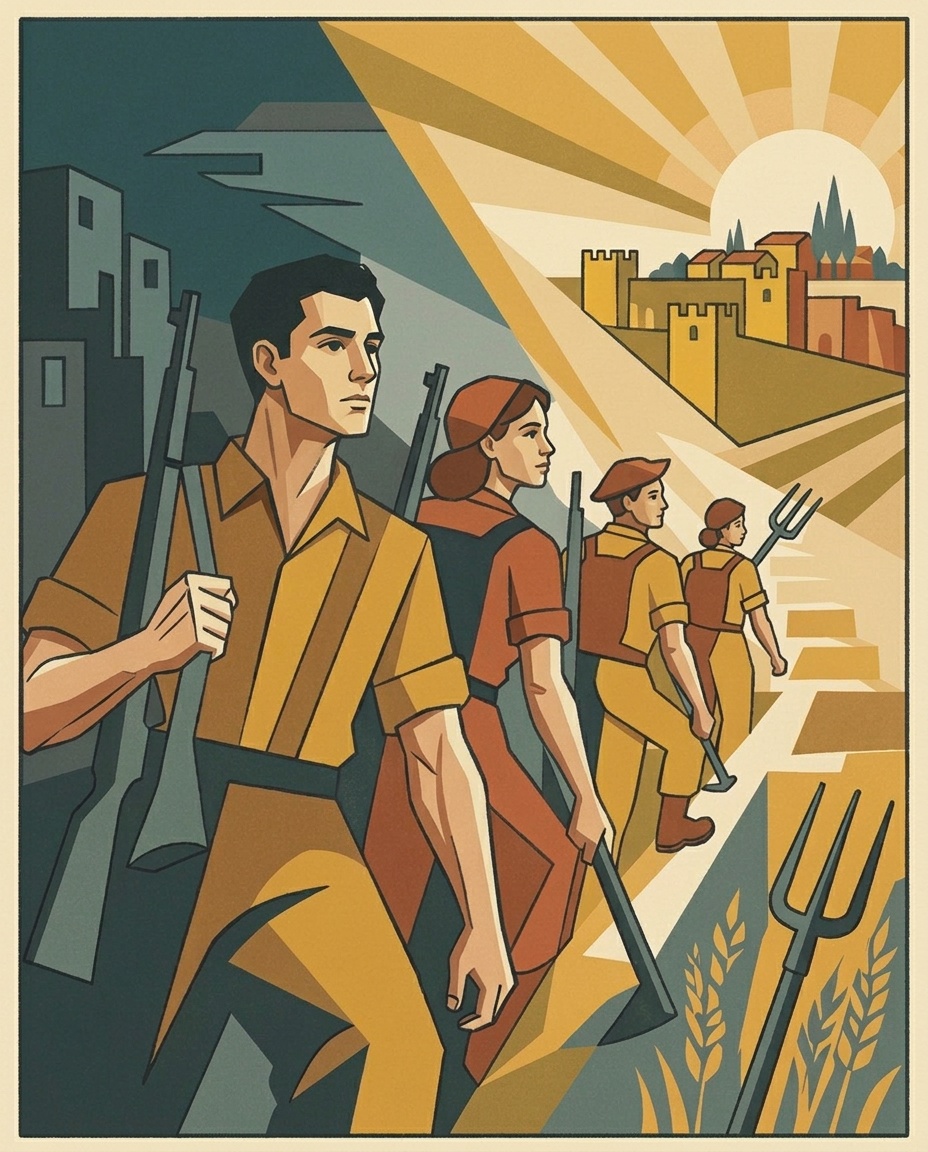
It was nineteen forty-three when the call came. The world war was burning on three continents. The Soviets had broken the back of the Wehrmacht at Stalingrad in February. The Allies had landed in Sicily in July. Montgomery’s Eighth Army had pushed Rommel across Egypt and Libya the year before, and at El Alamein in October the Suez Canal had been saved, and the Yishuv with it. In Palestine it felt like a miracle narrow enough to defy comprehension. If Rommel had got across the canal the Jews of Palestine knew they were finished. They had prepared for it. The Hagana leadership had drawn up Plan Carmel, a last stand on Mount Carmel above Haifa, a Masada for the day the Germans came. And the news was beginning to come out of Europe. It started in trickles in nineteen forty-two. The Jewish Agency in Jerusalem received a cable from a representative in Geneva, drawn from intelligence supplied by a German industrialist named Eduard Schulte. The Nazis had decided to murder all the Jews of Europe. A specific plan. A specific number, six million. Trains. Gas. Chimneys. The cable was almost too clinical to believe. The American State Department sat on it for months. The British Foreign Office filed it for review. The Jews of Palestine had no reason not to believe the worst, and they believed it. By nineteen forty- three the trickle was a wave. The Bermuda Conference in April produced no Allied action. The Warsaw Ghetto Uprising was crushed by the SS through April and May, the last fighters dragged out of the smoking ruins. The Bialystok Ghetto rose in August. The death camp at Treblinka was shut down, and it was shut down because all the Jews of eastern Poland had already been killed in it. By the autumn of nineteen forty-three the Jewish leadership in Palestine knew that millions of their people were being murdered in Europe, and that they could do almost nothing about it. This is the world in which Shlomo Lev, sixteen years old, decided to enlist. He went first to his friend Shukra. Shukra was a Yemenite kid, dark and quick, the son of a family that had walked from Sana’a in the great Yemenite Aliyah of the nineteen forties. The two of them had grown up together in Givat Ram, swimming at the athletic pool, climbing the same walls. Let’s go enlist in the British Navy and fight the war, Shlomo said. They’re taking Jewish volunteers. We could go to Europe. That was true, after a fashion. Individual Jews had been enlisting in the regular British forces in large numbers since the war began. By nineteen forty-three more than thirty thousand Palestinian Jews had volunteered for British service, roughly a tenth of the able-bodied population of the Yishuv, and they served everywhere from the Royal Navy to the desert war. The Jewish Brigade Group came later, in September of nineteen forty-four, under Churchill’s prodding: three battalions of Palestinian Jews who fought in Italy under their own blue and white flag with the Star of David.
Shukra’s father wept. Shukra was an only son. His mother took hold of his arm and would not let go. They bribed him with the cash they had been saving, to keep him in school. Shukra stayed. He kept the bus money. Shlomo had told his own parents nothing. He took his bus fare and went alone to the British induction center in the middle of Tel Aviv.
The induction center was a low colonial building on Allenby Street with rotating fans and a Union Jack and a row of seated young men in clean shirts waiting their turn. Shlomo went through the door and presented himself at the desk.
A man in a small side office saw him out of the corner of his eye.
The man’s name was Elkanah. He was a Jewish recruiter, formally a clerk for the British and in practice an officer of the Hagana, planted at the induction center to spot exactly this kind of boy. Elkanah waved Shlomo over. He shut the door.
“How old are you?” Elkanah asked, in Hebrew.
Shlomo lied. “Eighteen.”
“You look about fifteen,” Elkanah said.
“Sixteen.”
Elkanah leaned back. He looked the small blond boy up and down. The wiry build. The blue eyes. The bored steadiness with which the boy met his gaze.
“Why don’t you join the Palmach?” he said quietly.
In nineteen forty-three that question carried weight.
The Palmach needs explaining here, because most readers in the year twenty twenty-six will not know what it was, and the whole arc of this book turns on it.
Plugot Mahatz. The Strike Companies. It was the answer to a problem that had been worrying the Hagana high command for more than a year. The Hagana was a part-time militia. Its members had day jobs as farmers and shopkeepers and schoolteachers and reported for duty in the evenings. That worked for static defense, for manning the watchtowers of a kibbutz against raiders. It was useless for the mobile, immediate response a real war would demand. What if the Germans came over the Sinai? What if the British, beaten in North Africa, pulled out of Palestine altogether and left the Jews to face the Arabs alone? What if the hour came when the Yishuv had three days to put a fighting force in the field, and three days was all there was?
Yitzhak Sadeh conceived the answer in May of nineteen forty-one. The Palmach would be a full-time, permanently mobilized strike force of young men and women living and training on kibbutzim, splitting their time between agricultural work, ideological education and military preparation. The kibbutzim would feed them, house them and disguise them. The Palmach would defend the kibbutzim and bring in the harvest.
The British funded it at first, in the middle of nineteen forty-one, because they needed Jewish commandos behind Vichy French lines in Lebanon and Syria. The first Palmach operation came in June of that year. Operation Boatswain was a maritime sabotage mission against Vichy oil installations at Tripoli. Twenty-three Palmach members and their British liaison officer sailed from Haifa and were never heard from again. The Hagana built a memorial in their name. The Palmach kept going.
After El Alamein the German threat receded and the British abruptly ordered the Palmach disbanded. The Palmach went underground. Yitzhak Tabenkin, the head of the great kibbutz union HaKibbutz HaMeuhad, proposed that it fund itself through agricultural labor. Each kibbutz would host a platoon. Each fighter would work fourteen days a month in the fields, train for eight days, and take seven off. The kibbutz would feed them and the platoon would protect them. The plan was approved in August of nineteen forty-two, and it was called hakh’shara meguyeset. Drafted Training. It was the most important institutional innovation in the history of the Israeli military.
By nineteen forty-three, when Shlomo walked into the British induction center, the Palmach numbered perhaps a thousand fighters. By nineteen forty-eight, when the State of Israel was declared, it had more than two thousand permanently mobilized fighters in three brigades, with reserves bringing the total past five thousand. Its members became the backbone of the Israeli army in the war that followed. Yitzhak Rabin came out of it. Yigal Allon came out of it. So did generals, ambassadors, kibbutz leaders, air force pilots and chiefs of the Mossad.
The Palmach was Herzl’s most radical idea made practical. The Jews would not wait any longer. They would be their own Messiah. When their hour came they would take their fate into their own hands. The battle cry, used by every officer leading a charge, was one word. Aharai. After me. It was not a technique of combat. It was an ethic of command. Palmach officers did not stand behind and shout orders. They went first.
“Why don’t you join the Palmach?” Elkanah said, in his office on Allenby Street.
Shlomo did not need long. He had grown up hearing about the Palmach. His older brothers’ friends had been disappearing into kibbutzim. He had heard the songs at the bonfires. He took the bus fare he had saved for the British Navy and used it the next day to get himself north, to the kibbutz where Elkanah had told him to report.
He did not tell his parents. His father would not have approved. Yaakov was an old-world religious Zionist who had wept when the family came ashore at Jaffa, who kept the laws strictly and prayed daily, and he did not want his sixteen-year-old youngest son carrying a rifle in the dark. Babel did not want it either. Shlomo solved the problem by not telling them. He left a note saying he had gone to a friend’s kibbutz for the harvest, and he kept the lie going by letter for the next year and a half.
He was assigned to Pluga Daled. Company Four. The companies were numbered by the letters of the Hebrew alphabet, Aleph, Bet, Gimel, Daled. Pluga Daled had been formed in the summer of nineteen forty-one out of the Hagana youth of Tel Aviv and its surroundings, recruited through the Nahal Pioneer Combatant Youth at the agricultural school at Mikveh Yisrael. The first formation was brief, ten days of intensive training and then home to wait. In the spring of nineteen forty-two the company was called up again, this time permanently. They trained at Ben Shemen, then at the kibbutz of Mishmar HaEmek in the Jezreel Valley, and then they were posted to the kibbutzim of the eastern valley, Givat Hayim and Ein HaHoresh and Ramat HaKovesh and Givat HaShlosha, where they took up the half-soldier, half-farmer routine that defined Palmach life.
Shlomo went to the Ramat HaKovesh platoon. The Palmach's own service record notes something about how he got there that was unusual enough to be worth writing down: he was recruited directly, by a recruiter, and not through hachshara. Almost everyone else came into the Palmach through the youth movements and the training farms, a pipeline that took months and vetted a boy through people who had known him for years. Shlomo came in off the street in Tel Aviv, on a bus fare he had saved to join the British Navy, because one man in a side office looked at him and made a judgment on the spot. Over the next two years the record puts him at Ramat HaKovesh, at Maoz Chaim in the Beit She'an valley, and at Beit HaShita below Mount Gilboa.
By the time Shlomo arrived in nineteen forty-three, Pluga Daled was a brotherhood. Its men and women were mostly eighteen to twenty-two years old. Several of them became Israeli generals. Several became leaders of the kibbutz movement. A couple became poets. The company had no formal ranks. Rank in the Palmach was deliberately suppressed on paper. You obeyed who you obeyed because of who he or she was, not because of stars on a shoulder. Initiative and chutzpah counted for everything.
He was almost certainly the youngest fighter in Pluga Daled, and perhaps the youngest in the whole Palmach that year. He was small for his age. He was blond. He had not yet shaved. He looked like somebody’s little brother.
He had a great deal to prove, the company commander told him after the first week of training.
The Boy Turned Palmachnik
Palmach training was unforgiving by design.
A Palmach fighter, by the end of his basic course, was expected to be able to do a long list of things. He had to be able to march fifty kilometers in a night carrying full pack and rifle. He had to be able to climb a rope, scale a fence, and descend from a rooftop. He had to be able to shoot a Lee-Enfield .303 rifle from a kneeling position at a target two hundred meters away and put six out of ten rounds in a circle the diameter of a man's head. He had to know first aid, basic topography, and the elements of squad infantry tactics. He had to be able to swim. He had to be able to throw a Mills bomb, the British-made fragmentation grenade, fifteen meters and hit a barrel. He had to be familiar with the major small arms of every army he might encounter: the German Schmeisser MP-40, the British Sten, the Soviet PPSh-41, the Italian Beretta, the American Thompson. Many of these weapons would shortly be looted, bought, or smuggled into the Yishuv's armory.
Beyond the basics, a Palmach fighter could specialize. The training programs included sabotage and explosives, the boged, as the demolition men were called. Reconnaissance and scouting, gid'on. Sniping. Signals and radio operation. The operation of light and medium machine guns (the British Bren and the German MG-34). Mortars (the British two-inch and three-inch), and small-boat seamanship. The Palmach put particular emphasis on training field commanders, mefakdei sadeh, men and women who would think for themselves under fire, lead from the front, and improvise solutions when the plan fell apart. There was a famous Palmach training maxim, attributed to Yitzhak Sadeh: Im hayalim einam mefakdim, hamefakdim einam hayalim, If the soldiers are not commanders, the commanders are not soldiers.
Shlomo took to it. He had been training for it his whole life without knowing it. The cemetery wall and the water tower in Givat Ram had been a kind of preparation. The fearlessness that had been chased into him by an old woman with burning dough in Ukraine had made him a particular kind of asset.
He learned to climb ropes with his palms and his knees and the soles of his boots. He learned to scale fences with his rifle slung across his back so the muzzle would not catch on the wire. He learned to descend from heights: first from a low platform, then from a wall, then from the kibbutz water tower. He learned to march. Pluga Daled went on long marches in the eastern Jezreel Valley, sometimes thirty kilometers in a single overnight, the boys and girls staggering into the kibbutz in the gray light before dawn with their feet a mess of blisters.
The food, at the kibbutz, was austere. Palestine was on wartime rations. Breakfast was a slice of black bread, half a tomato, a sliver of cheese, an olive or two, and tea. Lunch was soup and a piece of meat the size of a child's fist, if there was meat at all. Often it was lentils and a hard-boiled egg. Supper was, again, bread and tea. The fighters were always slightly hungry. They were also, by their early twenties, in the best physical condition of their lives.
The unit's best athletes were chosen for the swearing-in ceremony.
The swearing-in was a ritual of central importance in Palmach culture. It marked the moment when a class of trainees became full fighters. The heads of the Hagana, including its commander-in-chief, the formidable Yaakov Dori, would come up to the kibbutz to watch. The four platoons of the company would compete in front of them in an obstacle course: a three-kilometer run with rifle, a fence scale, a rope traverse strung between two trees, a tower climb, and finally a rope descent down the side of the kibbutz water tank. The winning platoon's captain would receive the honor of leading the swearing-in.
Shlomo was not chosen for the demonstration team. He was, the company commander explained, too small. The dignitaries would be watching for spectacle. The small blond boy could not provide spectacle. They needed the bigger, more physically commanding fighters at the front of the column.
On the morning of the competition, one of the chosen runners woke with a bad stomach. Something he had eaten the night before, perhaps the cucumber salad, perhaps the local water, had given him a violent case of dysentery. He could not stand up without doubling over. He was out.
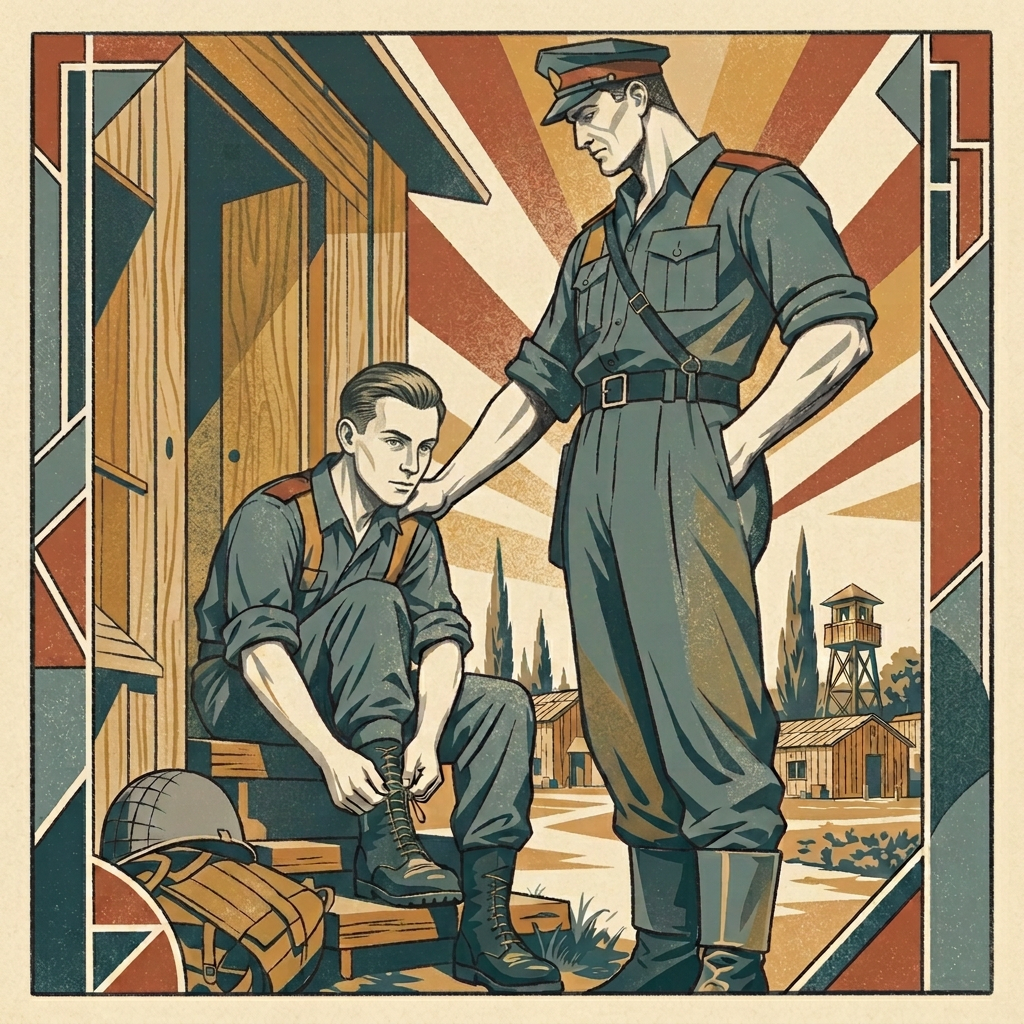
The company commander walked through the barracks looking for a substitute. He thought about the wild kid he had heard about: the one who ran along cemetery walls in Jerusalem, who climbed the kibbutz water tower at night for fun. He found Shlomo lacing his boots in the doorway of the bunk room.
"You go in," he said.
They put Shlomo into the runner's slot. They handed him an Italian carbine: a Carcano Modello Trentotto, a serviceable little rifle that the Palmach had acquired in some untraceable way, smaller and lighter than the standard British Lee-Enfield, but still nearly as long as the boy himself. The barrel reached past his ear when he slung it. He looked, his platoon mates would say afterward, less like a soldier than like a kid who had broken into his uncle's hunting gear.
The dignitaries arrived. Yaakov Dori was there, and the kibbutz movement leadership, and the heads of the Hagana intelligence services. They sat on wooden benches that had been set up in the kibbutz's central yard. They had coffee. They settled in.
The gun went off.
Shlomo ran the three kilometers with the rifle on his back. He was, against the expectations of every dignitary on the benches, holding his own with the bigger boys. He came into the kibbutz field at the head of his platoon. He climbed the perimeter fence. He went hand-over-hand along the rope strung between the two cypresses: his palms tearing on the rough fibers in a way that left small ladders of blisters that would scab over the next morning. He climbed the kibbutz water tower. He was breathing hard but not panting.
The descent was last.
The descent was a single fixed rope tied to the top of the water tank, falling fifteen meters straight down the side of the tank to the dirt of the kibbutz yard. The fighter had to swing his legs over the edge of the rim and walk himself down, hand over hand, with his feet braced against the steel side of the tank, while the dignitaries below watched.
The biggest fighter in the company went first. He was a giant of a fella, six foot two, big-shouldered, who had been chosen specifically for the visual impact of his descent. He swung over the rim of the tank confidently, took the rope in both hands, planted his right foot, and the foot slipped. He fell. He did not fall all the way, because he caught the rope with his hands and then with the crook of his elbow, but he fell halfway down the tank with his shoulder slamming into the steel and his legs swinging out into space.
The crowd of dignitaries gasped. Yaakov Dori stood up. The platoon at the base of the tank rushed forward to catch him. He landed on his feet, but badly, and he could not get back to where he had been. He had to climb down the rest of the way, slowly, embarrassed.
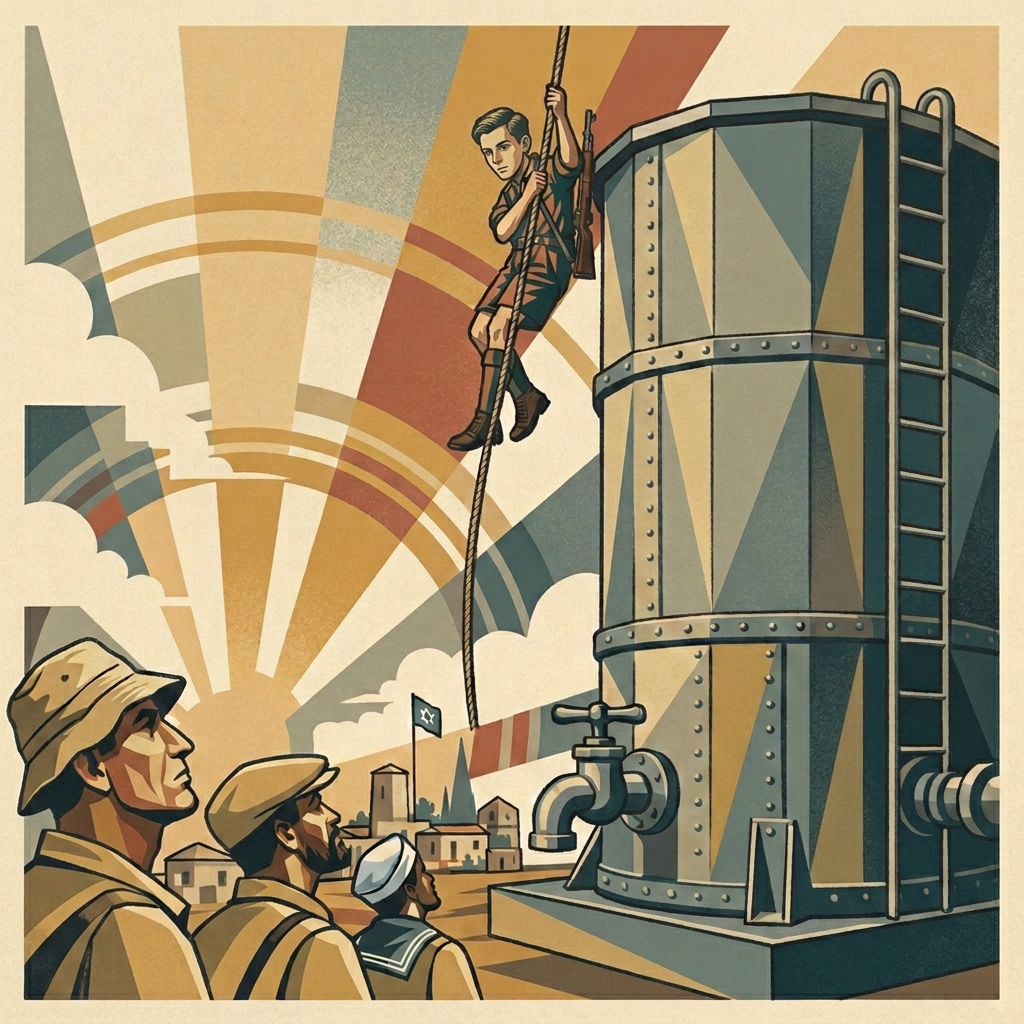
Then the dignitaries on the benches looked up.
A small blond boy with a rifle bigger than himself, all of one hundred and ten pounds, swung his legs over the rim of the tank. He fitted his hands to the rope. He braced his feet against the steel. He started to walk down. He did it slowly and without hurry, the way someone strolls down a flight of stairs at home. Hand over hand. Foot after foot. The rifle bobbed against his shoulder blades. He came down all the way to the dirt of the kibbutz yard and let go of the rope and turned and looked at the dignitaries.
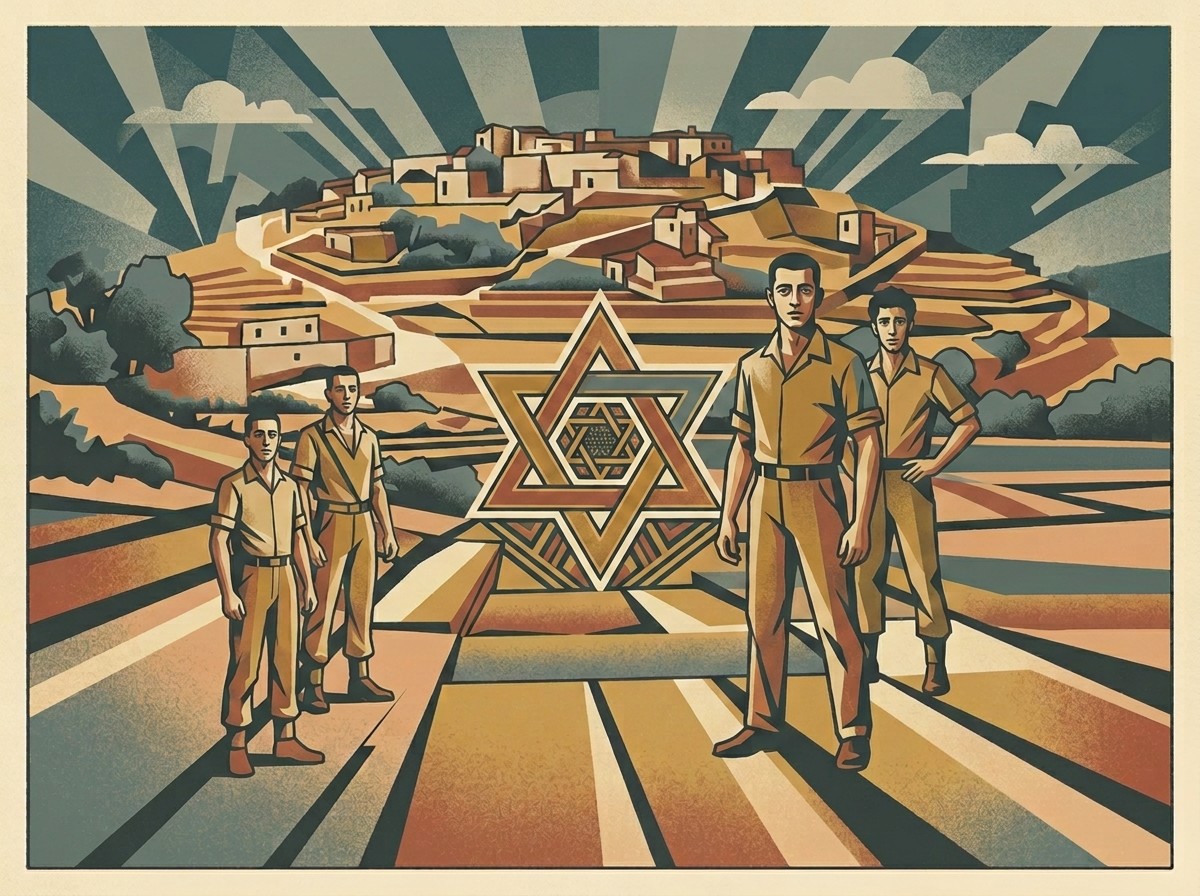
The dignitaries did not say anything for a moment.
The Convent and the Camp
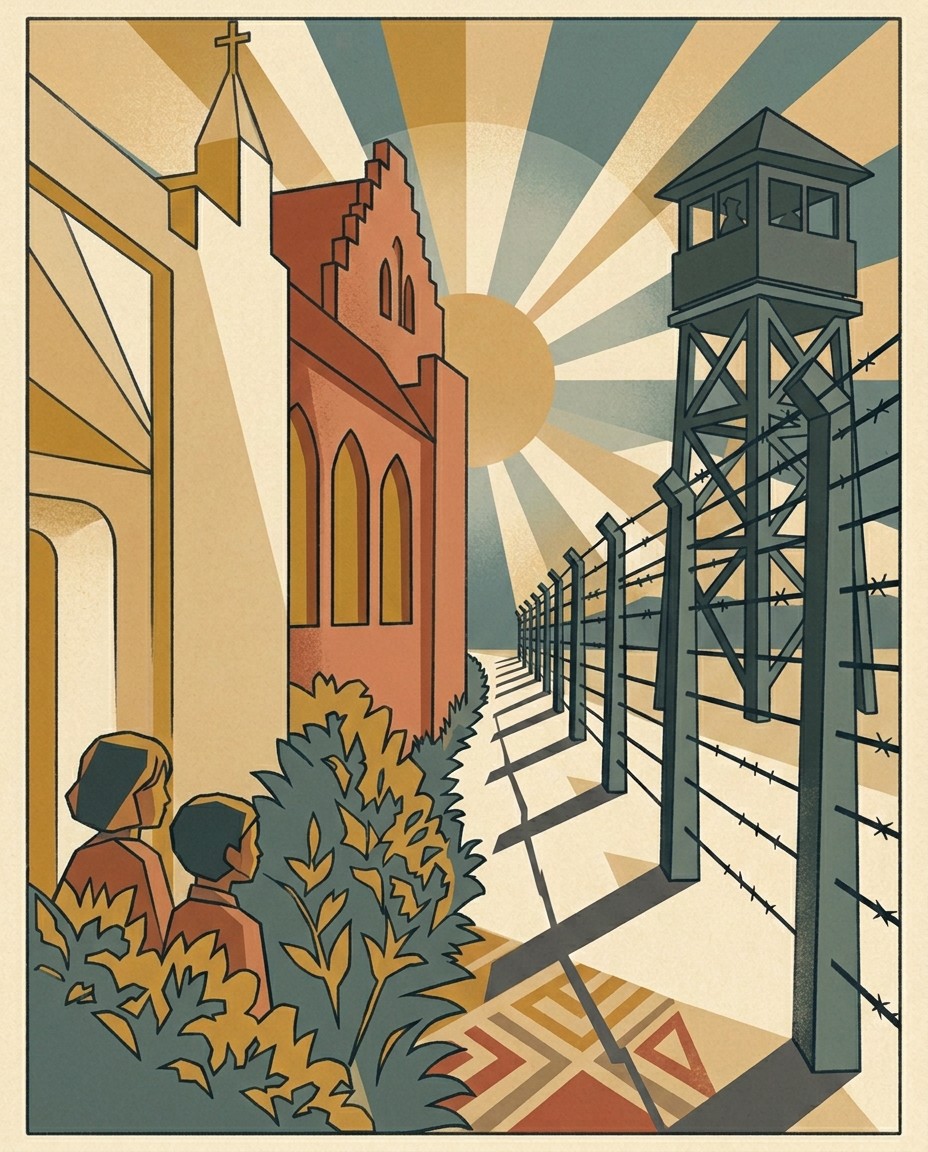
That night the new fighters of the Palmach were sworn in. There were bonfires set up around the central yard of the kibbutz. The company stood in lines. They raised their rifles in the air with their right hands. They swore loyalty to the Jewish people and to the Jewish arm: the arm that would be raised only for just causes. Yaakov Dori read out the oath. The four platoons answered together. The fires crackled. Afterward there was singing. The Palmach had its own canon of songs, Shir HaPalmach, Hen Efshar, songs that would be sung in Israel for the next eighty years, on memorial days, by the grandchildren of the people who had sung them first. Shlomo, the smallest fighter at the bonfire, sat in the middle of his platoon and ate his share of the bread and drank his share of the wine and learned the words to the songs. He had been in the Palmach for less than a year. He was sixteen years old. He had a great deal still to learn. He was, however, by midnight, no longer the boy from Givat Ram. He was a Palmachnik.
By the spring of nineteen forty-three, the Germans had nearly finished with the Jews of the Netherlands. Of the roughly hundred and forty thousand Jews who had been in the country when the occupation began, the great majority had already been deported east, to Auschwitz and to Sobibor, and most of them were already dead. The machine was running out of Jews to find. It had become, in its last Dutch phase, a matter of sweeping up the remainder: the hidden, the overlooked, the children in the institutions. In April of nineteen forty-three the sweep reached Eersel. The town's police chief, a man named Klaasen, acting on the orders of the pro-German mayor, arrested the last Jews of the town. Among the last Jews of the town were the two German refugee children at the convent. The Mother Superior called George to her the night before. She put him and his sister in a room and told them what she had been ordered to do, and what she had been unable to prevent: the chief of police had compelled her to hand the children over, and in the morning two policemen would come and take George and Ursula to a concentration camp. The camp was called Vught. George was twelve years old, going on thirteen. Ursula was eight. And when George heard the words concentration camp, he came apart, because he was the one person in that room who knew exactly what they meant. He had seen his father carried off a train on a stretcher with ruined legs. He had seen his uncle Ludwig come home and then be found dead. Concentration camp was not an abstraction to George Levy. It was the thing that had killed the men of his family. He cried. The Mother Superior told him she was sorry, and that there was nothing she could do. The children were not without anyone. They had a legal guardian, a man in the regional capital of 's-Hertogenbosch, and on the way to the camp the policemen stopped so that the children could see him. George sat in the guardian's office and cried again, and the man promised that he would do everything he could to get the two of them out. It was a real promise, and it would matter later. But a promise was, in April of nineteen forty-three, all that anyone in occupied Holland could offer a Jewish child, and George and Ursula were driven on toward the camp. The two policemen had come for them in plain clothes, with an ordinary taxi rather than a marked car. They told the children why: so that no one along the way would gawk at them, so that a boy and his small sister would not be paraded through the streets like two arrested criminals. It was a gentle thing to tell two frightened children, and the children took it as a kindness. But the truer reason was most likely simpler and sadder, and the children were too young to see it. These were two grown men who had been handed an order to deliver a boy of twelve and a girl of eight to a concentration camp, and some part of them did not want to be seen doing it. The plain clothes spared the children a little. What they spared more was the policemen. A man who arranges not to be seen doing a thing has already, somewhere inside himself, been told by his own conscience exactly what the thing is. It never rose to refusal, and it never came near rescue. But the shame was real, and shame, in that place and that year, was itself a kind of proof that the human being inside the uniform had not been entirely switched off.
Then the taxi drove through the gate of Vught.
Vught was a real concentration camp: the only full SS concentration camp the Germans built inside the occupied Netherlands, set near the city of 's- Hertogenbosch. It had a men's camp and a women's camp. It had a section for Jews. It had barbed wire and watchtowers and roll-call squares. And it had, in nineteen forty-three, a commandant named Karl Chmielewski, a man who had come to Vught from the Mauthausen camp system in Austria, from the subcamp at Gusen, with a reputation for sadism so pronounced that it had marked him out even among the SS. The children had been delivered into the keeping of one of the cruelest men in a system built out of cruel men.
George's first minutes inside the wire taught him where he was. He and Ursula were set down and left standing, two children, no one speaking to them. Nearby were the guards: young SS men, laughing, carrying on, firing their weapons into the air for amusement. And then an older guard came along on a bicycle, a man who looked perhaps seventy, in uniform: a guard the prisoners had a grim nickname for, and, George would learn, the meanest of them all. A few feet from where the children stood, a prisoner was standing. The old guard got off his bicycle, took up a heavy piece of wood, and began to beat the prisoner: beat him down to the ground, and went on beating him after he was down, and no one ordered him to stop, and no one made him stop. That was the first thing George Levy saw inside Vught. He was twelve. His sister, beside him, was eight.
A Jewish woman came and found them where they stood: a prisoner herself, from the Jewish women's camp; George remembered her as Flo. She asked whether they were George and Ursula Levy, and took them in, and brought them to the women's camp. For a boy of twelve it was a strange place to be assigned, but it kept him near his sister, and keeping near his sister was the instruction his mother had given him on the platform at Lippstadt, and George kept it. When the camp later moved him for a time into the men's section, the separation was hard on them both, and hardest on Ursula, and he got himself back to her as soon as he could.
Life inside Vught was the ordinary life of the camps, which is to say it was crowded, and it stank, and the food was bad, and every day there was the Appell: the roll call, the prisoners stood in ranks and counted, for hours, in the cold, in the women's camp by Dutch women of the SS. There were beatings constantly. Brutality was the medium the place ran on. George, because he was a child, was not assigned to labor, and so he had, in a sense, the worst job of all: he had time, and nothing to fill it with but watching. He learned to make himself scarce. He found an empty barrack with a piano in it, and he sat down at it and played the way his mother had taught him to play, and he played for Ursula, the songs their mother used to sing, and tried to teach his little sister to play. It is one of the images to keep from this part of the story: a boy and his small sister at a piano, inside a concentration camp, playing their dead mother's songs to each other because there was nothing else with which to be kind.
And then something happened that pulled George and Ursula Levy partway back out of the machine, not all the way, but partway, and partway turned out to be the difference between living and dying.
A claim was lodged on the children's behalf. It was not true, and everyone who constructed it knew it was not true, and constructing it took real nerve, because a lie told to the SS about a prisoner's identity was a lie that could get the liar killed. The claim was that George and Ursula were not full Jews at all, that they were half-Jewish children, the children of a Catholic German father. And the claim had one genuine thread running through it that made it just plausible enough to survive a check: there really was a man named Mueller. Dr. Joseph Mueller was George's uncle, the husband of Lucie's sister, Irmgard, and he was a real person, and he really had emigrated to the United States. The fiction simply moved him from the edge of the family to the center of it, and turned an uncle by marriage into a father.
Chmielewski himself summoned the children to his office to judge the claim. He looked them over, looked the two of them up and down, two small children with blue eyes, and he delivered his verdict. It must be true, he said. They hardly looked Jewish. He went so far, this commandant, this man from Gusen, as to sit little Ursula on his knee. It is one of the most chilling scenes in George's whole account, precisely because nothing violent happens in it. A mass murderer dandles an eight-year-old girl on his lap and decides, on the evidence of the color of her eyes, that she may be allowed to go on living a while longer. That was the whole logic of the racial state, performed in a single small domestic gesture.

The verdict reclassified the children. They were given better accommodations than the rest of the Jewish prisoners. They had become, in the bookkeeping of the camp, something other than what they had been the day before. They were no longer simply two Jewish children with no value, slated for the same end as every other Jewish child. They were now potential assets: children who might, with their supposed Catholic father and his American address, be worth keeping intact, worth holding, worth perhaps one day exchanging for German prisoners in Allied hands.
It was a monstrous kind of luck. It depended on a lie, and on a brother-in- law's surname, and on the tint of two children's eyes, and on the willingness of the people around them to gamble their own lives on a forged story. None of it should have been necessary. In a world with a Jewish state, none of it would have been: George and Ursula Levy would simply have been two children safe behind their own borders. In the world as it actually was, in the spring of nineteen forty-three, the only thing standing between the Levy children and the gas was a fiction about a Dr. Mueller.
And then the ordinary life of the camp put a question to George Levy that he has spent the rest of his life answering.
It was the new standing that made what happened next possible. It is hard to imagine the question being put at all to a Jewish child who did not have it. Flo's name appeared on a deportation list. What that meant, precisely, nobody in the women's camp could have said, that was the particular cruelty of the lists, which gave a name and a date and nothing else, but everyone understood the direction of travel, and everyone understood that Vught, for all of it, was not the worst place a Jew could be sent. And then Chmielewski asked George a question. He asked whether he and Ursula needed Flo. Whether they needed her to look after them.
On its face it was a kindness, and it was nothing of the kind. It was the commandant of a concentration camp putting a lever into the hands of a boy of twelve and inviting him to pull it, and George understood, with the terrible practical clarity that camps teach children, what pulling it might cost. If he said that he needed her, Flo might be kept at Vught. Or the two of them might be attached to her and sent wherever she was going, and wherever she was going would be worse.
He said no.
He was twelve years old. He had a sister of eight whom his mother had told him, on a railway platform in Lippstadt, to stay beside. He chose the two of them. There was no adult in that camp to take the weight of the question off him, and there has been no one since from whom he will accept absolution for it. He has thought about Flo regularly across the more than eighty years that followed, the woman who found two abandoned children standing in the dirt inside the wire and asked their names and took them in, and what he has thought is that he did not have the courage to ask that she be allowed to stay. Nobody knows whether the asking would have saved her. Nobody knows whether it would have killed all three of them. He has never permitted either possibility to stand in for an excuse. In his own accounting of his life it is a personal failure, and he has never forgiven himself for it.
There is one thing to set beside it, and it does not undo it, and George has never let it. Years after the war he learned what had become of her. Flo had been sent to Auschwitz. Flo had lived.
That fiction was about to be tested. The summer of nineteen forty-three was coming to Vught, and with it the transports.
Tommy Guns, Jail at Latrun, and the British
The trouble started, as trouble in the Palmach often did, with a bus. Two of Shlomo's comrades, two of the older fighters, men in their early twenties who had been with the unit longer than he had, were returning to Pluga Daled's kibbutz from a regional Palmach meeting up north. They were carrying two Thompson submachine guns. The Thompsons were precious objects, irreplaceable. They had probably been smuggled in by a Jewish soldier returning from the Italian campaign. They were the kind of weapon that, in nineteen forty-three, would change the outcome of a particular engagement. The two fighters had hidden the Thompsons under sacks of vegetables in the luggage rack on the roof of an inter-city bus. This was the standard Palmach concealment technique: pile potatoes or cucumbers or onions over the weapons in big jute sacks, the kind everyone moved produce in, and trust that a bored British soldier at a checkpoint would not unload the entire roof. Under wartime British rationing, every bus on every road was searched. The British had imposed strict food rationing in nineteen forty in response to wartime shortages, and the black market in vegetables was a real and persistent problem. A bus stuffed with sacks of unmarked produce was suspect on its face. At a checkpoint outside the kibbutz, the soldiers got up on the roof and started lifting sacks. They found the Thompsons. They could not, on the spot, prove which passengers the guns belonged to. The fighters had had the sense not to claim the sacks. But the bus was bound for Pluga Daled's kibbutz, and every British intelligence officer in Mandate Palestine knew that Pluga Daled's kibbutz was a Palmach base. The British knew the weapons belonged to the Palmach. They could not, in court, prove it. They could, however, conduct a search. Word reached the kibbutz that night: telephoned, ahead of the British convoy, by a sympathetic Jewish telephone operator at the regional exchange.
The kibbutz did not sleep. The fighters spent the night burying everything that could be incriminating. The two-inch mortars went into a pit dug under the dining hall floor. The Sten guns and the Bren went into a hidden cavity behind the false wall of the laundry. The signal radios: these were the most precious objects of all, far more valuable than any rifle, because there were only a handful in the Yishuv, went into a hollow space carved out of an old olive tree. The fighters worked in the dark, in shifts. By dawn the kibbutz looked, to any outside observer, like a normal agricultural settlement.
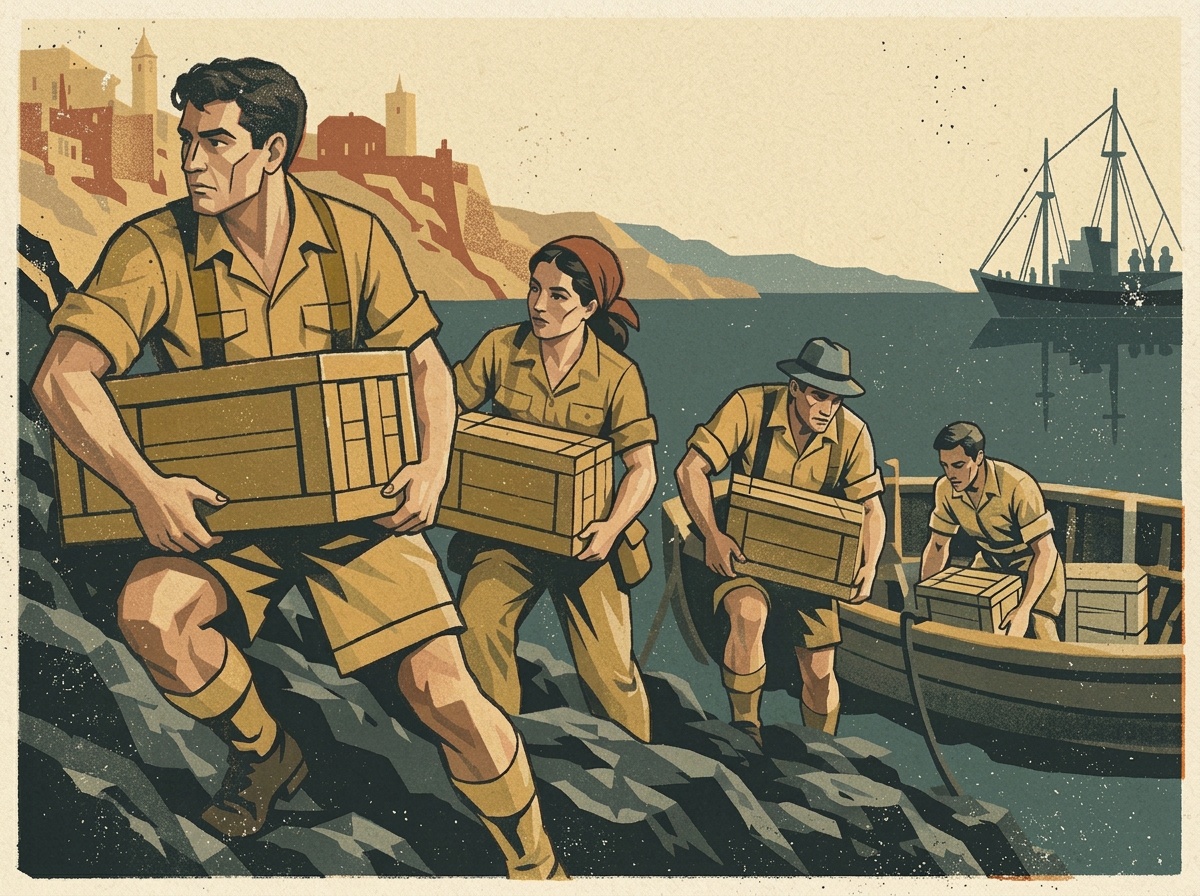
The next morning the fighters went out into the fields and milked the cows and pruned the orange trees and pretended that nothing was wrong.
The British surrounded the kibbutz at noon.
It was a full battalion. Lorries and Bren-gun carriers and a couple of armored cars, ringing the perimeter. The colonel in charge gave a megaphone speech in his clipped colonial English. Everyone is to gather in the central yard. Resistance will be met with force. Anyone attempting to leave the perimeter will be shot. The kibbutzniks gathered in the yard. The British soldiers fanned out through the buildings.
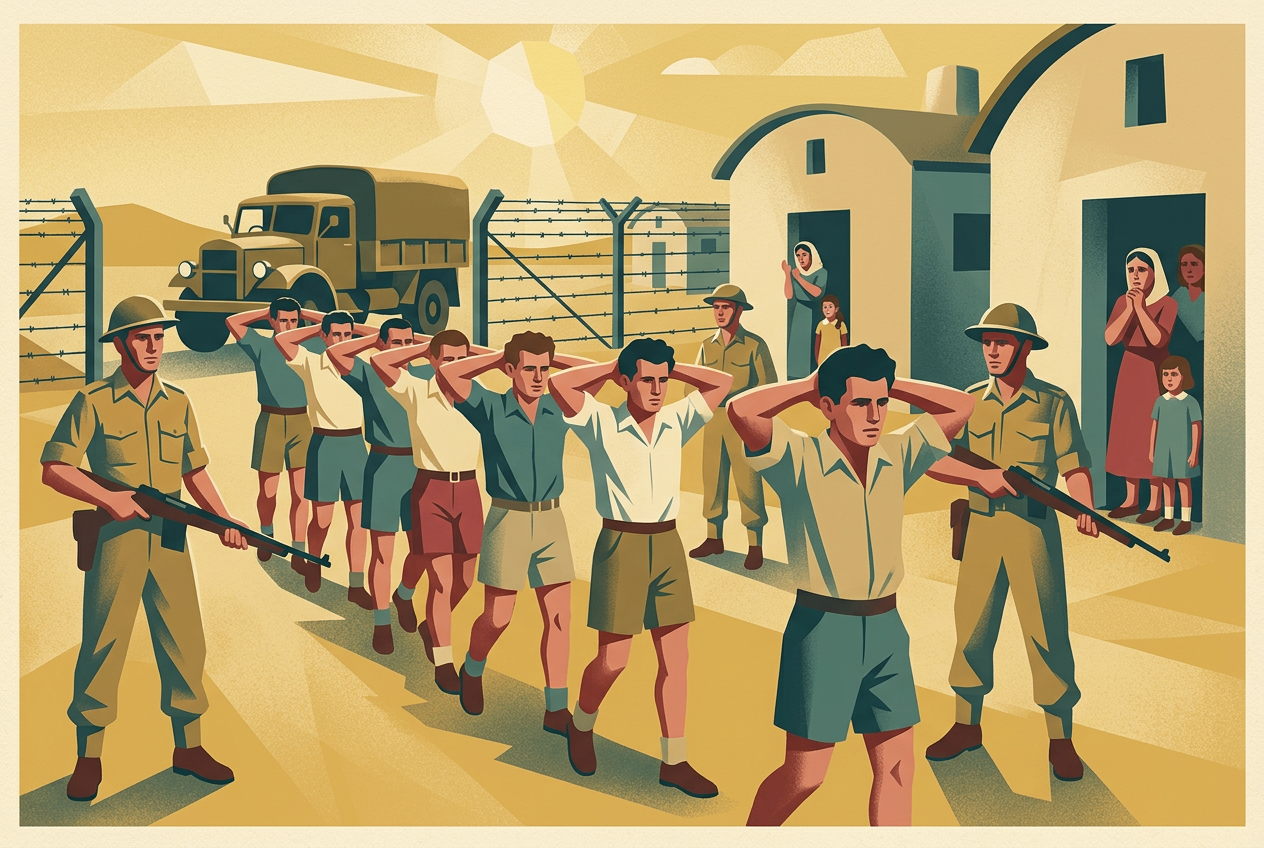
They searched. They searched the dining hall. They searched the laundry. They searched the children's house, where the small ones of the kibbutz were terrified by the men with rifles and the loud English voices. They searched the dairy. They searched the orange grove for hours. They found exactly one thing.
In the bushes near the perimeter fence, half-buried in the leaf litter, a soldier found a dummy Mills bomb: a training grenade, hollowed out, painted a dull green. It had been used in a training exercise some weeks earlier and someone had failed to retrieve it. It was harmless. It contained no explosive. It was, however, on its face, an item that no civilian kibbutz had any business possessing.
It was enough.
The colonel signaled. His sergeants started moving through the assembled kibbutzniks with rifle butts and short truncheons. They were looking for the boys. They knew, the way colonial occupiers always know, that the cadre of an underground army would be young and male. They began clubbing.
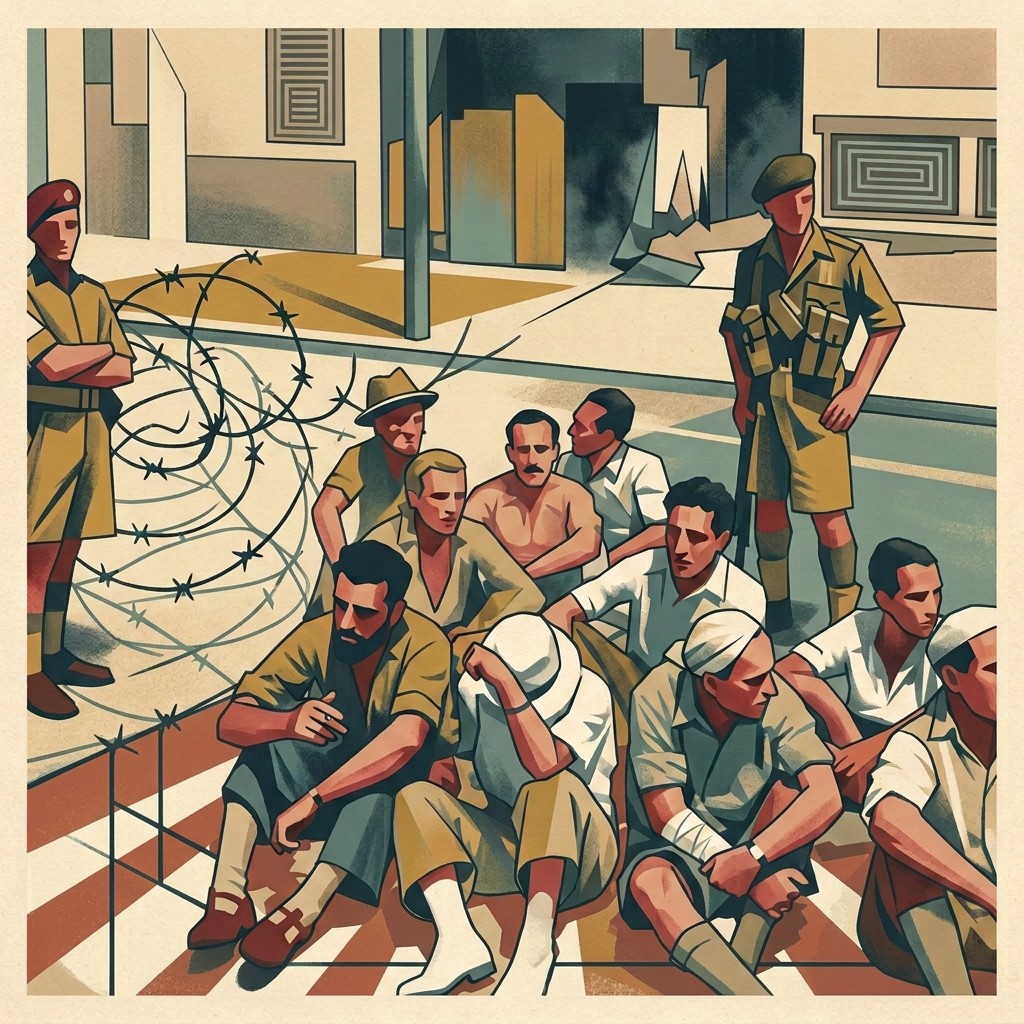
Shlomo was hit in the side of the right knee with a rifle butt. He went down. The fighter next to him went down on top of him. The fighter next to that one went down on top of them both. Within a minute thirty-five young Jews of the kibbutz were lying in a pile in the central yard, bruised and bleeding, being kicked and shouted at by the colonial troops in their khaki shorts.
The British loaded them, handcuffed in pairs, into the open backs of three lorries. They drove them, with no explanation, north and east, into the hill country. Several hours later they stopped at the British prison in Nablus.
The prison in Nablus was a big white stone building with high walls, in the middle of a town that, in nineteen forty-three, was an Arab nationalist stronghold. The British held it as a regional security base. The Jewish prisoners were processed and put into cells, six and seven to a cell, on cement floors, with metal slop buckets in the corner. The cells smelled of old urine and rotten potatoes. The other prisoners, many of them Arab nationalists picked up in the aftermath of the Revolt, some of them ordinary criminals, watched the new Jewish arrivals with a kind of impersonal curiosity. His father, the rabbi, did not know where he was. When the news of the British raid on the kibbutz reached Jerusalem, Yaakov knew that the youngest son who had supposedly been "helping with the harvest" for the last year had not actually been doing anything of the kind. He did not get frantic. He did not weep. He sent Shlomo's older sister Rachel, who was practical and brave and the kind of older sister who had been keeping track of her younger brother her whole life, to find out where he had gone. He's a Palmachnik, Father. The rabbi closed his eyes. He may have prayed. He certainly did not stop being his son's father. The charge on his record is carrying illegal weapons. The Jewish prisoners were transferred from Nablus, after a couple of weeks of processing, to Latrun. Latrun was, and is, a strategic crossroads on the highway between Tel Aviv and Jerusalem, about forty kilometers from each. Whoever holds Latrun controls the road. The British had built a fortress there in the nineteen thirties as part of a system of police forts designed by a Royal Engineers officer named Sir Charles Tegart, who had cut his teeth fighting the Bengali insurgency in India in the nineteen twenties. The Tegart forts were squat reinforced- concrete blockhouses with corner turrets, designed to dominate the surrounding terrain and to be defensible against any attack short of artillery. There were sixty-two of them scattered across Mandate Palestine. They are mostly still standing. Several of them are Israeli police stations today. Latrun was, by nineteen forty-three, also the British detention camp for Jewish political prisoners. Members of the Hagana, the Palmach, the Irgun, and Lehi, anyone caught with illegal weapons or anyone suspected of underground membership, would be held there without trial under the Mandate's emergency regulations. Among the famous prisoners who would do time in Latrun was Moshe Sharett, who would become the second prime minister of the State of Israel. He was held there for months in nineteen forty-six during the British "Black Sabbath" mass arrests. Many of the senior Hagana leadership cycled through the camp. Shlomo and his comrades did three months at Latrun. The food was bad: British rations, lentils and salt pork that he could not eat, hard biscuits and tea. The barracks were dormitories with twenty bunks each. The exercise yard was a stretch of dirt the size of a tennis court. The prisoners were allowed to write one letter a month, censored by a British clerk.
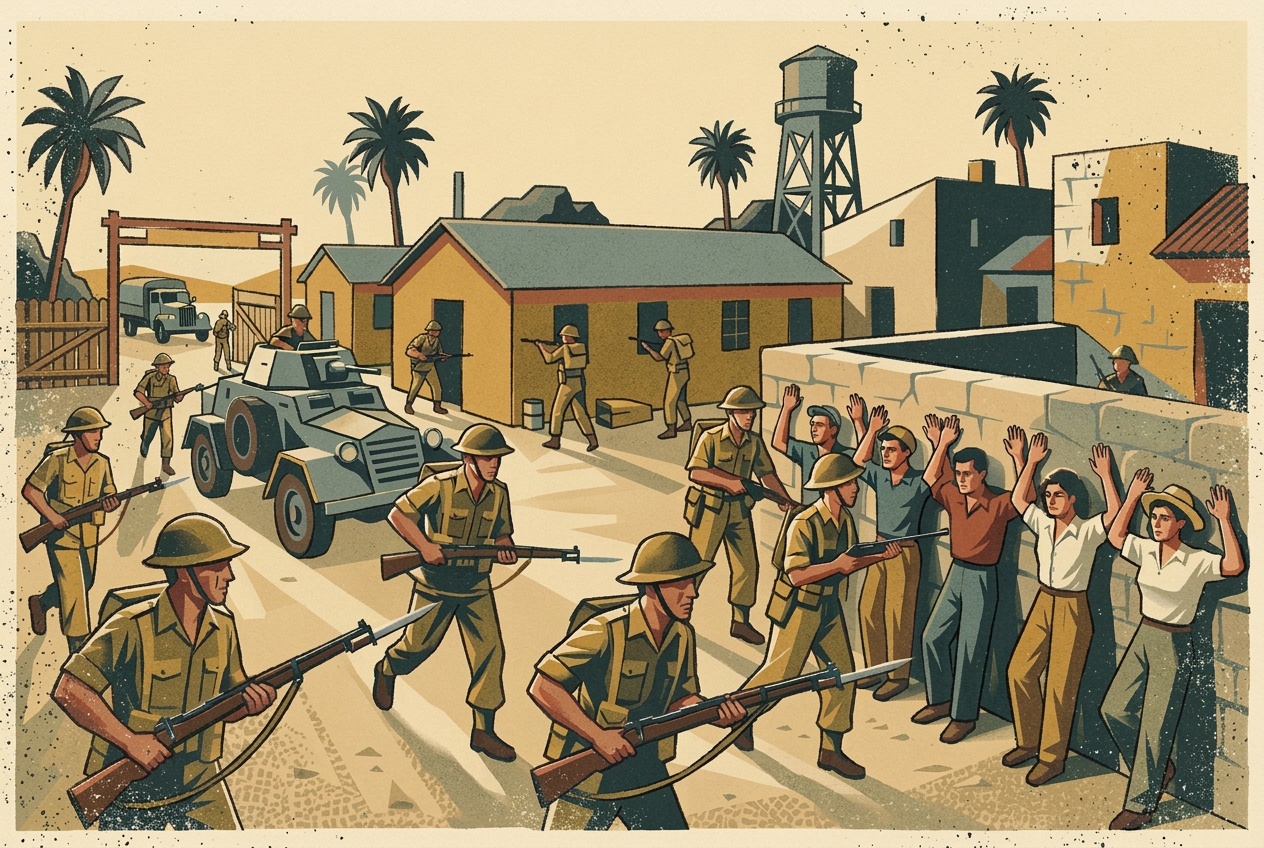
They were also, secretly, organized. Latrun functioned as a kind of university for the Jewish underground. The older Palmach fighters taught the younger ones what they had learned in the field. The Irgun prisoners, although officially the Palmach and the Irgun were rivals, and although in nineteen forty-four the Palmach would actively cooperate with the British in the Saison operation to suppress the Irgun: got along with the Palmach prisoners in jail. There were classes in topography, in signals, in basic Hebrew literature for the boys from Yemen and Iraq who had not had the schooling. There were exercise drills in the yard. There were lectures, after lights out, in the bunks. The British knew this was going on. They could not entirely stop it. They contented themselves with the fact that, while these men were inside Latrun, they were not blowing up British radar stations.
After three months Shlomo and ten of his comrades were released. The British procedure was deliberately cruel and deliberately unhelpful. They loaded the boys into a lorry, drove them out onto the Tel Aviv--Jerusalem highway in the middle of nowhere, opened the back, and waved them out.

"Go."
They had no shoes. The British had not bothered to return their boots, which had been confiscated on entry. They had no money. Shlomo had a single American dollar bill folded in the lining of his belt, he had kept it through the whole prison stay, against this exact moment, but no Palestine pounds. They had no food. They had only their thin prison shirts.
They flagged down the first bus that came along. The driver, a Jewish man, recognized them on sight, bareheaded, bare-footed boys with the look of people who had not slept indoors in weeks, and waved them aboard without asking for fares.
In Tel Aviv, on the local bus that took them from the central station to the neighborhoods, Shlomo saw his sister Rachel sitting two seats up. She had not been told he was being released that day. She was on her ordinary errand, on her ordinary bus, on her ordinary afternoon, when her younger brother sat down next to her smelling of three months of British prison food and looking like the last picture in a wartime newsreel.
She did not scream. She squeezed his hand. She wept quietly into her scarf for the rest of the ride. When they got off the bus she walked him through Tel
Saved from Sobibor
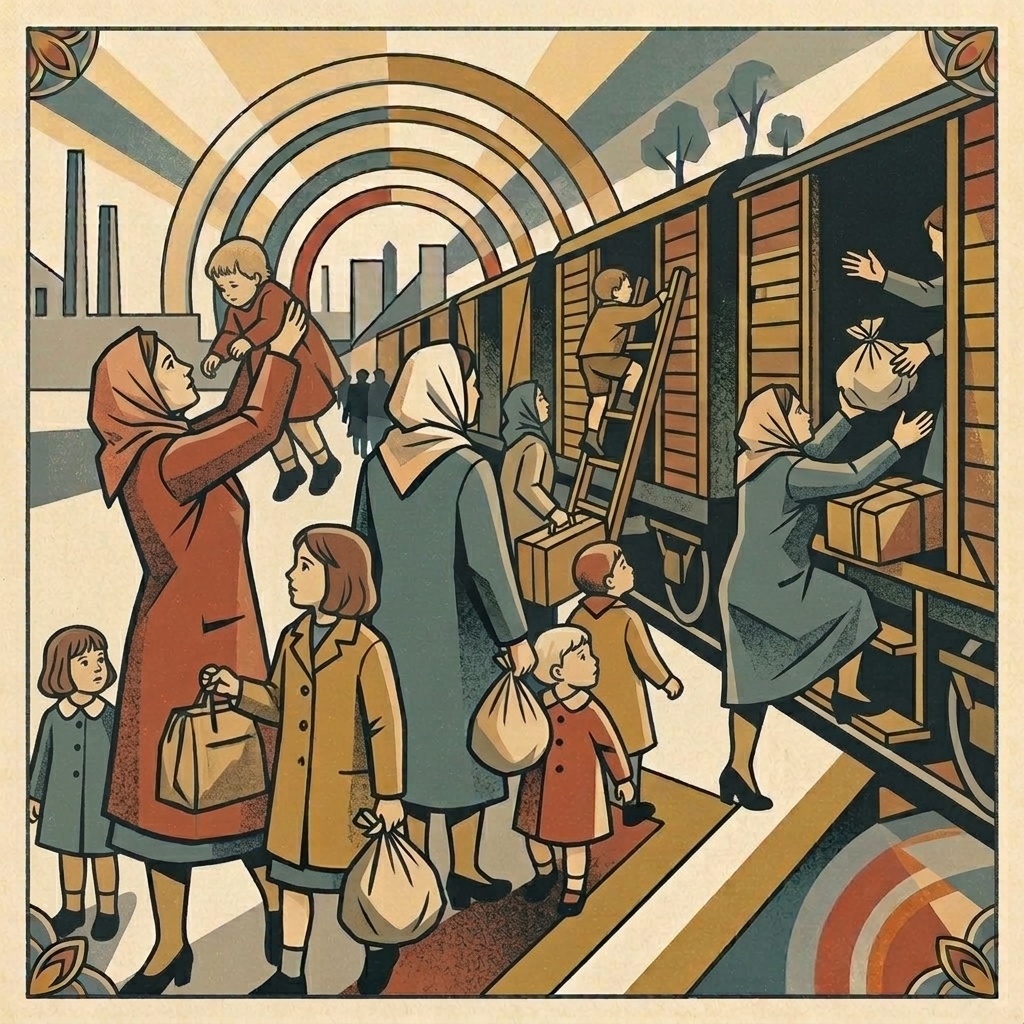
Aviv to the apartment of an aunt who could feed him before he was sent back to Jerusalem to face their father.
He had been in the Palmach a little over a year. He had a single American dollar to his name. He had been arrested by the British, beaten in a kibbutz yard, transferred to Nablus, held three months at Latrun. He had not, in any of this, fired a shot in anger.
He was about to.
In the summer of nineteen forty-three, sickness moved through the crowded barracks at Vught, and the SS answered it the way the SS answered everything. They decided to clear out the children. The order came down that every child in the camp, up to the age of sixteen, was to be removed. On the sixth and the seventh of June, nineteen forty-three, they were loaded into dirty freight cars. The mothers of the younger ones were loaded in with them. Nearly thirteen hundred children went north to Westerbork, the great transit camp in the northeast of the Netherlands, the funnel through which the Germans had already poured most of the country’s Jews on the way to the killing centers in the east. The thing was presented gently. The children were being taken to a special children’s camp, the families were told. A better place. A place that would be easier on the young. George and Ursula Levy were in that transport. They were carried out of Vught to Westerbork with all the other children and all the mothers. No one was held back at the gates of Vught. At Westerbork the transport paused only briefly. Then the order came to move on, and on the eighth the mothers and the children were put back onto the freight cars and sent east, still believing they were going to the special children’s camp. The special children’s camp was Sobibor. Sobibor was not a camp in any sense the word can survive when it is used about a place for children. It was one of the three killing centers the Germans built in occupied Poland for the single purpose of murder. Not labor. Not detention. Murder, at once, on arrival. A transport reached Sobibor and within a few hours almost everyone on it was dead. The train that left Westerbork on the eighth carried three thousand and seventeen people, more than a thousand of them children of sixteen and under. It reached Sobibor on the eleventh. Every person on it was killed. They had been told they were going to a place that would be better for the young. Five children did not go. When the transport moved on from Westerbork toward Sobibor, five children were held back, kept off the cars, left behind inside the wire. Two of the five were George and Ursula Levy. No virtue of their own held them back. The fiction held them back. The claim that they were the half-Jewish children of a Catholic father in America had reclassified them, on paper, as something the system had a reason to keep. The lie about Dr. Mueller, built months earlier by the people trying to protect them, did the exact thing it had been built to do, at the only moment that would ever matter. It held five children back from the cars while thirteen hundred others rolled east. George understood the shape of it even at twelve, and he carried it for the rest of his life. Not as guilt, though survival of that kind always leaves a residue. As knowledge. He knew the name of not one of the thirteen hundred. He knew that he and his sister had been in the same transport, marked for the same place, and that a piece of paper had reached down and lifted the two of them off the train. There is no moral in it. There is only the fact, and the fact is the argument of this whole book. In nineteen forty-three a Jewish child’s life turned on a forged identity and a stranger’s nerve, because the Jewish people had nothing larger than that to put between a child and a death camp. No state. No army. No border. So George and Ursula stayed at Westerbork. Westerbork was the antechamber of the killing centers, and in its daily texture it was still less violent than Vught had been. It was enormously overcrowded and the food was bad, but there were not the constant beatings. It was a place where people waited. What they waited for was the list. Every week a list was posted, the names of the people who would be put on the next transport out of Westerbork to the east. The transports left on a fixed schedule, and the whole psychology of the camp organized itself around the posting of that list. A prisoner went to the wall and read down the names. If your name was not on it you had been granted one more week of Westerbork, which was wretched, and which was not the train. If your name was on it, you knew. Week after week the relief of the spared and the dread of the named were measured out against the same sheet of paper on the same wall. George and Ursula read that wall from the summer of nineteen forty-three into the new year. For months their names stayed off it. In January of nineteen forty-four their names were on it. George was thirteen now, going on fourteen. Ursula was nine. They had been in Holland for almost five years. They had survived the convent and the sweep and the commandant at Vught and the transport that carried the other children to Sobibor. Now a train was coming for them too. The fiction was still working. The train they were put on in January of nineteen forty-four was not going to Auschwitz, and it was not going to Sobibor. Their classification sent them to a camp inside Germany itself, because of the half-Jewish claim and the American uncle and the possibility, however remote, that the two of them might one day be worth exchanging. They were going to a place whose name had not yet gathered, in the winter of nineteen forty-four, the horror it would carry by the spring of nineteen forty-five.
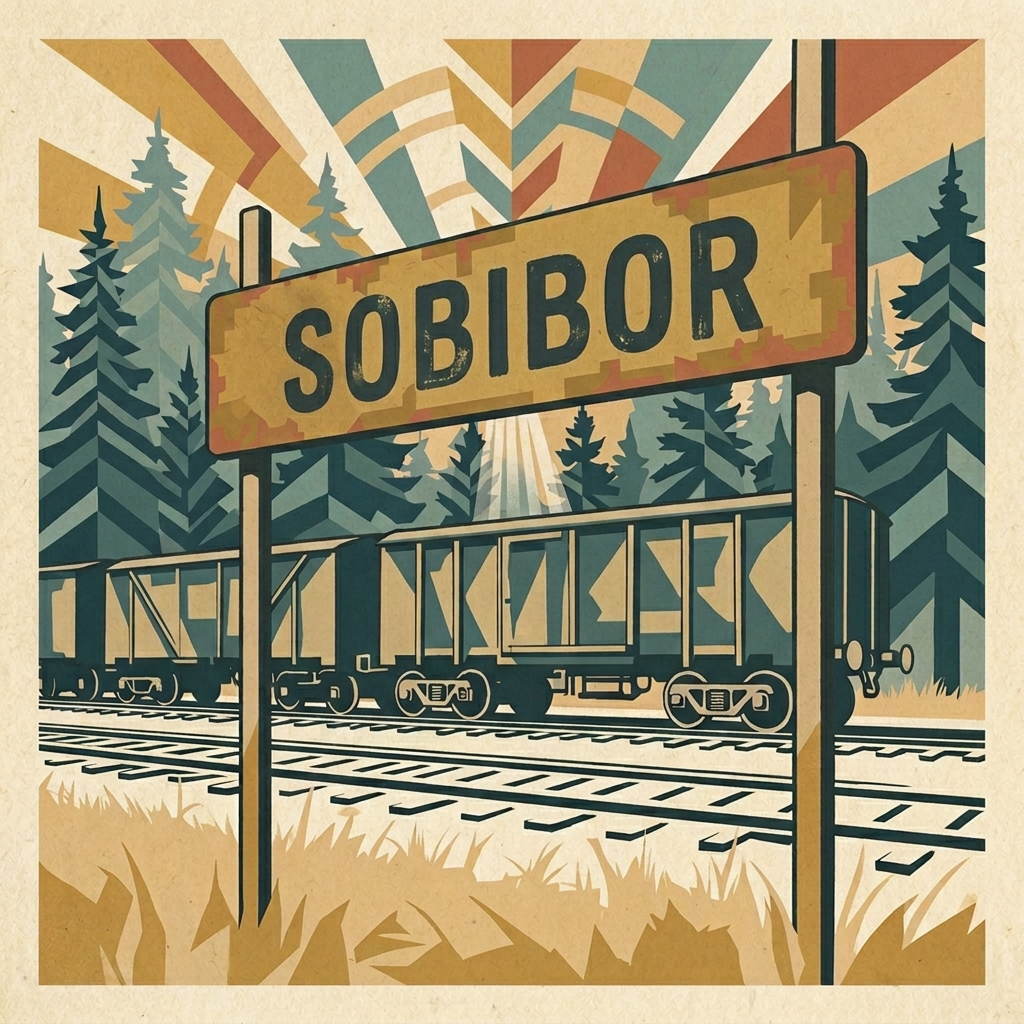
Bringing the People Home, Part One: From Syria
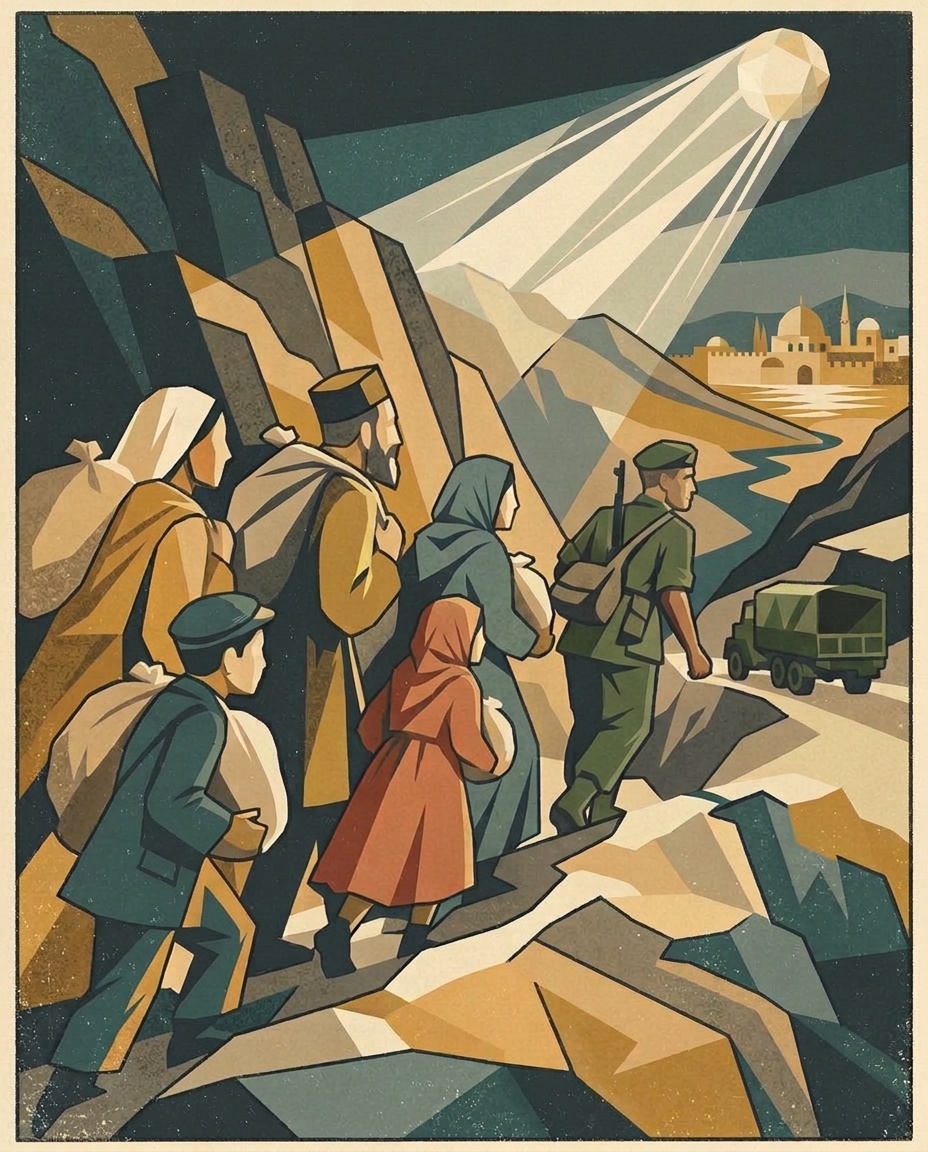
The greatest moral fact about the State of Israel is that her doors have never been closed. It is the only country in the world whose central organizing principle is to take in the homeless of one particular family of humanity. The Law of Return, passed by the Knesset in nineteen fifty, gives every Jew on earth the automatic right to immigrate and acquire Israeli citizenship. The principle has no equivalent anywhere else. France does not have a Law of Return for the French diaspora. Italy does not. China does not. Israel does because Israel exists in the first place for that purpose. But in the nineteen forties the doors were not yet open. The country itself did not yet exist. The territory was a British Mandate, and the British, after the Arab Revolt of the late nineteen thirties, had decided that they could not afford to admit Jewish refugees in any number that would alarm the Arab population. The White Paper of May, nineteen thirty-nine, issued by the Chamberlain government, the same government that signed the Munich Agreement the previous September, set the limit at seventy-five thousand Jewish immigrants over five years, after which immigration would cease unless the Arabs consented. The Arabs, did not consent. The White Paper went into effect in the same months that the Nazi regime began the systematic stripping of citizenship and property from the Jews of Germany and Austria. It hardened over the course of the war, as the Yishuv learned what was happening to the Jews of Europe. The British turned back ship after ship of refugees. They interned the Jewish refugees they did catch, in camps in Atlit, north of Haifa, and later in Cyprus. They sometimes sent ships back to the Mediterranean. The most infamous of these expulsions had not happened yet in nineteen forty-four when Shlomo got out of Latrun, the Exodus affair was still three years away, but the policy was already entrenched. After the war, in nineteen forty-five, when the death camps were opened and the world saw what had been done, the British did not lift the immigration restrictions. They tightened them. The American president Harry Truman wrote a famous letter to Prime Minister Attlee asking that one hundred thousand survivors be admitted to Palestine immediately. Attlee refused. The British thought of Palestine as a strategic asset they could not afford to alienate the Arabs over.
The Jews of Palestine therefore decided, by stages, to open the doors themselves.
The decision was made by the Hagana leadership in coordination with the Jewish Agency. The operation was called Aliyah Bet, Aliyah B, to distinguish it from the official, legal Aliyah that was strangled by British quotas. Aliyah Bet was the clandestine Aliyah. It would, between nineteen forty-five and nineteen forty-eight, smuggle more than a hundred thousand Jews into Palestine in the teeth of the British navy. It would do so in old freighters bought on the cheap in Marseille and Genoa, in fishing boats refitted in Tangier, in dilapidated ferries leased from European shipping companies that did not ask too many questions. It would do so by land, too: across the Syrian and Lebanese frontiers, through the dry riverbeds of the eastern Galilee, on the backs of young Palmachniks like Shlomo Lev.
He was assigned, after his release from Latrun, to the northern border.
The Syrian operation worked like this. The Jews of Syria: a community that had been living in Damascus and Aleppo and the smaller towns of the Syrian interior for two thousand years, since well before the rise of Islam, were facing increasing persecution as the Arab nationalist movements rose against the French Mandate. By the early nineteen forties, Syrian Jewish families were beginning to look for ways out. The Jewish Agency in Jerusalem set up a network of Palmach operatives, under Hagana intelligence direction, who would receive them and bring them across.
Shlomo worked these runs out of Ayelet HaShachar, the kibbutz in the upper Galilee under the Naftali ridge, close enough to the frontier that a unit could leave after dark and be over the border before midnight.
A typical operation went as follows. A Palmach unit of perhaps eight to ten fighters would cross from the Yishuv into Syria over the mountains of the Golan, on foot, at night. The Golan in those years was an empty highland of basalt and thistle, dotted with a few Druze villages and not much else. The Palmach unit would have a contact, usually an Arab guide paid for his services and his discretion, who would meet them on the Syrian side. The guide would lead them to a rendezvous point near the road, often a clump of trees near a culvert. There they would meet a bus or a truck or several taxis, each loaded with a Jewish family that had been told to come to that spot at that hour and to bring only what they could carry.
The Palmach unit would then walk the families, sometimes ten people, sometimes thirty, back across the mountains. At night. In silence. With the children carried on the fighters' shoulders so that they would not cry. Sometimes for many miles.
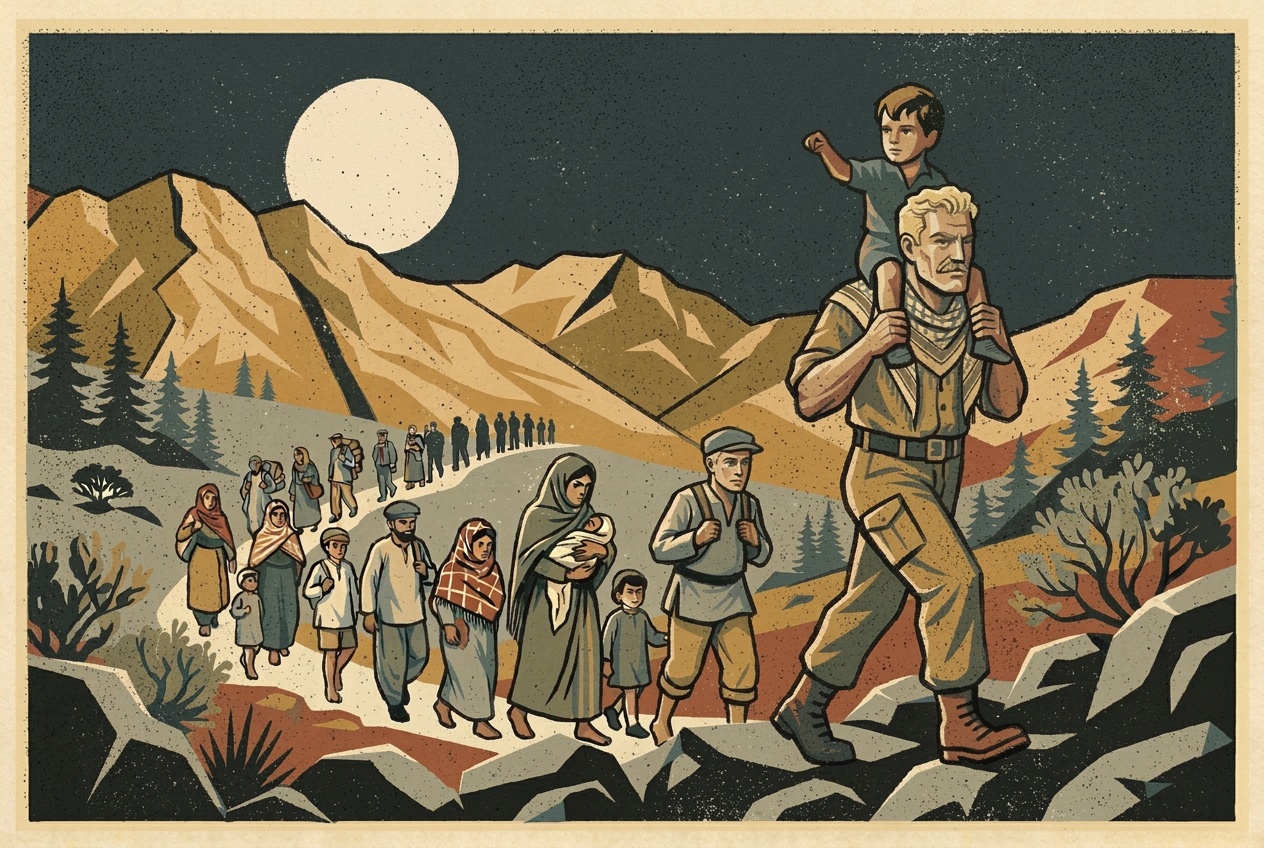
Once they had reached the Syrian-Mandate border, they had a second problem. The British had drawn a second border inside their own territory: a security line between the Jewish settlements of the north and the Syrian frontier, monitored by armed checkpoints, designed to keep exactly this kind of refugee movement from succeeding. To get past it, the Palmach unit had to go miles around through dry riverbeds.
The standard technique was a chain of lookouts. Ten fighters would walk the whole route to its end, leaving one fighter hidden every kilometer or so, in a bush, behind a rock, under an olive tree, as they went. By the time they reached the rendezvous point at the orange grove of Kibbutz Ashera, the chain was strung the entire way back to the border. If anything went wrong on the return, a British patrol, an Arab Legion patrol, a freak encounter with a shepherd, the lookouts could fire signals or scream warnings down the chain, and the convoy of refugees and fighters could go to ground or take a detour.
It was Shlomo's job, often, to be one of the lookouts. He was small. He was good at hiding. He had a rifle. He could lie in a bush for hours without moving.
On one such night he had been left alone in the dark, after his comrades had walked away to the next station of the chain. He found a thick bush in the bottom of a wadi and bent down to crawl into it. He had just settled in, was just about to lower himself into a sitting position with his back against a rock and his rifle across his knees, when something jumped out of the bush onto his back.
He never knew, for the rest of his life, what it was. It might have been a man: an Arab smuggler, a thief, a shepherd who had bedded down for the night. It might have been a hyena. It might have been a leopard. There were still leopards in the wadis of the eastern Galilee in nineteen forty-four. It might have been a wild boar. He felt only that something with weight and breath had come down on him and that it ran away in the same instant, silently, down the wadi.
He felt his hair stand on end. He felt his heart fill, for the first time in his memory, with something like terror. He had not been afraid of heights and he had not been afraid of rifle butts and he had not been afraid of British colonels and he had not been afraid of three months in Latrun. He had, however, just been jumped on in the dark by an unknown animal in an empty wadi, and his body had reacted in the animal way. He drew his pistol: a Webley revolver the Palmach had issued him as a sidearm, six rounds. He sat in the bush with the pistol in his lap and waited for the thing to come back. It did not come back. The night drained slowly toward dawn. The chain of lookouts held. The convoy passed safely along the dry riverbed at three in the morning, he heard the muffled footfalls and the soft Hebrew commands as it went by, and continued on toward the orange grove of Kibbutz Ashera.
At Kibbutz Ashera there were three concealed tents set up in the trees. The refugees were taken in. They were fed. They were given Palestine clothes: the men got khaki shirts and shorts, the women got modest cotton dresses, the children got hand-me-downs from the kibbutz nursery. The Syrian clothes they had come in were burned, in case they contained anything traceable. Within a day or two the families were put on buses bound south, with forged Palestine identity papers, and dispersed into the Yishuv. They became, with that paperwork, Palestinian Jews. Many of them are still alive today. Their grandchildren are Israeli citizens. Their great-grandchildren serve in the IDF. At dawn the smugglers walked back through the orange groves to start again. This was Shlomo Lev's seventeenth birthday.
Bringing the People Home, Part Two: From Lebanon
After several months on the Syrian operation, Shlomo's section was moved west, to the border with Lebanon. The Lebanese border in nineteen forty-five was a different proposition from the Syrian border. The Lebanese coast, the green hills above Tyre and Sidon, the seaside villages with their fishing fleets and their Phoenician ruins, had a road running south along the Mediterranean directly into Palestine. The Jewish town of Nahariya, just south of the border, was the smuggling endpoint. The mountain roads were guarded by Vichy-trained French troops in nineteen forty (the Free French had taken over in nineteen forty-one) and, by the war's end, by the new Lebanese army and the Arab Legion of Transjordan, which patrolled with armored cars and machine-gun-mounted Bren carriers. The Palmach in those years had developed two special operational units that were particularly active on the Lebanese border. The first was Ha- Machlaka Ha-Germanit, The German Platoon. It consisted of young Palmachniks who had been born in Germany or Austria, who had escaped before the war, and who spoke fluent native German. They had been used by the British during the war for covert operations behind Axis lines in North Africa and the Balkans. One of their most famous exploits had been disguising themselves as Wehrmacht soldiers in a raid against a German fuel depot in Cyrenaica during the long campaign against Rommel. After the war they remained a covert-operations asset of the Palmach. They worked clean. The second was Ha-Machlaka Ha-Aravit, The Arab Platoon. It consisted of young Palmachniks who had grown up in Arab countries, Yemenites and Iraqis and Syrians, or who had been raised among Arabs in mixed neighborhoods of the Yishuv and spoke Arabic without an accent. They lived as Arabs. They wore Arab clothes. They went into Arab villages and Arab cafes and Arab markets and listened. They were the eyes and ears of the Hagana inside the Arab world. They were also, on operations, lethal. Years later their successors would form the foundation of the Israel Defense Forces' Mista'arvim units: the famous Israeli special-forces operatives who can pass for Arabs and who have, in the decades since, brought back hostages from Beirut and Gaza. Shlomo's unit on the Lebanese border included one such Arab-speaker. He was a Damascene Jew named Yusuf, that was probably not his real Palmach name, but the Hebrew form he later went by was Yosef. He had come over in one of the very first Palmach extractions out of Syria, two years before. He spoke Damascus Arabic with the cadences of a man who had grown up haggling in the Souk al-Hamidiyya. The unit's job, often, was to scout possible smuggling routes through Lebanese territory and to make contact with potential local guides.
Once, on such a scouting trip, Shlomo and three other fighters were stopped on a road by a patrol of the Arab Legion. The Legion was the gendarmerie of Transjordan: Bedouin troops commanded by British officers, the most disciplined Arab military force in the region. They were not stationed in Lebanon, but in this period they ranged freely across borders, and the British were content to let them do so.
The four Palmachniks were unarmed. The whole point of a scouting trip was to avoid being caught with weapons. They were dressed in cheap Lebanese clothes: loose trousers, white shirts, embroidered vests. They were posing as peddlers.
The Legion lieutenant demanded papers. He looked at the four of them. He stopped on Shlomo, who was blond and pale and had blue eyes. The lieutenant decided, with the flat certainty of a man accustomed to being right, that this was a Lebanese infiltrator: perhaps a Christian, perhaps a French-trained provocateur, perhaps a Jew. He could not say what, exactly. He decided to arrest Shlomo alone.
The standoff dissolved into shouting. Yusuf, speaking in the village Arabic of the lieutenant's own region of Transjordan, laughed at the lieutenant. The lieutenant could not, somehow, get the arrest organized. After fifteen minutes the patrol simply gave up, told the peddlers to keep moving south, and rode off.
The four of them walked into the next Arab village along the road. It was a small village, perhaps two hundred inhabitants, with a single café in the central square. They sat down at the café. They ordered coffee. They played backgammon.
This is one of those small details that the texture of Shlomo's life turns on. Shlomo Lev had become, in the long evenings at the kibbutz, a champion backgammon player. The game in the Yishuv was an obsession in those years. Every kibbutz had its champions. Every Arab cafe in the country had its champions. Shlomo had played and lost and played and lost and finally, by sheer hours of practice, became the champion of Pluga Daled.
At the cafe in the Lebanese Arab village he sat down across from a local farmer who had been the village champion for as long as anyone could remember. He played him. He beat him. He beat him again. He beat him a third time. The local farmer, who had at the start of the game looked at the small blond stranger with the suspicious squint of a man who suspects a French agent, ended the third game laughing and slapping the table and calling for another round of coffee. The whole village had gathered to watch. By the time Shlomo and his comrades stood up to leave, an hour later, the suspicious looks had turned into admiration. The village would, the next time a Palmach unit needed to pass through, remember them as friends. There is something in this episode, the backgammon, the laughter, the conversion of suspicion into welcome, that is at the heart of how the Yishuv survived in nineteen forty-five. The Jews of Palestine did not, by and large, win the Arab villages over by force. They could not. They were outnumbered. They won them over, where they won them over at all, by being recognizable as human beings to other human beings. By playing backgammon. By drinking strong coffee. By laughing at the right jokes. Many of the Palmach's intelligence sources in Arab villages were maintained in exactly this way. The truck incident at the Bren-gun checkpoint was less elegant. A few weeks later Shlomo was leading a group of about twenty Lebanese- Jewish refugees, mostly women and children, down out of the hills toward Nahariya. He had loaded them into the back of a small flatbed truck whose Lebanese-Christian driver, an Arab man from a Maronite village along the road, had figured out instantly what was happening when Shlomo's unit had flagged him down. The driver had not asked for money. He had said only, in good Hebrew, I will take them. The Maronites of Lebanon, descendants of the early Christian heretics of the eastern Mediterranean, often had a quiet sympathy for the Jews. Their priests had been giving Jewish refugees shelter for years. The road came down out of the hills toward the coast. As they approached the bridge that crossed the main highway, Shlomo saw what was ahead. The Arab Legion had set up a checkpoint at the bridge. There were two Bren-gun carriers, half tanks, half armored cars, with mounted .303 machine guns on top, drawn up on either side of the bridge so that cars had to slow to a crawl and weave between them. There were perhaps eight legionnaires visible. The Maronite driver did not slow. He floored the accelerator. The truck bounced over the small rise that came before the bridge and roared toward the checkpoint at perhaps sixty kilometers an hour. The legionnaires were not, in that moment, manning the Brens. They had been smoking and drinking tea on the side of the road, in the lazy heat of the early afternoon, and the machine guns sat on their tripods unattended.
One legionnaire ran toward the truck. He leapt onto the running board as it passed and grabbed for the wheel. The Maronite driver let go of the wheel with his left hand, jerked his elbow into the man's face, and shoved him off. The legionnaire went flying. He landed in the dirt and rolled. The truck roared past, with twenty Jewish refugees in the back gripping the sideboards.
The Brens, still unmanned, swung on their tripods.
The truck made the run to Nahariya. The refugees were delivered to the safe house, a Hagana flat above a fish shop on the seafront, and from there dispersed inland. The driver was paid in gold coins from a Hagana pouch and disappeared back over the border with a wave. Shlomo blessed God in the old Yiddish formula, Boruch Hashem, and went and found a glass of water and sat on the floor of the safe house with his back against a wall.
The refugees from that truck and from the dozens of other operations like it became, in the years that followed, Israeli citizens. Some of them are still alive, in their nineties now, living in Nahariya and Haifa and Karmiel and Beersheba. Their grandchildren are doctors and software engineers and IDF officers.
The Star Camp
Bergen-Belsen sat on a stretch of heath in Lower Saxony, in the north of Germany. George and Ursula Levy were brought there in January of nineteen forty-four, and they were assigned to the part of it called the Sternlager, the Star Camp.
The Star Camp was a particular invention. It held the so-called exchange Jews, the Austauschjuden, a population of several thousand the Germans had decided, for the moment, not to kill. They were Jews thought to be worth something alive: Jews with proven connections to enemy states, Jews holding foreign passports, including the "passports of convenience" that desperate families had bought from South American and Central American consulates in the hope that a piece of foreign paper might shield them. Diamond dealers. People the regime categorized, in its own vocabulary, as Jews of merit. The idea was that such people could be traded, exchanged for German nationals held by the Allies, or for hard currency. They were made to wear the Star of David, which gave the camp its name. But they were, at first, allowed to keep their own civilian clothes, and they were spared the hardest labor, and they were kept alive.
George and Ursula belonged in the Star Camp because of the fiction, because the claim of a Catholic father and an American uncle had made them, on paper, exactly the kind of Jew the exchange system existed to hold. For a while, at the start, the family classification did what it had done before: it bought a slightly softer treatment. The Levy children were, at first, a little better off than the general run of prisoners.
It did not last. Almost nothing at Bergen-Belsen lasted, except the camp's capacity to get worse.
Through nineteen forty-four and into nineteen forty-five, as the Soviet army drove in from the east, the Germans evacuated the camps in occupied Poland and force-marched and shipped their surviving prisoners westward, into the camps inside Germany. A great many of them were poured into Bergen-Belsen. The place had never been built to hold such numbers. It had no gas chambers. It had not been designed as a killing center. It did not need to be. Overcrowded past any sane limit, without adequate food, water, sanitation, heat, or medicine, Bergen-Belsen simply became a machine for killing people slowly, by starvation and exposure and disease, and above all by typhus. In the last months before liberation it killed tens of thousands.
This is the camp in which George Levy spent the end of his childhood, from the age of thirteen to the age of fourteen.
He kept his sister with him. That had been the instruction, on the platform in Lippstadt, and George had now been keeping it for five years and he did not stop keeping it at Bergen-Belsen. He managed, somehow, to have Ursula with him in the men's barracks. They slept in the same bunk, the bunks were stacked three high, a board on the floor, a board in the middle, a board near the ceiling, and George and Ursula slept in their bunk together, feet touching, so that each of them would know in the night that the other was still there.
The barracks themselves were beyond the ordinary reach of description, and George, telling it as an old man, did not strain after fine language. He simply listed. There were lice crawling over their bodies, all the time. There was no heat. There was, for practical purposes, no place and no time to relieve yourself, so people relieved themselves where they were, on the floor. The man sleeping next to you might be dead in the morning. This happened, George said, many times. People died in the middle of things. You could be speaking with someone and he would give a single loud cry and be gone. The dead were carried out of the way and laid along the wall of the barracks, and by the end of a week, or two weeks, the whole length of the barracks would be lined with bodies, feet out, and the bodies would be naked. They were naked because the living needed what the dead no longer needed. If a dead man had shoes without holes in them, and you had shoes with holes, you took his shoes. If he had a garment that would hold a little warmth, you took it. Then, every week or so, a detail would come through and fling the bodies up onto a truck, where they piled like a haystack, and the truck would carry them away.
There were the roll calls, the Appell, standing in ranks for hours in the cold while the count was taken. And there were the Kapos. A Kapo was a prisoner who had been given authority over other prisoners and a measure of privilege for using it, and the system did much of its daily violence through them. George remembered two Kapos in particular at Bergen-Belsen, men he understood to be Russian or Ukrainian criminals, actual murderers, who had been set over the prisoners and who beat them. He watched, standing in the roll-call line, a Kapo beat the man in the row beside him, beat him, and beat him, and go on beating him, until even the German guard standing there told the Kapo that it was enough, that he could stop now. When a German guard is the one who calls a halt, you have a precise measure of the world you are standing in.
In the late autumn of nineteen forty-four a transport of women arrived from Auschwitz. They were not put in the Star Camp. They went into the tent camp on the open plain, and when the storm of the seventh of November flattened the tents they were moved into the huts of the small women's camp, which stood next to the Star Camp, behind its own wire. George remembered the women arriving. He did not know, then, that among them were a mother and her two daughters from an Amsterdam family named Frank, or that one of the daughters was a fifteen-year-old girl named Anne, who had been keeping a diary. Prisoners on George's side of the wire could sometimes meet the ones on hers at the fence, in the half-dark. In December a girl in the Star Camp wrote in her diary that the Frank sisters were in the other camp. Anne Frank died of typhus in February of nineteen forty-five, two months before the British came, and her sister Margot died within days of her. George learned that only long afterward, the way the world learned it. At the time they were simply more women, from the east, walking into the same dying place.
And yet George Levy, fourteen years old, starving, grey, surrounded by the dead, was certain, flatly, unshakably certain, that he was going to live.
He had reasons, and the reasons were not faith and were not denial. They were intelligence reports, gathered by a teenager with his eyes open. He could see the sky. Day after day the sky over Germany went black with American bombers flying east, and a boy who watched that sky could count, and could draw a conclusion. He knew the Allies had landed in Normandy. He knew the Russians were coming on. He knew, with what he later described as one hundred percent certainty, that Germany was losing the war and that the camp would, in the end, be reached. The only problem, the whole of the problem, but also, clarifyingly, the entire problem, was to stay alive until it was. That was the project. Hang on. Stay alive. The war would do the rest.
And there was one more thing George insisted on, every time he told this story, because he refused to let the account be only darkness. Not everything, he said, was bad. There had been, even here, one small good thing, and he wanted it on the record.
He was so hungry, one night, that he went to a guard. The guard, in the dark, brought his weapon up and asked the boy what he wanted. George told him the truth: that he was starving, that he had to have something to eat, and that he had a little sister in the barracks. The guard told him to come back the next night. And the next night the guard gave George a slice of bread, one slice, all he could spare, and George took it back and shared it with Ursula. When George looked at the guard, he saw that the man was perhaps only four or five years older than himself. A boy, a little older, on the other side of the gun, who had found one slice of bread and decided to give it to a Jewish child. George kept that, deliberately, alongside everything else. It was the reason a man who had every right to a closed heart could say, at the end of a long life, that hope had been real even in Bergen-Belsen, that you could be inside that place and still find, once, a human being.
The bread did not change the arithmetic of the camp. By the early spring of nineteen forty-five Bergen-Belsen was collapsing into itself, the typhus everywhere, the dead beyond counting. The British army was coming. It would reach the camp in the middle of April and find horrors that its soldiers would never afterward be free of. But George and Ursula would not be there to be found by the British. In the first days of April, with the Allied armies closing from both directions and the SS frantic to empty the camp before they arrived, the Germans began loading prisoners back onto trains.
George and Ursula Levy were put on one of them. It would become one of the strangest and most terrible journeys of the entire war, and it has a name. It is called the Lost Transport.
Aliyah Bet, Bringing the Survivors
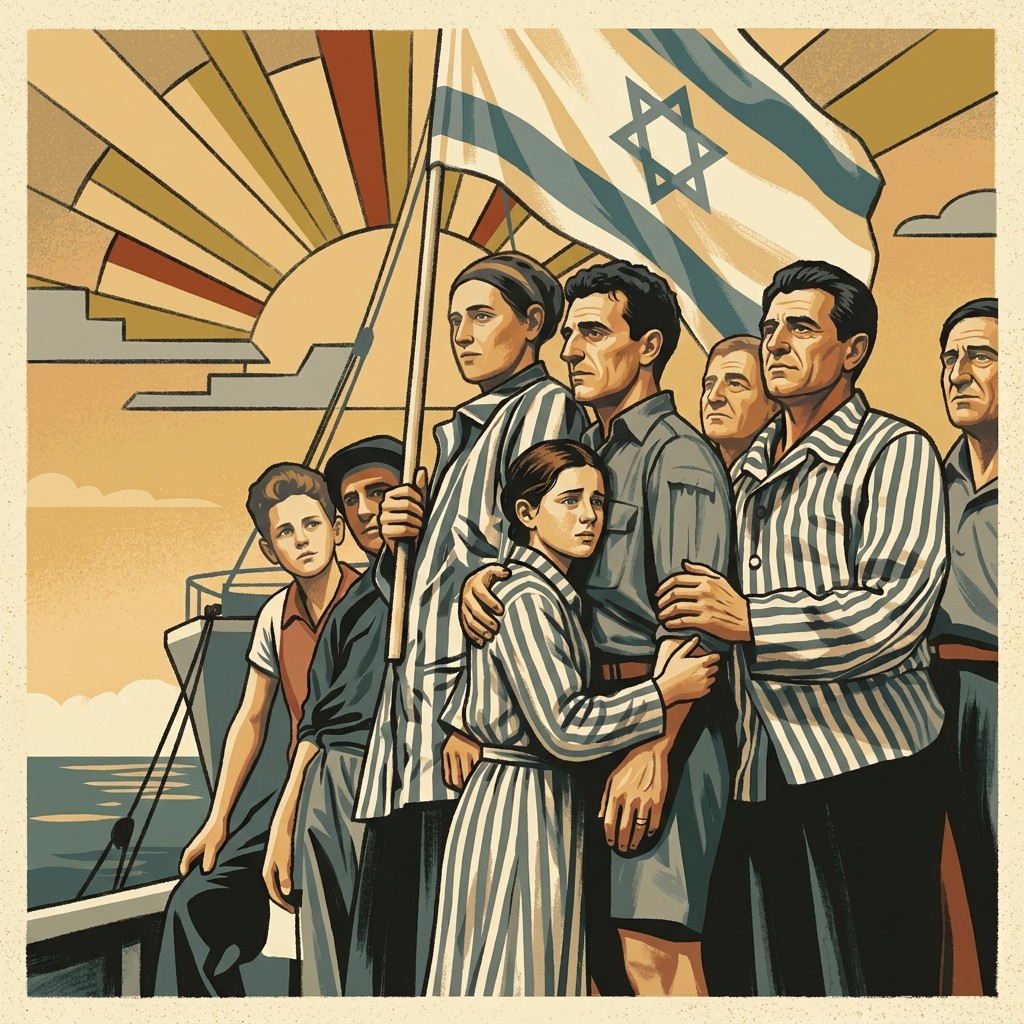
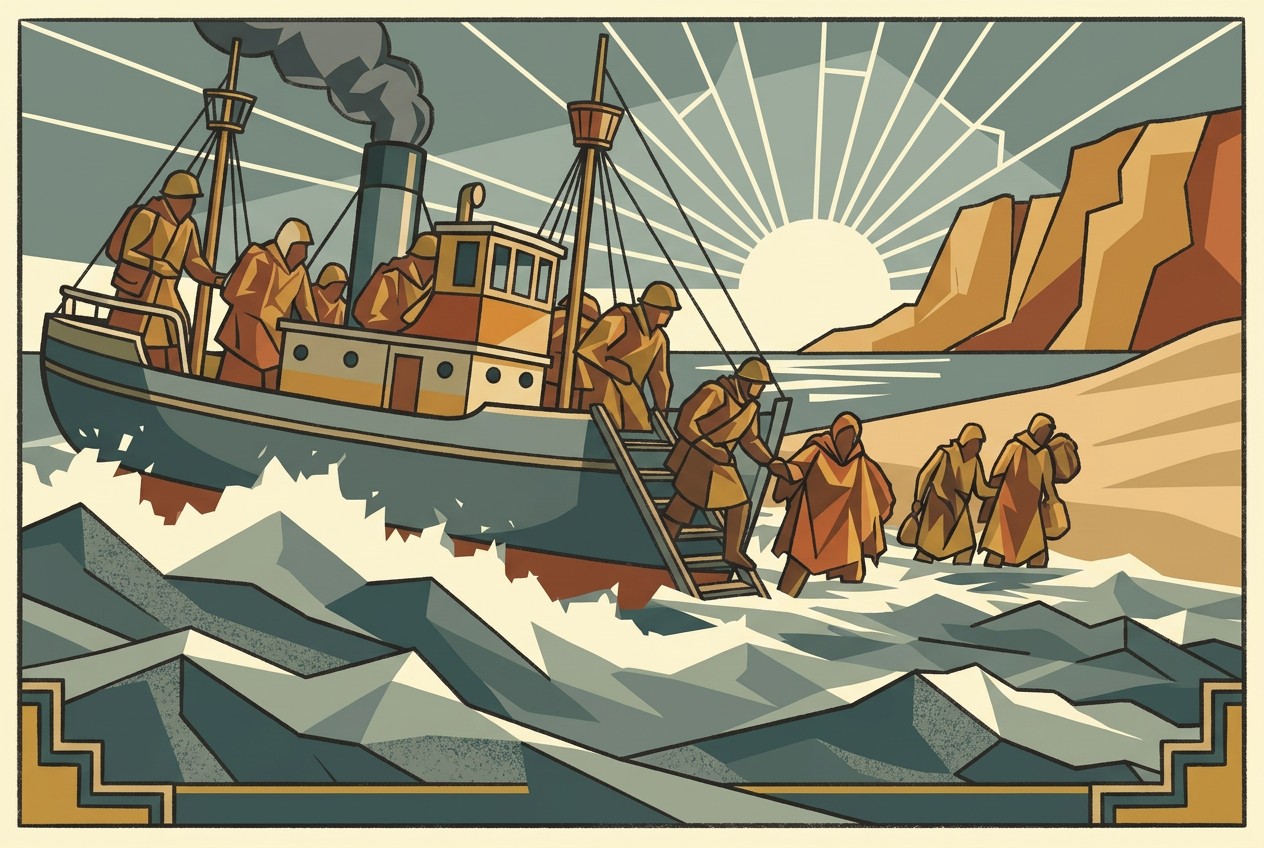
If the modern State of Israel exists at all, it is because young people like Shlomo went to the sea and pulled survivors out of it.
The pivot in Shlomo's life came in nineteen forty-three, when he transferred from the land-based operations of Pluga Daled to the maritime arm of the Palmach. This unit had a separate name and a separate culture. It was Pluga Yud, Company Ten, the tenth letter of the Hebrew alphabet, or, more commonly, Palyam: Plugot Ha-Yam, The Sea Companies. It had been founded in nineteen forty-three, formally attached to the Palmach's Staff Battalion, the Fourth Battalion. Its mission, defined from the start, was the most morally important of any unit in the Yishuv: to take the ships of Aliyah Bet through the British naval blockade and to land their cargoes of human beings on the beaches of the Land of Israel.
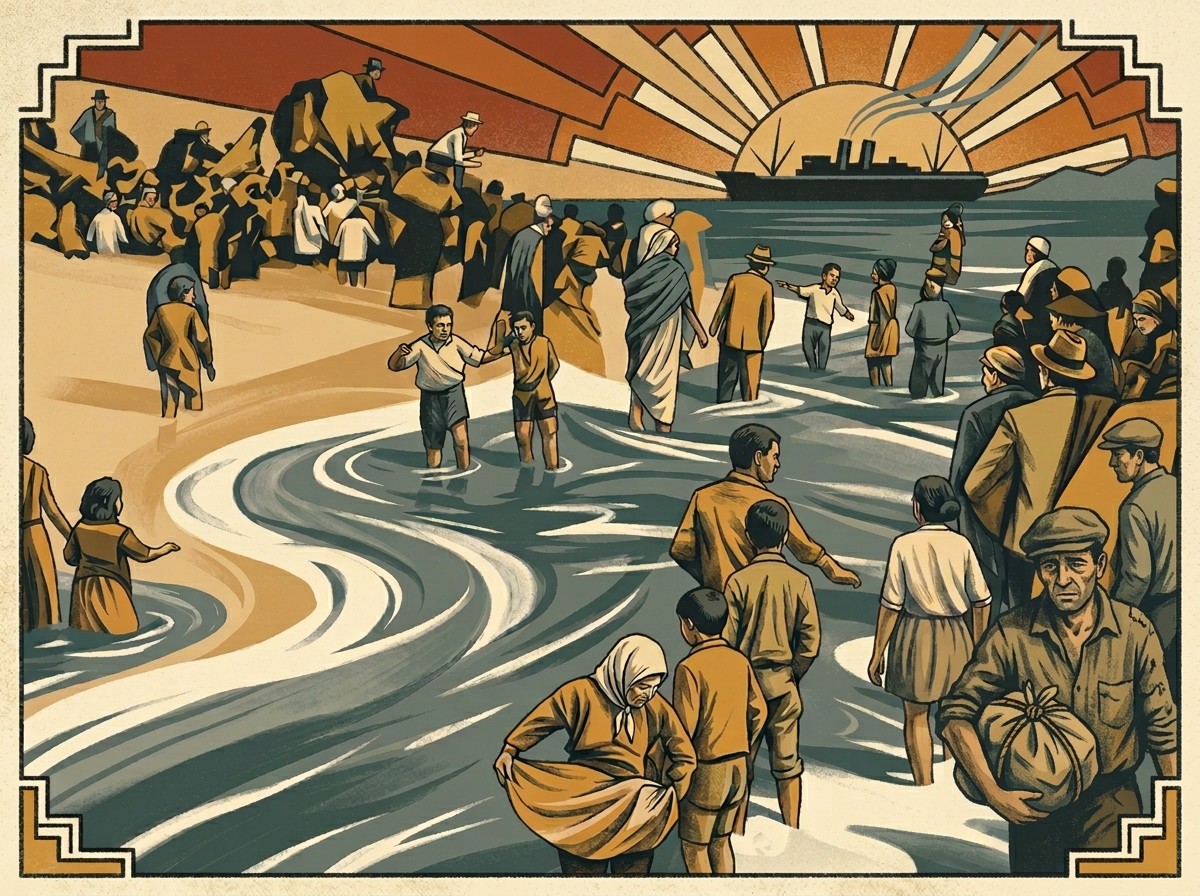
The Palyam would shepherd sixty-six immigrant ships in the years between its founding and the declaration of the State. Between them, those sixty-six ships carried over a hundred thousand Jewish survivors of Europe and the Arab world. Most of them sailed from Italian and French ports, Genoa, La Spezia, Bari, Marseille, although a few came out of the Black Sea, and a few from North African ports like Tangier. The crews were a mixture of Palyam fighters, foreign sympathizers, Americans, Greeks, Italians, Swedes, Norwegians, some of them Jews and many not, and survivors themselves who, having walked across half a ruined continent to the Italian coast, were willing to volunteer for the deck crew on the final leg.
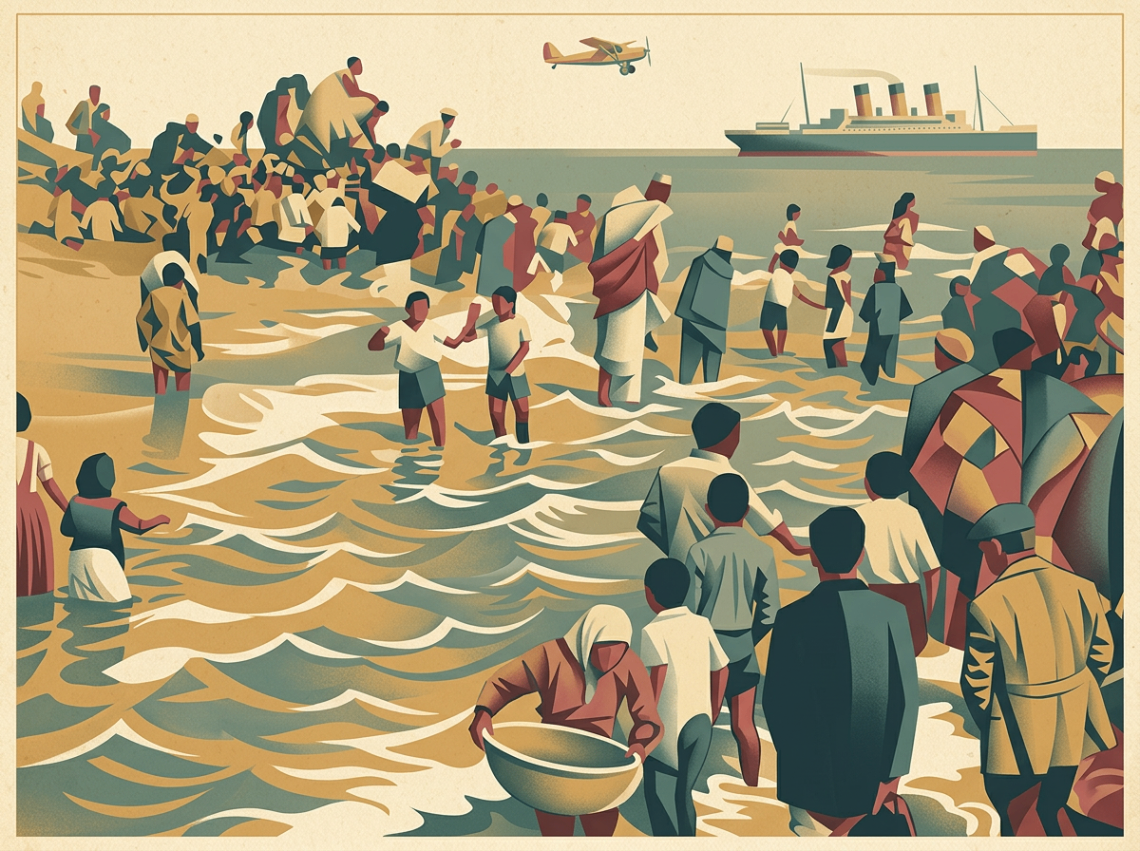
Shlomo trained at the Palyam harbor school in Haifa. The school had been set up in a warehouse on the docks. The instructors were retired Palestine Jewish merchant marine officers, supplemented by a few veterans of the Royal Navy and the Italian merchant marine who had migrated to Palestine after the war. Shlomo learned navigation, sextant work, dead reckoning, chart reading. He learned seamanship, knots, rigging, sail-handling, basic engine maintenance. He learned how to swim in the open sea. He learned to row a small dinghy through surf.
Then he was called to Caesarea.
Caesarea, the ancient Roman port of Herod the Great, sat on the Mediterranean coast about halfway between Tel Aviv and Haifa. By the nineteen forties it was a quiet stretch of ruined Roman columns and Crusader-era stone, with a single small fishing harbor and a long curve of beach. The
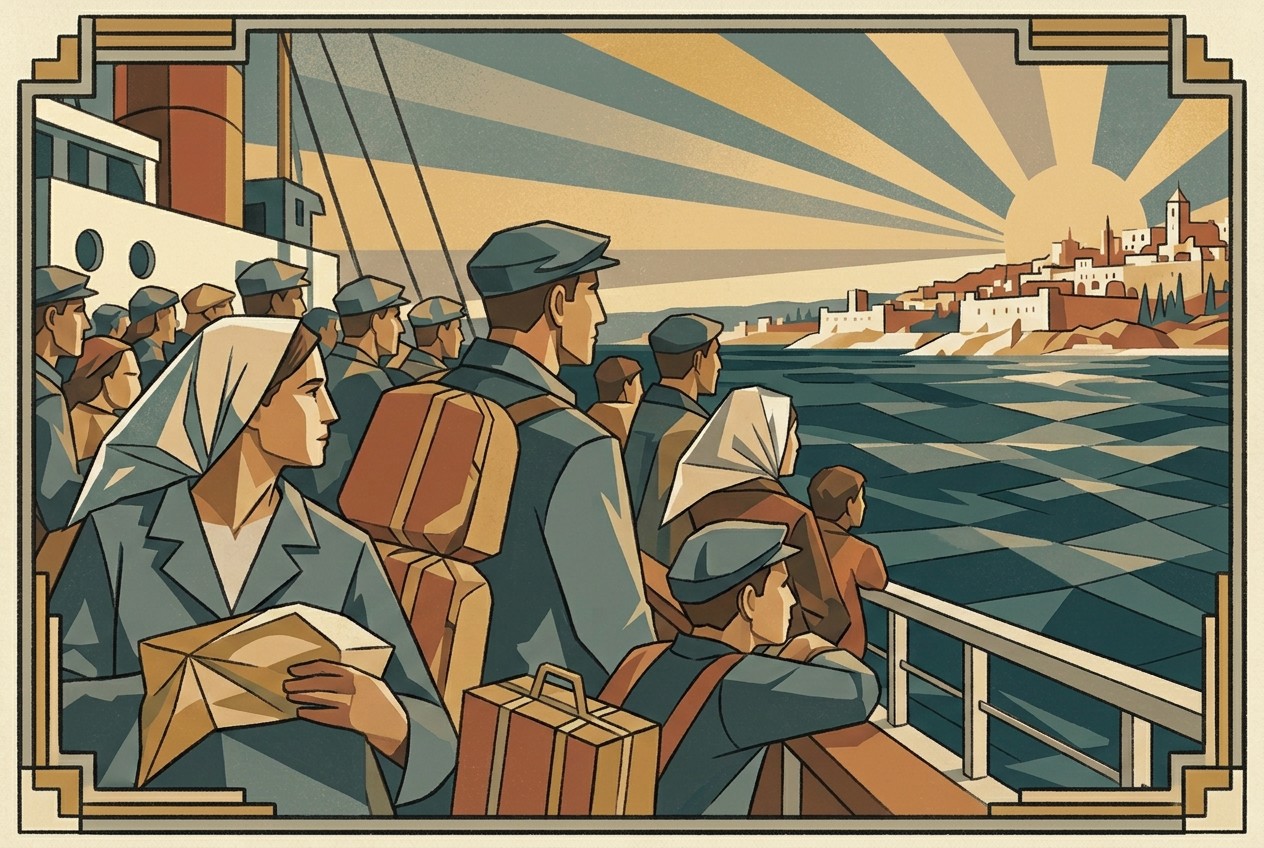
Palyam had made it one of its main landing sites. The British did not patrol there in any great force. The local Arab village of Qisarya, which had been built on top of the ancient ruins, was small and easily worked around. The first ship Shlomo helped land was a tiny fishing boat out of Italy. It carried fifty or sixty young Jews from the death camps of southern Europe. They had walked, most of them, from the Russian zone of Poland or Ukraine, Vilna, Lodz, Bialystok, to the Italian Adriatic coast. They had been gathered up by the Bricha, the underground network run by former Jewish partisans and Hagana operatives in Europe that smuggled survivors westward and southward to the embarkation ports. They had been packed into a fishing boat that, on the deck, looked entirely Italian. Below decks they were stacked like cordwood in the bilges and the fish-holds. The boat crossed the Mediterranean in eleven days. It made the rendezvous with the Palmach signaler on the beach at Caesarea by lining up a particular shore feature, a particular Roman column, with a fire on the dunes. The Palyam ferried it the last two hundred meters into the surf with three small sailing dinghies. Shlomo was in one of the dinghies. The Europeans, when the dinghies pulled up alongside the fishing boat in the dark, stared down at the Palyam crew as if they were a vision. They had been told, in Italy, that there were Jews in Palestine. They had not entirely believed it. The Jews they had known in Europe had been pale and bookish and well-mannered. The Jews who were now reaching up to them out of the dinghies were brown, sun- tanned, bare-armed, wearing nothing but shorts and undershirts. They had rifles slung across their backs. They were laughing in Hebrew. They reached up with hands that were calloused. The refugees climbed down into the dinghies, perhaps twenty per dinghy, and the Palyam rowed them through the surf and onto the sand of the Land of Israel. They were given hot tea on the beach. They were embraced. Many of them cried. A few of them kissed the sand. Then they were put into trucks that had been waiting in the dunes and driven inland to the network of kibbutzim that would absorb them. Shlomo and the other smugglers got drunk on Italian wine that night, in a stone barn behind the dunes. It was the wine the fishing boat had carried as part of its cover story. They drank it out of tin cups. They had brought home their first survivors. They kept doing it, ship after ship. Shlomo came into the Palyam on its fourth course, in nineteen forty-five, and his record from those years carries one more line before the ships: a mission at Atlit. Atlit was the British detention camp south of Haifa where the refugees who were caught at sea were put behind wire, and in October of nineteen forty- five the Palmach broke into it and took two hundred and eight of them out over the hills to Kibbutz Yagur. The record does not say which operation at Atlit was his. There were sixty-six in all. The Palyam's records list them. Dalin. Hatikva. Geula. Theodor Herzl. Yagur. Lo Tafhidunu. You Will Not Frighten Us. Hannah Senesh. Exodus 1947. Each was an old freighter or trawler or schooner, often dangerously overcrowded, named for some figure or phrase in modern Hebrew. Each was crewed by some combination of Palyam fighters and foreign volunteers. Each was tracked, in its final days at sea, by the Royal Navy. The British had figured out the operation by nineteen forty-five. They installed great coastal radar fortresses on Mount Carmel above Haifa and at Givat Olga, on the dune escarpment north of Tel Aviv. The radar stations could detect ships approaching from a hundred miles out. The Royal Navy maintained a permanent picket of cruisers and destroyers off the Palestine coast, with orders to intercept any unidentified vessel approaching and to escort it to Haifa for processing. By nineteen forty-six the British were catching more ships than they were missing. Most of the refugees who had been caught, perhaps fifty thousand of them by nineteen forty-seven, were interned in camps on the British colony of Cyprus. Some were turned back to Europe outright. The most famous of these turnbacks was the Exodus 1947, which sailed from southern France in July of nineteen forty-seven with forty- five hundred Holocaust survivors aboard. Off the coast of Palestine it was rammed by a British destroyer, and after a deck battle in which Palyam fighters and refugees fought British marines with crowbars and tinned-food cans, the ship was boarded and the refugees deported. The British did not, in this case, send them to Cyprus. They sent them all the way back to displaced-persons camps in Germany, back to the country whose camps they had just survived. The international outrage helped, in some real sense, to win Jewish independence at the UN that autumn. The radio operator chosen to ride with the Exodus on its fatal voyage was a young Palyam fighter who had filled the slot Shlomo had been offered and turned down. Shlomo had been on land at the time, working a particular Palmach operation that he had not been willing to leave. The young man who took his slot survived the Exodus battle but spent the rest of nineteen forty- seven in a British internment camp at Bremen. He would, after his eventual release, become a senior officer of the Israeli Navy.
Shlomo's most vivid memory of the Palyam years, however, was the night of the Hannah Senesh.
The Hannah Senesh was named for one of the great Jewish martyrs of the Second World War. Hannah Senesh had been born in Budapest in nineteen twenty-one to an assimilated Hungarian-Jewish family. She had immigrated to Palestine in nineteen thirty-nine, at the age of seventeen, and joined a Zionist youth movement. In nineteen forty-three, at the age of twenty-two, she volunteered for one of the most dangerous operations of the war: she was parachuted into Nazi-occupied Yugoslavia by the British, with a small team of other Palestinian-Jewish volunteers, with orders to make her way overland into Hungary and to organize Jewish resistance and rescue. She was captured at the Hungarian border in June of nineteen forty-four. She was tortured. She was tried for treason. She refused to give up the names of her contacts. She was executed by firing squad in Budapest in November of nineteen forty-four, six months before the end of the war. She was twenty-three years old. The Palmach buried her body in the Kinneret cemetery after the war. She wrote, in a Hungarian prison cell awaiting execution, a poem that ends with the words: Blessed is the match consumed in kindling flame. Blessed is the flame that burns in the secret fastness of the heart. Blessed is the heart with strength to stop its beating for honor's sake. Blessed is the match consumed in kindling flame.
The ship named for her sailed from Italy in December of nineteen forty-five with two hundred and fifty Hungarian and Romanian Jewish survivors aboard. It was a small wooden trawler, intended for a Mediterranean fishing run, not for an open-sea passage in winter weather. It crossed in heavy seas.
It arrived off the coast of Nahariya on the night of December the twenty- fifth. Christmas Day in nineteen forty-five. The Palyam had chosen the night carefully. Christmas was a holiday for the British soldiery of the Mandate. The garrison along the northern coast would be drunk in their barracks. The intelligence officers would be playing cards. The radar operators, where they were on duty, would be paying attention only to formal alerts.
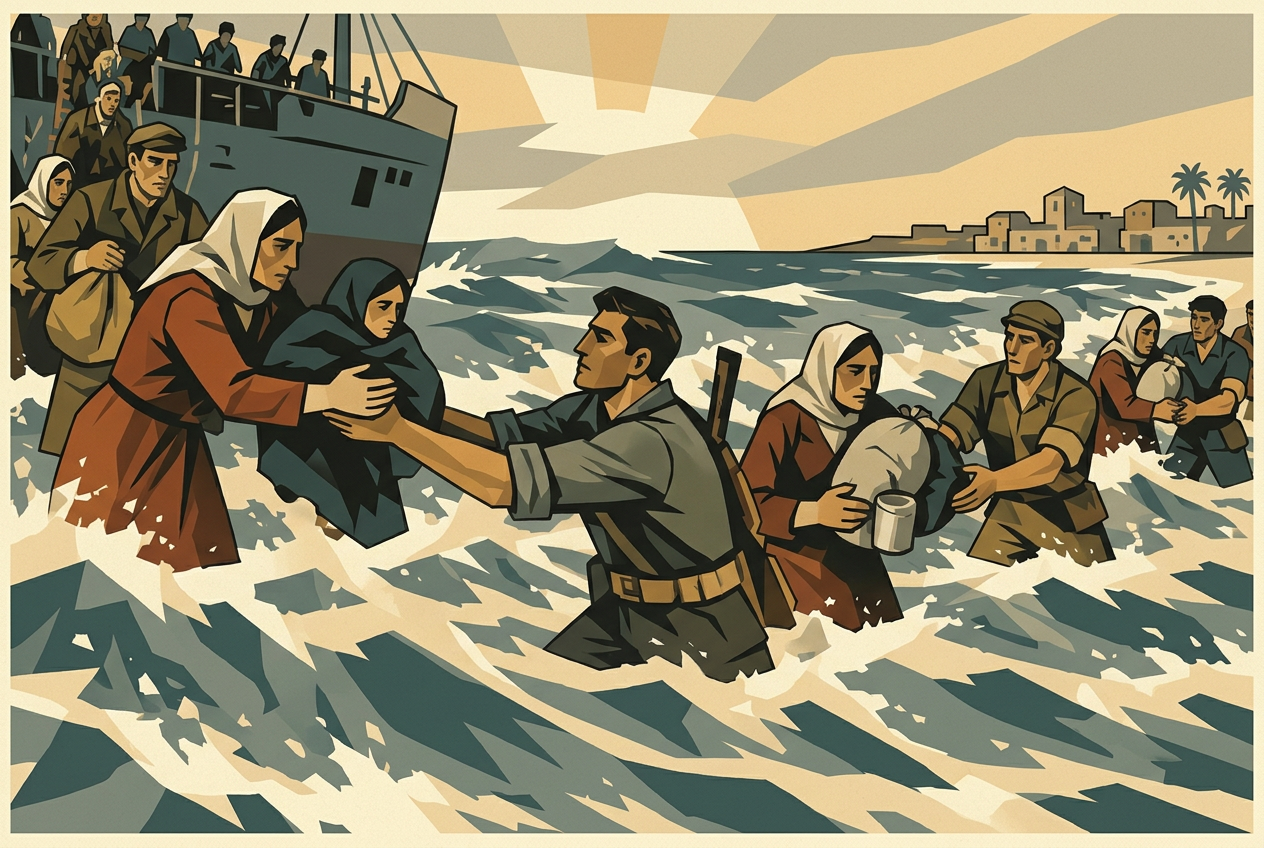
The Palyam had arranged something more. A small group of fighters had spent the previous afternoon in the cafes of Nahariya, getting friendly with the local British officers stationed at the Tegart fort. By that evening the officers had been invited to a Christmas party at a discreet apartment in town: a party laid on, the officers were told, by the Mayor's wife. The Mayor's wife, in fact, had nothing to do with it. The Palyam had hired a group of local prostitutes: a particularly Hebrew solution to the problem of the British garrison on a Christmas night, to entertain the officers from sundown until daylight. The British command structure in Nahariya, that evening, was distracted.
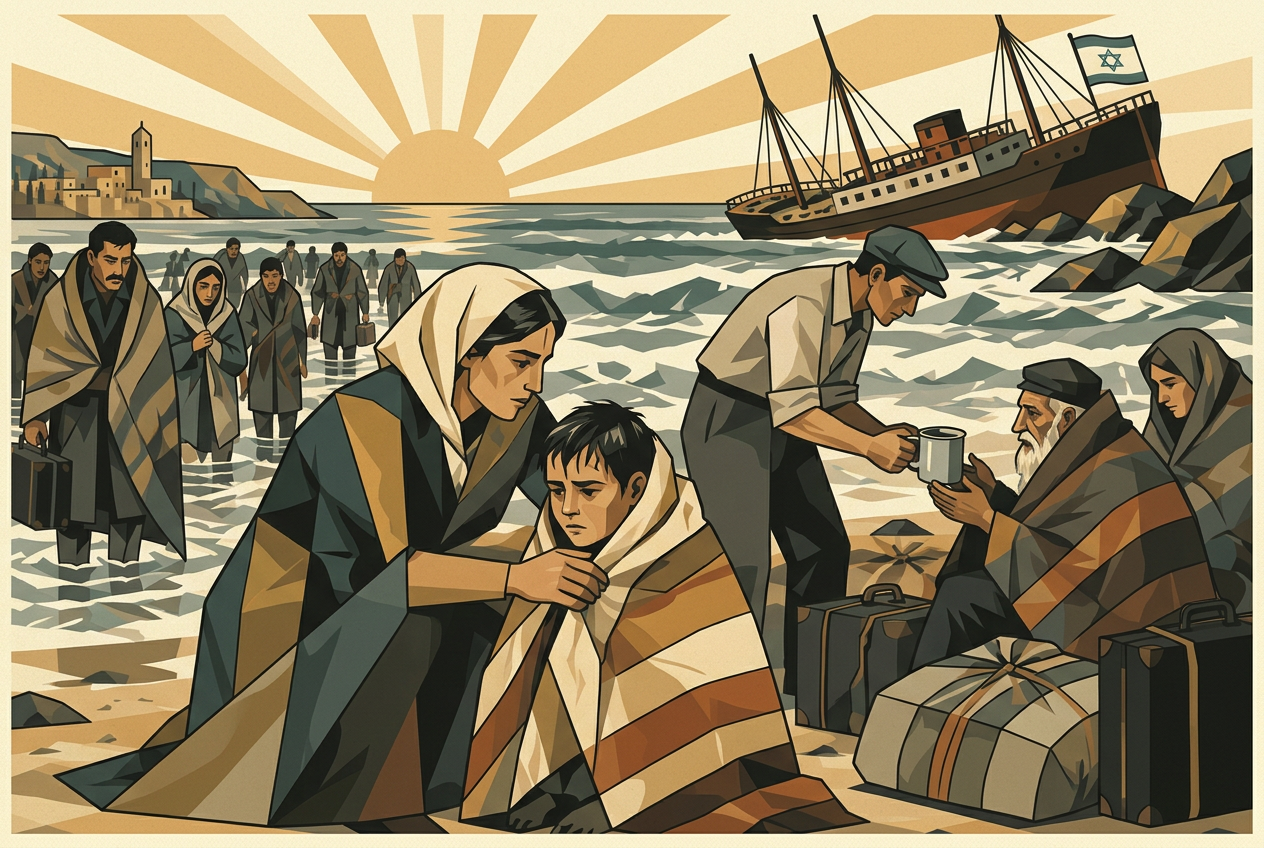
The sea was heavy. There was a strong wind blowing out of the southwest. The Hannah Senesh came in too close to shore in the dark. Her hull struck the rocks below the beach. She keeled over dangerously.
The Palyam shore team, Shlomo among them, was waiting on the beach with townspeople from Nahariya. They saw the ship list. They saw the lights of the deck lanterns swinging at an angle they should not have been swinging at. They went into the water.
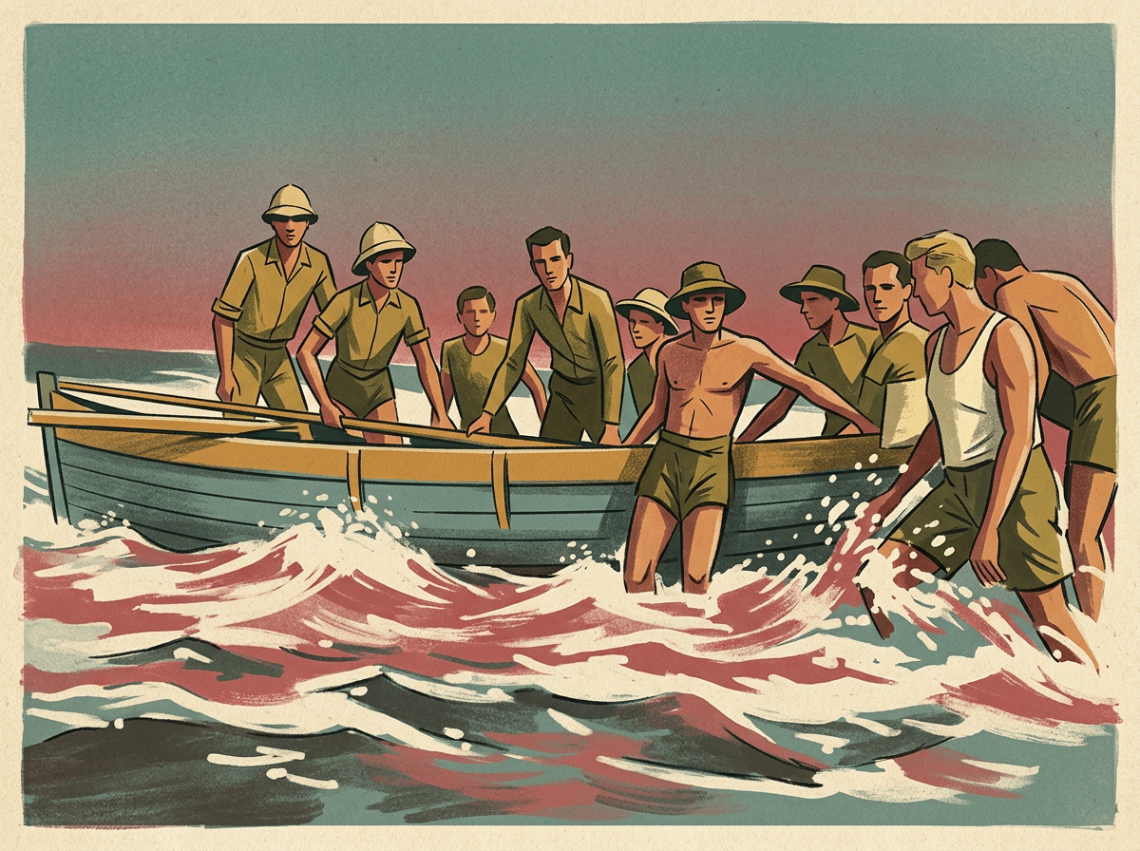
They pulled the refugees off, one by one, through the surf in the dark. The sea was cold: December cold, the temperature at which adult men begin to shake within twenty minutes and small children within five. The Palyam fighters formed human chains through the breakers. They handed the refugees, like packages, from one chain link to the next. The townspeople of Nahariya had brought blankets to the beach and hot tea in tin urns. They wrapped the survivors as they came out of the water.
One hundred and fifty souls landed at Nahariya that night.
They were scattered, before dawn, into the neighboring kibbutzim: Hanita, Eilon, Matzuva. By the time the British officers at the Tegart fort had sobered up and made it back to their posts, the Hannah Senesh was a stripped wreck on the rocks and the hundred and fifty Hungarian and Romanian survivors had vanished into the rural population of the western Galilee. None of them were ever caught. Their descendants are Israelis today.
The Palyam's record of the night reads, in dry official language: On the night of December twenty-fifth, the vessel arrived at the shore of Nahariya. The sea was stormy and there was a strong wind blowing. These circumstances caused the vessel to run up onto the rocks close to the shore, and keel over dangerously. A shore team of the Palyam, together with town citizens, helped the passengers leave the vessel and scattered them about in the neighboring kibbutzim.
What it does not say, what cannot be said in an official record, but what was said over and over again in private by the Palyam crews and the townspeople of Nahariya, was that nobody died that night. Two hundred and fifty Holocaust survivors went into the cold December surf of the eastern Mediterranean and every single one of them came out of it alive.
It was, Shlomo would say, the proudest night of his life. He was eighteen years old. It is worth holding still, for a moment, on what Shlomo was actually doing on those beaches, because the other strand of this book was unspooling at the very same hour. Through nineteen forty-four, while Shlomo waded ashore in the dark at Caesarea carrying the survivors of Europe out of the small boats, a Jewish boy named George Levy was a few hundred miles to the north, inside Germany: a child of thirteen, starving in the Star Camp at Bergen-Belsen. He was precisely the kind of child the boats existed for. He was not on one of them. Almost no child was. The Bricha network and the Palyam between them could reach only a fraction of those who needed reaching, and the British navy caught a great many of the ships besides. But every survivor Shlomo carried up a beach in those years was a person who had come out of George's world, and every one of them was proof that the work was the right work, and a reproach that there was not more of it, and not sooner. Shlomo did not know George's name. He did not need to. He had spent his whole youth memorizing, with his back and his hands, the general shape of him.
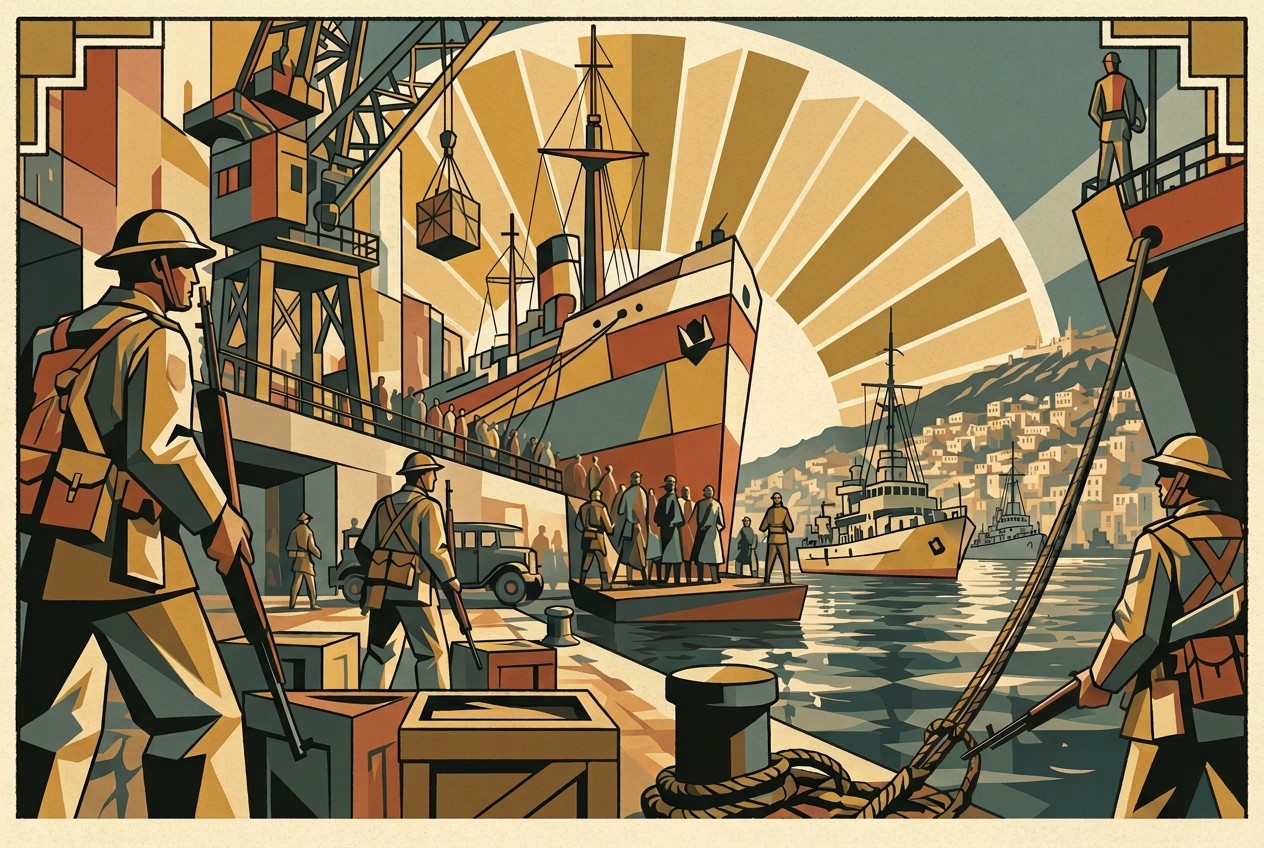
The Lost Transport
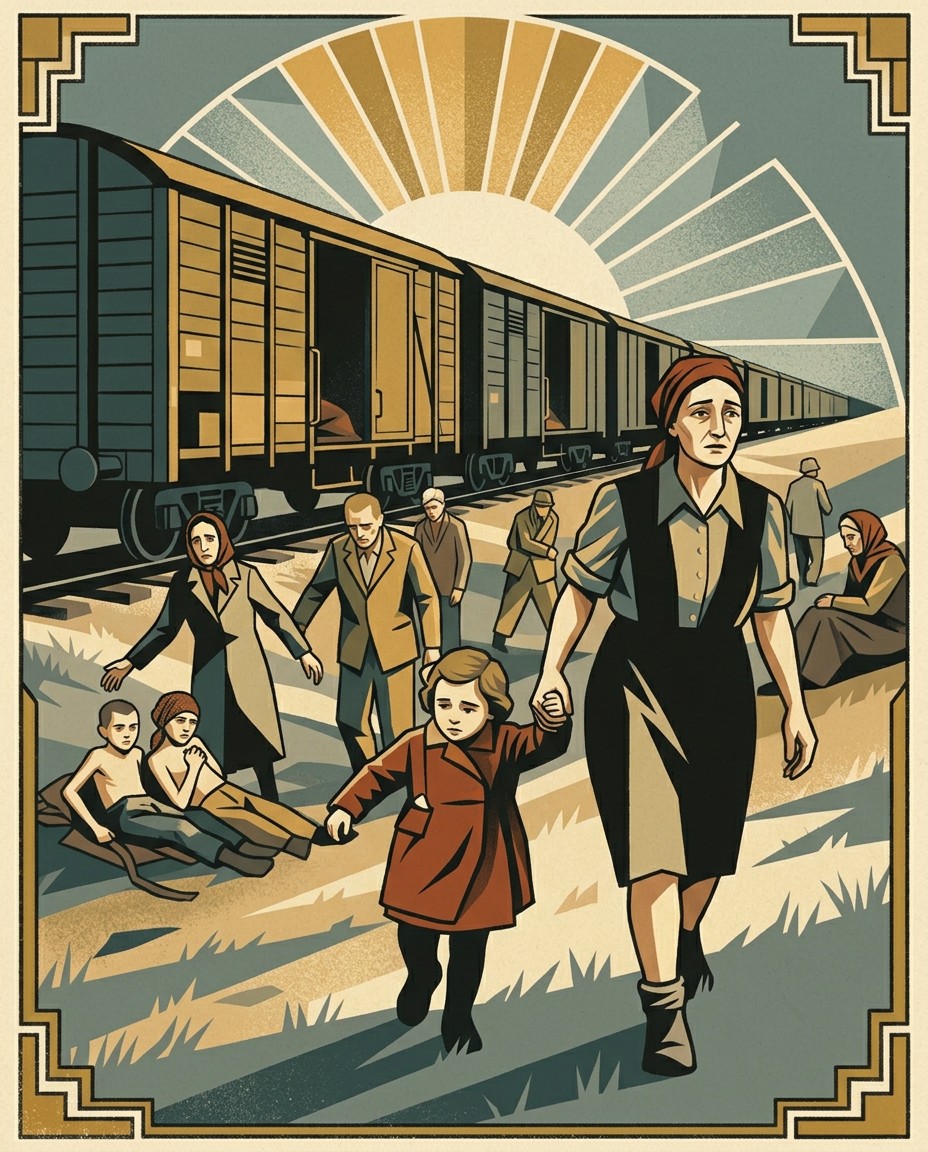
In the second week of April, nineteen forty-five, with the war all but lost and the Allied armies closing on Bergen-Belsen from east and west, the SS sent three trains out of the camp. Their orders, in the last weeks of the Reich, were to make sure that the prisoners were not simply found alive and waiting when the Allies arrived. The three trains were loaded with prisoners from the Star Camp and pointed south, toward the ghetto-camp at Theresienstadt, in what is now the Czech Republic.
The three trains had three different fates. The first reached Theresienstadt. The second was intercepted and liberated by Allied forces along the way. The third never arrived anywhere it had been sent. It has been known, ever since, as the Lost Transport, the Lost Train.
George and Ursula Levy were on the third train.
There were about twenty-five hundred people aboard it, and what made this transport unusual, even among the transports of that ruined spring, was that every single one of them was a Jew. It carried people of every age, from infants to the elderly, many of them holders of the foreign "passports of convenience," many of them listed simply as stateless: people who had been born in Germany and then stripped of Germany, people who belonged, on paper, to no country on earth. They were now sealed into freight cars and sent rolling into the collapsing heart of a collapsing country.
The train could not get where it was going. The rail network of eastern Germany was being torn apart by Allied bombing, and the line to Theresienstadt was cut. So the train did not go to Theresienstadt. It went, instead, nowhere, and it went nowhere for almost two weeks. It wandered through eastern Germany, backing and filling, halting and starting, routed and rerouted around broken track and burning junctions, seemingly without aim. Thirteen days, George remembered. Thirteen days on the train.
There was no food. When the train stopped, the guards would sometimes let the prisoners climb down, and the prisoners would scatter a little way to scavenge whatever the spring countryside held, and in April it held almost nothing. A farm by the line might yield an apple, shriveled, left over from the autumn before. George ate old grass. Everyone aboard was already starved from the camp. Now they were starved further, for thirteen days, in moving boxcars.
People died the whole way. About a hundred and ninety-eight of the roughly twenty-five hundred were dead by the time the train stopped for the last time. Another three hundred and twenty or so died after they were freed, of typhus and of the plain effects of starvation. Roughly six hundred did not come out of it alive, and more than half of those died after the rescue. The dead could not be carried. They were put off the train at the side of the track, and sometimes the prisoners were made to bury them where the train had stopped. The Lost Transport left a thread of graves across eastern Germany, in towns and at nameless points between towns, marking where it had paused long enough to set down its dead.
After thirteen days the train came to a stop for the last time, near a small German town called Tröbitz.
George remembered the moment of it as sound before sight. A woman on the train began to call out that they were free, free, free, and George looked out, and there were soldiers, and the soldiers were Russian. The Red Army had come across the wandering train and taken it. It was the twenty-third of April, nineteen forty-five. Two weeks before the end of the war in Europe, the Lost Transport stopped being lost.
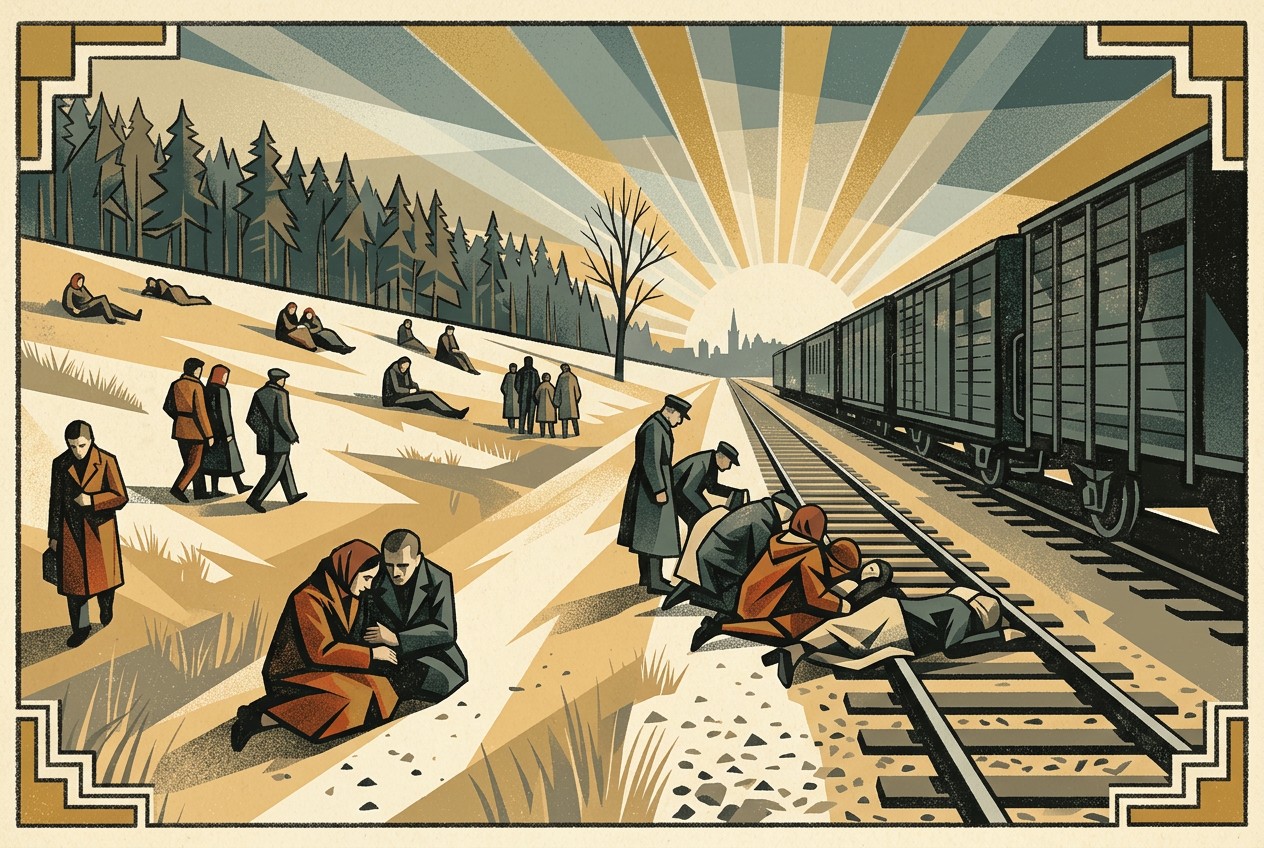
Liberation, for the survivors of that train, was not the scene from the newsreels. The Soviet soldiers who had found them were front-line troops with a war still to finish and very little food of their own. They could not feed twenty-five hundred starving people, and the survivors were, in the main, left to fend for themselves. Most of them could not walk. George and Ursula could. The two of them, who had walked out of so much already, walked the rest of the way into Tröbitz.
The town was empty. It was a ghost town. The German civilians who had lived in Tröbitz had fled west ahead of the Red Army, abandoning their houses, and so the survivors of the Lost Transport found an entire small town standing open and vacant. George and Ursula simply took over one of the empty houses and moved into it, and lived there, in the strange suspended weeks that followed.
The dying was not finished. The typhus the prisoners had carried out of Bergen-Belsen had come with them on the train, and at Tröbitz it broke out as a full epidemic. The liberated kept dying after liberation, that is one of the cruelest facts of the end of the camps, and it was true at Tröbitz as it was true everywhere. The survivors were deloused. They were tended as well as the conditions allowed, and still, many of them died in the town that was supposed to be the end of it. George and Ursula stayed at Tröbitz for two or three months, inside that aftermath, until they could be moved.
George Levy was fourteen years old.
It is worth stopping on that number, because the body that carried it did not match it. George had the white hair of an old man. His teeth had loosened in his gums and fallen out. He weighed perhaps sixty pounds, perhaps a little more: the weight of a small, healthy child of eight, hung now on the frame of a boy of fourteen. He had been three years in the camps. He had lost his father, his uncle, his grandparents, his mother, his home, his country, his name as a thing that meant safety, and very nearly his body. By every external measure he was a ruined child.
And here is the thing that has to be said plainly, because it is the center of who George Levy was. Through all of it: through Vught and the commandant, through the transport that took the other children to Sobibor, through Westerbork and the list on the wall, through Bergen-Belsen and the bodies along the barracks, through thirteen days on the Lost Transport eating grass, George had never once believed he was going to die. He had been certain, the whole way, that he would live. He never had a doubt. It was not bravado and it was not innocence. It was something closer to a decision, made early and held without wavering: that his job was to stay alive and to keep his sister alive until the war reached them, and that the war would reach them. The war had now reached them. He had been right.
Eventually the survivors at Tröbitz could be brought west, out of the Soviet zone and into the American one. George and Ursula were taken to Leipzig, to an American base, and for the first time in years there was simply enough food, plenty of it, handed to them freely, and George, a boy again for an afternoon, enjoyed himself. From there a long, crowded train carried them back across a smashed Germany to the Netherlands, to the south of Holland, near the Belgian border where the convent had been. George was sick, and was put into an American Army hospital, and stayed there until a doctor finally told him that he was well, and that he could go.
The war was over. George Levy had survived it. He was fourteen, going on fifteen. He was an orphan. His mother lay in a grave she did not have at the Stutthof camp. The large warm prosperous family in the big house in Lippstadt had been reduced to a brother and a sister standing on a street in the south of Holland with nowhere in particular to go.
And here, again, the two halves of this book lie down side by side, and ask to be read together.
In April of nineteen forty-five, while George Levy's train wandered the broken rail lines of eastern Germany with twenty-five hundred stateless Jews aboard and no destination that would take them, a young man named Shlomo Lev was on the far shore of the Mediterranean, in the Land of Israel, doing the opposite work with the opposite kind of train. Shlomo's people ran ships, old freighters, fishing boats, trawlers, packed with the survivors of the camps, and drove them through the British blockade to land their human cargo on the beaches in the dark. Two conveyances, in the same season of the same year. One was a train full of Jews that no country on earth would receive, rolling in circles until six hundred of its passengers were dead. The other was a fleet of small illegal boats full of Jews, aimed with absolute precision at a single shore: the one piece of ground that wanted them.
George Levy had spent his whole childhood being moved against his will across a continent that had no place for him. Shlomo Lev had spent his whole youth building, with his hands, the place. For nearly the whole of their lives they did not know of each other. But if you want to understand, in one image, why the State of Israel had to exist, you can hold those two trains in your mind at once: the Lost Transport, and the boats at Caesarea. The difference between them is the difference a homeland makes. It is measured in children.
George had survived without one. He would spend the rest of his long life as living testimony to what that had cost, and to what it must never be allowed to cost again.
The Long Way Home
The Belt and the Charge
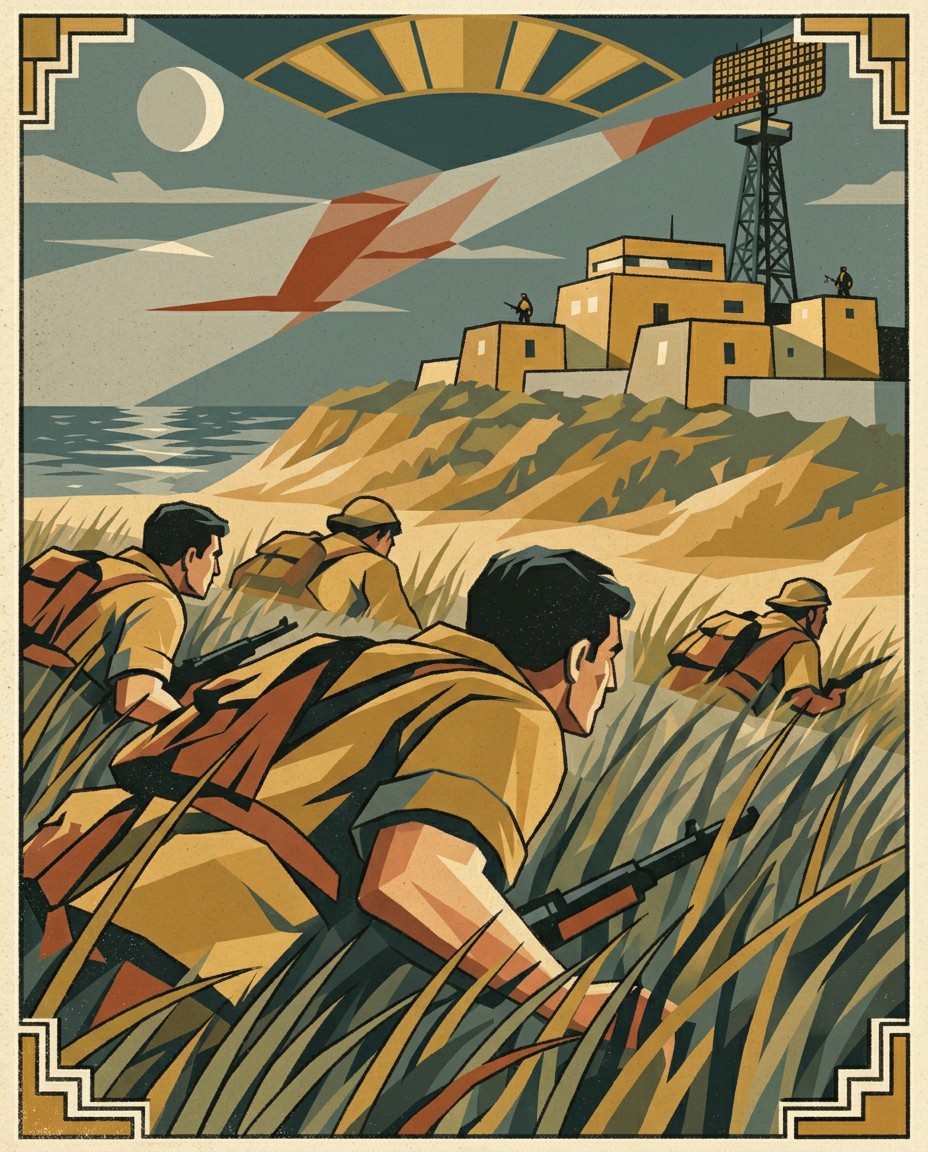
By nineteen forty-six the British had decided the Yishuv was out of control. The war was over. The death camps had been liberated. The displaced persons camps of Europe were overflowing with Jewish survivors with no homes to return to and nowhere else to go. The American president was insisting that one hundred thousand of those survivors be admitted to Palestine immediately. The Arab states were threatening war if a single one was. The British, caught in the middle, were trying to keep the Mandate quiet by stopping the immigration ships and arresting the Yishuv's leadership at the same time. In response, in the autumn of nineteen forty-five, David Ben-Gurion authorized the Hagana to launch an open armed struggle against British rule. The Palmach, which until then had pursued mostly defensive and immigration-related operations, was unleashed for sabotage. The targets were British infrastructure: railways, bridges, oil pipelines, communications facilities. The first joint Hagana-Palmach operation, on the thirty-first of October, nineteen forty-five, sank three British patrol boats and blew up one hundred and fifty-three railway bridges and culverts in a single night. The British called the new campaign the Jewish Insurgency. They were not wrong. For two years a kind of low-grade civil war went on between the British and the Jews of Palestine. The Irgun and the smaller, more extreme Lehi, operating outside Hagana command, often condemned by the Hagana, sometimes hunted by it, conducted their own campaigns, including the famous bombing of the British headquarters at the King David Hotel in July of nineteen forty-six, which killed ninety-one people. The Palmach itself focused on sabotage that minimized casualties: blowing up empty bridges in the middle of the night, attacking unmanned communications towers, sinking moored patrol boats. By the autumn of nineteen forty-six, the Hagana high command had identified the British coastal radar system as the most strategically important target left. The four big radar stations, at Mount Carmel, Givat Olga, and two smaller sites, were what was enabling the Royal Navy to catch the Aliyah Bet ships. Without them, the immigration flow could continue. With them, the flow would be choked off. The Palmach decided to blow up all four sites at once. Shlomo was assigned to the Givat Olga raid.
Givat Olga sat on a low ridge above the Mediterranean, north of Tel Aviv near the Arab village of Hadera. The radar installation was housed in a single reinforced-concrete blockhouse, with a tall mast bearing the rotating antenna on the roof and a corner machine-gun nest covering the approach. It was guarded by a British platoon, twenty-some soldiers, in barracks beside the blockhouse. The compound was surrounded by a chain-link fence with concertina wire on top.
The Palmach demolitions man on the operation was a fighter named Yankel Kaminsky. Yankel was twenty-six years old. He had just been released from the British prison at Latrun, where he had spent two years. He had taken the rap for a girlfriend who had been caught carrying his pistol on her person. He had refused to inform on her. He had served the two years. He had come out of prison the week before this operation, gaunt and quiet, and he had asked the Palmach for the most dangerous job they had available. Yankel, after he survived this operation, married the girlfriend.
Shlomo's job, on the Givat Olga raid, was sabal. The word is Hebrew for "porter." He was to crawl behind Yankel through the dark with twenty pounds of TNT on his back, divided into eight canvas-wrapped charges, with detonators packed separately in his pockets. The point of the sabal arrangement was that the demolitions man could not, in close work in the dark, be encumbered by the weight of the charges. He had to keep his hands free and his head free and his ears clear. The sabal was his pack mule. The sabal was also, often, his last line of defense, if a sentry surprised them, Shlomo's job was to drop the charges into the dirt and use his rifle while Yankel ran.
The night was clear and cold. There was a quarter moon. The operation was set for one a.m., when the British platoon at the radar station would be at its sleepiest.
The plan had three elements. First, sappers from another Palmach unit would cut the wire fence on the western side of the compound, away from the barracks. Second, Yankel and Shlomo would crawl in through the cut wire and place the charges at the base of the radar mast. Third, simultaneously with the demolition, a separate fighter would climb the telephone pole on the road outside the compound, splice into the line, and call the British captain in command of the radar station to inform him that he was about to be blown up, so that he could evacuate his men. This last element was a particular Palmach signature in this period. The Palmach was not at war with the British soldiers as individuals.
It was at war with the policy. The point of the operations was not to kill British troops but to destroy British capability. If you could give the British a chance to save themselves while destroying their equipment, you did.
At one a.m. the sappers cut the wire. The two-foot gap in the fence was barely visible in the moonlight. Yankel and Shlomo crawled through, low on their elbows and knees, dragging the charges. They reached the base of the radar mast at one-eleven. They were directly under the rooftop machine-gun nest. They could hear the soldiers up on the roof talking, in low colonial voices, about a girl one of them was seeing on leave in Tel Aviv.
There was a steel pole at the base of the mast: a structural support, not the antenna itself, but ideally positioned to amplify the blast.
Yankel wanted to lash the charges to the pole at about chest height. The whole effect depended on the angle of the explosive. If the charges were tied at the base, the energy would dissipate into the dirt. If they were tied high, the blast would shear the steel and bring the mast down. Yankel had carried his demolition gear in. He had not carried any rope. The Palmach quartermaster's kit had not, in the rush of the briefing, included rope.
Yankel looked at Shlomo in the dim moonlight and made a face that meant: We have no rope.
Shlomo, instinctively, did the thing that would later become family legend. He unbuckled his own belt. He pulled it out of the loops of his Palmach khaki trousers. He handed it to Yankel.
Yankel took the belt. He looked at it. He nodded, almost smiling. He lashed the eight canvas-wrapped charges to the steel pole at chest height with Shlomo's belt, looping the leather around the pole and through itself in a sailor's knot. He inserted the detonators. He set the fuse for ninety seconds.
Outside the compound, at exactly the same moment, the third Palmach fighter on the operation, a man known by his Palmach name only, Itzhak the Climber, had shinnied up the telephone pole. He had tapped the line. He had connected his portable handset. He rang the British captain in the radar station's office.
The captain picked up.
"Captain Robinson, sir," said Itzhak the Climber, in flawless British English. He had been raised in Jerusalem by a father who had served as a clerk in the British administration and who had insisted, against the family's better judgment, that his children speak the King's English.
"Yes, who's that?"
"This is the forces of the Jewish army. We are going to blow up your station, sir. Please remove your men."
There was a moment of silence on the line.
"Cheerio, my good fellow," said the captain at last. He sounded amused, in the way British officers sometimes sounded amused at things they did not really find funny. "Good luck if you can."
He did not yet know that Yankel and Shlomo were already inside his fence.
The machine gun on the roof, above their heads, began firing at that exact moment: wildly, into the darkness in every direction, on the basis of nothing more than the sentry's instinct that something was wrong. Tracer rounds arced over the compound. The British platoon, in the barracks, began to come awake. Shouts in English. The sound of boots on cement.
Yankel lit the fuse with his Zippo.
They ran. They went back through the cut wire on their elbows and knees. They crawled fifty yards through the dunes to the wadi where the rest of the unit was waiting. They had thirty seconds. They had fifteen seconds.
The charge blew.
The blast was big. It threw a fountain of concrete and dust and steel and bits of antenna a hundred feet into the air. The radar mast, sheared at chest height by the focused energy of the explosion, came down sideways with a long metal scream and crushed the corner of the blockhouse beneath it. The corner machine-gun nest collapsed into the rubble. The British soldiers up there had, fortunately, taken cover when the firing started and they were not, in the end, killed. The captain's warning had given them time to flatten themselves against the inside walls of the building. The radar installation was finished.
The British radar at Givat Olga collapsed onto itself.
The same night, the other three radar stations were hit. The Mount Carmel station was damaged but not destroyed. The two smaller installations were taken down. The Royal Navy's ability to interdict Aliyah Bet shipping was crippled for months. Through the gap, more refugee ships made it to the beaches.
By dawn the British were on the roads.
A curfew had been declared. Lorries with mounted Brens roamed the highways. British soldiers stopped every young Jew on the road, in the cities and in the countryside, and sniffed them, literally sniffed them, holding their faces close to the boys' clothes. The detonators that the Palmach used left a residue that clung to fabric for days: an acrid, headache-inducing chemical smell. Anyone who smelled of it was, by definition, a saboteur.
Shlomo's group split up. Yankel went one way. Shlomo went another. One quartet of the unit was led by a fighter named Shaike Ofir.
Shaike Ofir, in nineteen forty-six, was a twenty-year-old kid from Jerusalem with a particular talent: he could make himself look like an idiot at will. He had been studying with an amateur theater company in the city for several years before the war. He had the kind of face that could transform itself, with a slack jaw and unfocused eyes, into the perfect picture of a village simpleton: a man who, in the kindly words of one wartime report, was not all there.
He would, decades later, become one of Israel's most beloved actors. He would star in classic Israeli films of the nineteen sixties and seventies. He would win the Israel Prize for theater. Israeli children would grow up imitating his voice.
In nineteen forty-six, however, he was a Palmach saboteur who had just blown up a British radar station, and his unit was walking down a country road in the early light when an armored patrol came around the bend.
The patrol stopped them. The British sergeant got out of the lead vehicle. He smelled the boys.
Shaike Ofir, on the spot, began to drool.
He let his jaw hang open. He let his eyes lose focus. He shuffled forward toward the sergeant in the loose, careless gait of a man who has no idea where he is. He started to sniffle. He wiped his nose with the back of his sleeve. He tried to embrace the sergeant.
The sergeant, disgusted, shoved him aside. He said something rude in English. He told the village idiots to get out of his way.
The patrol drove on.
The four Palmach fighters, including Shaike Ofir with his drool drying on his chin, walked home down the road in the early morning. By noon they were back at their kibbutz, eating breakfast.
Orphans of Europe
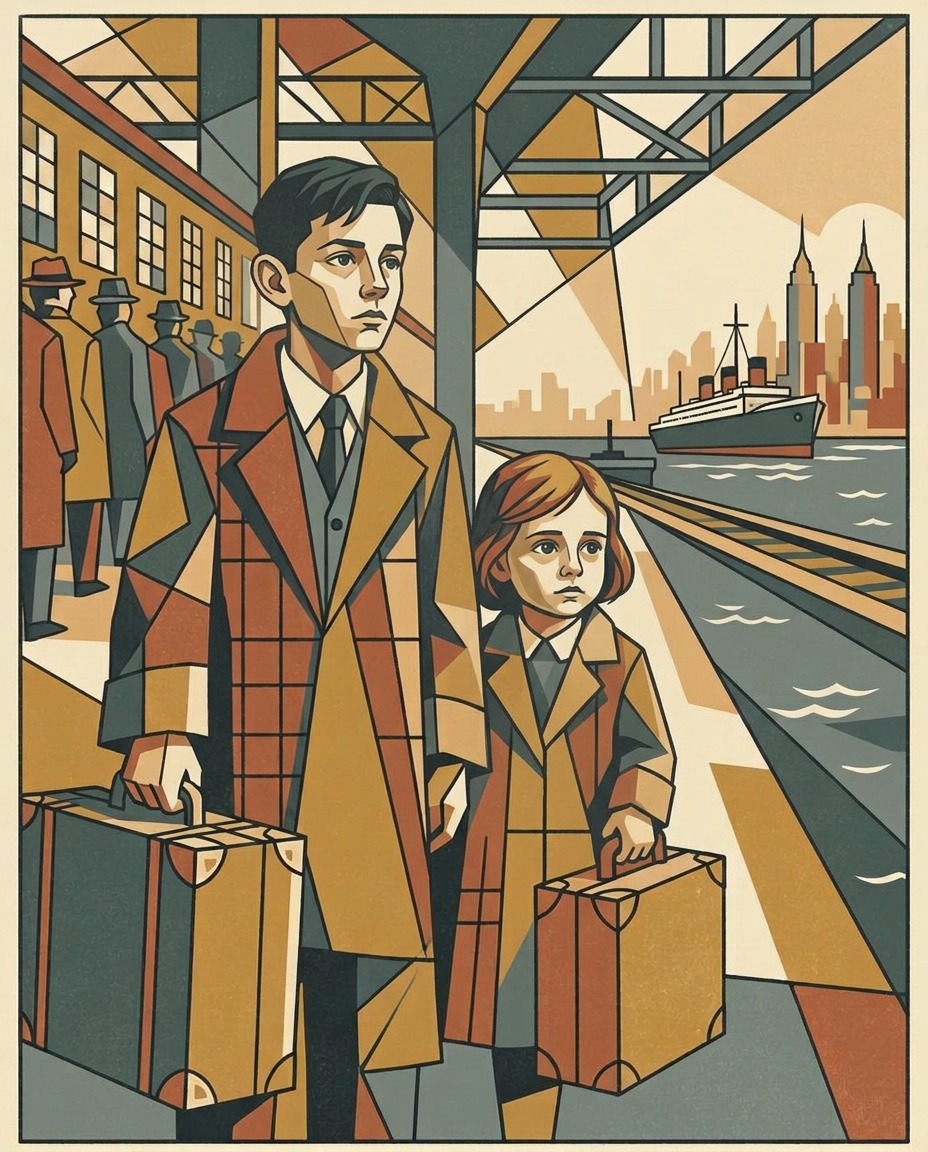
When the American Army doctor finally told George Levy that he was well enough to leave the hospital, George walked out into the south of Holland with his sister beside him and faced, for the first time, the question that the war had postponed. He was alive. Now what?
He was fourteen, going on fifteen. Ursula was ten. They had no parents. They had no grandparents, no uncles, no aunts, no surviving relatives anywhere in Europe. The large family of the big house in Lippstadt had been erased: father and uncle dead in the winter after Kristallnacht, mother murdered at Stutthof, the grandparents gone, the cousins scattered or killed. George and Ursula Levy were, in the precise and terrible bureaucratic language of the years right after the war, displaced persons. Orphans of Europe.
There were a great many of them. This is something that the comfortable retrospect of the twenty-first century tends to lose: that the end of the war did not solve the problem of the Jews of Europe so much as expose it. The camps were liberated, and the survivors walked out, and walked into a continent that still had no place to put them. Their homes were occupied by other people. Their towns did not want them back. In some places returning Jews were met with fresh violence. They collected, by the hundreds of thousands, in displaced-persons camps, many of them on the very soil of Germany, waiting for some country, any country, to open a door. The Holocaust had ended. The homelessness had not.
George and Ursula were luckier than most, and the precise shape of their luck is the point of this chapter. The family that had served as their guardians in Holland took the two children in for a time, welcomed them back with real joy, and helped nurse them the rest of the way to health. George spent stretches of those two years, from nineteen forty-five to nineteen forty-seven, in and out of hospitals, his ruined body slowly rebuilding itself. Holland sheltered him. But Holland was not going to be the answer, and everyone involved understood it. The answer, if there was one, lay across an ocean, and it lay there because of a name.
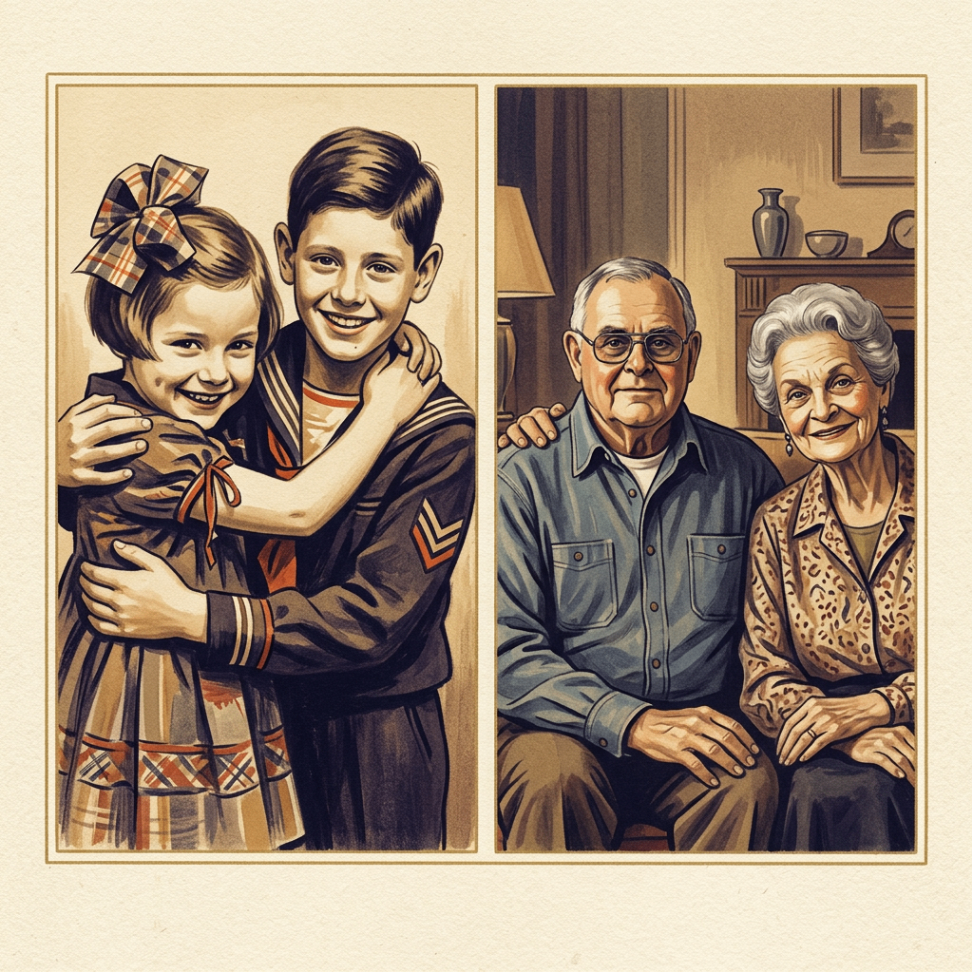
The name was Mueller.
Dr. Joseph Mueller was a real man, and the reader has met him already, twice. He was George's uncle: the husband of Lucie's sister, Irmgard. Years earlier, Joseph Mueller had emigrated to the United States, and the reason he had emigrated was itself a small Holocaust story with a happier ending: he had gone to America in order to get his Jewish wife, George's aunt Irmgard, out of Europe and to safety. It was the Mueller name and the Mueller address in America that had been borrowed, in the camp at Vught, to build the fiction of a Catholic father: the fiction that had pulled George and Ursula out of the column bound for Sobibor. The lie had used a true man. And now the true man, in Chicago, was the one living thread the two orphans had to hold.
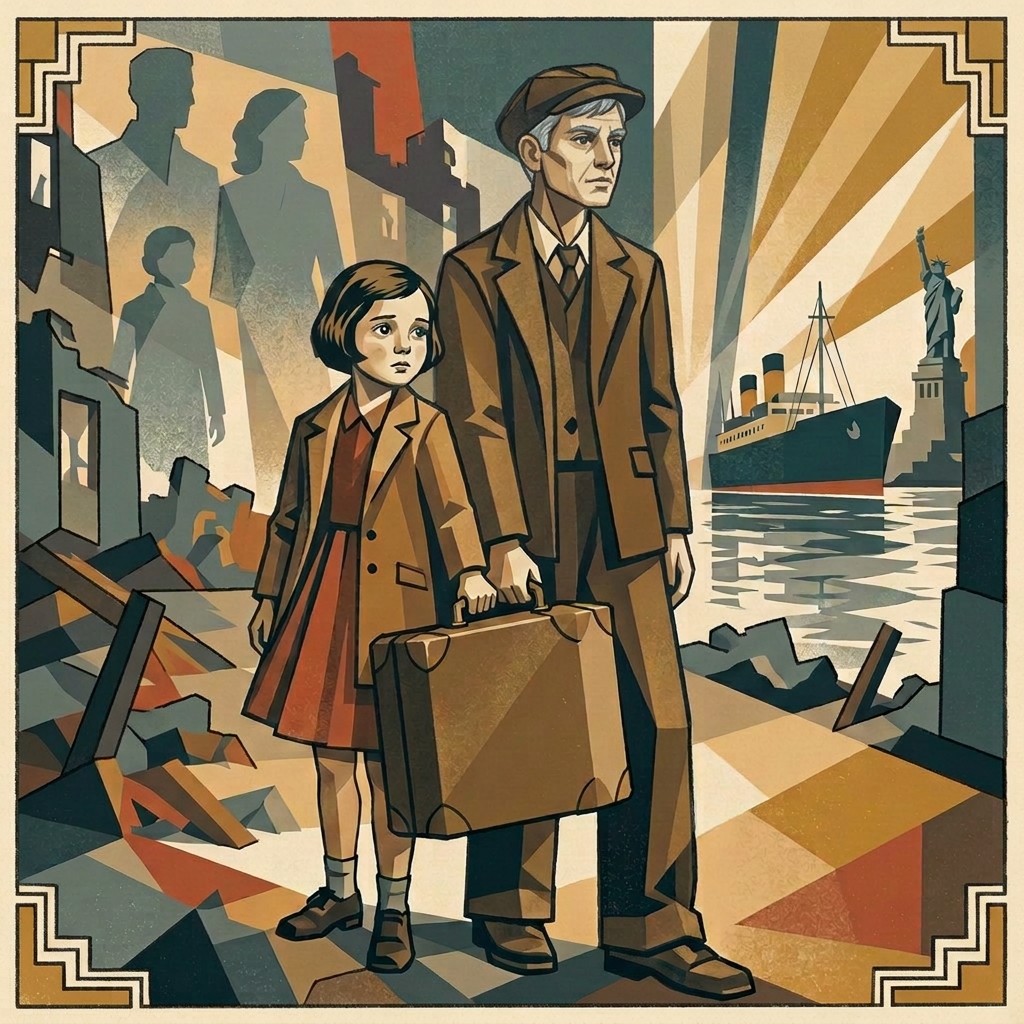
In nineteen forty-seven, George and Ursula Levy crossed the Atlantic and came to the United States, to Chicago, Illinois, to live with their uncle Joseph and their aunt Irmgard.
And on arriving, George Levy became George Mueller.
He took his uncle's surname. The fiction that had kept him alive inside a concentration camp became, on American soil, simply his legal name: the family name he would carry, and his children would carry, for the rest of the century. There is something almost unbearably neat about it, and George himself, telling the story decades later, would turn it over with a kind of rueful wonder. The disguise had become the man. He had been born George Levy. He had survived as the half-fictional nephew of Dr. Mueller. He arrived in America and put on the survival as a name. Late in his life, when he finally let the whole story out, he settled it by carrying all of it at once: George Levy Mueller. The boy from Lippstadt and the boy who lived, joined by a hyphen.
There is a second thing George put on when he came to America, and it was heavier than a name, and he wore it far longer. He put on silence.
George Mueller did not talk about what had happened to him. He did not talk about the camps, or the Lost Transport, or his mother, or the fact that his name had ever been anything but Mueller. He did not talk about it to neighbors or to friends. He did not, for decades, talk about it to his own children. He built an American life, and he built it, deliberately, on top of a sealed door. His children grew up not knowing their father's real name. They grew up not knowing that the quiet pharmacist who took them places had been carried, at their age, along a rail line full of corpses. The silence held until the nineteen nineties, close to fifty years. We will come back, later in this book, to how and why it finally broke, because the breaking of it is one of the most important things George ever did. But it began here, in nineteen forty-seven, the moment the boy stepped off the boat and decided that the way to live in the new country was to bury the old one.
It is worth being clear-eyed about the choice George made, because his road and the road of this book part company at exactly this point, and the divergence is instructive rather than embarrassing.
Operation Ice Action at Yazur
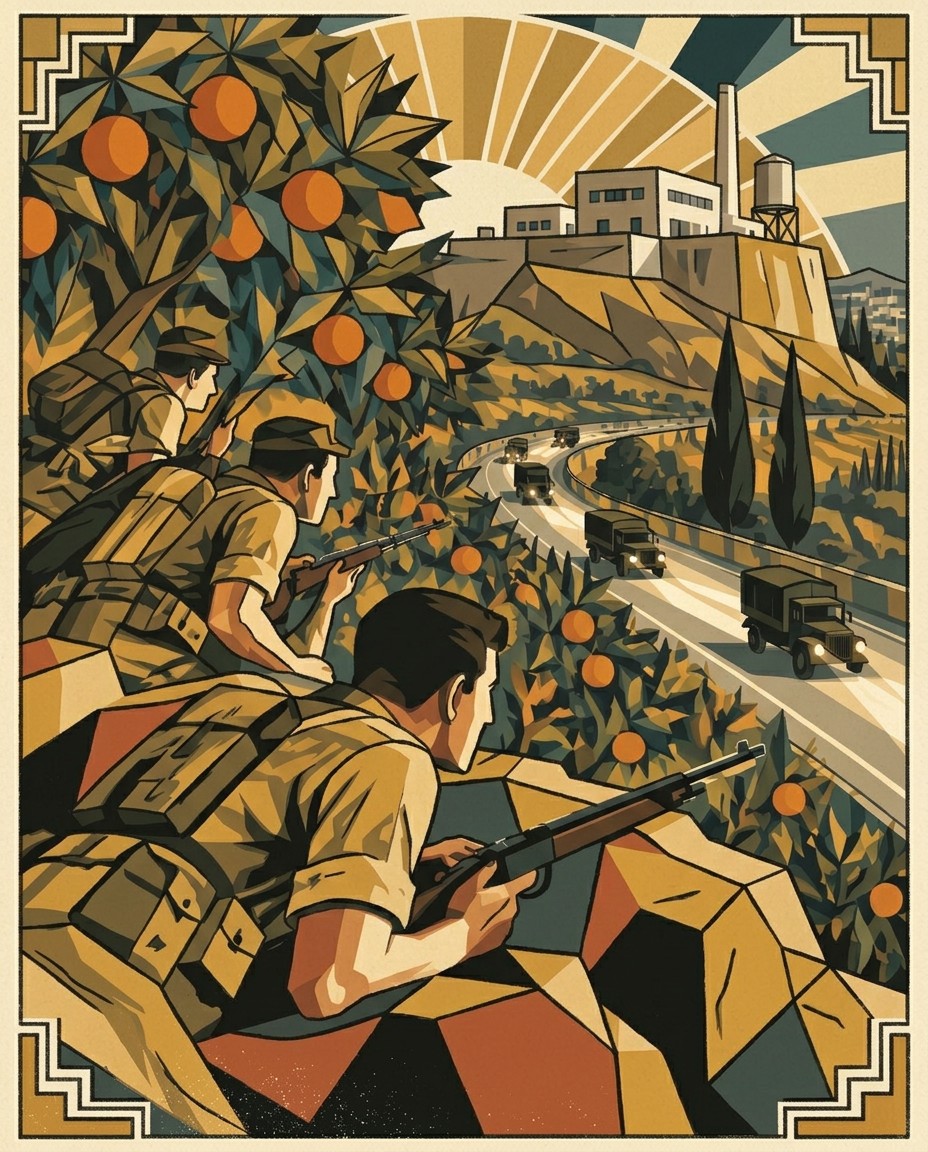
George Levy did not go to the Land of Israel. He went to America. He had reasons, and the first of them is simply chronological: in nineteen forty- seven there was no State of Israel to go to. There was a British Mandate with its doors barred, the same barred doors that had helped trap his mother. The one door that opened for George and Ursula was an American visa, and it opened only because an uncle happened to be standing on the other side of it. George went to America the way Jews had gone to America for seventy years: toward the other promised land, the goldene medina, the great refuge of the West. Millions of Jews made that choice, before the Holocaust and after it, and built extraordinary lives, and George Mueller would build one too. But notice what George's rescue actually depended on. It depended on a relative with the right passport. It depended on a consulate's willingness. It depended on a quota, and a sponsor, and a piece of fortune as thin and as personal as the fiction that had saved him at Vught. Take the uncle away, and most orphans of Europe had no such uncle, and George Levy is one more displaced child in a camp on German soil, waiting for a door. That is the condition this book exists to describe. A people whose survival is a matter of whether some individual member happens to have a cousin in Chicago is a people living, still, on luck. And luck, the twentieth century had just finished demonstrating, runs out. This is why George Mueller's story, which detours away from Israel, ends up being one of the strongest arguments for it. George himself came to say so, plainly, in the years when he finally spoke. Israel, he would insist, does not exist because of the Holocaust, the longing and the labor and the boats all came before, but the Holocaust proved, beyond any further argument, why the longing had been right. He would quote Elie Wiesel, who had been a boy in the camps as George had been a boy in the camps: As a Jew, I need Israel. More precisely, I can live as a Jew outside Israel, but not without Israel. George Mueller lived his whole adult life outside Israel, in Illinois, contentedly. He understood, better than almost anyone alive, that he could not have lived without it, that the difference between his fate and the fate of the thirteen hundred children of Vught was, in the end, the difference between having somewhere to go and having nowhere, and that no Jewish child should ever again be made to depend on an uncle and a lie. In nineteen forty-seven, though, all of that was still ahead of him. In nineteen forty-seven George Mueller was a teenager in Chicago with a borrowed surname and a buried childhood, learning English, going to school, starting, quietly, doggedly, in the only way he knew, to live.
And three thousand miles east of his uncle's apartment, the State whose absence had cost him everything was, that same year, being fought into existence on the beaches and the hilltops of the Land of Israel. The man fighting for it whom this book has been following was, in nineteen forty- seven, twenty years old, and about to have the hardest year of his life.
The vote came on a Saturday night. On the twenty-ninth of November, nineteen forty-seven, the United Nations General Assembly, meeting at Flushing Meadows in Queens, New York, adopted Resolution one hundred and eighty-one. The resolution recommended the partition of Mandatory Palestine into two states: one Arab, one Jewish, with a small international zone around Jerusalem. The vote was thirty-three in favor, thirteen against, ten abstaining, one absent. The United States voted yes. The Soviet Union voted yes. The Arab League voted no. Britain abstained, an act of stunning bureaucratic cowardice for the country that had created the problem in the first place. In Tel Aviv, the radio broadcast the count live. Crowds had gathered in the streets and around radios in every cafe and apartment in the city. When the gavel came down on the thirty-third yes vote, the city erupted. People danced in the streets. Strangers kissed strangers. The British colonial officers stationed in the city looked at the crowds and went home and closed their shutters. David Ben-Gurion, the leader of the Jewish Agency, the man who would become Israel's first prime minister, watched the dancing from his hotel balcony for half an hour. Then he turned to an aide and said, in Yiddish, Now the war starts. He was right. Shlomo had spent part of that year close enough to Ben-Gurion to see him at work. His record for nineteen forty-seven puts him on the security detail for the leader of the Jewish Agency, which meant standing at doors and riding in cars and watching rooms while the man inside them decided whether to declare a state. He was twenty years old. Within hours, Arab forces inside Palestine and Arab states outside it began their attacks. The Arab Liberation Army, an irregular force organized by the Arab League and based in Syria, crossed into northern Palestine within days. The Palestinian Arab militias of the Mufti's faction began ambushing Jewish vehicles on every major road in the country. The Arab Legion of Transjordan, formally under British command but trained and led by Bedouin officers loyal to King Abdullah, began preparing to invade. The strategic Arab objective was clear from the first week. The Jewish settlements of Palestine were not contiguous. They were scattered: strung along the coast, planted in the Galilee and the Negev, isolated in pockets surrounded by Arab villages. The Arabs intended to cut Jerusalem off from the coast, cut the Negev off from the center, cut the Galilee off from the rest of the country. The Jews could be defeated piecemeal. The single most important road in Palestine, in the war that began the day after the UN vote, was the road from Tel Aviv to Jerusalem. It ran inland from the coast, climbing through the Judean foothills via the Arab villages of Yazur, Ramle, and Latrun, then up through the narrow defile of Sha'ar HaGai, the "Gate of the Valley", into the Jerusalem hills. The road was eighteenth-century in its alignment, twentieth-century in its surface, and entirely Arab in its surroundings. Every kilometer of it was overlooked by Arab villages whose inhabitants had been told, by the Mufti's propaganda, that the Jews were coming to destroy Islam. The Arab Liberation Army had set up positions in those villages, in the orange groves, on the hillsides. They controlled, with rifles and machine guns, every meter of the road. The Jews of Jerusalem: eighty thousand of them, including women and children, including the religious elderly of Mea She'arim, including the Hadassah Hospital staff on Mount Scopus, were under siege. The Hagana organized supply convoys. The convoys would leave Tel Aviv before dawn, trucks loaded with flour, sugar, lentils, fuel, ammunition, and try to make the run up to Jerusalem in a single day. They were escorted by small squads of men and women from the Palmach. There was the Zehavi unit from Tel Aviv and the Forman unit from Jerusalem. The Palmach fighters rode on the hoods and the roofs and the running boards of the trucks, with their rifles and a small number of precious machine guns, ready to return fire when the ambushes came. The ambushes always came. The Arab gunmen knew the schedule. The convoys could not run at night, because the road was too narrow and too winding for trucks without headlights, and headlights would be lethal in ambush country. The Arabs would set up firing positions on the hillsides above Sha'ar HaGai, or at the narrow defiles near Latrun, or in the orange groves between Yazur and Ramle, and they would wait. In the end, two hundred and forty-five convoys would attempt the run between December of nineteen forty-seven and June of nineteen forty-eight, when the siege was finally broken. They would carry, between them, more than ten thousand tons of supplies. The cost was high. The wrecks of burned convoy trucks still line the road today: the Israeli government has left them there, painted in red lead to slow the rust, as monuments. You drive past them when you take the highway from Tel Aviv to Jerusalem now. They are scattered in the brush along the verge, twisted lumps of metal that used to be Dodge and Chevrolet trucks. Every Israeli school child knows what they are.
Shlomo was part of the convoy escort details. He rode on the hoods of trucks. He fired back when the ambushes came. He helped pull wounded fighters out of burning cabs.
But the more strategically important operation of that winter, the one in which he would be wounded, was different. It was an attempt to silence one of the ambush positions itself.
The Arab village of Yazur sat astride the Tel Aviv--Jerusalem road just outside Tel Aviv, perhaps twelve kilometers from the city center. From a small ice factory at its edge, perched on a low hill with a clear view of the road below, gunmen ambushed the Jewish convoys with rifle and machine- gun fire as they passed. They were Hasan Salama's men. Salama commanded the Arab irregular forces in the Jaffa and Lydda district, and the road out of Tel Aviv was his to close.
One ambush in particular had been especially bad. A Jewish patrol from the Hagana, a pickup truck with eight or ten fighters, had been ambushed at that spot in early February of nineteen forty-eight. Every man on the truck had been killed. There is a monument by the road today, in what is now the Israeli town of Or Yehuda, with the eight or ten names on it. You can see it from a passing car if you know to look.
On the twentieth of February, nineteen forty-eight, the Palmach launched Operation Ice Action: Mivtza Pe'ulat Ha-Kerakh, a small strike to take the ice factory at Yazur, blow it up, and break the ambush position controlling the road.
Shlomo was assigned to the left-wing security detachment of the assault.
It was a moonless night. The Palmach unit, perhaps thirty fighters, in three sections, approached the ice factory through the orange groves north of the village. The demolitions section, with charges, went in first. The center section followed to provide close support. Shlomo's section, on the left, lay flat in the orange groves to cover any Arab response from the village.
The factory was taken. There was no resistance inside. The night watchmen had heard the Palmach approach and had run for the village. The charges were laid. Yankel, yes, the same Yankel Kaminsky, who had since married his girlfriend and was now the Palmach's senior demolitions man, set the fuses for two minutes and began crawling out toward the orange groves.
Then, and no one ever knew exactly why, firing began. From the village. From the orange groves. From the hillside south of the factory. The fog of war: someone fired a shot, perhaps an accident, perhaps a probing round from an Arab sentry who had heard something, and within seconds the whole position was a free-for-all of muzzle flashes and shouting. Shlomo, lying flat among the orange trees, felt something warm and wet running down his right leg. He looked down. His Palmach trousers were dark with blood. He had been shot. He could not, in the chaos, tell exactly where. The pain had not yet arrived. The pain was a few seconds away, and when it arrived it would be enormous, but for now there was only the warmth of the blood and a kind of distant astonishment. He stood up. There was nobody near him. The orange grove around him was empty. Everyone else was running for his own life, back toward the wadi where the unit had assembled, away from the factory which had just begun to belch white smoke as the fuses burned. He started to walk back through the orchard. He kept his feet under him by holding onto the trunks of the orange trees as he passed. The pain arrived. It was, he would say later, like being hit on the leg with a hammer from inside. The bullet had entered his hip from the front and exited the back, missing the femoral artery by perhaps an inch. If it had hit the artery he would have bled out in the orange grove in four minutes. It had not. He came to the road that crossed his retreat: a country track running west from the village. A British machine gun had set up at the intersection during the assault, the British still being formally in charge of the territory and obligated to "maintain order." The Bren swept the area in long, slow arcs of tracer fire. He crawled, crawled, his bleeding hip dragging, to the bridge under the track and lay there, panting, until the next arc swept past, and then he moved. He kept walking through the trees. He counted, to keep himself going, in Hebrew: echad, shtayim, shalosh. He passed perhaps a hundred trees before he had to stop and lean against one. The blood was pooling in his boot. He could feel his foot squelching when he stepped. He kept walking. He counted to a hundred again. He kept walking. He kept walking. By his own reckoning he walked perhaps five kilometers, alone, through the orange groves and the open ground south of the village, until he saw the headlights of waiting ambulances on the road near the Mikveh Yisrael agricultural school.
Mikveh Yisrael was an institution of central importance to the Yishuv. It was the country's oldest agricultural school, founded in eighteen seventy by the Alliance Israélite Universelle, the French-Jewish philanthropic society. Theodor Herzl himself had visited it in nineteen oh-two and had been photographed at its gates with Kaiser Wilhelm the Second, in a famous meeting that helped set Zionist diplomacy in motion. The school's students and faculty had been, for sixty years, the agronomic backbone of Jewish Palestine. Pluga Daled itself had been recruited there in nineteen forty- one. It was, in a deep sense, Shlomo's spiritual home.
He saw the ambulance headlights. He started walking faster toward them, on the leg that should not have been carrying him. When he was perhaps fifty meters away he collapsed.
The Hagana medics found him. They put him on a stretcher. They lifted him into the ambulance.
They took him to the hospital in Tel Aviv. The bullet had not hit the artery. It had passed through soft tissue. The surgery was straightforward. He had lost, by the surgeon's estimate, two liters of blood. He needed a transfusion. They typed him. They put the blood in. He woke up in a hospital bed in the morning, with his older sister Rachel sitting in the chair next to him reading a newspaper.
He had been seventeen and a half years old when he joined Pluga Daled. He was now twenty-one. He was the wounded soldier of an army of a country that did not, yet, exist. He had a state to inherit, and it was about to be declared.
The Burma Road
The State of Israel was declared on the afternoon of the fourteenth of May, nineteen forty-eight, in the small front hall of the Tel Aviv Museum on Rothschild Boulevard. David Ben-Gurion stood up under a portrait of Theodor Herzl, between two flags hung from the wall, and read out a one-page declaration that contained two thousand years of yearning. We, the members of the People's Council, representatives of the Jewish community of Eretz- Israel and of the Zionist movement, are here assembled on the day of the termination of the British Mandate over Eretz-Israel and, by virtue of our natural and historic right and on the strength of the resolution of the United Nations General Assembly, hereby declare the establishment of a Jewish state in Eretz-Israel, to be known as the State of Israel. It took him sixteen minutes to read. Two hundred and fifty people were crowded into the hall. Outside, the streets of Tel Aviv were silent. The British Mandate, formally, was to expire at midnight. The British High Commissioner was, at that moment, on a destroyer in the harbor at Haifa, preparing to sail home. The cabinet members of the new state signed their names at the foot of the parchment. They sang Hatikvah: the new national anthem, the old Zionist song. They went home. Within hours, five Arab armies invaded. The Egyptian army crossed the Sinai frontier and moved north up the coast. The Transjordan Arab Legion crossed the Jordan and moved into the West Bank toward Jerusalem. The Syrian army attacked from the northeast. The Lebanese army attacked from the north. The Iraqi army, having marched through Transjordan, attacked from the east. The Saudi government sent a token force to fight alongside the Egyptians. The Yemenis sent ammunition. The combined Arab forces outnumbered the Jewish forces in men, artillery, armor, and aircraft. The Egyptians had Spitfires. The Jews had no air force to speak of. The Transjordanian Arab Legion was the most professional Arab army of the period: British-trained, British-led, with armored cars and modern small arms. The Jewish forces had to muster, in those first weeks, with rifles dating from the nineteen twenties, ammunition that was always running short, and improvised machine guns produced in clandestine workshops in basements in Tel Aviv. They had no tanks. They had a handful of light aircraft that had been used for crop dusting.
By every conventional military calculation, the State of Israel should have been overrun and obliterated within six weeks. Shlomo was, during the first weeks of the war, in the hospital. His wound was healing. He could walk again. He could not yet run. He sat propped up on pillows in the hospital ward, listening to the radio reports. The Egyptians were advancing. The Negev settlements of Kfar Darom and Nirim were under siege. The Arab Legion had crossed the Jordan. The siege of Jerusalem was tightening. The Old City's Jewish Quarter was about to fall. He could not stand it. He sat on a small cushion in a small Tel Aviv apartment that the Palmach used as a way station, the cushion stuffed under his hip to relieve the pressure on the healing wound, and listened to the rumors. The Palmach was massing at Kibbutz Hulda for a great breakthrough operation. The kibbutz had become the staging area for the assault on Latrun: the British Tegart fort, which had been seized by the Arab Legion as the British withdrew, now stood astride the Tel Aviv-Jerusalem road like a stopper. Until the Legion could be cleared out of Latrun, Jerusalem would starve. There were new Czech machine guns, the rumor said, that had just been unloaded from a shipment in Haifa. The Czechs, in a strange alignment of the moment, had decided to sell weapons to the new Jewish state, at premium prices, paid in hard currency, in defiance of the international embargo. Mauser rifles, MG-thirty-four machine guns, Messerschmitt fighter aircraft. The crates were being broken open at Hulda and the weapons handed out to the assembled fighters. Shlomo hitchhiked from Tel Aviv to Hulda on his small cushion. He could not, he had figured out, sit on a normal seat for very long. The cushion went with him everywhere. He flagged down trucks on the southbound road. He bought a glass of water at a roadhouse. He arrived at Hulda by evening. The Palmach nurse on duty took one look at him and said, in the way that experienced Israeli nurses say everything: "What are you doing here?" He told her. She talked him into staying home for the Passover Seder. The breakthrough operation, she said, would be over in a day. He was four weeks out of surgery. He should go home, eat his mother's charoset, and come back for the next round. She was kind. She was firm. He went home. The breakthrough operation at Latrun was a disaster. The Palmach had attacked at dawn. The Arab Legion had been waiting in ambush in the wadis and on the heights around the fort. The Israeli forces: many of them Holocaust survivors who had just arrived in the country, some who had been off the boat at Haifa for less than a week, with minimal military training and rifles they had been handed at the Hulda kibbutz the night before, were cut to pieces. The official casualty figure for that one operation, the First Battle of Latrun, was seventy-five dead and dozens more wounded. A subsequent attempt, the Second Battle of Latrun a week later, killed sixty-four more. The Jews could not break through. Latrun would remain in Arab Legion hands until the Six Day War of nineteen sixty-seven, when the IDF finally took it.
Many of Shlomo's friends were killed in those first battles. Including another blond fighter named Shlomo Levin: different last name, but the same first name, the same blond hair, and a face that, to anyone who saw it from a distance, looked very much like his own. The two of them had been mistaken for each other in the Palmach for years. When Shlomo Levin was killed at Latrun, comrades who had seen him in the morning and heard about Shlomo's wounding in the previous month assumed that their Shlomo, the blond one with the rifle bigger than himself, was dead.
For months afterward, when Shlomo walked through the streets of Tel Aviv, friends would stop in front of him, frozen, and stare. "You're alive? They told us you were killed at Latrun."
He would shake his head. He was alive. The other Shlomo was dead. He would walk on, with his small cushion tucked under his arm. He could not, in those months, say much about it.
Then a few jeeps from a Jerusalem unit slipped through the mountains by dry riverbeds and reached Tel Aviv, and from there reached David Ben-Gurion himself. They reported that there was, perhaps, a way around Latrun. The wadis south of the main highway were, in places, navigable by a jeep or a small truck. If one could connect the existing tracks, blast through the rough bits, and grade a passable surface, one could move convoys around the Latrun bottleneck and into Jerusalem without ever firing a shot at the fortress.
Ben-Gurion authorized the project. Command was given to an American Jewish colonel named Mickey Marcus.
Marcus is one of the great minor heroes of the war. Born in Brooklyn to immigrant parents from Romania, he had been a star athlete at West Point in the nineteen twenties, served as a federal prosecutor in Manhattan in the nineteen thirties, and parachuted into Normandy with the eighty-second Airborne Division on D-Day in nineteen forty-four. He had been part of the planning team for the post-war occupation of Germany. In nineteen forty- seven, hearing of the Yishuv's desperate need for military experience, he had quietly resigned his US Army commission and volunteered. Ben-Gurion appointed him the Israeli army's first general, the title was aluf, an ancient Hebrew word reactivated for the moment, and put him in charge of the Jerusalem front.
He organized the construction of an alternate side road through the wadis. Hundreds of laborers, many of them new immigrants who could barely speak Hebrew, swinging picks alongside Palmach engineers, worked the route day and night, blasting boulders, grading the surface, throwing in fill where the road dipped. The Israelis called it, after the Allies' improvised supply route through the Burmese jungle to wartime China, the Burma Road. The name stuck.
Marcus was killed by a sentry's mistaken bullet at four in the morning of the eleventh of June, the day before the road opened. He had walked outside the wadi camp to relieve himself. The Israeli sentry, who spoke no English, did not understand his answer to the challenge and shot him. He was the only American general to die in combat under a foreign flag in the twentieth century. Kirk Douglas would one day play him in the movie Cast a Giant Shadow.
Convoys began rolling into a starving Jerusalem on the first of June, nineteen forty-eight. They came around the Burma Road, slowly, jeep by jeep at first, then small trucks, then in column. They brought flour and lentils and water in jerry cans. They brought ammunition for the Hagana defenders of the Old City. They saved the holy city from starvation, if not from the partial fall of the Jewish Quarter: the Old City Jewish Quarter, with its ancient synagogues, would surrender to the Arab Legion on the twenty-eighth of May and would remain in Jordanian hands until nineteen sixty-seven. The synagogues would be dynamited. The Jewish residents who survived would be paraded through the streets and expelled.
But West Jerusalem, where most of the Jewish population had been concentrated since the eighteen sixties, was held. Mostly because of the Burma Road.
Shlomo, recovered enough to limp without the cushion by midsummer, joined the Burma Road traffic. He and his fellow recovering wounded: Moshe, the leader of the small group, who had a girlfriend in the right social circle; Moisi, a Greek-Jewish kid, and one or two others, decided they wanted to form a jeep commando unit. The Negev Brigade had nicknamed its jeep-mounted company the Negev Beasts, jeeps with bolted-on machine guns that ran rings around the Egyptian columns in the desert. Moshe's group wanted to do the same on the Jerusalem road. They had no jeeps. They had no quartermaster authorization. They had no military rank, exactly, because the Palmach in those months was still figuring out how to fit into the new Israeli army structure. Moshe, the leader, had a girlfriend whose father was an important man in the Tel Aviv business community. The father had an important jeep. Moshe took advantage of this. He walked up to the father's driver one afternoon, in front of the family's apartment building, and announced, in his best command tone, that he was confiscating the jeep for an important military mission, and he drove away with it. The four jeep-less fighters now had one jeep. On the way up to Jerusalem on the Burma Road, a track of jagged rocks, rutted, badly graded, designed for emergency throughput and not for comfort, the jeep blew a tire. They had no spare. They flagged down passing convoys. No one would give them one. Night fell. They drove the rest of the way to Abu Ghosh on three wheels and a rim, banging through the mountains. They got their spare in Abu Ghosh: a Christian Arab village along the road that had stayed friendly with the Jews since the Yishuv days and would remain so for the next eighty years. Before they could get a second jeep for the commando unit, an army lawyer arrived from the girlfriend's father, threatening a court-martial. Moshe was forced to return the jeep. The jeep commando unit was over before it began. Then the armistice was signed. The Israelis had, against every expectation, won. The armistice agreements were signed at Rhodes between January and July of nineteen forty- nine: separate agreements with Egypt, Lebanon, Jordan, and Syria. Iraq, which had also fought, refused to sign and is still technically at war with Israel. The State of Israel emerged from the conflict with about a third more territory than the UN partition plan had originally allotted. It controlled the western Galilee, the coastal plain, most of the Negev, and West Jerusalem. It did not control the Old City, the West Bank (which Jordan annexed), the Gaza Strip (which Egypt occupied), or the Golan Heights (which Syria held). The shooting, in the meantime, stopped. By its end, the Palmach had lost one thousand one hundred and eighty-seven fighters in the war of independence and the years before it. The figure includes the Givat Olga raid and the Hannah Senesh night and the orange grove at Yazur and every other operation since nineteen forty-one. The dead were eighteen to twenty-five years old, in the main. About thirty-four of them were women. About a tenth had been born in the United States or Britain or other Western countries. About a half had been born in Palestine. The rest had been born in the Pale of Settlement, in Yemen, in Iraq, in Morocco, in Bukhara, in Salonica. They had come from everywhere. They had fought in one place. They were buried in the same long graveyards on the hillsides above the kibbutzim that had hosted them. Shlomo went to Haifa and joined the Navy.
The Sailor of the Republic
Israel had no real warships.
What it had, in the late summer of nineteen forty-eight, was a scrapyard of corvettes. These were small American World War Two warships, Auk-class minesweepers and PC-class submarine chasers, vessels of about six hundred to nine hundred tons, that had been built by the US Navy for convoy escort duty in the Atlantic and the Pacific. After the war, with the American fleet contracting, dozens of them had been declared surplus and sold off through the War Shipping Administration. The Jewish Agency, working through front companies in New York and Panama, had quietly purchased nine of them in nineteen forty-six and forty-seven. The plan had been to refit them in Italian and French yards and use them to escort Aliyah Bet immigration ships. Three of them, Wedgwood, Hagana, and Northland, had become the famous refugee transports of the late nineteen forties, carrying thousands of survivors past the British blockade.
The British, however, had captured most of them. The Royal Navy had taken the surplus corvettes as they tried to land their refugee cargoes, herded them into the harbor at Haifa, and chained them to the quay. By the time the British evacuated Palestine in May of nineteen forty-eight, the harbor was full of small grey warships sitting at their moorings with their engines cold and their hulls rusting.
When the State was declared, the sailors of the Palyam, Shlomo among them, went down to the harbor of dead ships.
They painted them. They wire-brushed the rust off the deck plates and laid down fresh grey enamel. They tested the engines, which had been allowed to run dry. They fixed the radio sets that had been deliberately broken by departing British engineers. They mounted whatever cannons and machine guns they could find: twenty-millimeter Oerlikons stripped off captured Czech merchant ships, four-millimeter Hotchkiss guns from somewhere in the surplus market, an Italian-made forty-millimeter Bofors that had come over with one of the Aliyah Bet shipments. They named the ships after places in the Bible. The Eilat. The Haifa. The Wedgwood was renamed Hashomer. They put them to sea.
These were the first ships of the Israeli Navy.
They were ridiculous. They were obsolete. They were undermanned and undergunned and over-improvised. They were also, in those first months, the entire seaward defense of the new country. They patrolled the Israeli coast from the Gaza frontier to the Lebanese border. They escorted the freighters bringing supplies into Haifa. They intercepted, on one famous occasion in October of nineteen forty-eight, the Egyptian flagship Emir Farouk, a converted royal yacht of twelve hundred tons that was bombarding the coast off Gaza. Israeli midget submarines, themselves jury-rigged contraptions, frogman-operated, hardly more than waterproof scooters, torpedoed the Emir Farouk and sank her with most of the Egyptian high command aboard.
Shlomo served as an able seaman on one of the patrol corvettes for the rest of the war and into nineteen forty-nine and fifty. He did the work of an enlisted naval rating: he stood the watches, he scraped the decks, he polished the brass, he learned to navigate by sextant on the bridge, he loaded the guns, he stood lookout in the bow at three in the morning when the Mediterranean was dark and the only sound was the engine.
When the war ended, with the armistice agreements, the Palmach itself was disbanded. The three Palmach brigades, Negev, Yiftach, and Harel, were absorbed into the new Israel Defense Forces as conventional infantry units. Senior Palmach officers, who were mostly identified with the left-wing Mapam political party, were eased out of command positions by David Ben-Gurion's Mapai government. Many of them resigned from the army altogether in nineteen fifty. Yigal Allon, who had commanded the Palmach, never reached the senior national leadership. He would be foreign minister, deputy prime minister, and acting prime minister for a few days, but he would die in nineteen eighty without ever ruling the country. Yitzhak Rabin, who had commanded the Harel Brigade at the age of twenty-six, took the longer view. He stayed in the military, rose to chief of staff during the Six Day War of nineteen sixty-seven, and became prime minister of Israel in nineteen seventy-four, and again in nineteen ninety-two, before being assassinated by a Jewish nationalist at a peace rally in Tel Aviv in November, nineteen ninety-five.
Shlomo, who had served in his last Palmach months under a young intelligence officer named Zvi Zamir: a man who would, decades later, become the head of the Mossad and would be on the phone with Prime Minister Golda Meir during the Munich Olympics massacre of nineteen seventy-two, was demobilized in nineteen fifty.
He was twenty-three years old. He had been a Palmachnik for seven years. He did not know what to do with himself.
He stayed on the corvette for a while as a regular Navy sailor. The new Israeli Navy was professionalizing. There were uniforms, ranks, regulations.
He chafed under the formality. He had come up in a force where rank had not been respected because rank had not existed. He could not adjust to the new military culture. He decided, finally, to sign onto a merchant ship. He found work on a Norwegian freighter sailing out of Haifa. The Norwegians, like the Greeks, ran a substantial Mediterranean shipping operation and were always short on deck crew. They did not care about a sailor's politics. They cared whether you could stand a watch and whether you could splice a line. Shlomo could do both. He sailed for two years. He shipped to Bombay and Calcutta. He shipped to Singapore and Hong Kong. He shipped down the eastern coast of Africa, around the Cape of Good Hope, and across the South Atlantic to Buenos Aires and Rio de Janeiro. He shipped up the Pacific coast of South America to Callao and Guayaquil. He shipped to ports in Europe: Genoa, Marseille, Hamburg, Antwerp, Rotterdam. He learned merchant marine English, which is its own dialect. He learned, in the Norwegian fashion, to drink schnapps in the evening watch. He came home, finally, to England. In England an old friend tracked him down. The friend was a young man named Yoram Kaplan: a wealthy, eccentric scion of an English Jewish family whose father owned a scrap-metal foundry somewhere in the industrial Midlands. Yoram had been a comrade in the Palmach. He had moved back to England after the war for reasons of family business. He was, in nineteen fifty-three, a man with money and time and an itch. He found Shlomo in a Norwegian sailors' bar in Liverpool. He sat down across from him with two glasses of beer. "What's your plan?" he asked. "I want a sailboat," Shlomo said. "I want to sail around the world." He had been thinking about it for months on the Norwegian freighter. He had stood on the bridge of a six-thousand-ton steamer in the middle of the South Atlantic at three in the morning, watching the phosphorescent wake unspool behind him, and he had wanted to be on something smaller. He had wanted to feel the wind. He had wanted to navigate by sextant and stars the way the Phoenicians had navigated, the way Captain Cook had navigated, the way every sailor who had ever loved the sea had navigated. Yoram, who had his own kind of itch, slapped the bar. "I'll find you a boat," he said. Within days he had. It was a wooden ketch: about thirty-five feet long, double-masted, with a small cabin and a single auxiliary engine that ran on diesel. The Scottish owner had sailed her all the way from Aberdeen to the Yarkon River in Tel Aviv before she had begun to leak so badly that he had abandoned her at her moorings. Yoram bought her for a song from the broker who had taken her on consignment.
They patched the hole. They painted the hull. They fitted a small new diesel motor. They raised the masts. They sewed sails. The work took weeks. They worked in a small Tel Aviv yard, side by side with shipwrights who muttered in Yiddish and German and Hebrew. They drank coffee in the mornings. They drank arak in the evenings.
They recruited a radio operator. His name was Hashmal, Hebrew for "Electricity", for reasons no one could quite remember. He was a Jerusalemite, a bit older than the rest of them, the kind of man who could repair any piece of electrical equipment ever manufactured. He could not, however, swim. He had been raised inland. He had once, on a port call in Haifa during the war, jumped from a pier directly into the water, not into a boat alongside, but past the boat, into the open harbor, out of pure absent- mindedness. He had to be fished out with a boathook. The fact that they were now hiring him as a radio operator on a sailing voyage was a Palmach joke that nobody in the crew got tired of.
They sailed.
From Tel Aviv they took her up the Turkish coast in gale winds. They came in to Rhodes, the great Greek island just off the Anatolian shore, and laid up for two days. They sailed onward to the Greek islands: Patmos, Naxos, Crete. They put in at Heraklion, where Shlomo bought a Greek edition of The Odyssey he could not read, in honor of the place. They went west to Italy. They put in at Brindisi and Naples and Civitavecchia. They went on to Marseille, the great old French Mediterranean port, where they ate bouillabaisse in waterfront restaurants and slept aboard. They went on to Barcelona. They went on to the Strait of Gibraltar.
Crossing the strait toward Tangier in late autumn, a sudden squall caught them with their sails tied up. They had been on the engine, motoring through what had looked like flat calm. The squall hit at thirty knots. The main mast, which had been newly stepped, but on which the rigging had not been entirely retensioned, snapped at deck level with a sound like a rifle shot. Shlomo, who had been at the helm, ducked. The main and its rigging came down on the cabin top in a tangle of canvas and wire.
They drifted east, toward the coast of Algeria. The engine got them as far as Algiers harbor, where they dropped anchor among Arab fishermen and waved their merchant ensign and asked for help. The fishermen brought them a smaller jury mast, a length of pine ten feet long. They stepped it. They fixed enough rigging to carry a small jib and a trysail. They started the engine again. They limped to Tangier in three days. The Jewish Yacht Club of Tangier was not a yacht club in any conventional sense. It was a back room of a Jewish-owned import-export business in the old medina, where the city's small but ancient Jewish community, Sephardim whose families had been in Morocco since the Spanish expulsion of fourteen ninety-two, kept a private bar and a small library of charts and a pegboard where messages could be left for arriving Jewish sailors. The patron was a wealthy hotelier named Aboulafia, a descendant of the great medieval kabbalist Abraham Aboulafia, who had family connections from Casablanca to Caracas. He hosted Shlomo and Yoram and Hashmal for two weeks. He paid for the major repairs to the ketch. He fed them every night at his hotel restaurant. He also warned them, sitting in the hotel garden under a fig tree, that they should not cross the Atlantic in hurricane season. It was October. The hurricane season in the North Atlantic runs from June through November. The boat was not, in truth, in shape for a crossing even in calm weather. The new mast was a temporary fix. The engine was running on the kind of diesel they could get in Tangier, which was sometimes adulterated. They had limited stores. They went home. They sailed east, back along the Spanish coast, back through the Mediterranean, back to Tel Aviv. They arrived in February, nineteen fifty- four. They had been gone almost a year. The ketch was sold to another Tel Aviv enthusiast. Yoram went home to England. Hashmal went back to electrical work. Shlomo did not know what he wanted to do next. He was twenty-seven years old. He had fought in a war of independence. He had sailed the South Atlantic. He had nearly sailed the Atlantic. He had no formal trade. He had no apartment. He had no money to speak of. He had a girlfriend in Brooklyn. He had met her, years before, on a port call. Her name was Alma Feldner. She had been a college student at the time, the daughter of an Eastern European Jewish family that had immigrated to New York before the war, raised in the dense, fervent Brooklyn Zionist youth movement. She had spent a year in Israel on her own kibbutz volunteer program. They had met at a Habonim meeting, Habonim, the Builders, the socialist-Zionist youth movement, in a Brooklyn synagogue basement. They had stayed in touch. He had written her, occasionally, from the ports of his Norwegian voyages. She had written him back, postcards from New York. They were not engaged. They were nothing as formal as that. They were on the long verge of something. He did not know it then, but his next adventure would take him into an Egyptian prison and through three months of being almost killed every day, and when it was over he would be ready, finally, to come home and marry her.
A New Name in Chicago
The rest of George Mueller’s life, the long sunlit middle of it, is the most ordinary chapter in this book. That is why it belongs here. After what the first fifteen years had done to him, George went on to live an American life so completely ordinary that the ordinariness is itself a victory. It was a quiet answer to the men who had decided he should not exist at all.
He went to college. He was drafted into the United States Army in the nineteen fifties and he served, and the service did him good. It carried benefits, an education, a foothold, the standard machinery by which mid- century America turned young men into citizens with prospects. It also carried him back across the Atlantic. While he was a young American soldier in Europe he sought out the lawyer in Germany to whom his mother, in the worst month of her life, had handed the family’s photographs for safekeeping. The man still had them. He gave them to George. That is how the surviving images of the Levys of Lippstadt came down through time and across an ocean into the hands of the boy they belonged to. Max, Lucie, the big house, the children before the catastrophe, handed over to a grown man in the uniform of the country that had taken him in.
George became a pharmacist. He spent his working life as a pharmacist and retired as one. He married, and the marriage lasted sixty-five years and is lasting still, a span of devotion longer than the Nazi regime and the Cold War and most of the lives in these pages. He and his wife raised five children, four of them daughters, and out of those five came a tribe of grandchildren and, in time, great-grandchildren. In nineteen sixty-three, a year George marked by the assassination of President Kennedy, the way Americans of that generation marked everything, the family moved to Glen Ellyn, a leafy suburb west of Chicago. He stayed there for more than sixty years, an established and well-liked man of his town.
His hobbies are worth naming, because each one is a small refutation of Bergen-Belsen. George learned to fly. He got his pilot’s license and flew light aircraft for the pleasure of it, all over the place. The boy who had been shipped across Europe in sealed freight cars as cargo became a man who lifted himself into the sky on purpose, for joy, with his own hands on the controls. Most of his children would not come up with him. One always would. A daughter named Lucy, named for his mother, Lucie, whose hope had bought all of this, was his first passenger and his steadiest one.
He made music, and the music had two teachers, and between them they are most of what was left of his childhood.
The piano came from his mother. Lucie Levy taught him at the instrument in the big house in Lippstadt, when he was a small boy and the world was still intact. He never learned to read a note. He learned the way a child learns a language, by ear and by hand, sitting beside her. It was the last thing she was able to give him that the Germans could not take off him at a railway platform. He kept playing in the empty barrack at Vught, picking out tunes for Ursula. He played piano in bars as a young American. He was still playing every day in his nineties.
The harmonica came from his uncle Pawel. The lessons were informal, an uncle and a boy and an instrument passed back and forth across a table, and they were cut short. Pawel was deported from France to Auschwitz on the seventeenth of August, nineteen forty-two, in the terrible summer when the transports were leaving the camp at Drancy outside Paris week upon week, and he was murdered there. He was forty-three years old.
Here is the detail. When Pawel handed the harmonica across the table, he handed it the way a person hands something to someone sitting opposite, which meant the boy took hold of it turned around, with the low notes where the high notes should be. Nobody corrected him. Then the family scattered across Europe, and there was nobody left to correct him. So George Levy Mueller learned the harmonica backwards, and he played it backwards for the next eighty years, in three concentration camps and on a train through the ruins of Germany and in a pharmacy in Illinois and at the kitchen tables of his great-grandchildren. Every note of it, his whole life long, in the position his murdered uncle put it in.
Most of all he played the songs of the house in Lippstadt, from before the teachers changed, before the singing in the street, before any of it. He taught them to his own children and they taught them to theirs. There is an unbroken line of melody running from Lucie Levy, murdered at Stutthof in nineteen forty-four, through her son’s hands, into the nurseries of a family in Illinois that the people who killed her had meant to make certain would never exist.
For about fifty years George Mueller lived that life on top of a sealed door. He had decided, stepping off the boat in nineteen forty-seven, that the way forward was silence, and he kept the silence with remarkable discipline. His neighbors did not know. His friends did not know. His own children grew up not knowing their father’s birth name, not knowing that he had been in the camps, not knowing that the fourteen-year-old boy on the Lost Transport was the man making their breakfast. He did not lie to them. He simply did not open the door, and they did not know there was a door to open.
What finally opened it was a teacher.
Sometime in the nineteen nineties a schoolteacher learned that George Mueller had a history, and asked him to come and speak to her class. George said no. He did not do that kind of thing, he told her. She asked again. He said no again. She kept asking. At last, worn down or won over, he agreed to do it once.
He never stopped. After fifty years of silence George Mueller began to speak, and once he had begun he found he would not leave it alone. He went to schools, class after class, year after year, a steady unglamorous circuit of ordinary American classrooms. His wife suggested that the Holocaust museum might want to hear him, and he became a speaker there as well, telling the story to strangers, on a schedule, deliberately. He wrote it all down in a book, and he gave the book the truest title it could have. He called it Lucie’s Hope, for his mother, and for what she had hoped, which was simply to save her children, and which, against the whole weight of the twentieth century, she had done.
In his old age he was clear about why he had reversed himself so completely. He did not enjoy talking about the Holocaust, he said. He would not do it at a party, would not do it socially, did not want it brought up. Standing in front of a classroom and telling it whole, to people who needed to hear it, was a different thing. That helped him. It made him feel he was doing something. It lifted a little of the weight he had been carrying since nineteen forty-seven. The silence had been a way to survive the peace. The speaking was a way to be useful with what he had survived.
He had to forgive a good deal in order to live as lightly as he did, and he thought hard about forgiveness, the way a serious person thinks about a hard thing. He had forgiven the policemen who came for him, and the police chief whose order had sent him to Vught. He had forgiven them partly for his own sake, because a person cannot walk around the world carrying hatred without the hatred doing its damage to the carrier. His forgiveness had a hinge in it, and the hinge was honesty. He would forgive someone who was truly sorry for what he had done. Someone who was not sorry, someone who would say it had not happened or that it had been right, he did not believe he could forgive, and he did not pretend otherwise. Good fortune had spared him ever meeting face to face anyone who had actually run the machine. That had made forgiveness easier to offer, he said. It is easy to forgive in the abstract. He was too truthful a man to claim more virtue than the facts of his own life had tested.
The nightmares came less often as the decades passed. Once a year, then less. The past loosened its grip slowly, the way it does for the strong and the lucky, and George was both. It never fully let go, and the world kept reminding him. In the late nineteen seventies a group of neo-Nazis announced their intention to march in Skokie, Illinois, a Chicago suburb that was home to thousands of Holocaust survivors and to George’s own sister Ursula, and George felt the old fear move in him again. Anything like that, he said simply, is scary. Ursula lived out her life in Skokie and died there, of natural causes, an old woman, around the end of the twenty-tens. George had kept her alive through Vught and Westerbork and Bergen-Belsen and the Lost Transport, sleeping feet to feet so each would know the other was there. He outlived her by a few years, the last of the two Levy children of Lippstadt.
George Levy Mueller reached the age of ninety-five. The boy who had the white hair of an old man at fourteen was genuinely old now, a great- grandfather in a quiet Illinois town, still playing by ear at the piano as his mother had taught him, still holding a harmonica the wrong way round, still going out to tell the story when he was asked. His advice to the young people who came to hear him was not dramatic. Do not worry too much. Everyone suffers, and everyone is given good things as well. That is the shape of a life. Things tend to work out. From most men it would be a platitude. From a man who had eaten grass on the Lost Transport at fourteen and gone on to fly his own airplane through clear American skies, it was a finding, reported back from the far side of the worst the century could do.
There is one more reason George’s decision to break his silence belongs at the hinge of this book. When he began to speak in the nineteen nineties he assumed, as most survivors assumed, that he was doing the work of memory, carrying a warning back from a closed and finished past so that the future would be inoculated against it. He did not expect to live to see the warning become current again. He did not expect that in his nineties he would be watching antisemitism rise in the streets of the cities of the West, watching Jewish students harassed and synagogues guarded and the oldest accusations put into new mouths. He did not expect October.
That is where this book goes now. To October, and to the third of our three lives, the one being lived at this moment. George Mueller spent fifty years in silence and thirty years as a witness. The witness turned out to be needed more than anyone had thought. The thing he had survived, and the thing Shlomo Lev had fought to make sure could never happen again, had not agreed to stay in the past.
Bat Galim, an Israeli Flag at the Mouth of the Suez Canal
By nineteen fifty-four, Egypt had decided that Israel should not exist.
The actual policy was more granular than that, but in spirit it was that. The Egyptian Free Officers' coup of nineteen fifty-two had ousted King Farouk and installed a junta of nationalist colonels. Gamal Abdel Nasser, who had risen to the leadership of the junta by the spring of nineteen fifty-four, was a charismatic Arab nationalist who saw the existence of the Jewish state as an insult to Arab dignity, a wound to Arab pride, and a strategic foothold of Western imperialism that had to be erased. Within five years of taking power, Nasser would nationalize the Suez Canal, triggering the second Arab-Israeli war of nineteen fifty-six. Within thirteen years he would close the Strait of Tiran and assemble Egyptian armor in the Sinai for an attack on Israel, triggering the Six Day War of nineteen sixty-seven.
In nineteen fifty-four, his attention had focused on the Suez Canal.
The Suez Canal had been completed in eighteen sixty-nine by the French engineer Ferdinand de Lesseps. For most of its first century of operation it was operated by a private French-British company, the Compagnie universelle du canal maritime de Suez, under a concession from the Khedive of Egypt. The canal was an international waterway by treaty, the Constantinople Convention of eighteen eighty-eight, which guaranteed that it was to be free and open to ships of all flags in time of peace and time of war.
After the establishment of Israel in nineteen forty-eight, Egypt had begun to block Israeli shipping from the canal. The Egyptian position was that, although the nineteen forty-nine armistice agreement had stopped active hostilities, Egypt was still technically at war with Israel, and as a belligerent it had the right to search and seize enemy vessels. The Israelis pointed out that the armistice was permanent, that no Arab belligerent right could exist under it, and that the Constantinople Convention was unambiguous.
The Security Council, in its resolution of the first of September, nineteen fifty-one, ruled in Israel's favor. The Council declared that, since the armistice regime was of a permanent character, neither party could reasonably assert that it was actively a belligerent or required to exercise the right of visit, search, and seizure for any legitimate purpose of self-defense. It called upon Egypt to terminate the restrictions on the passage of international commercial shipping through the canal.
Egypt ignored the resolution.
For the next three years, no Israeli-flagged ship passed through the canal. Egyptian customs officers seized Israeli-bound cargoes from neutral vessels. The blockade was maintained, the Security Council was reminded, the Security Council did nothing more, and the matter became one of those slow international stalemates in which nothing changes but the calendar.
By the autumn of nineteen fifty-four, Israel decided to test the claim.
The plan was straightforward in its conception. The Jewish Agency, in coordination with the new Israeli foreign ministry, would acquire a small commercial freighter, fly her under the Israeli flag, load her with ordinary commercial cargo, and send her through the Suez Canal from south to north, from the Red Sea into the Mediterranean. If the Egyptians let her pass, the blockade was over and the Security Council resolution had been enforced. If the Egyptians seized her, the international community, including Egypt's American sponsors and her Soviet sponsors and her former British colonial masters, would have to react to an open violation of a Security Council ruling and an international convention.
It was, in essence, a diplomatic provocation dressed as a commercial shipment.
The crew would not be told the full diplomatic context. They were told only that they would sail a small Israeli-flagged freighter from Massawa, in the Italian-administered colony of Eritrea on the Red Sea, north through the Gulf of Suez, through the Suez Canal, and home to Haifa. They were told the cargo would be ordinary commercial freight. They were told the captain would carry a small pistol, the customary deck officer's sidearm in Mediterranean trade in those years, but that the ship would carry no other weapons.
A Hebrew-speaking captain quietly approached Shlomo in the late summer of nineteen fifty-four. By then Shlomo was working as a dock-gang sailor in the harbor at Haifa, mending nets and unloading freight, picking up odd jobs while he figured out his next move. The captain had heard of him. The captain knew his Palyam record. He knew that he had served on the corvettes. He knew, importantly, that he was the kind of man who could be relied on to keep his head in a difficult situation.
"We have an unusual voyage," the captain said. "It requires ten suckers. Are you in?"
The Hebrew word for "suckers" is frayerim: fools, marks, men who agree to do something on which the odds are not entirely on their side. There is a particular Israeli affection for the frayer who, despite knowing better, says yes anyway.
Shlomo, twenty-seven and recently returned from a year of inadvisable sailing, said yes.
He recruited two others. Pepo was a former Negev Brigade fighter, a tough wiry kid who had walked into Beersheba in October of nineteen forty-eight as part of the Israeli capture of the city. Bavbel was a former Israeli Navy human-torpedo pilot: one of the daredevil frogmen who had ridden modified Italian-built torpedoes against the Emir Farouk in nineteen forty-eight. He had a kind of cold competence that Shlomo trusted.
They flew, in late August, to Asmara, the colonial capital of Eritrea. They took the train down to Massawa, the great Red Sea port that had been Italian Eritrea's main harbor since the eighteen nineties.
The ship was waiting in the harbor.
She was the Bat Galim, Daughter of the Waves, a five-hundred-ton freighter that had been built in the late nineteen forties for the Mediterranean coastal trade. She was small. She was unremarkable. She flew the flag of Honduras. The Jewish Agency had purchased her from a shipping company in Italy, registered her in Honduras during the transit, and intended to lower the Honduran flag and raise the Israeli flag once she was clear of Egyptian observation. She was the kind of ship that, on any normal commercial run, would not have attracted a second glance.
The cargo was loaded over several days. Ninety-three tons of meat, packed in salt in wooden barrels. Forty-two tons of plywood, in stacks lashed under tarpaulins on the deck. Thirty tons of cured hides, in canvas-wrapped bales. The cargo manifest was bona fide. The receiving shipping agent in Haifa had been arranged. The freight insurance had been purchased through Lloyd's of London. Everything about the run was, on paper, an ordinary commercial voyage.
Shlomo, with the leisurely pace of a sailor waiting for departure orders, did some reading. A Norwegian sailor in a freighter berthed alongside the Bat Galim in the Massawa harbor had given him a stack of paperback novels in English: cheap pulp, Westerns and adventure stories, the kind of books merchant seamen passed around for entertainment. Shlomo took them aboard.
He would need them.
The Bat Galim sailed north from Massawa on the twenty-fourth of September, nineteen fifty-four. The Red Sea passage was easy. The weather was calm. The crew rotated through their watches. By the morning of the twenty-eighth of September she was approaching the southern entrance of the Suez Canal.
The date was, for the crew of the Bat Galim, a particular date. The twenty- eighth of September, nineteen fifty-four, was the first day of the Hebrew year five thousand seven hundred and fifteen: Rosh Hashanah, the Jewish New Year.
She arrived at the southern entrance of the canal, by ship's log, at five- thirty in the morning. The sun was just rising. She identified herself by radio to the Egyptian Suez Canal Authority. She gave her name, her cargo, her flag, her tonnage, her destination, and her crew complement. The Authority logged her in.
In accordance with the usual procedure, she anchored at Green Island, off Port Tewfik, the southern terminus of the canal. She moored alongside three other ships waiting for the convoy north. There was the Empire Clyde, a British vessel under charter to the British Ministry of Transport. There was a Norwegian merchantman, name lost to the official records. There was a tanker, flag also forgotten.
At eight a.m. the Egyptian Port, Health, and Immigration officials boarded the Bat Galim. The inspections were carried out in a friendly atmosphere. The officials checked the cargo manifest. They stamped the crew passports. Some of the officials, recognizing it was the Jewish New Year, the Bat Galim had flown her Honduras flag at her stern but the Israeli sailors had been speaking Hebrew on deck, wished the crew, in passable English, a happy New Year.
The captain and Shlomo and the others made polite noises in return.
At nine a.m. an Egyptian patrol vessel approached.
She came up alongside the Bat Galim with her guns at the ready. An Egyptian naval officer climbed aboard. He carried orders, in Arabic, that he showed to the captain. The orders read: The ss Bat Galim is hereby seized as a vessel of enemy origin found in Egyptian territorial waters in violation of the General Armistice Agreement. The vessel, her cargo, and her crew are placed under the custody of the Egyptian Navy.
The captain protested. He pointed out the Constantinople Convention. He pointed out the Security Council resolution. He pointed out that the Bat Galim was an unarmed commercial vessel on a legitimate commercial run.
The Egyptian officer was polite. He was unmoved. "Effendi," he said in his careful English, "you will please bring the crew on deck."
Wireless communication with the company offices in Haifa, which had been maintained on a regular schedule through the night, came to an end at that moment. The Egyptian patrol vessel jammed the Bat Galim's radio. No contact with the ship or its crew was made for the next eight days. In Haifa, the company office knew what had happened only because Lloyd's of London cabled the loss of contact to the Jewish Agency that evening.
The Egyptians had a story. Or rather, they were beginning to invent one.
The story, as it emerged over the following weeks in the chambers of the Mixed Armistice Commission and the United Nations Security Council, went as follows. The Bat Galim had not approached the canal peacefully. Rather, she had crossed into Egyptian territorial waters in the Gulf of Suez during the night, had encountered three small Egyptian fishing boats numbered ninety, three hundred and fourteen, and the "mother boat" of a small fishing flotilla, and had opened fire on them with automatic weapons. Two Egyptian fishermen, named, in the Egyptian complaint that would be filed at the UN, as Abd el Aziz Sabri and Mohamed Hameed el Talatini, had been killed. Their bodies were missing. Their boat had been sunk. Two other fishermen had jumped overboard to save themselves. The Egyptian fishermen had reported the attack to the Abu Darag frontier post in the early hours of the morning. The Egyptian patrol vessel had been dispatched to find the offending Israeli ship. The seizure of the Bat Galim was the apprehension of the armed Israeli warship that had been masquerading as a commercial vessel.
Egypt put the story on the record. The formal complaint went to the Mixed Armistice Commission on the sixth of October, nineteen fifty-four, and its language is worth having exactly. In the early hours of the twenty-eighth of September, it said, an Israeli merchant vessel named Bat Galim, manned by a crew of ten Israelis, had entered Egyptian territorial waters in the Gulf of Suez a few miles south of the Port Rock lighthouse. The crew had attacked two Egyptian fishing boats by automatic fire, sinking one of them and causing the death of the two fishermen it named. This hostile act, committed by armed Israelis inside Egyptian territorial waters, constituted a flagrant violation of the General Armistice Agreement. An investigation was requested.
An investigation is what Egypt got.
This story was, to use the technical legal term, a fabrication. The Bat Galim carried no automatic weapons. She had not deviated from her ship's track. Her log showed clearly that she had arrived at the entrance of the canal at five-thirty a.m. by the southerly course she had been on continuously since leaving Massawa. There had been no two fishermen missing: the brother of one of the supposedly missing fishermen, when located by a UN observer team later in October, could not say where his brother lived. There had been no automatic-weapons fire: the Egyptian medical-legal expert who examined the alleged victim boat, a Dr. Zaki Mohamed el Banhawi, was caught by the UN observers in the act of probing the holes in the boat's hull with a knife, apparently inserting bullet slugs into them to manufacture evidence. None of this mattered, in the short term, to the men aboard the Bat Galim. They were taken off the ship at gunpoint. They were lined up on the dock at Port Tewfik. They were searched. They were loaded into the back of an open Egyptian Army lorry. The lorry started north for Cairo.
Hell in Cairo
The road from Suez to Cairo runs about a hundred and twenty kilometers across the Eastern Desert, through low hills of sand and limestone, past the occasional irrigation village and the occasional crossroads with a tea stall and not much else. The lorry made the run in five hours. The ten Israeli sailors, including Shlomo, sat in the back on the bare metal floor with their wrists tied behind them. There was an Egyptian Army private with a rifle in the corner. There was a sergeant in the cab next to the driver. The private with the rifle was, as it turned out, sympathetic. He spoke a bit of English. He had been told, by his officer, that the men in the back of his lorry were the Israelis who had murdered two Egyptian fishermen. He believed the story for the first twenty kilometers. Then, watching the men in the back of the lorry, who were not behaving like murderers, who were behaving like ordinary tired sailors, he began to have his doubts. Halfway to Cairo he leaned forward and spoke to them in halting English. "I am sorry," he said, in the way one says sorry for something one cannot prevent. "Where you are going, it is hell on earth." Shlomo, sitting closest to him, looked up. "Where are we going?" "Cairo. The military prison. They will hurt you. I am sorry." The men in the back of the lorry, Shlomo and Pepo and Bavbel and the captain and the others, said nothing. They arrived at the military prison in Cairo at sundown. It was a low stone building inside a high stone wall, in a back district of the city near the railway sheds. The lorry pulled into a courtyard. The Egyptian guards at the gate looked into the back of the lorry. Their eyes lit up. The beatings began before they were out of the lorry. The guards did not wait for orders. They came up the back of the lorry with their rifle butts and their fists and their boots. The first blow, Shlomo took it in the side of his head, was a rifle butt swung horizontally. He saw white. He went down. The second blow took him in the kidneys. The third in the thigh. There were perhaps twenty guards. They were enjoying themselves. They had been told all afternoon, by the prison commandant, that these were the Israelis who had murdered Egyptian fishermen. The Israelis were dragged out into the courtyard. They were stripped. Their clothes, their cheap merchant marine khakis, their canvas sneakers, their belts, their wristwatches, their wallets, were thrown into a pile in the corner of the courtyard. They were searched. Anything in their pockets was confiscated. Two guards spotted, on Shlomo's right ring finger, a high school class ring.
The ring had been given to him by Alma Feldner. She had taken it from her own hand at a Habonim meeting in Brooklyn, three years earlier, and slipped it onto his finger as a kind of half-serious half-joking gesture. He had worn it ever since. It was a cheap thing, silver-plated, with the stylized initials of her Brooklyn high school on the bezel. It was, for him, one of the most precious objects in his possession.
The two guards pulled it off. They held it up. They put it in a pocket.
Shlomo, naked and bleeding from a cut over his right eye, was thrown into a cell. The cell was a small concrete room with no bed, no blanket, no chair, no window. There was a metal slop bucket in one corner. The floor was wet. The walls had been recently whitewashed in a way that did not entirely hide the stains.
He lay down on the cement.
He laughed.
It was not a happy laugh. It was the laugh of a man who has, in the course of a single afternoon, traveled from being a merchant sailor on a Mediterranean shipping run to being a naked prisoner on the wet floor of a Cairo military prison cell, and who finds the disjunction absurd. He remembered, lying there, an old Yiddish saying his mother had used when she was annoyed with him as a child: Vos kricht zikh dir, mit dayn krume fis?, And what are you crawling toward, with your crooked feet?
He said it out loud to the ceiling.
Late that night the door opened.
A general walked in. He was a big man: Egyptian Army, full uniform, peaked cap, brass buttons. He was accompanied by three junior officers. One of the junior officers carried, on a small velvet pillow, the high school ring.
The general looked at Shlomo on the floor.
"Is this yours?" he asked, in perfectly clipped British-public-school English. The English of a class of Egyptian officers who had been sent to British military academies in the nineteen thirties.
Shlomo, instinctively, said no.
There was, in that moment, a calculation he made very fast. The two guards who had taken the ring had been the only ones who had seen it on his finger. They had, judging by the general's barely-contained anger, been caught. They were probably outside the cell at that very moment. If Shlomo identified the ring as his, the two guards would be punished severely. If he said the ring was not his, they would be off the hook, but he would also lose the only physical object connecting him to Alma.
He said no.
The general looked at him for a long moment. He looked at the ring. He looked at the junior officers. He nodded. He turned. He walked out.
The next day the two guards came to Shlomo's cell. They were quiet. They sat down on the floor across from him. They asked, in Arabic which one of the other prisoners was kept around to translate, how much the ring was worth.
"Fifteen guineas," Shlomo said.
The Egyptian guinea, in nineteen fifty-four, was a currency unit. Fifteen guineas was about three Egyptian pounds, a serious sum. An Egyptian Army private earned about five pounds a month.
The two guards' eyes widened. They had thought the ring might be worth, perhaps, half a pound. Fifteen guineas was a fortune. They thought, after Shlomo had named the figure, that they had been blessed by God for taking it. They would sell it on the Cairo silver market. They would never tell anyone.
In return, and this was the implicit deal, they would protect him.
Every morning at the prison, the routine was the same. The prisoners, Egyptian political detainees and the Israeli sailors all mixed in together, were forced to carry their slop buckets out of their cells to the central latrine. The prisoners had to do this in a defined order. While each prisoner was making the walk, every other prisoner in the yard was issued a four-by-two-inch wooden plank, like a small piece of construction lumber, the kind of thing one might use for shoring up a doorframe. The other prisoners were ordered to line the path and swing their planks at the back of the man carrying the slop bucket.
It was a gauntlet. The instruction from the guards was that anyone who did not swing his plank hard enough would himself face additional punishment. The result was that every morning, all the prisoners spent fifteen minutes hitting each other.
The guards' favorite line during these performances was: "The Jew is going to the bathroom." They would shout it in Arabic, and the gauntlet would form for the Israeli sailors specifically.
Shlomo, by his second week in the prison, refused.
He refused to carry his bucket. He refused to participate. He stood in the doorway of his cell with his arms folded.
The Egyptian guards on the morning shift, the same two who had stolen and not-stolen the ring, sighed. They walked over. They quietly arranged for another prisoner, an Egyptian thief who had been arrested for shoplifting somewhere in Cairo, to carry Shlomo's bucket for him. The Egyptian thief was paid by Shlomo, after the fact, with the small bits of chocolate that the Israelis had been allowed to receive in their care packages from the International Red Cross. The two guards looked the other way. The deal held.
In the third week, the Egyptian guards came to him with another suggestion. He could buy a needle.
Where this needle had come from, none of the Israelis knew. It was a steel sewing needle, of the kind used for canvas work or sail repair. It was contraband, sharp objects were officially banned in the prison, but the same kind of internal economy that produced contraband cigarettes and contraband food also produced contraband sewing needles. Shlomo paid for the needle in halvah.
Halvah is a Middle Eastern sesame-paste confection. It is sold in big slabs in the markets of Cairo and Beirut and Tel Aviv. The Red Cross packages sent to the Israeli prisoners had contained, among other items, a small quantity of halvah from a Turkish supplier. Shlomo had been keeping his portion, untouched, for exactly this kind of currency. He traded a fist-sized piece of halvah for the needle.
With the needle, working in the long evenings in his cell when the guards had gone off shift, he made himself a pair of shorts.
The cloth was an Egyptian prison-issue shirt. It was a heavy white cotton, with thick seams and a pocket. He had been issued two. One he kept to wear as a shirt. The other he unstitched, panel by panel, with the needle and his own teeth. He cut the cloth, using the edge of an aluminum spoon ground sharp against the cement of the cell floor, into the pattern of a pair of summer shorts. He sewed them by hand, with thread he extracted from the unstitched seams. He used a flat-felled seam, the kind sailors use on heavy duck trousers. The fly was a single button salvaged from one of the discarded cloth panels.

The shorts took him about three weeks.
They are still in his New Jersey apartment today. They are folded in a drawer with his other small relics. The stitches are fine. The seams are precise. The shorts have outlasted the prison commandant, the Egyptian junta, the Nasser era, the Camp David Accords, and Anwar Sadat, and they are still, after seventy-some years, in serviceable condition.
The Egyptian guards never confiscated the needle.
There was a fourth incident worth recording. When the time came for the ten Israeli prisoners to be taken to court, formally, for a trial on the charge of having murdered two Egyptian fishermen, they were taken from the military prison to a civilian courthouse in central Cairo. The transit ritual was deliberately frightening. The prisoners were blindfolded. They were lined up against a wall in the courtyard outside the prison. They heard, behind them, the cocking of rifle bolts.
It was a mock execution. The guards stood ten paces behind the line of prisoners with their rifles raised and aimed. They held the firing position for perhaps fifteen seconds. The whole point was to make the prisoners believe they were about to be shot.
The two guards who had stolen the ring tied Shlomo's blindfold so loosely that he could, by tilting his head slightly forward, see down the line of his fellow prisoners. He could see the rifles raised. He could see, after a moment, the rifles being lowered. The guards laughed. The prisoners were marched onto a bus to the courthouse.
The trial was theater. The Egyptian prosecutor presented the fabricated evidence of the fabricated attack on the fabricated fishermen. The Egyptian judges nodded gravely. The Israeli prisoners were not permitted to speak in their own defense. They had Egyptian lawyers assigned to them, who said little. After several days the matter was set over for further deliberation. The prisoners were taken to a civilian political prison, a different building from the military prison, where conditions were marginally better.
It was there, at the civilian prison, that a particular Egyptian guard later said something to Shlomo that he remembered for the rest of his life.
"You are the captain," the guard said. "We knew you were the captain because you walked in standing up straight. Everyone else was bowed and afraid."
Shlomo had not, in fact, been the captain. The captain of the Bat Galim had been a man named: the records preserve different versions, but his Hebrew name was Avraham Cohen. He had been older, more senior, more experienced. He had not, in those first days at the military prison, walked in standing up straight. He had been running through the yard with a bedpan, white with terror, because the prison had immediately given him diarrhea and the indignity of the gauntlet had broken something in him.
Shlomo had not been the captain. He had been, however, the boy from Givat Ram who had, as a child, practiced walking through Arab neighborhoods of Jerusalem with his shoulders back and his head up, to project Jewish confidence, as he would say later. He had been doing it since he was nine years old. It was as automatic as breathing.
He had walked into the worst prison in Cairo as if he were going to dinner.
Meanwhile, eight thousand miles away, his future wife was riding the subway every morning from Brooklyn to Manhattan to sit in the United Nations gallery on the East Side and listen to the world debate the meaning of an Israeli flag in the Suez Canal.
Alma Feldner was, in the autumn of nineteen fifty-four, a graduate student at Brooklyn College. She had been raised by her parents to follow politics. She had been raised, in the Brooklyn Habonim chapter where she had met Shlomo three years earlier, to follow Israeli politics in particular. When the news broke in late September that the Israeli ship Bat Galim had been seized by Egypt and her crew imprisoned, Alma had run her finger down the crew manifest in the New York Times and seen, in the third position from the top, the name Shlomo Levitsky.
She took the IRT train to Forty-Second Street every weekday morning that autumn. She walked east to the UN. She showed her student ID at the public gallery desk. She sat in the back row and listened.
She heard, on the twenty-eighth of September, Israel's permanent representative to the UN, Abba Eban, deliver a formal note to the Security Council. Eban was thirty-nine years old, a Cambridge-trained orator with a voice like burnt honey. He read his note in the British English that would, for the next three decades, become the public voice of Israel at the UN.
"On instructions from my Government," Eban read, "I have the honour to convey to you the following information concerning an act of aggression perpetrated by the Government of Egypt against an Israeli merchant vessel in the Suez Canal. On the twenty-eighth of September, nineteen fifty-four, the ss Bat Galim, a vessel of five hundred tons flying the Israel flag, arrived at the southern entrance of the Suez Canal bound from Massawa in Eritrea to Haifa in Israel. The vessel was manned by a crew of ten, all Israelis, and carried a mixed cargo consisting of ninety-three tons of meat, forty-two tons of plywood, and thirty tons of hides. No firearms of any description, except the Captain's pistol, were on the ship.."
Alma listened. She made notes in a small spiral pad. She walked home in the November cold to her parents' apartment in Crown Heights and read the New York Times coverage in the evening. She wrote to Shlomo's family in Jerusalem to ask if there was any way to get a letter through. There was not.
She kept going to the UN.
Israel took the case to the Security Council on the fourteenth of October. The Council gave it five meetings before the year was out. The argument in New York was never really about fishermen. It was about whether a state that had signed an armistice could go on claiming the rights of a belligerent, and whether the Constantinople Convention of eighteen eighty-eight, which guarantees passage through the canal to the ships of every nation in war and in peace, applied to the ships of the Jewish state. The Council had answered both questions in Israel's favor in its resolution of the first of September, nineteen fifty-one. Egypt had ignored that answer for three years, and was now ignoring it with ten men in a Cairo prison. On the nineteenth of November, the Mixed Armistice Commission for the Egyptian- Israeli border met at kilometer ninety-five of the demarcation line to vote on the Egyptian complaint against the Bat Galim. The Egyptian delegation submitted a draft resolution finding that the Bat Galim had entered Egyptian territorial waters in violation of the General Armistice Agreement. The Israeli delegation voted against. The chairman of the Commission, a United Nations colonel named Bartholdy, abstained. The Egyptian draft was not adopted. The Israeli delegation then submitted a counter-resolution finding the Egyptian complaint to be unfounded. The Israeli delegation and the Chairman voted in favor. The Egyptian delegation walked out. Egypt rejected the finding. Radio Cairo announced that the Egyptian government had gone over the Commission's head to Major-General E. L. M. Burns, the Canadian officer who was Chief of Staff of the United Nations Truce Supervision Organization, and had asked for a fresh hearing before a special committee under his own chairmanship. The broadcast added one sentence about the men. The Israeli crew would be kept in prison. On the sixth of December, nineteen fifty-four, the Egyptian government announced, through its permanent representative Omar Loutfi, in a brief communication to the United Nations, that Egyptian judicial authorities had found "insufficient evidence" to support the charges that the Bat Galim's crew had fired on and killed Egyptian fishermen. Egypt would therefore release the ten-man crew and the cargo. It would not, however, release the ship. The Bat Galim would be confiscated. Alma Feldner, who had read in the Times that morning of the Egyptian announcement, took the IRT to the UN that afternoon and watched as Abba Eban took the floor of the Security Council to respond. The Israeli government, Eban said, would accept the release of the seamen and the cargo. It would not regard the case as closed. "The only solution which Israel can accept," Eban read, "is the unconditional release of the ship together with its crew and cargo so that it can complete the journey, which Egypt had not the slightest right to interrupt in the first place. No other outcome would be compatible with international law and practice."
On the fourth of January, nineteen fifty-five, Egypt's representative told the Security Council that the crew had been freed three days earlier, that his government intended to release the ship, and that the cargo might perhaps be put aboard a neutral vessel for shipment to Haifa. The representatives of the United States, Britain, France and Brazil welcomed the dismissal of the charges and rejected Egypt's reading of the Convention. On the thirteenth of January the Council's president closed the discussion by stating the consensus of its members. The resolution of nineteen fifty- one stood. It had continuing validity and effect.
The Egyptian Government, in private, ignored him. The ship was confiscated. The Bat Galim itself would never sail under the Israeli flag again. She was rebranded by Egypt as a coastal patrol vessel and was, the last sources indicate, scrapped in the late nineteen sixties. Egypt had pledged to the Security Council that the vessel would be freed. On the tenth of August, nineteen fifty-five, Israel wrote to the Council to report that she was still being held. The cargo was never returned. Ninety-three tons of meat, forty-two tons of plywood, thirty tons of hides.
The canal stayed shut. That was the finding of the whole affair, and Israel drew the conclusion the finding invited. The Bat Galim was the first Israeli ship ever to request passage through the Suez Canal, and she was the last for a long time afterward. Twenty-two months after the ten sailors walked across the line into Gaza, Israeli forces went into Sinai.
The crew was kept in Cairo for another three weeks, during which the practical question of how to release them across an active armistice line was hashed out between the Egyptian Foreign Ministry, the Israeli Foreign Ministry, the United Nations Truce Supervision Organization, and the International Committee of the Red Cross.
On New Year's Day, nineteen fifty-five, an Egyptian Army truck drove the ten Israeli sailors out of Cairo to a deserted road in the Gaza Strip, at that time under Egyptian administration. The truck stopped. The driver got out. He opened the back. He pointed at the desert beyond.
"Go," he said.
The Israeli captain, the same captain who had been running through the prison yard with a bedpan in the first weeks, looked at the Egyptian officer accompanying the truck. "Will you shoot us in the back?" he asked. The Egyptian officer was, as it happened, the same officer who had been their custodian since the trial. He had grown, over three months, to a kind of grudging respect for the men in his custody. He smiled. "If we wanted to shoot you," he said, in good English, "we would have shot you in Egypt." The ten sailors walked across the demarcation line into Israel. Bavbel, the old human-torpedo man, suspected mines. He had Shlomo and Pepo at the back of the column, the captain in the middle, the rest spread out at intervals. The walk was perhaps two kilometers. The desert was cold. The sun was rising behind them, over Sinai. Israeli soldiers, green-uniformed boys, much younger than the Palmach veterans they were greeting, met them at the crest of a low rise just east of Kibbutz Erez and embraced them. Shlomo was clean- shaven. He had decided in the prison to keep shaving, against the prison brushes that the entire population had used. Pepo had refused to shave with the prison razors and had kept his beard. Shlomo, in the January sunlight, looked like a boy again. He had been in Egyptian custody for ninety-five days. He had a single American dollar bill hidden in the seam of the shorts he had sewn himself. He had been keeping it the whole time, against the same possible necessity for which he had once carried a single dollar out of the British prison at Latrun. He was twenty-seven years old. He had been shot, jailed, beaten, mock-executed, and starved. He had been threatened with death by the British, the Arabs, and the Egyptians. He had been jailed by the British, shot by the Arabs, tortured by the Egyptians. And, each time, he had walked back out alive. He decided, in the truck that drove the ten of them from the border up to Tel Aviv that afternoon, that he had used up enough miracles. He was finished with the old adventures.
The Walk Home
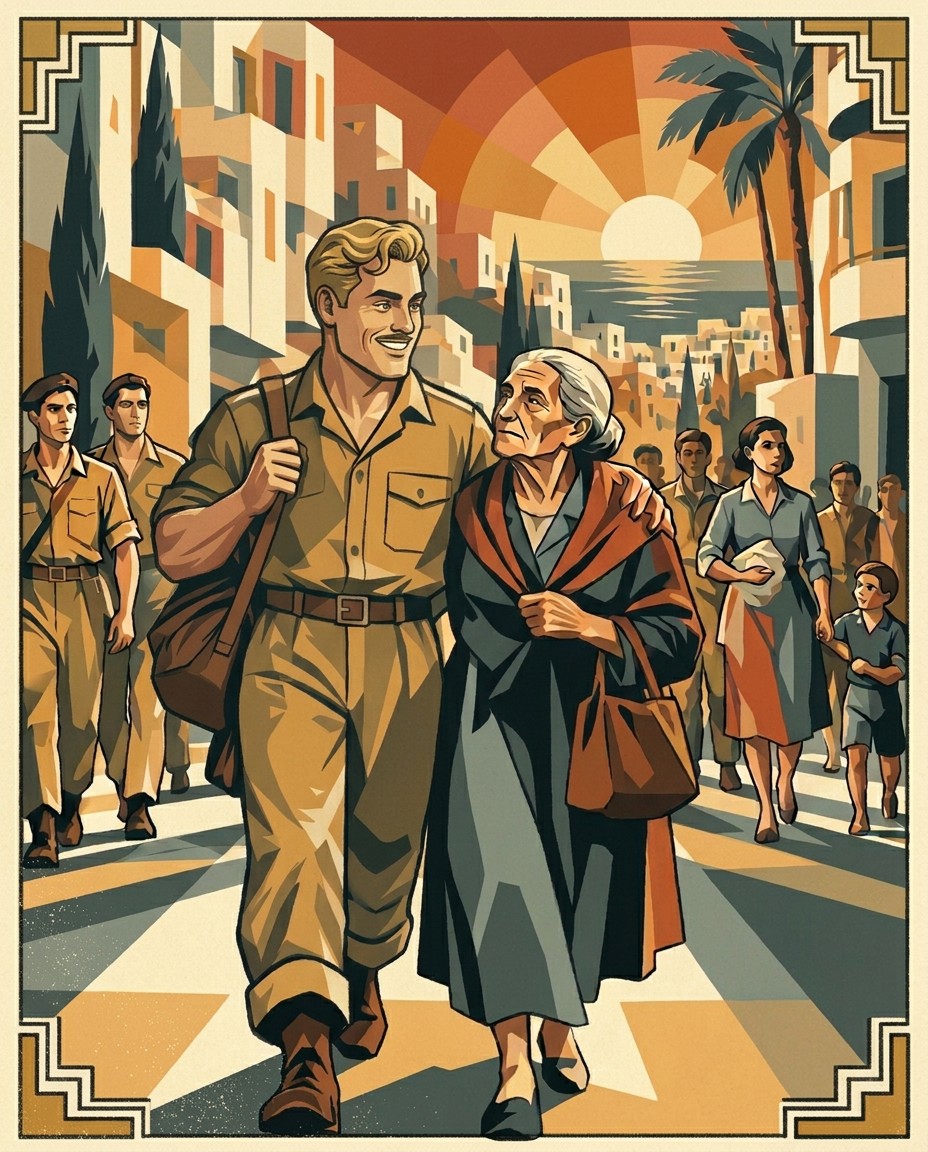
The Israeli authorities released the Bat Galim crew in the Kirya in Tel Aviv.
The Kirya, the Compound, had once been the German Templer colony of Sarona, founded in eighteen seventy-one by a group of German Pietists from Württemberg. They had built whitewashed houses with red tile roofs, planted orange groves, dug wells, and made a small productive settlement out of what had been Ottoman dune country. In the Second World War, with the parent organization in Germany increasingly Nazi-sympathetic, the British had interned the Templer community and shipped most of them to Australia. The British had used the buildings as a military headquarters. In May of nineteen forty-eight, when the British left, the new Israeli government had taken over the compound and made it the headquarters of the Defense Ministry. Today the Kirya is the heart of Israel's government quarter. The Israeli equivalent of the Pentagon stands there. The Israeli equivalent of the National Mall, Rabin Square, named for Yitzhak Rabin after his assassination, is two blocks away.
The truck pulled up to the gate of the Kirya in the late afternoon of New Year's Day, nineteen fifty-five.
It was a Saturday. It was Shabbat.
Shlomo's mother, who had not ridden in a car on Shabbat in seventy years, had walked.
Babel was, in nineteen fifty-five, a woman in her late sixties, a small, slightly stooped figure in a long dark dress with her hair under a kerchief. She had been told, by the Defense Ministry, when the crew would be released. She had been offered a car. She had refused. She did not ride in cars on Shabbat. She had walked from the Levitsky apartment in the new immigrant neighborhood of Tel Aviv where she had been living since Yaakov's death: Yaakov had died in nineteen forty-eight, the year of independence, never having seen the State actually declared, struck down by his stroke before the ceremony, across the city to the gates of the Kirya. The walk was perhaps eight kilometers. She had taken her time. She had stopped at every shul along the way and prayed. She had arrived at the gates of the Kirya at four in the afternoon, two hours before the truck.
The whole extended Levitsky family had gathered with her. There were Shlomo's older sisters and brothers, now with husbands and wives and small children. There were cousins from Jerusalem and Haifa. There were old Palmach comrades who had heard, on the radio, that the Bat Galim crew was coming home. There were sixty or seventy people standing in the late afternoon sunlight at the gate. Shlomo climbed down from the back of the truck. He looked at the crowd. He could not, at first, locate his mother. He saw cousins he had not seen in years. He saw the older sister Rachel who had wept on the Tel Aviv bus when he had come back from Latrun. He saw his mother. She came forward through the crowd, slowly, on tired old legs. She did not embrace him for a long moment. She looked at him. She put both her hands on his cheeks. She turned his head slightly to the left, looking at a small scar she had not seen before, where a guard's rifle butt had opened the skin above his right eyebrow. "You are too thin, Shloime," she said. He laughed for the first time in three months. They walked home together. The Levitsky family lived, by that point, in a small apartment in the Florentine neighborhood of southern Tel Aviv: a quiet block of two-story stucco buildings in the old workers' district. The walk from the Kirya was about five kilometers. People lined the road on both sides. Many of them had heard, on the radio, that the Bat Galim crew was coming home, and they had come out to see them. Some of them waved small Israeli flags. Some of them clapped. Some of them just stood, on the curbs of Allenby Street and Rothschild Boulevard, and watched the small white-haired old woman in the long dark dress walking with her young blond son. He had been jailed by the British. He had been shot by the Arabs. He had been tortured by the Egyptians. He had, each time, walked back out alive. He decided that night, sitting at his mother's table eating the Shabbat dinner she had warmed up for him, that he had used up enough miracles. He was twenty-seven years old. He was finished with the old adventures. The Palmach had discharged him in nineteen forty-nine, at twenty-two, after six years. He had been a lookout in a bush on the Syrian frontier, a prisoner at Latrun, a sailor on the illegal boats, a bodyguard, and a rifleman shot through on the road to Jerusalem. What he did with the next forty years was ordinary, and the ordinariness is the point. He had gone to sea properly first. In nineteen forty-nine he signed on with the Norwegian merchant marine and worked the decks of foreign ships across the world's oceans until he had earned the rating of able seaman, which is a qualification and not a courtesy. Around nineteen fifty he came back and joined the Israeli merchant fleet, and it was as an Israeli seaman that he had sailed into the Suez Canal on the Bat Galim.
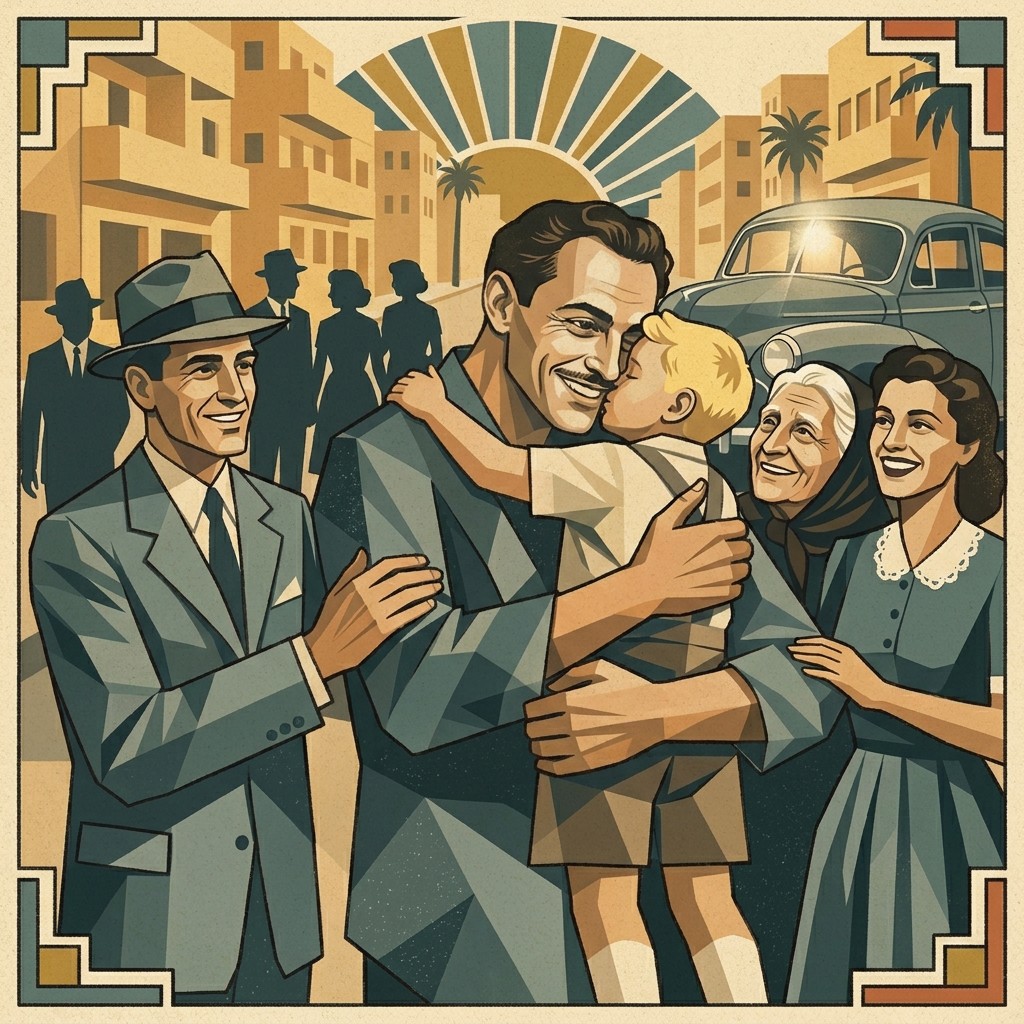
Now he married Alma and went home to Israel, and then the two of them went to Brooklyn, and Brooklyn is where he stayed. He learned the printing trade and worked it at Der Morgen Zshurnal, the Yiddish daily, setting in metal the language his mother had spoken in the kitchen in Olevsk. Later he opened his own shop and called it Shalom Typographic. He ran it until he retired in nineteen ninety-two.
He and Alma had three daughters. Lily Lev. Ava Lev. Beverly Lev-Whitford.
Count what is in that line. A boy born to a rabbinical family in a Ukrainian shtetl in nineteen twenty-seven had, by the ordinary arithmetic of his birth, almost no chance of a life like that. Most of the Jewish children born around Olevsk in those years were murdered before they were twenty. Shlomo got out at six because his parents decided to go to a country that did not yet exist. He spent his twenties making sure it would exist. Then he went and had a life. Three daughters. A trade. A shop with a Hebrew word on the sign.
There was one more thing he would do, and he did it in nineteen sixty-one, quietly and without ceremony, the way people do these things. He became an American citizen, and he changed his name in the same season. Levitsky came off, and Lev went on in its place: the Hebrew word for heart.
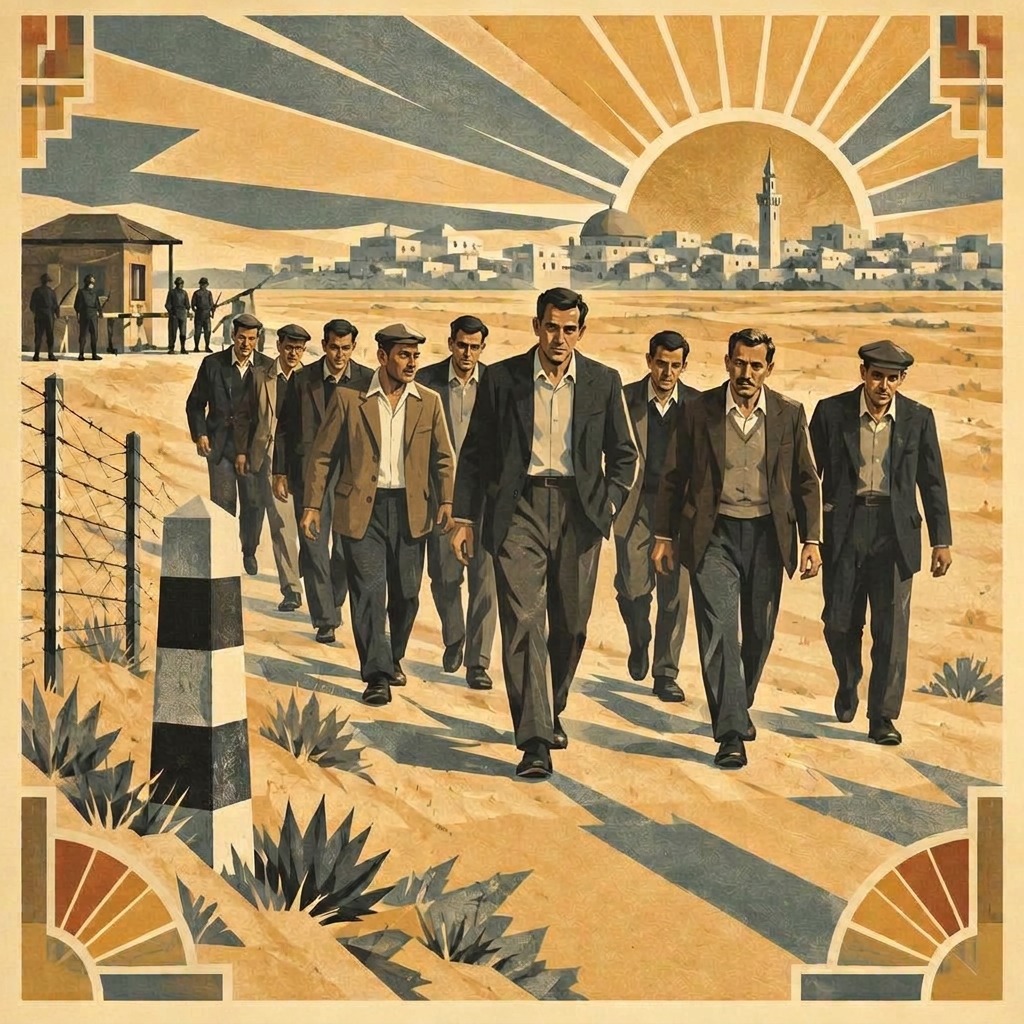
Consider what was being set down. A Christian landowner in a Ukrainian village had pressed that surname on a rabbi's family so that the men who stole Jewish children for the Tsar's army would look at the boys and see his name and leave them where they stood. It had held for the better part of two centuries. A boy had carried it down a rope in the dark with an Italian carbine on his back, and into the Palmach, and onto the decks of the illegal ships, and through the tunnels under Jerusalem, and into a cell in Cairo, and home again along Allenby Street beside his mother. It had been a good name and it had done hard work. It was simply no longer a name he required. He was Shlomo Lev.
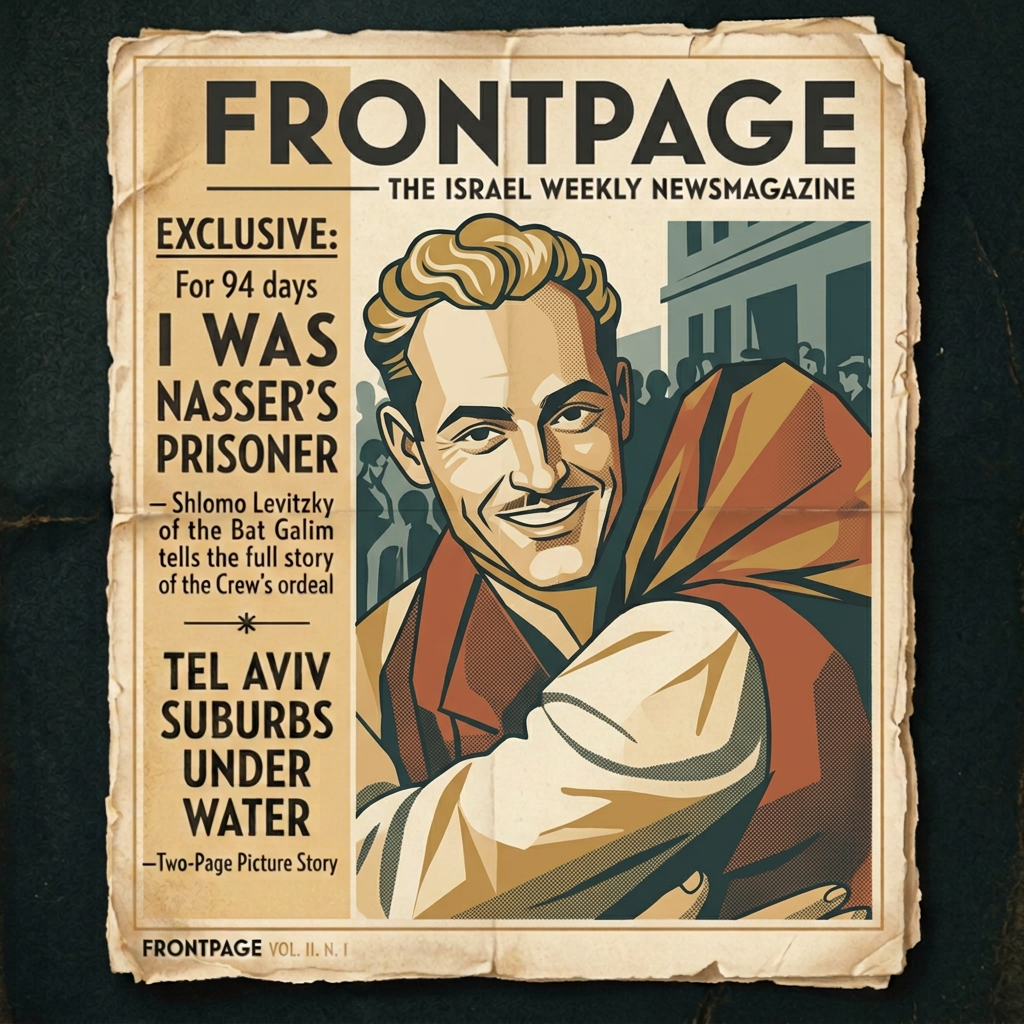
And it is worth stopping here, at the close of this part of the book, over something that runs through all three of the lives in it. Every one of these men changed his name. No two of them changed it for the same reason.
Gal's family put down Shaharbani, the name of an Iraqi town their people had left generations before anyone alive could remember it, and took up Sharon, which is the name of a plain in the land of Israel. Shlomo put down Levitsky, the gift of a Christian protector in the Pale, and took up Lev. Those two changes run in the same direction. They were made by men who no longer needed a name to shield them, who had a country of their own to be from, and who wanted the name they answered to when somebody called across a room to say so out loud.
George's runs the other way, and it is the whole argument of this book compressed into a single word. He was born George Levy, and Levy is among the oldest and least mistakable Jewish names there is: the name of the priestly tribe, carried three thousand years. He spent the rest of his life as George Mueller, and Mueller was the name of the lie that had kept him out of the gas: a borrowed Catholic uncle, a German surname, a fiction that converted two Jewish children into something the racial state was willing to spare. He had learned before he was fifteen exactly what a Jewish name was worth in the world as that world was actually arranged. It had cost him his mother, his father, his country, and the whole of his childhood. To George Levy Mueller, being identified as a Jew had never once in his life been anything but a liability, and a name that did not announce him was a thing worth keeping. He kept it for sixty years, and he kept the silence that went with it for fifty.
Two of these men took names that said, at last, who they were. The third kept the one that had allowed him not to say it. That is the distance between a people with a state and a people without one, and it can be measured in three surnames.
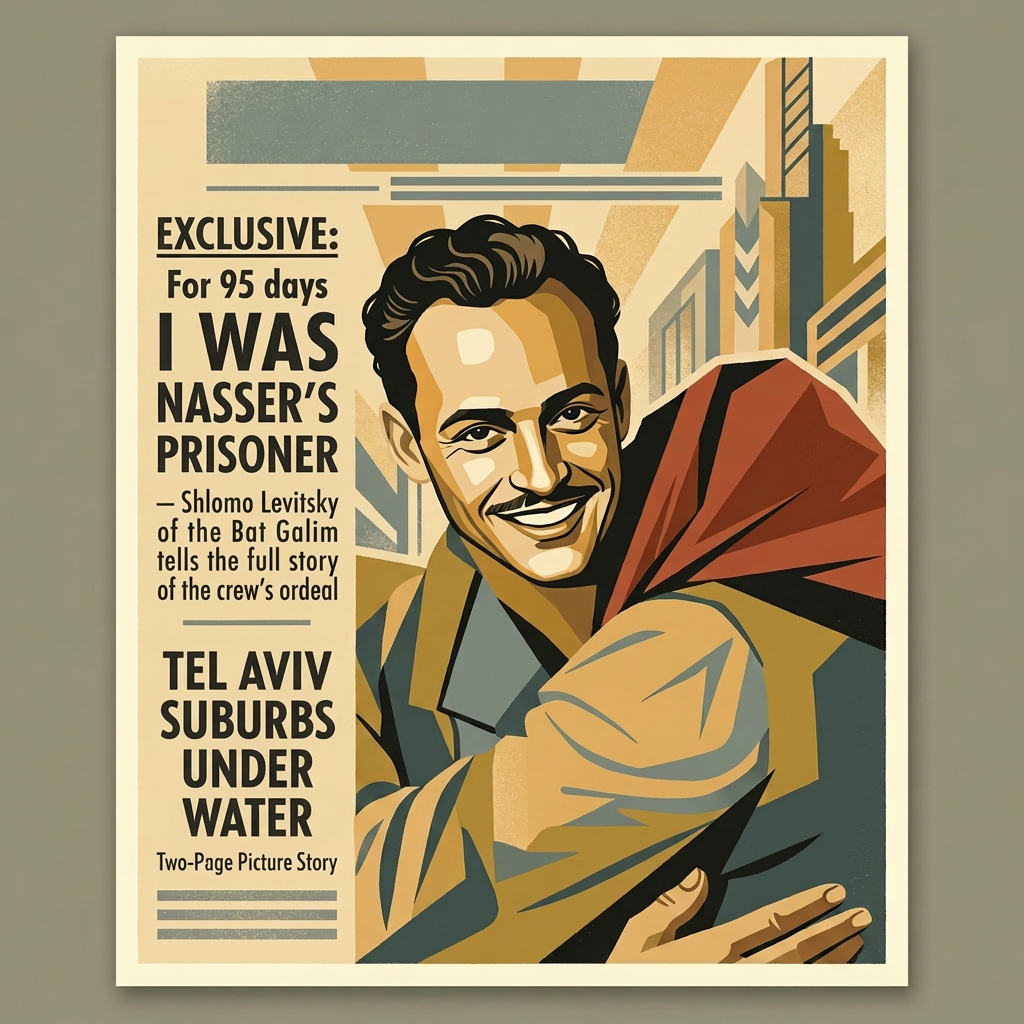
The Inheritance
The Morning of the Seventh of October
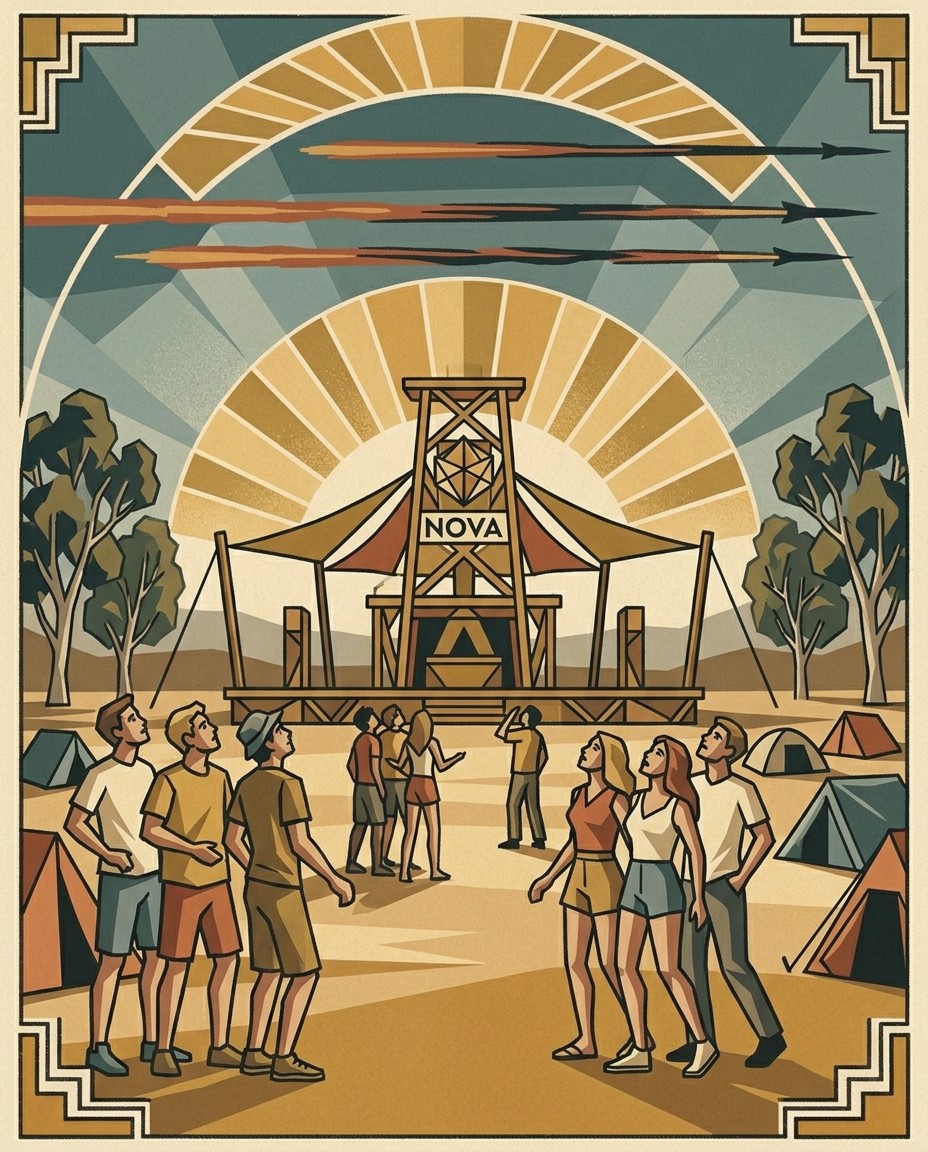
The seventh of October, twenty twenty-three, was a Sabbath morning. It was also Simchat Torah, the Joy of the Torah, the last day of the autumn cycle that begins at Rosh Hashanah and runs through Yom Kippur and Sukkot. Simchat Torah is a holiday of dancing. The scrolls come out of the ark and go around the synagogue seven times, and every circuit has its own song. Children ride on their fathers’ shoulders holding paper flags. No synagogue in the Jewish year is louder.
Along the southern fence it was quiet. It had been quiet for days. The autumn was warm. The citrus groves of the western Negev were giving off the first faint smell of orange blossom. The children of Be’eri were asleep. The children of Nir Oz were asleep. The children of Kfar Aza were asleep. The children of Nahal Oz, four hundred meters from the Gaza fence, were asleep. At Re’im, in an open field, a few thousand young people were still dancing at the Nova festival. Most were in their twenties. Some were in their teens. The first set of the morning had not yet started.
At six twenty-nine a.m. the rockets began.
Three thousand rockets went up out of Gaza into southern Israel. It was the largest barrage Hamas had fired in eighteen years of war against Israel, and the largest opening salvo of any war in the country’s seventy-five years. Iron Dome fired back. The sky over the Negev filled with pale parabolas.
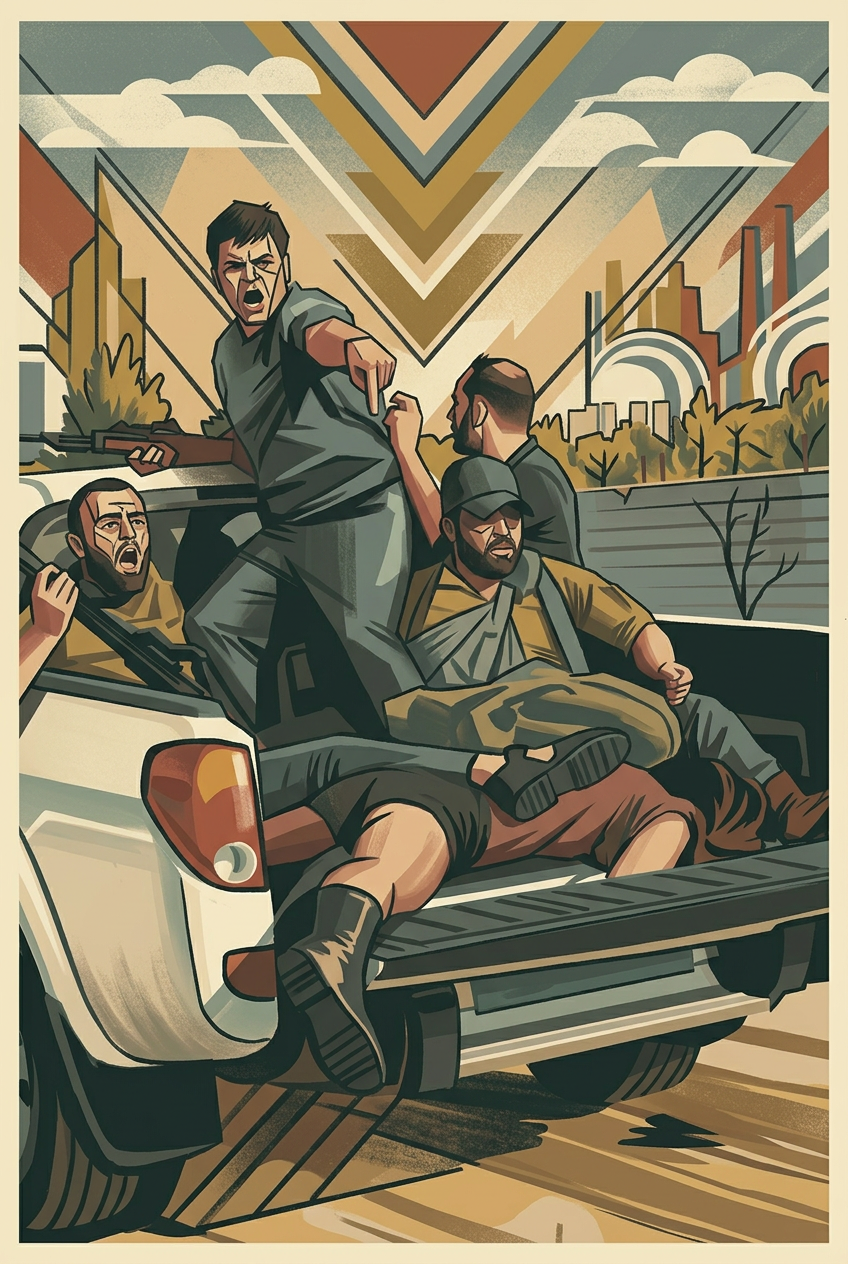
Under the rockets, three thousand Hamas operatives crossed the frontier. They came through more than thirty breaches blown open in the border fence by planted charges in coordinated detonations. They came in trucks. They came on motorcycles. They came on foot. They came on paragliders that floated over the fence and dropped armed men onto the Nova festival from the air. They carried Kalashnikovs. They carried GoPro cameras strapped to their vests so the operation could be filmed and uploaded while it happened. They carried maps of the kibbutzim with the safe rooms and the bomb shelters marked, drawn from years of intelligence work.

Three thousand was the first count and it was low. The breaches stayed open for hours, and in some places until the following day, and people kept crossing for as long as they stood open. The Israel Defense Forces later put the number who came through the fence that day at roughly six thousand.
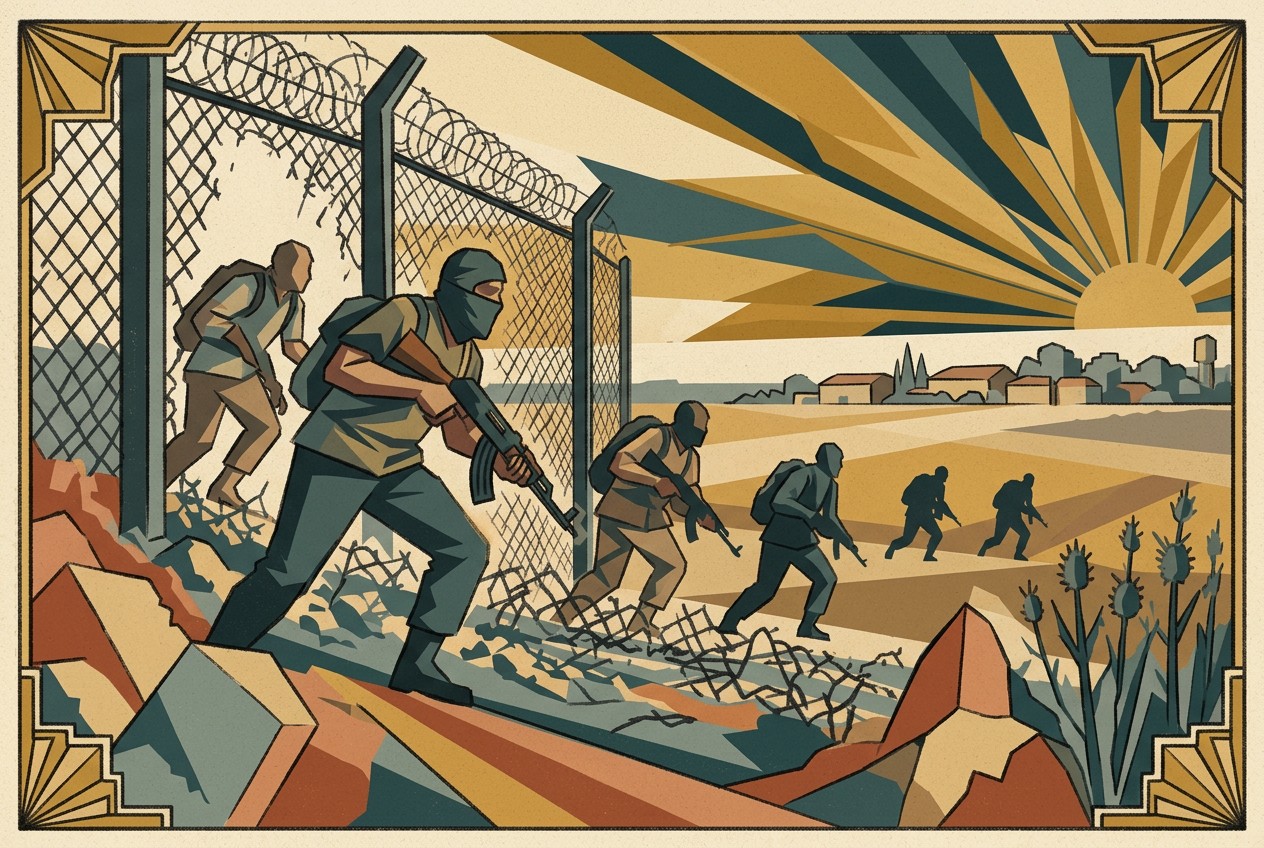
They were not all Hamas. The spearhead was the Nukhba, Hamas’s elite commando force, some three thousand eight hundred men trained for this assault and briefed on the kibbutzim, the safe rooms and the festival ground. Behind them came fighters of the smaller factions, Palestinian Islamic Jihad among them. Behind the fighters came roughly two thousand people who belonged to no military organization at all. They were ordinary residents of Gaza. They walked west through the broken fence because the fence was broken and the way into Israel lay open for the first time in their lives. They came on foot, on motorcycles, in the beds of pickup trucks. Some of them killed. Many of them looted, and carried back through the breaches the contents of the kibbutz houses: televisions, bicycles, kitchen appliances, the cars of murdered families. Some of them took hostages of their own. A number of the Israelis carried into Gaza that day were held in the back rooms of ordinary Gazan homes.

This should be stated plainly, because the word terrorists, repeated through the early reports, hides it. The assault began as a planned military operation. Within hours it was a mass event, and it reached well past the kibbutzim and the festival. Gunmen fought their way into Sderot and seized the police station, and the army had to destroy the building to take it back. They overran army bases along the frontier. They attacked the Erez crossing, the gate through which Gazans passed into Israel for work and for medical care. By the middle of the day the whole of the Gaza envelope, its farming villages and its roads and its towns, was a battlefield on sovereign Israeli soil. That had not happened since nineteen forty-eight.
The official investigation of the Israel Defense Forces, released in March of twenty twenty-five, called it the most consequential failure of state security in the history of the State of Israel. The Gaza Division was overwhelmed. The kibbutzim were unprotected for hours. At Nahal Oz, eleven undercover Border Police officers and the eight members of the kibbutz security squad held off perhaps thirty operatives in the first wave. Then the second wave came. At ten thirty-four a.m. attackers came in through the front gate, which was unstaffed. At ten forty more came in through the back gate. One hundred and fifty attackers entered Nahal Oz in the second wave.
A Maglan unit of seventy soldiers, the first significant infantry reinforcement, reached the kibbutz at one fifteen p.m. They went in at one forty-four. The last fighting, near the dairy farm, was at about three thirty. Nine hours after it started.
Thirteen members of Nahal Oz were murdered that day. Ilan Fiorentino, the kibbutz security coordinator, was killed two minutes after he found that the armory could not be opened because the power was out. Two foreign agricultural workers, one from Tanzania and one from Thailand, were killed. Eight residents were taken into Gaza, children among them.
The attackers had been issued body cameras along with their rifles and their grenades, and the instruction to film. At Nahal Oz they went further. They took the victims’ telephones, opened the victims’ own social media accounts, and broadcast the assault live to the friends and the relatives and the neighbors who followed those accounts. It was a weapon aimed at the mind rather than the body, and it was aimed at the people who loved the victims most.
Two Nahal Oz families were broadcast to the world that morning. In the Idan house, gunmen pushed toward the safe room. Maayan Idan, eighteen years old, was shot through the shelter door while she helped her father hold it shut. The gunmen took her mother’s telephone and started a livestream on Facebook. Gali Idan’s own friends and family watched her on the kitchen floor with her surviving young children, in the blood of their daughter and sister, one of the children asking aloud whether they were going to be killed too. Tzachi Idan was filmed wounded on the floor. Then he was taken alive into Gaza. Gali and the younger children lived. Tzachi did not come home for more than a year, and he came home as a body. He was buried beside Maayan.
In another house the gunmen broke in on Dikla Arava and her partner Noam Elyakim, and used Dikla’s Facebook account to run a livestream of some twenty minutes. It showed Dikla. It showed Noam, bleeding heavily from a gunshot wound in the leg. It showed Dikla’s son Tomer, seventeen years old, and Noam’s daughters, Dafna, fifteen, and Ella, eight. Then the gunmen took Tomer out of the house at gunpoint, into the lanes of the kibbutz, and ordered him to call the neighbors out of their safe rooms and into the open where they could be shot.
Tomer Arava was seventeen years old with a rifle at his back, and he did one of the bravest things in this book. He went to the doors as he had been ordered to, and he told the neighbors the houses were empty. He warned them. He had the only freedom a boy can keep with a gun behind him, and he spent it on his kibbutz. Then he ran, and he was killed in the crossfire of the battle for Nahal Oz, by Israeli fire, in the chaos. The army’s own inquiry examined his death and set it down by name. His mother, Dikla Arava, fifty- one years old, was murdered that day. Noam Elyakim was shot, carried into Gaza, and died of his wounds. Dafna and Ella Elyakim, fifteen and eight, were taken into Gaza and held there fifty-one days. Of everyone in that twenty-minute broadcast, they alone came home alive, released in a ceasefire deal.
The reader has met Ella and Dafna already, two names among the hostages whose photographs Gal Sharon carried in his head. Now the house they were taken from has its place as well. It stood among the houses that Gal’s unit would walk through room by room in the days that followed. What the cameras broadcast live to the world, the soldiers met again afterward, in silence.
That was only Nahal Oz.
At Be’eri, ten kilometers north along the fence, one hundred and one civilians were murdered in a single day. At Kfar Aza, sixty-four. At Nir Oz, seventy-six were murdered and seventy-six were taken, about a quarter of the whole community. Nir Oz had been a working agricultural village of four hundred people the night before. By sundown it was a ghost.

The worst of it was at the festival. Nova sat on three hundred sixty acres of open Negev desert: a sound stage, a few thousand young people, most of them Israeli, some of them foreign nationals from twenty-two countries. It was overrun at six thirty a.m., one minute after the rockets began. The attackers killed three hundred and sixty-four young people. They filmed the killings. They loaded the survivors into pickup trucks and onto motorcycles and drove them into Gaza. Forty of the festival-goers were taken alive.
The numbers can be set down. What was done in the hours the numbers count cannot. Over the months that followed, the official Israeli inquiries, the foreign press and the United Nations assembled a record of the seventh of October, and the record is worse than the totals.
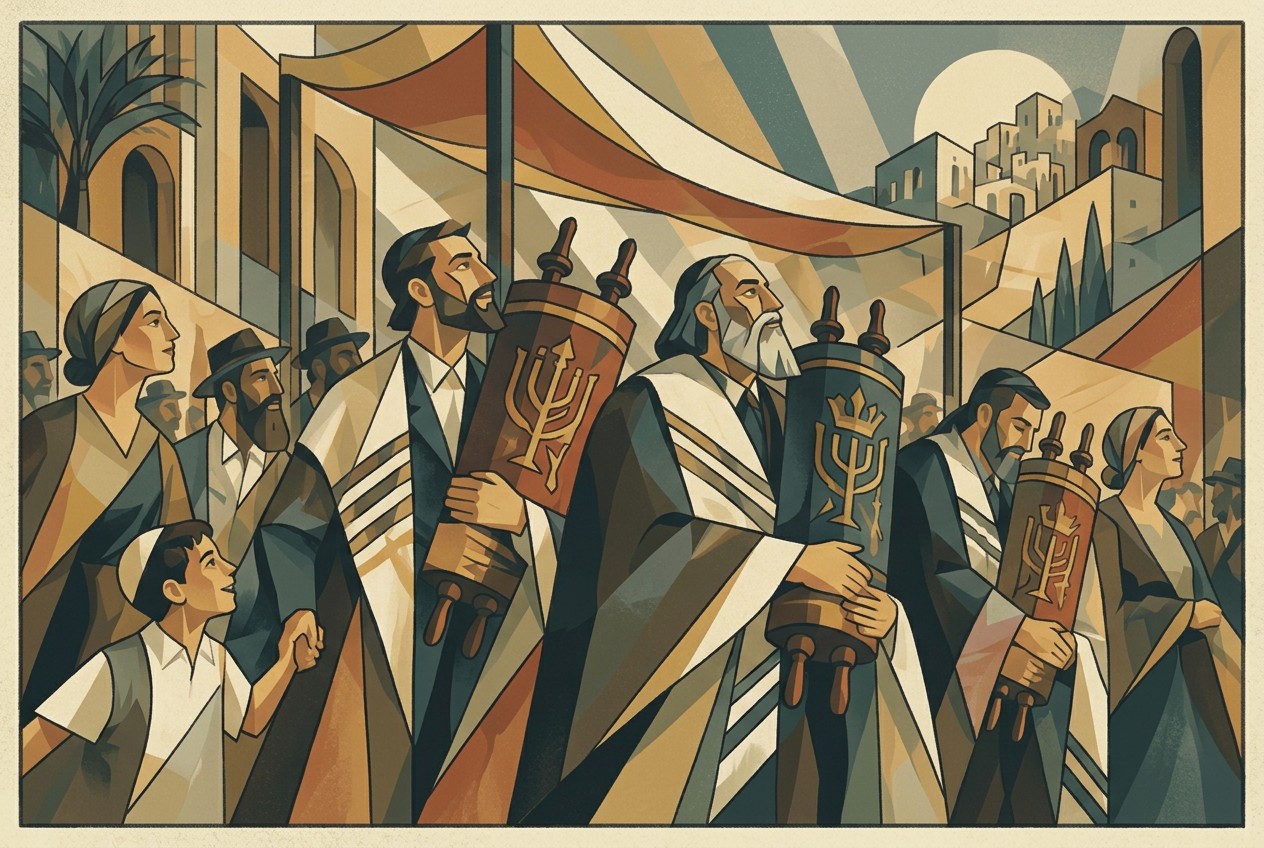
In March of twenty twenty-four, Pramila Patten, the United Nations Special Representative on Sexual Violence in Conflict, led a mission to Israel at the Israeli government’s invitation. Her team found reasonable grounds to believe that conflict-related sexual violence had occurred in more than one location on the seventh of October, including rape and gang rape at the Nova festival ground and its surroundings, along the road known as Route Two thirty-two, and at Kibbutz Re’im. It found clear and convincing information that sexual violence, including rape and sexualized torture, had been committed against hostages held in Gaza, and reasonable grounds to believe that it might still be happening to those who remained captive. The mission was a fact-finding visit and not a criminal investigation, and Patten said so plainly. Her conclusions were stated in the conditional. They put on the record of the United Nations itself a thing that parts of the world had already begun to wave away.
Thirty-six of the murdered were children. Whole families were killed together in the fortified safe rooms that every Israeli house near Gaza is built around. Those rooms are designed to hold against rocket fire. They were never designed to be held shut from the inside against men with rifles and grenades and time. Houses were set alight with the families sealed inside them. In some of the burned houses the forensic teams who came afterward could not tell at first how many people had died, or who they were, or whether a person now missing had been murdered in the house or carried alive across the fence.
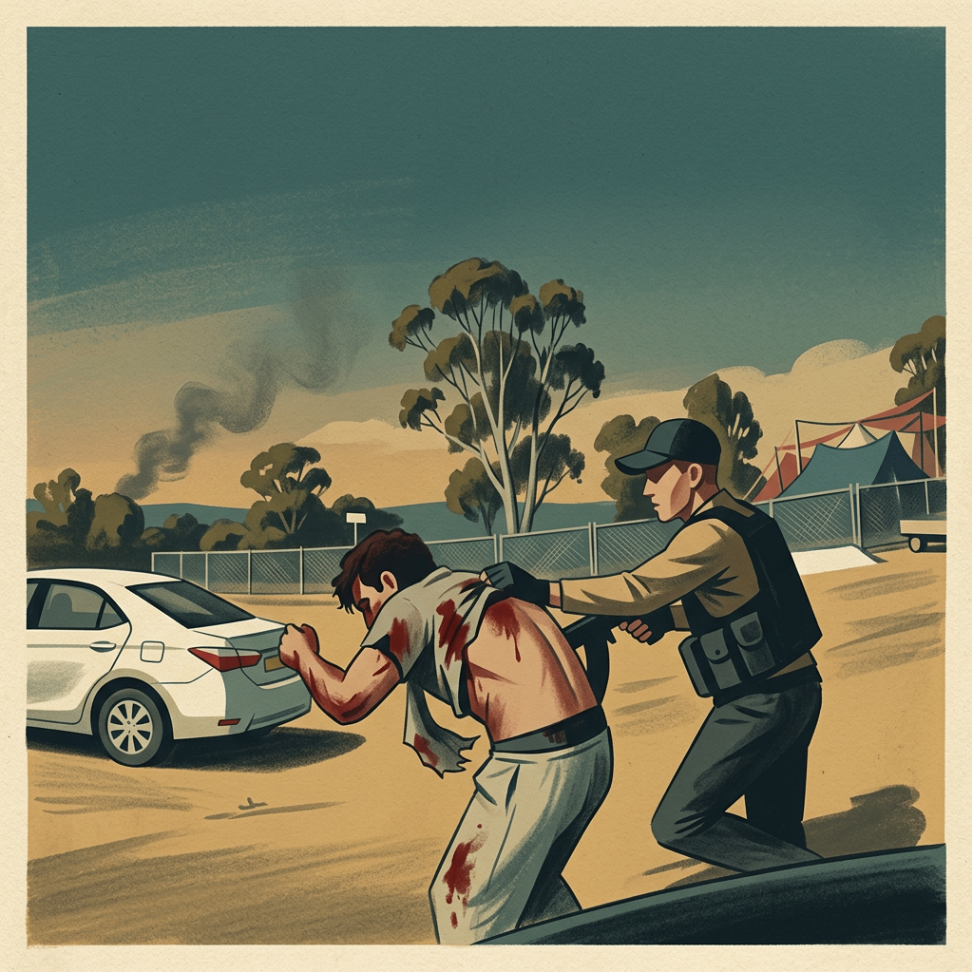
Shiri Bibas and her two small sons were carried into Gaza. Ariel was four years old. Kfir was nine months old, the youngest hostage of the war. They were taken from their home at Nir Oz. Their father, Yarden, was seized separately and held apart from them. For sixteen months Hamas said the mother and the two children had been killed by an Israeli airstrike. The bodies of the boys were returned in February of twenty twenty-five. Israeli forensic examination concluded that Ariel and Kfir had not died in any airstrike. They had been murdered by their captors. Yarden Bibas had been released alive three weeks before. Shiri and her two red-haired sons were buried together in a single casket.
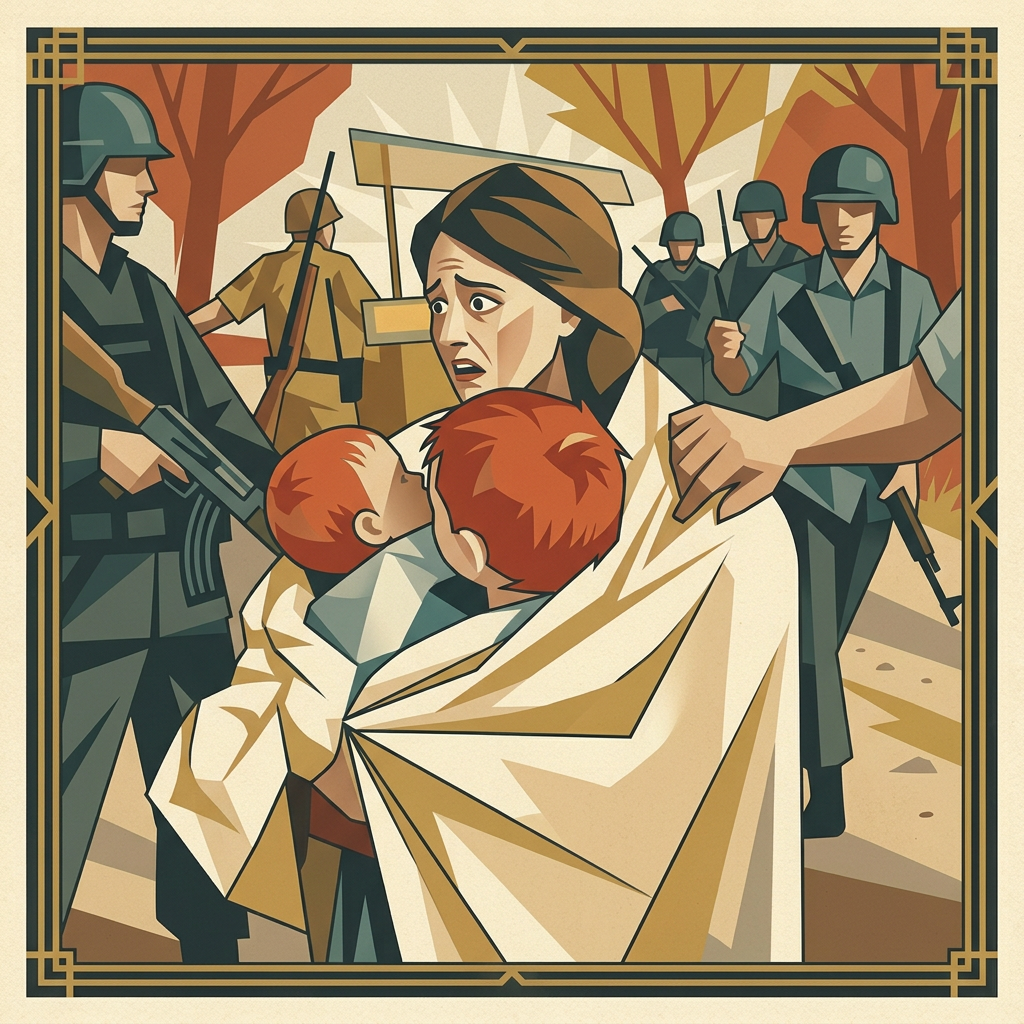
The hostages ran the whole length of a human life. The youngest was the Bibas baby. The oldest were past eighty, and some of them were Jews who had survived the Nazi camps as children and were made captive a second time in their last years. They held the citizenship of more than twenty countries. They included the Thai and Nepali farmworkers who had come to the kibbutzim for the season’s harvest and were taken alongside the families they worked beside. Some were freed in negotiated exchanges. Some were recovered alive by soldiers. Too many came home as bodies. The last of them was not brought out of Gaza until the twenty-sixth of January, twenty twenty-six, more than two years after the morning they were seized.
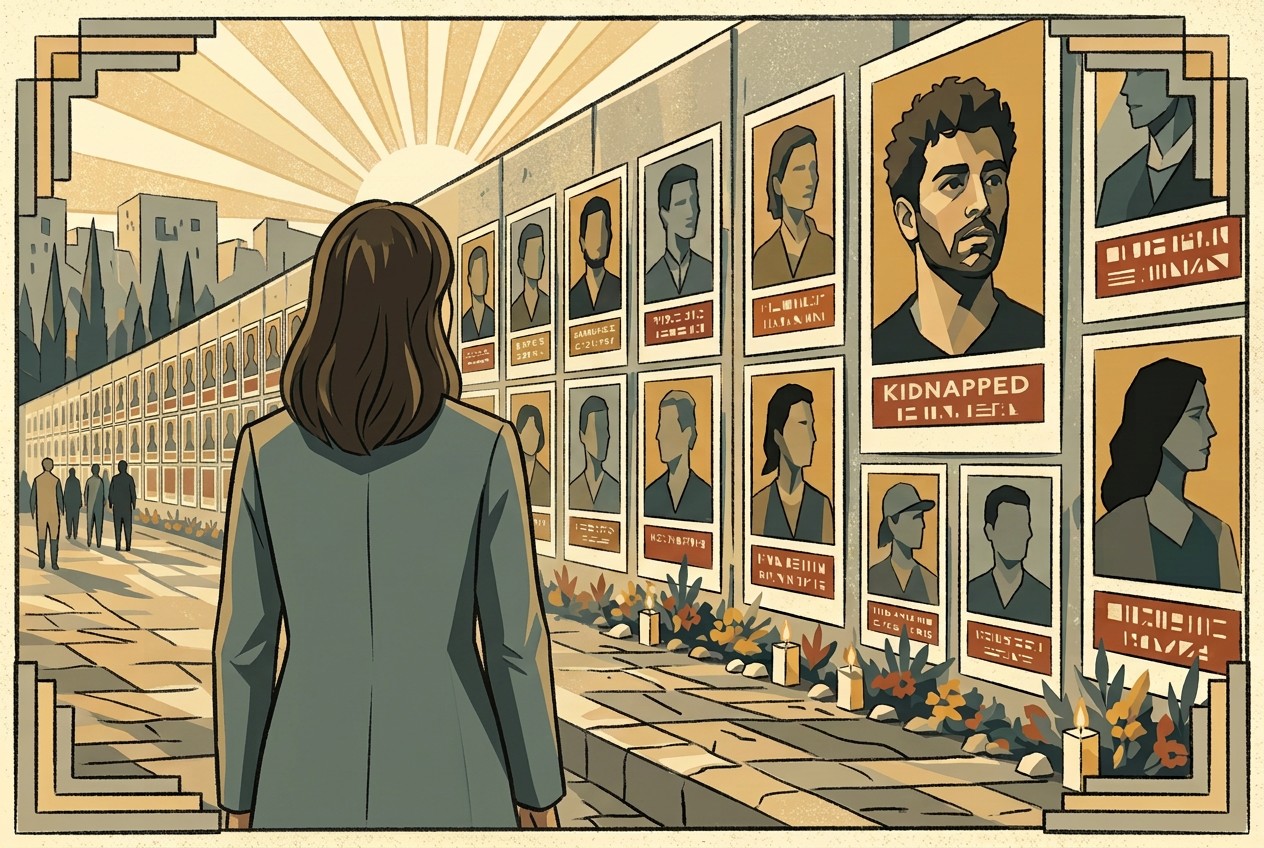
When the smoke cleared over southern Israel three days later, the official count was approximately one thousand two hundred Israelis murdered, two hundred and fifty hostages in Gaza, and a country in a condition no living Israeli had known.
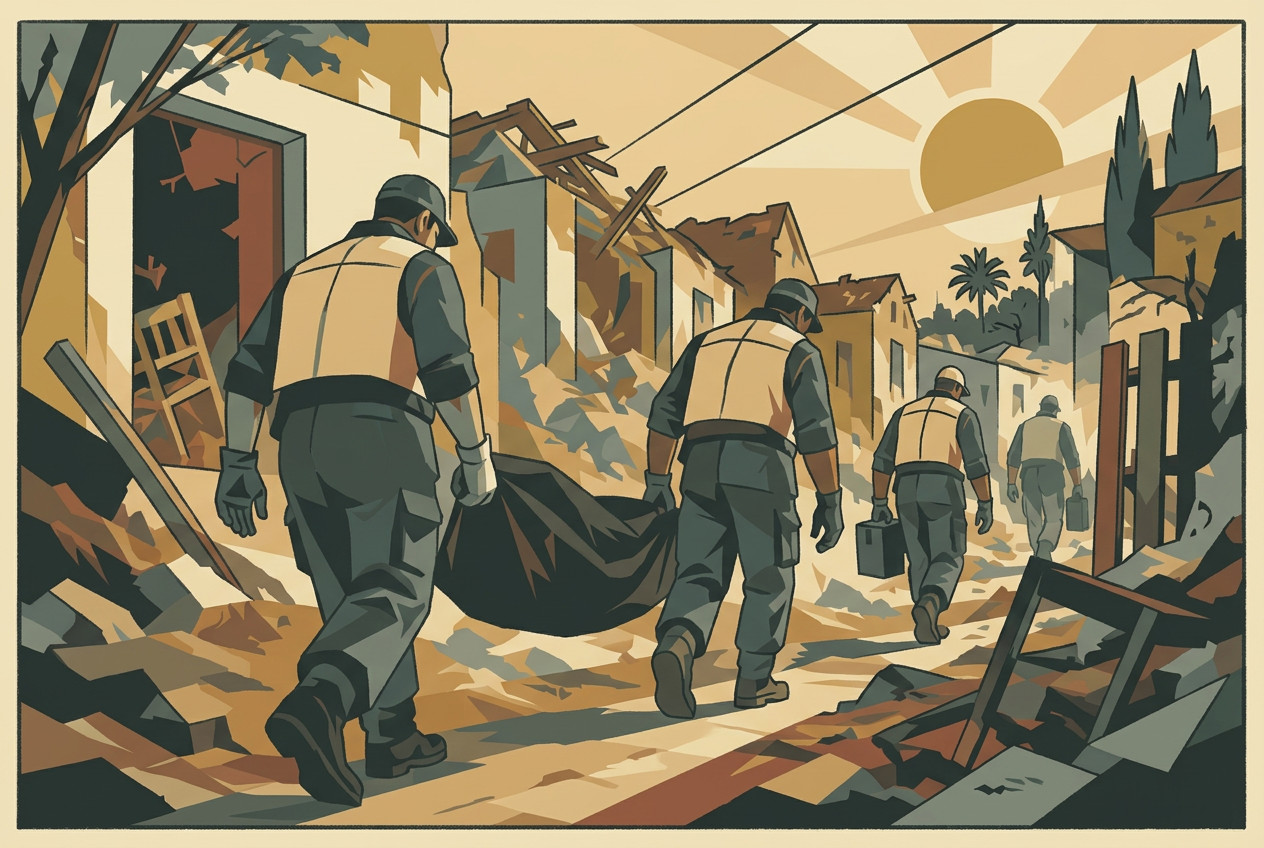
There had been bigger wars. The Yom Kippur War of nineteen seventy-three killed more Israeli soldiers, about two thousand seven hundred in three weeks. The people killed on the seventh of October were not soldiers. They were children. They were grandparents. They were Thai farmworkers who had come for the season and did not know what was happening. They were teenagers at a music festival who had been dancing two minutes earlier. They were Holocaust survivors who had lived through Auschwitz and were murdered in their kibbutz homes eighty years later by gunmen who filmed it for the internet. The proportion is usually lost. A country of seven million Jews lost twelve hundred people in one morning. In American terms that is roughly fifty thousand Americans murdered before noon, fifteen times the dead of September eleventh. America has no event of that scale in the twentieth century or the twenty-first.
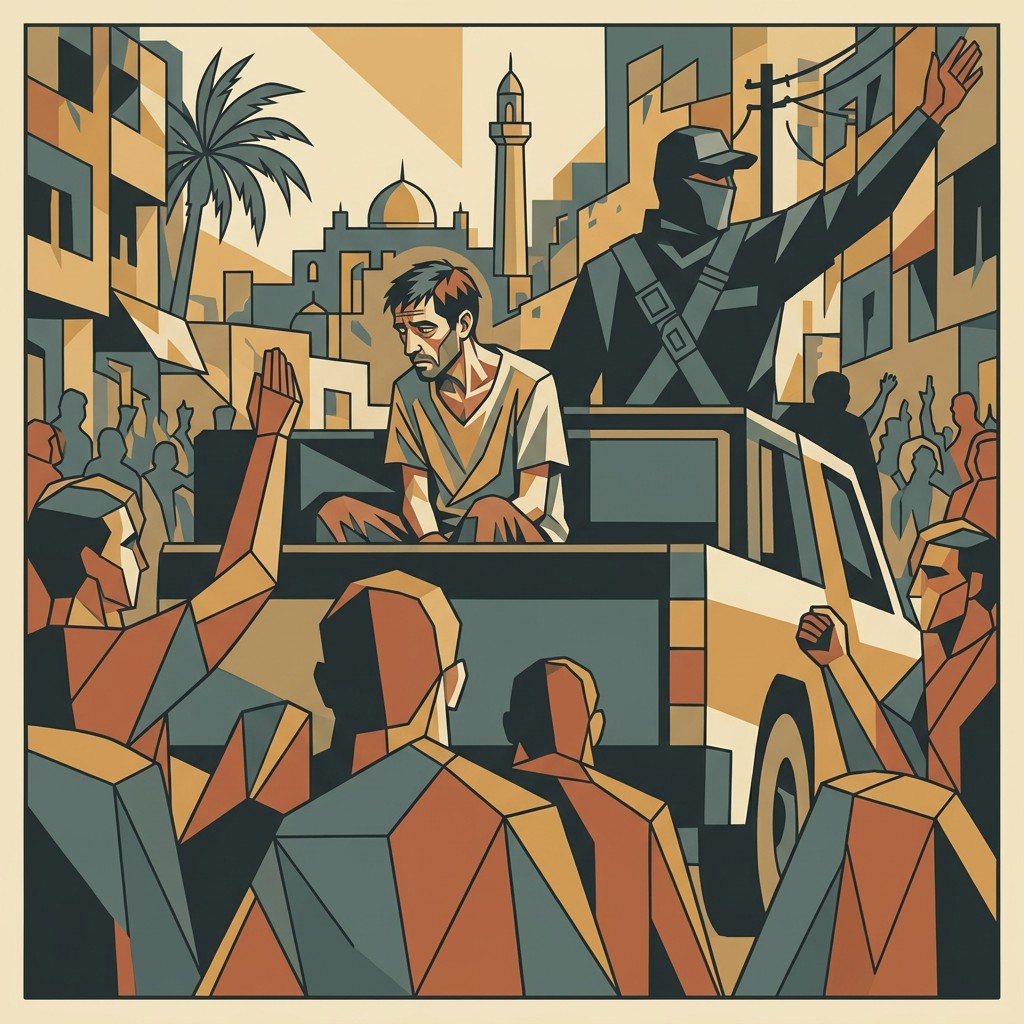
Gal
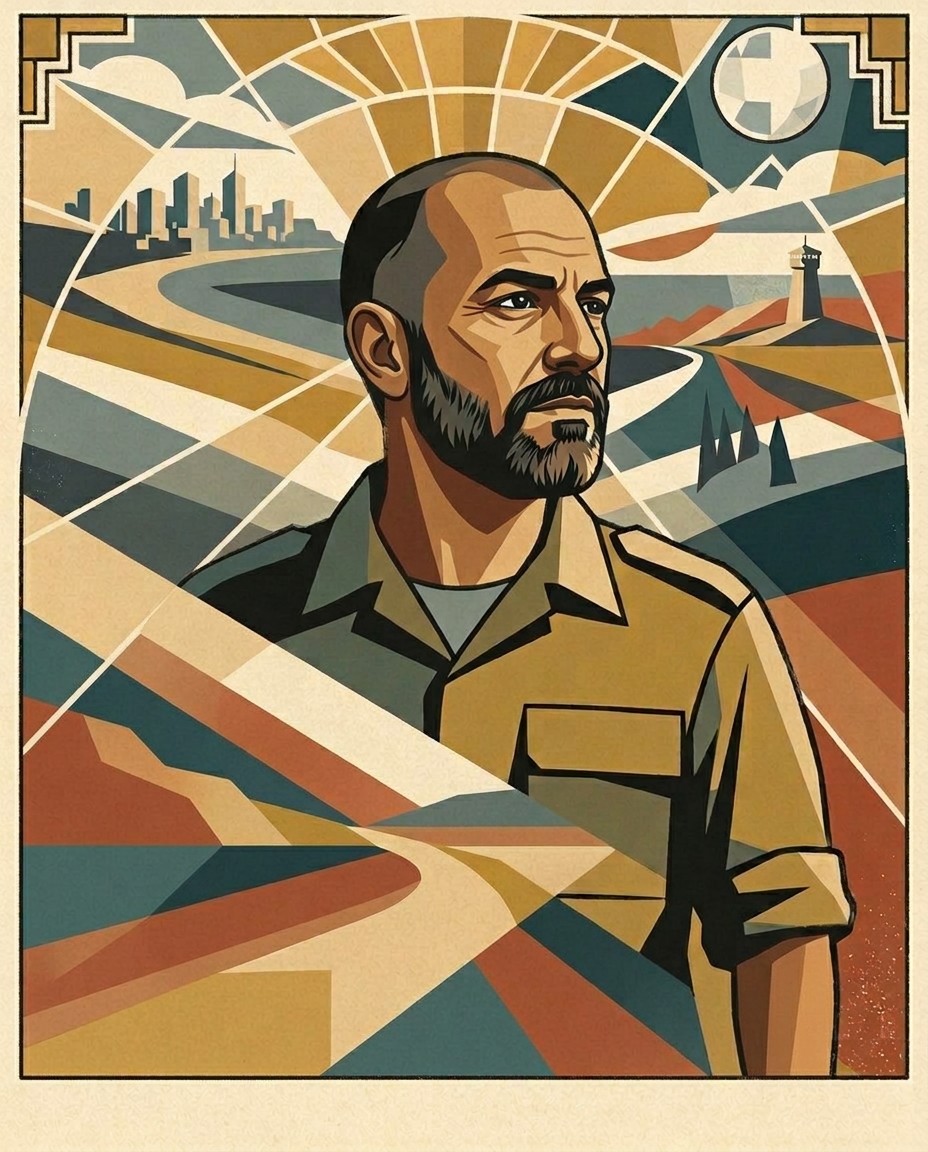
Gal Sharon was born in Tel Aviv in the early nineteen eighties. He was, by the time the events of this chapter began, a man just past forty: an agronomist by training, a captain in the reserves of the Israel Defense Forces, serving as his unit's intelligence officer, a husband and the father of ten-month-old twin boys. He lived in central Tel Aviv. He took his children to the playgrounds along the Yarkon River. He drank his coffee in the morning at one of the small cafes near the corner of his block before commuting to work. He was, in the long Israeli phrase, a typical Tel Avivi. Except that he was a captain in a Special Forces reserve unit, which meant that several weeks of every year he disappeared into the Negev for training, and that when the country needed him he went where the country sent him.
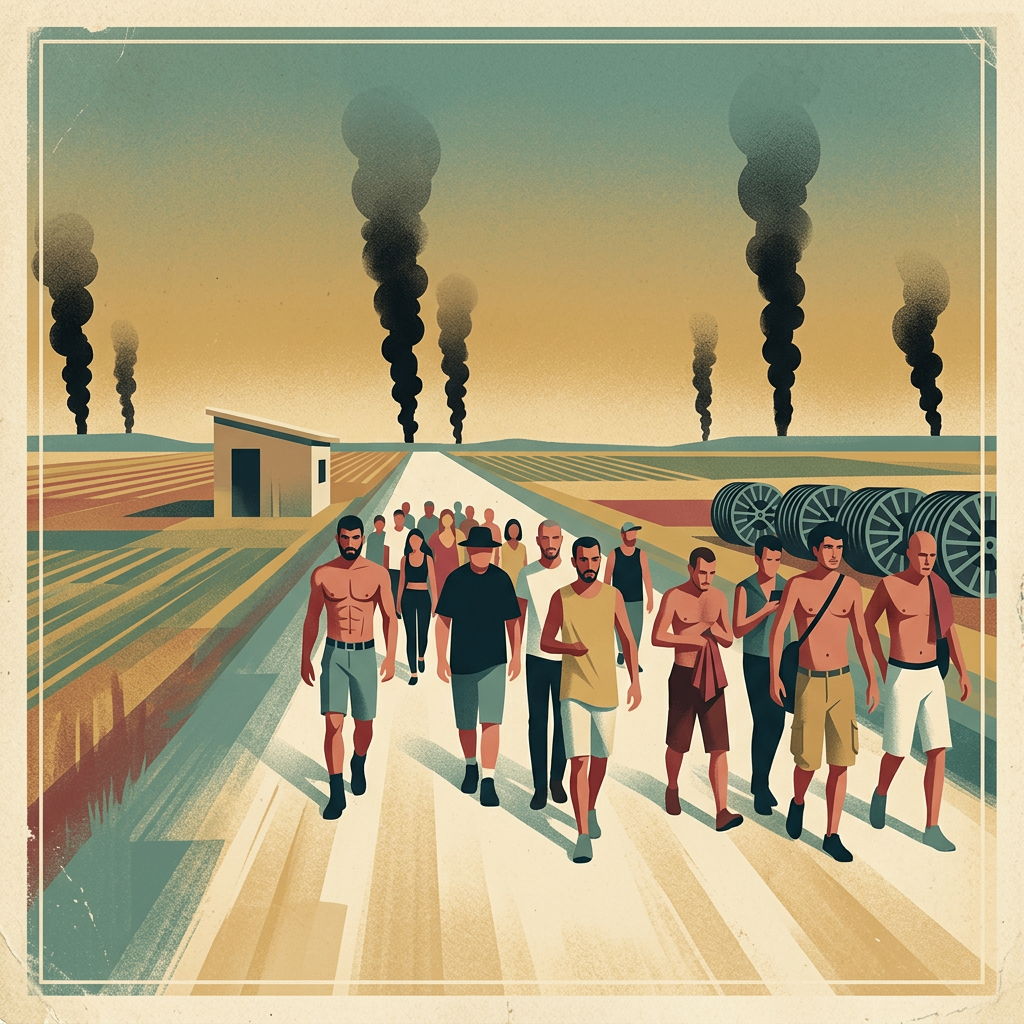
He grew up speaking Hebrew at home, in a household where the army was not a subject of conversation. His father had fought in Lebanon in nineteen eighty-two, in the war Israel called Peace for the Galilee: the invasion that drove north to Beirut, drove the Palestine Liberation Organization out of the country by sea, and then settled into the long occupation of a southern security zone that Israel would not finally leave until the year two thousand. Arie Shaharbani, his son would not become a Sharon for another quarter of a century, came home from it and did not talk about it. His parents had come out of Basra by way of ten years in Iran, and did not talk about that either. Asked, long afterward, what had been passed down at his family's table about soldiering, spoken or unspoken, Gal gave an answer of nine words: "We really never spoke about military service in our home." Whatever he carried into the uniform, he did not inherit it as a set of stories. He inherited it the way nearly every Israeli child inherits it, as weather.
The machinery of that inheritance starts early. Israeli teenagers are drawn into the conscription process at sixteen, two years before they can serve: the first summons, the medical, the psychometric batteries, the interviews, the slow sorting of an entire national cohort into the units that will take them. Gal went through all of it at sixteen, like everyone else, and he went through it without a dream. He has been plain about this, and the plainness deserves preserving, because the mythology of the Israeli army runs the other way: the boy who has wanted the red beret since he was nine, the tryout, the calling. There was none of that. "I actually never had a dream or a role in the army I really, really wanted," he said. "I just wanted to do something meaningful."
What the army wanted from him was his head and his Arabic. He was sent to Unit Eighty-Two Hundred. The number needs explaining to a reader outside Israel, because it does not translate. Unit Eighty-Two Hundred is the signals intelligence arm of the Israeli Military Intelligence Directorate: the country's National Security Agency, in the American comparison, and by several outside assessments the foremost technical intelligence organization in the world outside the United States. It is the largest single unit in the Israel Defense Forces, somewhere between five and ten thousand strong, and it is staffed overwhelmingly by conscripts between the ages of eighteen and twenty-one. That is the part that startles foreigners: the listening apparatus of a state that lives inside a permanent emergency is operated, in large part, by teenagers, sorted out of the national cohort for speed of learning and for languages and handed responsibility that in most countries would be given to a person in middle age. The unit is also, and not coincidentally, the single largest feeder of the Israeli technology industry. A remarkable share of the country's software companies were founded by people who met each other in its rooms at nineteen. Gal was selected for the reasons the unit selects. He had the analytic cast of mind, and he had Arabic, studied rather than inherited, since his father's generation had deliberately let the language go. There is a quiet irony in that, and it is worth naming, because it runs backward through the whole of Chapter Four. Arie had grown up faintly ashamed of the Arabic his parents spoke in the street and had put it down as the price of being wholly Israeli. One generation later the Israeli army looked at his son and wanted precisely that language back. "I guess with a background in Arabic and good analytical skills, I ended up there." A note of precision, because Gal insists on it and the insistence is characteristic. His regular service was not in a special forces unit, and he does not claim that it was. Eighty-Two Hundred is an elite unit, one of the hardest formations in the army to be selected into, but it is not a commando unit, and the distinction matters a great deal to a man who has since spent years in the company of people who go through doors. "I'm not sure my service in 8200 is considered special forces," he said. "It's however considered an elite unit." Asked about the hardest moment of his training, the moment he almost broke, he declined the premise entirely: nothing about it, he said, was really hard. The Special Forces came afterward, and they came because he asked for them. This requires a word about how the Israeli reserve system works, because it is the hinge of everything that follows in this book. An Israeli does not finish his mandatory service and go home. He finishes it and is assigned to a reserve unit, and that assignment can follow him for the next quarter of a century: a few weeks a year of training, a call-up in an emergency, a slow accumulation of middle-aged men who have known each other since they were twenty. Gal came out of Eighty-Two Hundred and was assigned to a reserve unit that then proceeded to do nothing whatever with him. They did not call. Years went by and they did not call. He was, in his own word, bored.
So he did a thing that very few people anywhere do. He went looking for a harder war. He found the officer responsible for reserve assignments, telephoned him, and asked to be moved, to something more combat, he said, with more action, and the man, evidently recognizing what he had on the line, personally placed him in the unit he serves in to this day. It is worth stopping on that, because everything Gal Sharon did after the seventh of October, twenty twenty-three, Nahal Oz, the grid searches, Khan Younis, Rafah, the hills above the Litani, he did in a unit that he had volunteered his way into, out of boredom, years before there was anything to volunteer for.
He was shaped in those years less by any single commander than by a single image, and he tells it as a small story rather than a large one. Somewhere in the corridors of military intelligence he came upon a very senior officer: Amos Yadlin, who had been one of the eight fighter pilots who flew the raid that destroyed Iraq's Osirak nuclear reactor in nineteen eighty- one, and who would go on to command the whole of Israeli military intelligence, down on his knees on the floor, fixing wires. That was all. A man at the top of the pyramid, on the ground, doing a job that was nobody's idea of his job. "I remember thinking to myself: man, this guy, he's so involved, and with such a high rank he doesn't mind getting his hands dirty. I loved it." Everything Gal would later say about leading men under fire is contained in that sentence, and it was learned by watching one officer on a floor.
And there is one thing he did not encounter in those years, which this book has to record because the whole of it is named after the word. He never heard an officer shout Aharai during his regular service. Not once. The Palmach's bequest to the Israeli army, the cry Shlomo Lev had heard shouted across a bonfire-lit kibbutz yard at his swearing-in in nineteen forty-three, did not reach Gal Sharon in the years he spent as a young man in uniform. He heard it many times later, in the reserves. The first time, he says, was the seventh of October.
What the army gave him instead was a piece of self-knowledge that he has never revised: that he was more capable than he had thought, that he could work under pressure, that he could hold large things and make decisions inside them. And it gave him an assumption about the future that turned out to be entirely wrong. "I honestly never even imagined the army would be so significant in my life so many years later," he said. "I really thought they were going to call me just for trainings once a year, for a week or two, and that's it."
The civilian life he built on top of that was, on its face, about as far from a rifle as an Israeli life gets. He wanted science. That much he had always known. What he did not have was a field, and the field arrived, as such things sometimes do, out of a magazine. In September of two thousand nine he read an article in National Geographic arguing that by the year twenty forty one of the most important occupations on earth would be the agronomist's, because there would be a great many more mouths to feed and a great deal less ground to feed them from. "I was like: that's it."
He could hardly have chosen a more Israeli answer. Agronomy in Israel is not an agricultural specialty so much as a national theology. David Ben- Gurion, having led the country to independence, resigned the premiership and went to live in a hut at Kibbutz Sde Boker in the middle of the Negev, on the theory that the desert was the real test of the Jewish state and that the country would be judged by whether it could make the sand produce. It largely did. A country that is roughly two-thirds desert invented modern drip irrigation, learned to grow crops on brackish water, built desalination plants that supply most of its drinking water, and came to recycle a larger share of its wastewater back onto its fields than any other nation on earth: a figure in the high eighties, where the next country down is not close. Israeli agronomists are exported the way other countries export engineers. Gal went to work in the agricultural cooperatives, in a profession whose entire premise is that food is a solvable problem.
There is a cruelty in that which the book cannot avoid pointing out in advance, because it arrives later in this story. The man who chose his life's work out of an article about how the world would feed itself would spend a stretch of the war standing guard over food, on the far side of a fence, watching it be fought over.
Before all of that he was, by his early forties, a man whose life had settled into the comfortable rhythm of central Israeli middle-class existence, and he describes it without a trace of nostalgia, because he does not regard it as lost. Life was good then, he says, and life is good now. He came home from work, took the children to the playground, came back, dinner, showers, bed. He still does exactly that: with, as he puts it, in-between breaks for miluim, the Hebrew word for reserve duty that has quietly become the organizing unit of his adult life.
He took his reserve duty seriously but not theatrically. And he believed, the way a great many decent Israelis of his political tendency believed, that the thing had a solution. He was, in the political vocabulary of twenty twenty-two, a center-left realist: a man with Arab colleagues who thought Gaza ought to be independent, that the Gazans should have their own life and the Israelis theirs, and that two peoples wanting ordinary things would eventually arrange to have them. It is important to record that this was a real conviction and not a pose, because of what happened to it, and because the man who held it is the same man who later said this: "I truly believe that the only thing that brings happiness to the people of Gaza is what brings sadness to the people of Israel." The distance between those two sentences is the distance the seventh of October moved him, and this book is obliged to show both ends of it.
On the morning of the seventh of October, twenty twenty-three, Gal Sharon was asleep in his own bed in Tel Aviv. It was the Sabbath, and a festival, and the weather was fine.
At six twenty-nine the sirens went. The apartment had no shelter: a great many Tel Aviv buildings of a certain age have none, having been put up before the reinforced safe room became law, so the family did what such families do, and went out to the stairwell, which is the safest place in a building that has nothing better, and sat on the concrete steps with the twins and waited. The sirens did not stop. They came and went for about an hour. This was the northern edge of the barrage described in the previous chapter, three thousand rockets fired in the opening minutes, the largest single salvo in the history of the conflict, reaching a stairwell seventy kilometers from the fence, where a man sat on the stairs with his ten-month-old sons and had no idea yet what he was hearing.
When it was over they went back inside and turned on the television. And there, in the first ragged footage coming up out of the south, Gal saw the image that decided the next several years of his life. It was a pickup truck. It was moving down a street in Sderot, and there were armed men standing in the bed of it.
A reader outside Israel may need the picture explained, because its horror is not obvious. Sderot is a working town of some thirty thousand people about a kilometer from the Gaza fence. It has been the most rocketed place on earth for the better part of twenty years. Its residents live with the Color Red alert and the fifteen seconds it gives them. Its bus stops are bomb shelters. The playground at the center of town has a concrete caterpillar that children climb on and shelter inside, because an entire generation there has been raised to be able to reach cover in fifteen seconds. Sderot under fire was not news. Sderot had been under fire since before the twins were born. What had never once happened, in all those years, was that men with rifles drove through it. That was the whole meaning of the picture. The fence had not been shelled over. It had been walked through.
He did not need the rest of the picture, and he did not have it. This is worth stating plainly, because hindsight has flattened the seventh of October into a thing that everyone understood at once, and no one did. Gal did not know about the music festival at Re'im. He did not know that hostages were being carried into Gaza. He did not know that whole families were being murdered in their safe rooms, or that by the end of the day the number would be twelve hundred. He assumed there were terrorists inside Israel and that this was bad enough. "All I knew is that things are bad enough to go to the army." He would not understand the scale of what had happened for days.
What he did next was plainer than the picture a reader is likely to have of it, and better. He did not kiss his sleeping sons and drive south into the smoke. There was nothing in the apartment to drive south with. Israeli reservists do not keep their war equipment at home. The rifle, the vest, the helmet, the radios and the specialized intelligence kit are all drawn from the unit's stores, and the stores are at the base. A reservist who drives to the war without going to his base first is a civilian in a car.
So he packed a bag, and he got into the car, and he drove to his base. That is the whole of it, and there is more in it than the cinematic version had. No formal mobilization order had reached him. The country was, in those first hours, still trying to work out what was happening to it, and the call-up machinery was running behind the events. The orders would come, in their hundreds of thousands, over the following days. Gal did not wait for his. Neither did a great many others: across Israel that morning, men who had not been summoned were emptying closets and telephoning one another and driving toward their muster points, and the reason the country was not lost on the seventh of October is in large part that they did.
He does not think he spoke to his family that day at all. Not his parents, not his brother. Asked, long afterward, how his relatives had responded when they learned he had deployed without orders, he found that he could not remember them responding, because he could not remember telling them. "I just ran to the army. I didn't talk to anyone." He supposes they were frightened and did not show it. That is a small thing and a revealing one: a great deal of what happened in Israel that morning happened without conversation.
A matter of scale belongs here as well, because it changes the weight of everything that follows. The sons he left in the apartment that morning were ten months old. They had been walking, if they were walking at all, for a matter of weeks. By the time he sat down to give the account this chapter is drawn from, their father had served five hundred days.
The drive south, when it came, gave him the thing he says he will never forget about that week, and it is not what a reader would expect. It was not the wreckage, though there was wreckage: the roadsides toward the Gaza envelope were strewn with abandoned cars and the debris of a day's flight, and Gal calls the drive intense and leaves it there. It was the people. On the second day of the war, with the south still under fire, Israelis had come out to the intersections. They stood at the junctions along the roads leading down to the front with signs and flags, and they handed food and packages in through the windows of military vehicles to men they had never met, and they did it while rockets were still falling on the towns behind them. This is the image Gal keeps from the road south, and he has a phrase for it that does not quite survive translation: the beautiful Am Yisrael. The people of Israel. Chapter Thirty-Two of this book is about what the rest of the world was doing that week. It is worth holding this picture beside it.

They went into Nahal Oz at night. Gal puts it at around one in the morning. The unit came in on a bus, and the bus went through the gate of the kibbutz under fire.
Anyone who has been near a firefight will understand what happened next, and anyone who has not should have it spelled out. A bus is a large, slow, thin- skinned object with everybody inside it. It is the single best target on the field. The doors opened and the men went out of it at a dead run, not toward anything, at first, but away from the vehicle, into the bushes at the side of the road, because the vehicle was what was going to be hit.
They lay in the bushes and they fought. There were still Hamas operatives inside the perimeter; Gal counts three that his men engaged. By six in the morning they were dead. Only then did the unit begin to move through the kibbutz house by house, looking for the others.
And then the sun came up, and Gal saw the thing he has never been able to put down. Nahal Oz in the early light was what it had always been: a beautiful green kibbutz, lawns and hedges and shade trees, the tidy handsome landscape that Israeli communal agriculture built out of sand over three generations. And laid across it, in the same frame, was a war. There were the bodies of terrorists lying in well-kept back gardens. There were the warheads of rockets in the children's playground. Overhead and all around it was enormously loud: helicopters, tanks, outgoing and incoming fire, the whole machinery of a state at war operating inside a village of four hundred people. He has described it since as a mixed atmosphere of war and peace, and the phrase is better than a more literary one would be, because the mixture is exactly what undoes a person. A ruin can be taken in. A ruin that is also somebody's garden cannot.
The kibbutz was not secured, and would not be for some time. Beyond the three operatives Gal's men killed in the dark, there were others still inside the perimeter, in houses, in sheds, in the agricultural buildings on the eastern edge, and the Israeli presence on the ground was still thin. Others again were out beyond the fence line, in the fields between the kibbutz and Gaza, either being hunted through the crops or firing in from concealed positions. Only once the last of them had been killed or captured could the kibbutz be handed over to the slower, methodical task that came next: the room-by-room clearing of the houses.
This is a technical military term. It means to walk through every building, room by room, in the wake of an attack, securing each space and identifying what is in it. There were several reasons to do it. The first was tactical: there might be operatives still hiding inside. The second was forensic: the bodies of the dead had to be identified and recorded for the police investigation that would follow. The third was humanitarian: there were, in some of the houses, survivors: people who had been hiding in their safe rooms for nine hours, hearing the gunfire outside, terrified that the next door to open would be the wrong one.
It was Gal's unit, from that first morning and through the days that followed, that walked through the houses of Nahal Oz.
He would not, in the years afterward, talk about all of it. There are some things he has not, fully said out loud. There are some images and memories that he has chosen not to set down in language because language would make them permanent in a way that he could not yet bear.
But he has talked about the houses themselves.
The houses had been left in the condition that the seventh of October had found them at six thirty in the morning. Breakfast tables abandoned. A coffee cup half-finished on the kitchen counter, and in one house an electric kettle that had been left switched on and was still hot. Reading glasses on a coffee table, folded, beside an open book. Children's toys scattered across the living-room floor: wooden blocks, a small plastic dinosaur, a cloth doll missing one button-eye. The light coming through the kitchen window in the long October afternoon falling across all of it as if these were ordinary rooms in an ordinary kibbutz on an ordinary Saturday.
Layered over the ordinary rooms, in unmoving contradiction, was the evidence of what had happened to them.
There was blood on some of the floors. The blood was so thick, on the kitchen tiles of one particular house, that Gal could smell it from outside the door: the iron, the warmth, the gathering of flies. There was the ash of buildings that had been set on fire and were still, in places, smoldering at the joists. There were the GoPro footage uploads that Hamas had made of certain rooms, which the IDF had access to through monitored telecommunications channels, which the soldiers could cross-reference with the rooms they were now walking through. In one house, a Hamas operative had killed a family of four, father, mother, two children, and had filmed the killings in detail. Gal walked through that house with the footage having been described to him by his commanding officer five minutes earlier. He recognized the dish on the kitchen counter.

The obvious question about work of that kind is how a person does it and goes on functioning, and Gal's answer to it is unheroic in a way that is probably closer to the truth than a heroic answer would be. Two things held. The first was that he was not alone: he was inside a unit of men he knew and trusted, doing the work shoulder to shoulder with them, and the presence of people you would die for turns out to be load-bearing in a way that no training is. The second was that he had not yet understood what he was looking at. "I'm not sure I understood how big the situation is," he said. "It took me a few days." That is not a failure of perception. It is how catastrophe is actually survived at close range: the mind takes in the room in front of it and declines, for the moment, to compute the country. The comprehension came later, and when it came it had to be carried on top of everything else.
These were the houses of the dead and the missing.
Time, in those houses, had stopped at six thirty a.m. on the seventh of October. The kibbutz of Nahal Oz had been a working farm community. It had been a place where people grew tomatoes and milked dairy cows and raised their children. The bodies on the kitchen floors had names. The children's toys had owners.
Gal's unit was assigned, in the days that followed, to a particular task. Some of the Israelis who had been kidnapped from Nahal Oz had been killed by their kidnappers before they crossed back into Gaza: shot in the agricultural fields between the kibbutz and the fence, executed when they slowed down the pickup trucks, or killed at the moment of the breach when the IDF helicopters had begun firing at the retreating Hamas operatives. Their bodies were strewn across about three square kilometers of open land between the eastern edge of Nahal Oz and the Gaza fence. Gal's unit had to find them. They walked the fields in line abreast, twenty soldiers across, in the slow methodical infantry pattern called a grid search. They worked at night because the early-October days were still hot. They found, over the course of three nights, eleven bodies. Each one was identified, photographed, and carried back in the unit's vehicles to the field morgue.
It is worth understanding what those three nights were, in Gal's own understanding of them, because the outside reader is likely to file them under grim housekeeping and he does not file them there at all. He calls it a sacred job. He says he was never prouder of his men than during it, and he makes a claim about his army that he regards as simply factual: that the Israel Defense Forces is the only army in the world that will risk living soldiers to bring back the dead.
The claim has a lineage, and the lineage is older than the army. In Jewish law the obligation to bury the dead is among the heaviest there is, and the burial of a body that has no one else to attend to it, the met mitzvah, the corpse of commandment, overrides almost everything else in the code. A High Priest, forbidden all his life from contact with the dead, is nonetheless obligated to stop and bury an abandoned body he comes across on the road. A Nazirite under vow must do the same. It is one of the very few commandments in Judaism that suspends other commandments in order to be performed, and the reason given is that the dead cannot act for themselves and therefore have the strongest possible claim on the living.
That principle became state policy, and it has cost Israel a great deal. The country has traded living prisoners for coffins more than once, most notoriously in two thousand eight, when it released a convicted murderer and four others in exchange for the bodies of two soldiers seized on the northern border. It has mounted operations, over decades, whose entire object was the recovery of remains. It sent soldiers into Gaza across two years of war with the return of the dead written into the mission alongside the return of the living, and the last of the hostages did not come out of Gaza until the twenty-sixth of January, twenty twenty-six, because a country that had promised to bring everybody home had defined everybody to include the dead.
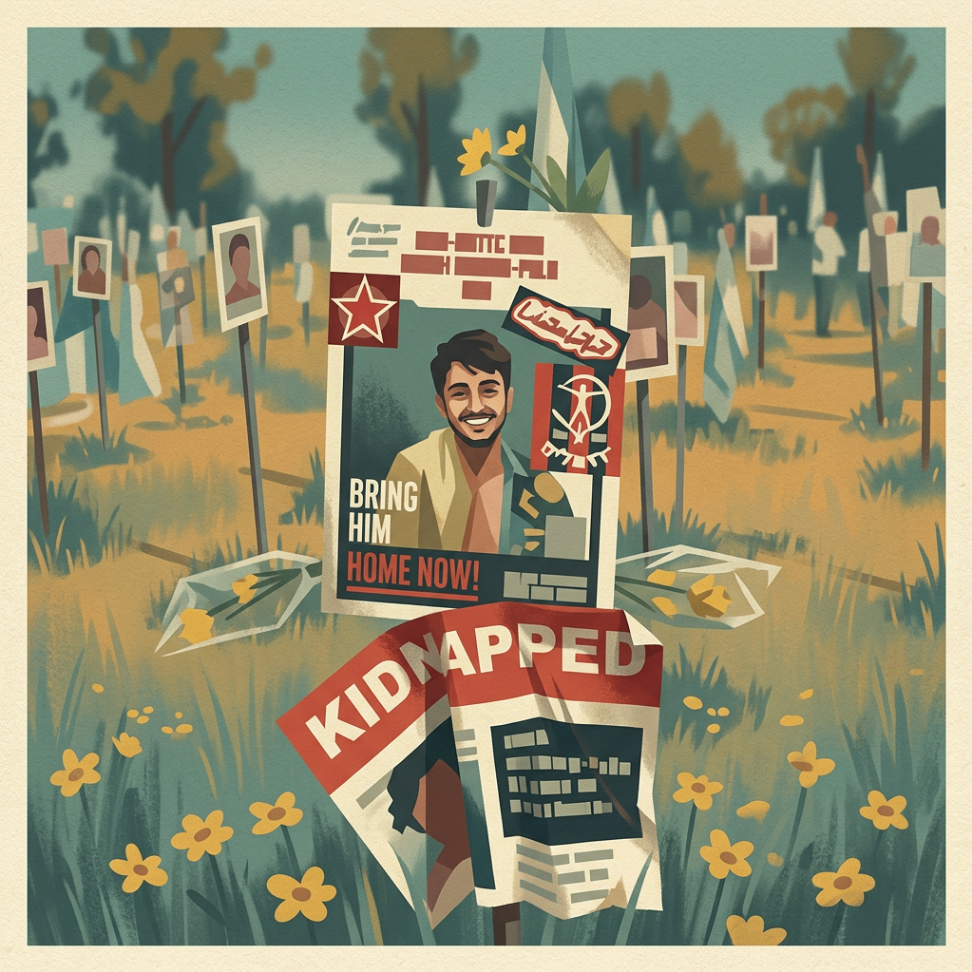
Twenty men walking abreast across three square kilometers of dark field, night after night, looking for eleven people they had never met, is what that principle looks like when it is actually being carried out. Every night they came back with bodies. Gal has never described it as a burden.
There was a particular kind of anguish at Nahal Oz in those first days, and it had to do with the fires. Many of the houses had been burned, some of them deliberately set alight with the families still sealed inside their safe rooms. Where there had been fire, there was often no way to tell, from what remained, whether a person had been murdered in their own home or dragged alive across the fence into Gaza. The families of the missing were left in a state that is hard to describe to anyone who has not lived it. It was not grief, exactly, because grief requires knowing. It was the suspended, sleepless torment of not knowing whether to mourn a death or to hold out hope for a return. Gal watched that torment settle over the survivors and the relatives who came looking, and he decided he could not leave it alone.
There was one more thing his unit did at Nahal Oz, and it did not come from an order. Gal is careful about the credit: he does not remember whose idea it was, and he declines to claim it. What he remembers is that the problem was in front of all of them, bodies that fire had made unidentifiable, and families who could not be told anything, and that once somebody said the word out loud, it was not really an idea at all. "Everyone knows you need teeth for that."
The kibbutz had a dental clinic. A dental clinic keeps records: X-rays, charts, the precise map of every patient's mouth. Teeth are the hardest substance in the human body and among the last things fire destroys, which is why forensic odontology exists and why, in mass-casualty events, it does work that nothing else can do. Israel's national identification effort after the seventh of October, run by the Military Rabbinate at the Shura base near Ramla, where the dead of that day were brought, would ultimately process more than fifteen hundred cases, run thousands of DNA tests, and read hundreds of dental X-rays, and it would insist, as a matter of religious law as much as of forensic practice, on at least two independent means of identification for every person. Where the standard comparison is the identification effort after the eleventh of September, two thousand one, which reached a little over half the dead, the Israeli effort would eventually account for essentially all of them. It could only do that if the records existed and could be reached.
The records were inside a building in a kibbutz that had not been secured. There were still active terrorists on the grounds and the area was under threat of fire. Gal took a couple of his men and went anyway. They crawled in through a window. They found the clinic's laptop, and one of Gal's soldiers, a reservist who in civilian life was a computer programmer, which is what a reserve unit is for, sat down with the machine and broke into it and recovered the patient files. The dental records went to the people who needed them, and post-mortem identification at Nahal Oz became possible.
Gal's own assessment of it is four words long and worth more than a paragraph of praise: "A tiny little mission that had a huge impact." Because of what he and two other men did through a window under fire, a number of families of Nahal Oz stopped having to guess. They could grieve, or they could hope, but they could do it knowing. He says it was worth the risk, and he says it without qualification, which is not how he talks about most of what he did in that war.
The promise came a few days into the war. Gal cannot place the exact night any more, but he can place everything else: the back of a pickup truck on the dirt road that ran along the eastern perimeter of the kibbutz, at perhaps three in the morning, with the orange grow-lights of Gaza burning steadily beyond the fence four hundred meters away: the ordinary agricultural lighting of a place where people were, at that hour, asleep.
He was sitting with other officers, and what they were discussing was arithmetic. The thing was not going to be short. It was going to be, in Gal's phrase, a marathon and not a sprint, and no army runs a marathon on men who never sleep in their own beds. They would have to start sending soldiers home in rotation: twenty-four hours, forty-eight hours, and back down again. It was the correct decision and everyone in the truck knew it.
Gal listened to it and thought: not me.
I am not going to stop fighting, he told himself, until the hostages come home.
He meant the two hundred and fifty Israelis who had been dragged into Gaza on the morning of the seventh of October. He meant the children whose photographs were taped to the walls of the unit's command tent. He meant the elderly grandmothers and the Thai and Nepali agricultural workers and the festival-goers and the soldiers and the kibbutz children. He meant Hila Rotem-Shoshani and the Bibas family and the Elyakim sisters from Nahal Oz, Dafna and Ella, who had been driven out of their home alive that morning. He meant all of them.
He did not keep it.
He held it for about seventy days. Then he was sent home, because armies send men home, and because a captain who refuses rotation is not a hero but a liability to the men who depend on his judgment. He went. He hated it. He has not entirely forgiven himself. "I obviously didn't keep this promise. I had to go back home after around seventy days, and I hated it. This thought of 'how can I go back home while some are still in captivity' was very hard for me."
It is worth sitting for a moment with what the promise actually was, because the failure he reports is not the failure it sounds like. He had not promised to bring the hostages home. That was never within his gift. It lay with negotiators in Doha and Cairo and with men in tunnels a hundred feet under Khan Younis. What he had promised, in the back of that truck, was something more like this: that he would not be the one who stopped. That while it was still going on, he would still be in it. A promise of that kind cannot be kept in the way a contract is kept. It can only be kept the way a man keeps returning, and he returned, and returned, for five hundred days, through Gaza and Syria and Lebanon, across more than two years, while the careers of the men he had gone to school with went on without him.
But this book is not going to hand him an absolution he has refused. He says he broke it. That is his verdict on himself, delivered without self-pity and without any interest in being talked out of it, and it belongs in the record in his words rather than in kinder ones. Something should be understood from the fact that a man who did what is described in the next chapter considers the outstanding moral fact of his war to be the seventy-first day, when he went home.
Two Years of War and More
What followed, for Gal Sharon, was five hundred days of war stretching from twenty twenty-three into twenty twenty-six, and it was not over when he counted them.
That sentence should be read slowly, because the number is doing a great deal of quiet work. When Gal drove to his base on the seventh of October, twenty twenty-three, ahead of his orders, he was a reserve officer, and reserve service in Israel has always been understood as an interruption: a few weeks pulled out of a civilian year, an inconvenience shouldered and then set down. Israeli reservists are not professional soldiers. They are agronomists and software engineers and schoolteachers and dentists and farmers, and Gal was an agronomist, with a job at an agricultural cooperative and ten-month-old twin boys at home. He expected, the way every reservist who reported in those first days expected, that this would be the hardest interruption of his life and then it would be over.
It was not over for a very long time. The interruption became the life. The war that began on the seventh of October would keep Gal Sharon in uniform, in rotations, for more than two years, through the whole of twenty twenty-four and twenty twenty-five and into twenty twenty-six. He led his unit into Gaza. He led it through the broken streets of Khan Younis, in the kind of urban combat that the world's armies regard as the most dangerous work there is: clearing buildings room by room, against an enemy who had spent two decades building a second city underneath the first one, a hundred and more miles of tunnels bored beneath hospitals and schools and apartment blocks, fighting from beneath the very civilians whose suffering it then offered to the cameras. Gal had trained for years for exactly this and no amount of training makes it anything other than what it is.
Before going any further it is worth saying what he actually did, because the phrase intelligence officer of a Special Forces reserve unit conveys almost nothing to a civilian, and what it describes is not a man at a desk.
Gal was responsible for everything in his unit that counted as intelligence, in both directions. Downward: taking what the enormous national apparatus knew, the satellite and signals product, the aerial imagery, the accumulated files on a neighborhood, a tunnel network, a commander, and turning it into something a company of men could use in the next four hours. Upward: taking what his men found on the ground and pushing it back into that apparatus fast enough to matter, because a document in a drawer in Khan Younis is worth nothing in a week and a great deal tonight. In between he was responsible for the specialized collection technology the unit operated, for interrogations, for the maps, and for the analysis of threat, which is the polite name for the job of standing in a planning tent and telling a room full of men which of the two available routes into a building is more likely to kill them. It is one of the least understood roles in modern soldiering, and one of the most morally exposed. The infantryman lives with what he did. The intelligence officer lives with what he said, and with the gap between what was known and what turned out to be true. He carried, in the field, what everyone else carried: an M-4 carbine, six magazines, two grenades, water, a first-aid kit, eye protection, a helmet, a plate carrier, radios, and, his own phrasing, and he leaves it there, other technologies. That was the standard load and it did not change much across two years. Somewhere between twenty-five and thirty kilograms, worn for days at a stretch, by a man in his forties whose civilian job involves a laptop and a field. And the word this book is named for turned out, in practice, to be a piece of tactical vocabulary rather than a piece of rhetoric. Asked what Aharai actually means when you are the one who has to go first through a doorway in Khan Younis, Gal answered without any of the poetry the question invited: "It means that I'm the first when we walk into a house or a tunnel. The team is following me. Really simple as that." Eighty years of Israeli military culture, and the thing it comes down to is the order in which men enter a room. The tours went like this, and Gal recites them the way a man recites addresses he has lived at. The first was Nahal Oz: secure the kibbutz, kill the terrorists still inside it, save whoever could be saved. Then a fortnight of the work already described, recovering bodies, gathering intelligence out of what the attackers had left behind. Then Gaza itself, and the objective there did not change across the three rotations that followed: secure the border, kill terrorists, bring back the hostages. Nuseirat. Khan Younis. Rafah. Each of those names carries its own weight. Nuseirat is one of the eight refugee camps of the Gaza Strip, in the center of the territory, and by the summer of twenty twenty-four it had become the place that answered a question a great many people in the West preferred not to have answered. On the eighth of June, twenty twenty-four, Israeli forces recovered four living hostages from Nuseirat in a daylight operation. They were not taken out of a tunnel. They were taken out of two ordinary residential apartment buildings, two hundred meters apart, in the middle of a densely populated neighborhood: one group of them held in the family home of a local physician. The rescue was extraordinarily bloody; Palestinian authorities put the death toll in the surrounding streets in the hundreds, and the operation became a case study in the arguments about proportionality that would run for the rest of the war. But the fact that sat underneath the argument, and that no one has seriously disputed since, is where the hostages had been kept: not in a military installation, but upstairs, in apartments, in a neighborhood, in the homes of people who were not soldiers.
Khan Younis is Gaza's second city and the birthplace of Yahya Sinwar, who designed the seventh of October and was killed in Rafah in October of twenty twenty-four. Rafah is the southernmost city, on the Egyptian border, and it was where the tunnel economy that armed Hamas for two decades came up for air. Between them they contained the densest, most heavily prepared urban battlefield any Western army has fought in since the Second World War.
Then, after two years, the north. Syria first: the securing of the frontier that had come apart along with the Assad regime at the end of twenty twenty- four, and against an enemy that was no longer a state army but the jihadist remnant that fills the space where a state army used to be: Islamic State, al- Qaeda and their local franchises, in a buffer zone Israel had entered as the regime collapsed and had not left. And then Lebanon, where the objective was the oldest one on that border: to push Hezbollah back behind the Litani River.
That river has been the line for half a century. Israel first crossed it northward in nineteen seventy-eight, in the operation that bears its name. United Nations Security Council Resolution Seventeen Oh One, which ended the war of two thousand six, required that the area south of the Litani be free of any armed force other than the Lebanese state and the United Nations, and for eighteen years it was not, while Hezbollah rebuilt beneath the villages, in front of the peacekeepers, in the open. In May of twenty twenty-six Israeli ground forces crossed the Litani for the first time since nineteen seventy-eight. Gal's father had fought his war in Lebanon in nineteen eighty-two. Gal fought his there in twenty twenty-six. Forty-four years, and the same river.
The two theaters were nothing alike, and Gal is precise about the difference in the way a professional is precise. Gaza was tight, urban, crowded, hot; Syria and Lebanon were cold and wide open, villages scattered across terrain rather than packed into it, and often foggy and raining. Counterintuitively, he found the north easier, easier to fight in and easier to collect intelligence in, because open ground can be seen across and a city cannot.
What urban combat in Gaza was actually like is the thing Gal says the cameras and even the military briefings could not carry, and his description of it is a list rather than a narrative, which is probably how it was experienced.
Every house was rigged. Almost every house had a tunnel. There were weapons in ordinary rooms, not caches in bunkers, but rifles in apartments. It was tight and crowded, block on block, with no field of view longer than a street. And the civilians, in his account, were frequently not the thing the word means: people presenting as bystanders who were carrying arms.
Then there was Khuza'a, and Khuza'a is the reason this chapter exists in its expanded form, because it did something to Gal's understanding that four rotations of combat had not.
Khuza'a is a town on the eastern edge of Khan Younis, five hundred meters from the Israeli border fence, close enough that a person could walk from it into Israel in ten minutes, which is precisely what happened on the seventh of October. Gal's unit went through it house by house. He puts the neighborhood they cleared at something like two hundred homes, and they entered all of them.
Almost every single house contained something that had been taken from Israel on the seventh of October.
Not weapons. Not documents. Household objects. The contents of kibbutz homes, carried back through the broken fence and installed in the sitting rooms of a town where families were living around them. Gal calls them trophies, and the word is doing exact work: these were not supplies, and they had not been taken by fighters under orders. Chapter Twenty-Nine of this book records the fact that roughly two thousand of the people who came through the fence that morning belonged to no armed faction at all: ordinary residents of Gaza who walked west because the way west was open, and who looted, and in some cases killed, and in some cases took hostages of their own into their own back rooms. Khuza'a is what that fact looks like eighteen months later, from the inside, at the scale of a neighborhood.
"I realized that there are no innocent," Gal said, "and that not only terrorists raided into Israel, also regular civilians."
This book is obliged to hold that sentence carefully, because it is the sentence on which the whole moral argument of the war turns, and because it was said by a man standing inside two hundred looted houses rather than by a man at a podium. It is not a claim about who may be shot; Gal never treated it as one, and the rules he fought under never permitted it to be one. It is a claim about what he had believed on the sixth of October, that the war was between an army and an organization, with a civilian population caught unwillingly between them, and about what two hundred front rooms did to that belief. He had been a man who thought Gaza should be free and independent and left to live its own life. He walked out of Khuza'a no longer able to locate the population he had been imagining. The reader is free to weigh that against the evidence and to reach a different conclusion. A great many decent people do. What cannot honestly be done is to pretend the man did not see what he saw.
He saw the tactic from the other side too, and one instance of it has stayed with him. Hamas, he says, used civilians as bait: deliberately, as procedure, to map Israeli positions and learn Israeli responses. The example he gives is an old man with what Gal understood to be a mental disability, who was sent walking toward their position so that whoever had sent him could time how quickly he was detected and observe what the soldiers did about him. That is the whole of the anecdote. An old man, used as an instrument, by his own side, to measure a reflex. The literature on human shields in that war is enormous and contested. This is what it looked like at the range of two hundred meters.
And then there was the aid.
In the late spring of twenty twenty-five, after months in which the argument over food had become the central front of the war's public life, a new distribution mechanism was stood up in Gaza: a small number of large, fenced, heavily engineered sites in the south and center of the Strip, run by an American-backed foundation with private American security contractors inside the wire, and with the Israeli army holding the perimeter outside it. The premise was that aid delivered through the United Nations system was being taken by Hamas before it reached anyone, and that a system with identity checks at the gate could get flour into the hands of the people it was meant for. It ran for something under five months, and it was among the most bitterly contested undertakings of the entire war: the United Nations human-rights office counted hundreds of Palestinians killed in the vicinity of the sites. The Israeli army said its troops had fired warning shots at crowds approaching its positions. More than a hundred and seventy aid organizations called the sites death traps and refused to have anything to do with them, and American analysis disputed Israel's central claim about the scale of Hamas theft from the older system. There is no version of this paragraph that everyone will accept, and this book does not pretend to settle it.
The fight over the numbers ran alongside the fight over the sites, and it has to be set down plainly, because the numbers are the frame through which almost everyone outside the region received the entire story.
Every starvation figure that traveled the world in the summer of twenty twenty-five originated with one source. The Gaza health ministry is run by Hamas. That is not a slur and it is not in dispute. It is the administrative fact about the only body issuing the counts, and for the better part of two years the world's press relayed its figures as though they had come from a neutral registrar.
On the twelfth of August, twenty twenty-five, the Coordinator of Government Activities in the Territories, the Israeli army unit responsible for civilian affairs in Gaza and the West Bank, published a report calling the ministry's malnutrition campaign deliberate and misleading. The report set out what had happened to the figures. From the start of the war through June, sixty-six deaths had been attributed to malnutrition. In July alone the ministry reported more than a hundred and thirty-three. The ministry had also stopped doing the one thing it had always done before, which was publish the names of the dead. When it announced eighteen malnutrition deaths on the nineteenth of July and fifteen more on the twenty-second, the Israeli review, going case by case through everything published with identifying detail, could document only a handful.
What the review found in the documented cases was that most of the dead had pre-existing medical conditions, several of them severe, and that some had been receiving treatment in Israeli hospitals before the war. The case it singled out was a four-year-old boy named Abdullah Hani Muhammad Abu Zarqa, whose photograph had gone around the world as the face of Gazan hunger. The boy had a genetic disease that causes vitamin and mineral deficiencies, osteoporosis and bone thinning. Other members of his family have it. He had traveled with his mother to a hospital in east Jerusalem for treatment of it before the war began. None of that reached the audience that saw the photograph.
Ten days later, on the twenty-second of August, the Integrated Food Security Phase Classification confirmed famine in Gaza Governorate. It was the first famine ever confirmed in the Middle East, and it put five hundred and fourteen thousand people in famine conditions.
Israel rejected the finding immediately and then rejected it in detail. COGAT's commander, Major General Ghassan Alian, said the report rested on partial and unreliable sources, many of them affiliated with Hamas, and ignored the aid that had actually entered. On the eleventh of September, COGAT and the foreign ministry published a fifty-eight-page review of the famine declaration. Its charges were specific. The malnutrition data had been drawn largely from hospital settings, where children were already being screened for or enrolled in supplementary feeding programs, which is a selection bias severe enough to make the sample useless as a picture of the general population, and which the review argued put the famine threshold for malnutrition almost certainly unmet. The annex tables in the IPC's own August report showed no upward trend in malnutrition through July, while the text described an exponentially worsening crisis. Members of the Famine Review Committee had taken public political positions on the war, including one co-author who had accused Israel of genocide less than three weeks after the seventh of October, before the ground offensive had begun.
Then the calendar answered the question. On the nineteenth of December, twenty twenty-five, the IPC published an updated assessment finding that famine conditions in Gaza were over. COGAT said that some thirty thousand trucks carrying more than five hundred thousand tons of food had entered during the ceasefire period, between six hundred and eight hundred trucks a day, and that this exceeded the requirements of the population by the World Food Programme's own metrics.
The other side of it belongs here too, in the interest of a reader who wants to check this book rather than trust it. The IPC and independent food- security specialists rejected the claim that the thresholds had been loosened to reach the August finding. And the Association for Civil Rights in Israel, answering the August report from inside Israel, made the one argument that does real work against it: hunger is what turns a pre-existing condition into a death, and the order in which famine kills is the weakest first, the chronically ill, the newborns, the pregnant, the old.
What can be said without fear of contradiction is this. The figures that shaped world opinion about Gaza in the summer of twenty twenty-five came from a ministry controlled by the organization that started the war, they were published without the names that would have allowed anyone to check them, they were relayed by the world's press as established fact, and the most serious institutional finding built on them was withdrawn within four months. Gal Sharon was standing at the perimeter of a food distribution site while all of that was being argued.
Gal's unit was one of the units on the perimeter. What follows is what he says he saw from there, which is not the same thing as a finding, and is offered as testimony rather than as verdict. The mission, as he understood it, was to secure the sites and to make sure that Hamas did not take the aid. Inside the wire, he says, that mostly worked. What he watched happen outside it was that people would collect their food, carry it home, and find that Hamas had set up a post on the route, and the food would be taken from them there, a few hundred meters beyond the point at which the Israeli soldiers were permitted to do anything about it. The rules of the operation kept his men at the perimeter. They were not allowed to intervene. So they watched. He describes something else that he found harder to say, and that the reader may find harder to hear, because it is a claim about ordinary people under an extremity most of us have never approached. There was, he says, no solidarity in those crowds. People took more than they needed. It was each to his own. Whether that is a fact about Gazans or a fact about human beings on the far side of eighteen months of starvation is a question Gal does not attempt to answer, and this book will not answer it for him. It is worth noting, though, that everything known about famine anywhere, the Warsaw ghetto included, which is described elsewhere in these pages, suggests that the second reading is at least as likely as the first. And then there is what the duty cost the men who performed it. They were guarding food for the civilian population of the enemy they were fighting, an hour's drive from the kibbutzim of the seventh of October, having spent the previous year and a half recovering the bodies of the people who had been murdered there. Gal does not dress it up. "It was very hard," he said. "Although we were far and the American teams were closer, we still felt like this is unfair, feeding the people who massacred us. This is crazy." It should be said plainly what is contained in that sentence, because it is easy to read past. A man who believes he is feeding the people who massacred his people went and stood on that perimeter anyway, for as long as he was ordered to, and did the job. Armies are not usually praised for the operations their soldiers resent. This one is worth recording precisely because he resented it and did it. There is a symmetry here that Gal himself has never drawn and that the book will draw for him. He had chosen his profession in two thousand nine out of a magazine article about how the world would feed nine billion people. Sixteen years later he was standing in the dust at a fence with a rifle, watching food be fought over by a population his country was at war with, forbidden to intervene in either direction. There is no neat lesson in that. There is only the fact of it. The most frightened he was in five hundred days of war did not happen in a tunnel. It happened at a position in Gaza in the middle of the night, when a crowd, Gal puts it at six hundred people, came at the post at a run. Not a squad, not an ambush: six hundred people, running toward a handful of soldiers in the dark. They managed to push them back. He does not say how, and this book has not asked. And the most certain he ever was of being exactly where he needed to be was the first days at Nahal Oz. "I never felt so meaningful." Those two answers are the two poles of the whole thing: the moment the ground under a man gives way, and the moment he is more sure of his own life than he will ever be again. There was a decision he made in combat that still visits him, and he will not describe it. He was asked directly and he declined directly, and the declining is part of the record: "Yes, but I don't want to tell anyone. I feel like the outcome was very bad, but I had no choice, and I'd do it again." This book has decided to leave that exactly as he left it. There is a kind of war memoir that treats the withheld thing as a locked door to be picked, and there is a kind that accepts that a man who has told you a great deal is entitled to keep one room. Every commander who has ever had to choose between two bad options and send someone through the wrong one will recognize the shape of what is behind that door without needing its contents. He lost men. He said he would speak about them face to face and not on a page, and that conversation has not yet happened. Their names, if their families want them here, belong in a later edition of this book and not in a paraphrase in this one. What he will talk about, at length and with obvious pleasure, is leading them. His account of command is almost aggressively unglamorous. It is leadership by example, and it consists of never asking for a thing you will not do first: being the first one through, the first one up, the first one into the cold water. "It's really practicing what you preach. Very basic." Underneath that sits an idea he repeated to his men so often that they could finish it for him. When you have the why, the how is easy. Everyone in that unit was exhausted. Everyone was missing his children. Several were watching businesses fail at home. None of that had to be argued with, because none of it competed with the reason they were there, which was not abstract and required no persuading. The country had been invaded and people were being held underground an hour from their houses. Gal says the leadership was, for that reason, easy: a claim no officer in an unpopular war has ever been able to make.
The rest of it was emotional discipline, and he treats it as a technical requirement rather than a virtue. A commander leaves his negative feelings outside, because soldiers read their officer the way passengers read a pilot. "If you're balanced, they will be. If you're not, they will see it." He kept calm. It cost him something to keep calm, and the cost of it is the subject of Chapter Thirty-Three.
As for the men themselves: Gal refuses to give a portrait of the typical reservist, on the grounds that there is no such person. His unit contained teachers, programmers, engineers, students, the unemployed, the rich, the poor, the secular and the religious. He calls it a beautiful rainbow, and then he names the one group missing from it, and the naming is not incidental: it is, for a great many Israelis of his generation, the single most corrosive domestic fact of the war.
The ultra-Orthodox were not there.
The arrangement dates to the founding of the state, when Ben-Gurion exempted a few hundred yeshiva students from conscription as a gesture toward a world the Holocaust had nearly erased. A few hundred became, over seven decades of demographic growth and coalition politics, tens of thousands. In June of twenty twenty-four, with the country in its longest war and its reservists on their third and fourth rotations, the Israeli Supreme Court ruled that there was no longer any legal basis for the exemption and that the state had to draft them. What followed was less a reform than a demonstration of the limits of law: in the year after the ruling, on the order of nineteen thousand draft summonses were issued to Haredi men, fewer than a thousand presented themselves at induction centers, and a couple of hundred were actually conscripted: against a court-approved minimum, itself modest, of four thousand eight hundred. In the same period the army was asking for twelve thousand additional soldiers to cover its casualties and attrition.
Gal is careful to say he is not trying to be political, and then says it anyway, because by twenty twenty-six it had stopped being a political question in Israel and become a question about who was carrying whom. Asked what the country owes its reservists, he was unsparing: there is no amount of money, no movie tickets, no water-park passes, no ice-cream vouchers, and Israeli reservists were genuinely offered all of these, that buys back the moments he missed with his family. The debt, he says, will never be paid. The closest the country could come to paying it would be to share the burden, and that means everyone serving. He addresses that last part to a specific audience, in parentheses, and this book will leave the parentheses in: "yes, ultra- Orthodox, I'm talking to you."
What he learned about his country from the men under his command is the sentence he seems most certain of in all his testimony, and it is not about weapons. "I learned that our biggest power is not our technology or innovation, it's the responsibility we feel for each other. It always felt very normal to us to leave our families so other families could have normal and quiet lives."
And there was, he insists, a great deal of laughing. Asked for the moment of absurd humor that kept them sane, he could not isolate one, because there were too many and because they were not the kind that survive being written down. "Just men's jokes, really. I think if you put a bunch of men even in the most desperate times, at some point they will start to laugh." Every soldier in every war in this book would recognize that, including the boy in Bergen- Belsen.
And then, in twenty twenty-six, he led the same unit into Syria and then to the north, into the hills of southern Lebanon, into the second front: the long-promised confrontation with Hezbollah that had been simmering on the northern border since the day after the seventh of October, and that had driven sixty thousand Israelis out of the towns of the Galilee and into hotel rooms for a year. Gaza in the heat, Syria in the cold. The slogan Gal used, leading his men through both, was the slogan the Palmach had carried eighty years before, the slogan Shlomo Lev had heard shouted around a bonfire at his swearing-in in nineteen forty-three. Aharai. After me. Israeli officers do not send their men forward. They go first, and the men follow. It is the oldest rule of this army, and it is the reason the casualty lists of Israel's wars are so heavy with lieutenants and captains.
Between the rotations, Gal went home.
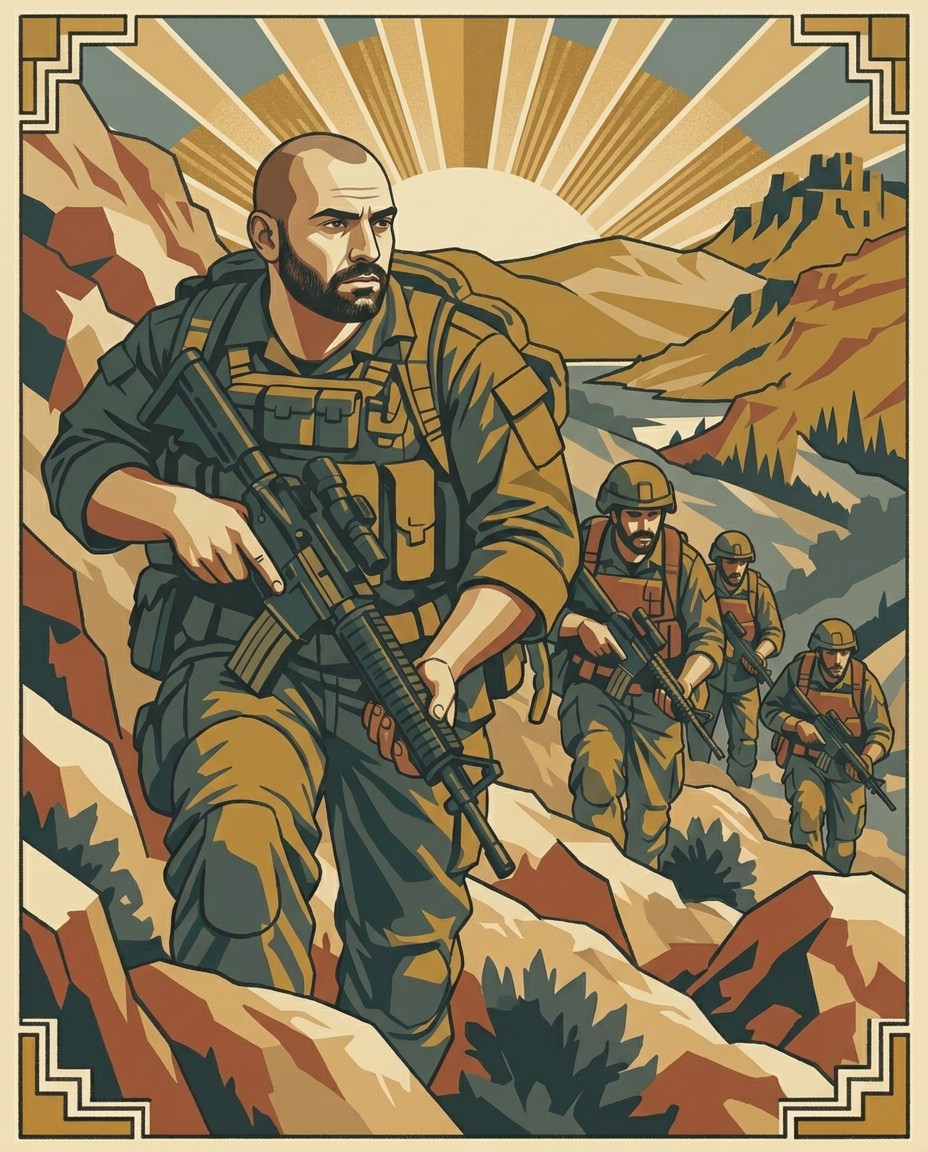
This is the part of a long war that the histories tend to omit, because it does not photograph well and it has no maps. A reservist's war is not continuous. It is a brutal oscillation. For weeks Gal would be in Gaza or in Lebanon or in Syria, in the particular sealed reality of combat, and then a rotation would end, and he would drive home, and within a few hours he would be standing in a playground beside the Yarkon River watching his small sons go down a slide. No human nervous system is designed to make that crossing, again and again, on that schedule. The men who did it described the strangeness of it in nearly identical words: the sense of being two people, neither of whom fully believed in the other. Gal had left the apartment on the morning of the seventh of October not knowing when he would be back. The answer turned out to be: again and again, briefly, for more than two years, each time a stranger in his own living room, each time having to learn his children's new words.
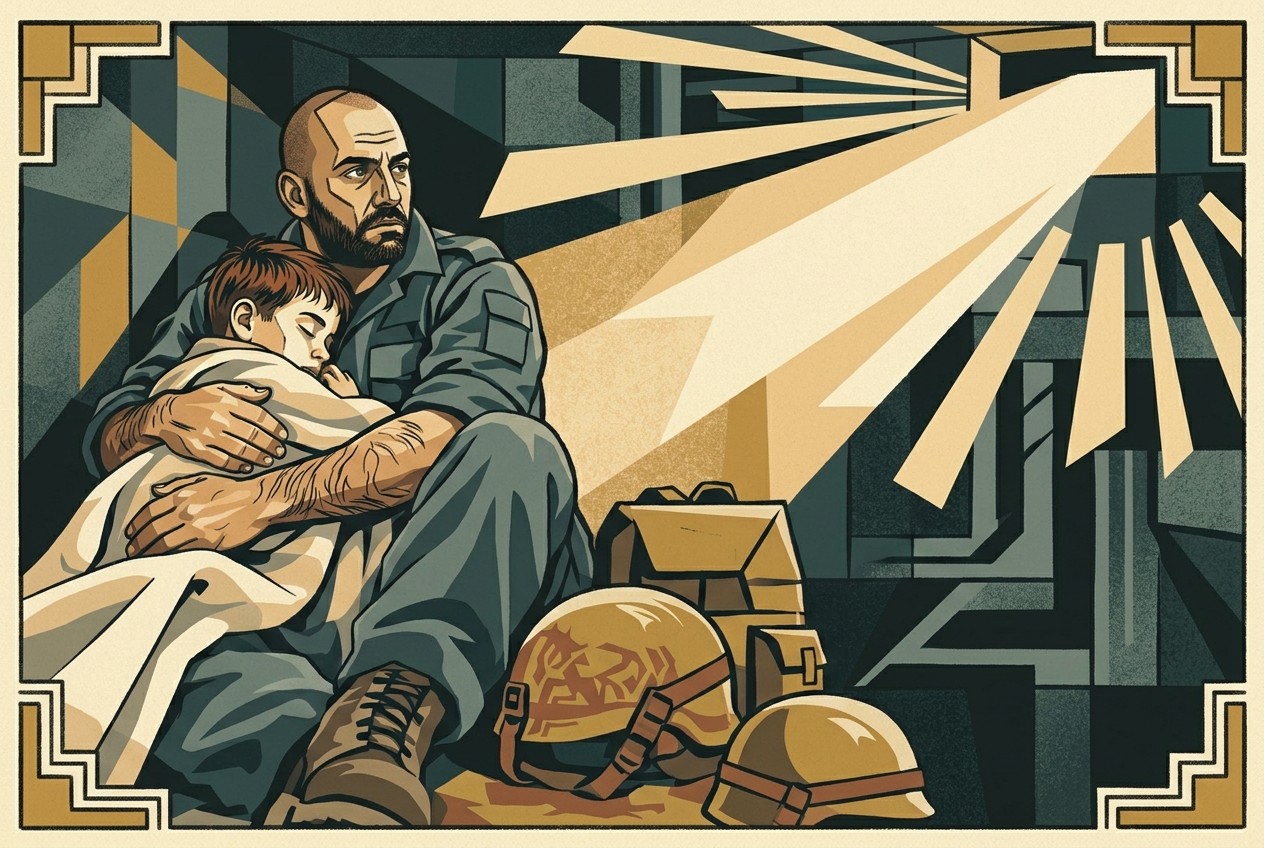
The cost of it ran along several seams at once. There was the plain cost in lives: the friends and soldiers who did not come back, the funerals slotted between rotations, the growing weight of names. There was the cost the book's own dedication names without flinching: the careers put on indefinite hold, the businesses that quietly failed while their owners were in Khan Younis, the marriages that bent and some that broke under five hundred days of separation and silence and the things that could not be said. Israel asked an enormous amount of a relatively small number of people in those years, and it kept asking, and the people Gal's age, the ones with the young children and the half-built careers, paid most of it.
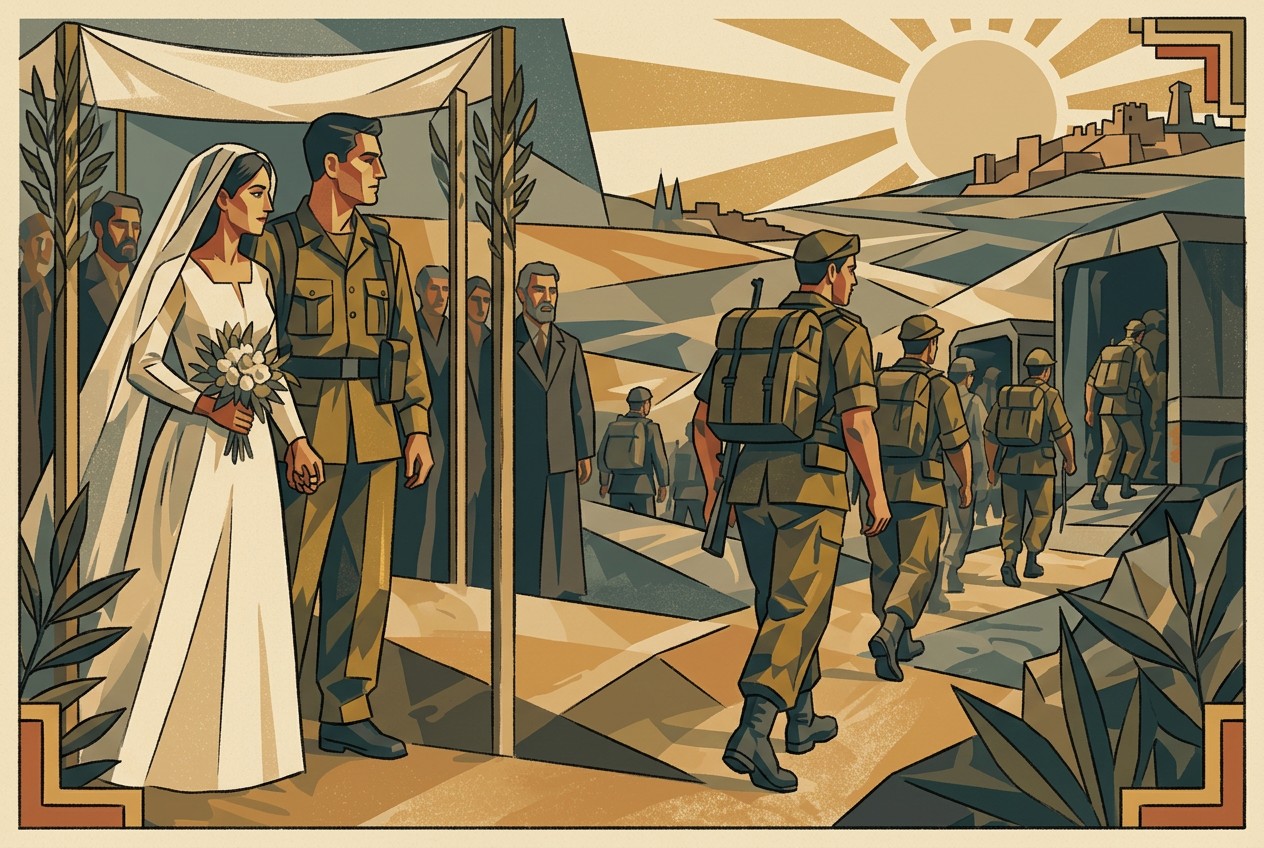
And underneath all of it ran the promise.
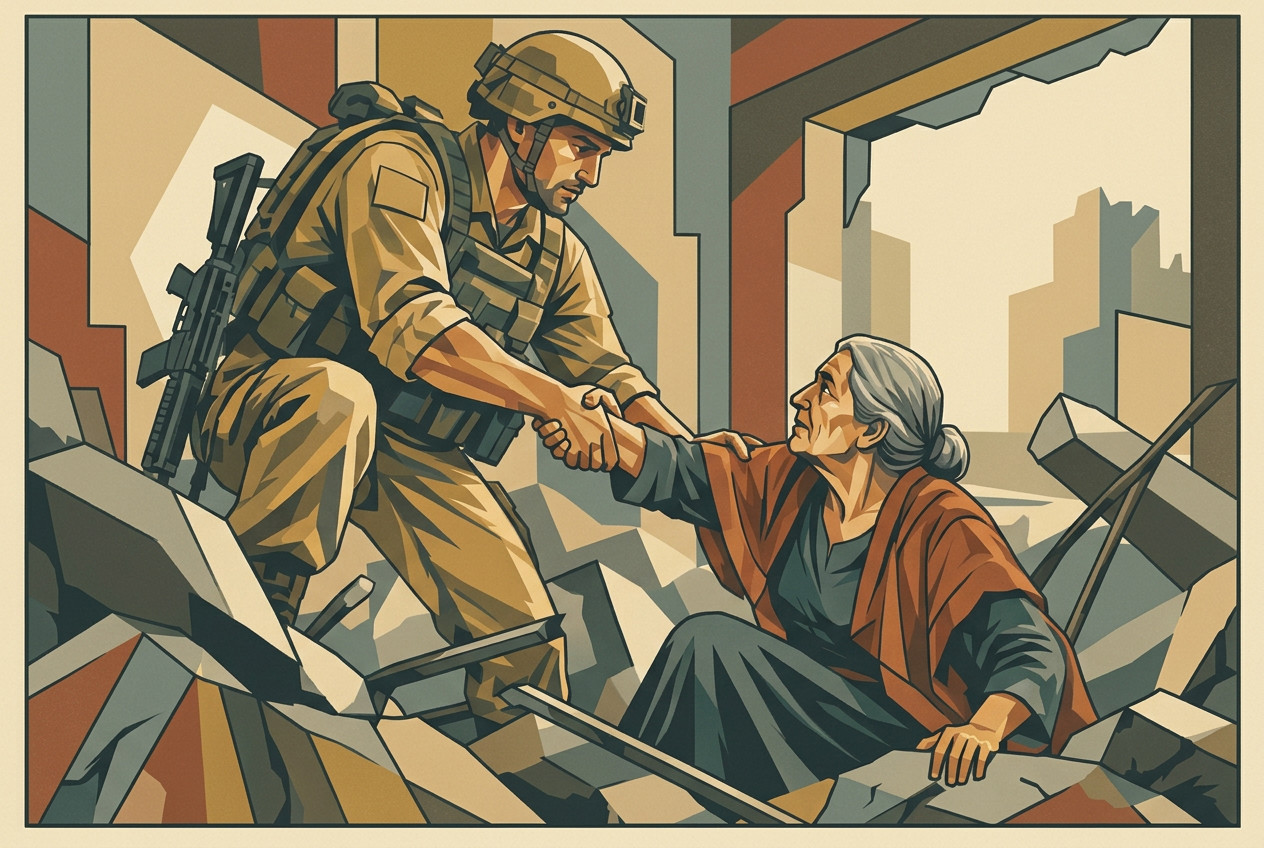
Gal had made it to himself a few days into the war, sitting in the back of a pickup truck on the dark perimeter of Nahal Oz, looking at the grow-lights of Gaza beyond the fence: that he would not stop fighting until the hostages came home. Two hundred and fifty human beings had been dragged into Gaza on the seventh of October. Over the months that followed, some of them came back, in the deal of late twenty twenty-three that returned more than a hundred of them, in the later, harder, partial agreements that traded pauses in the fighting for the living and, heartbreakingly, for the bodies of the dead. Each release was a public catharsis and a private agony, because each one also published, by omission, the names of those who were not on the list. Gal kept photographs of the hostages in his mind the way the command tents kept them taped to their walls. Some of the people whose return he had sworn himself to came home to their families. Some were murdered on October seventh, some came home barely alive, and others returned in coffins. The not-knowing that Gal had first watched settle over the families of Nahal Oz in October of twenty twenty-three settled, over the long war, into the collective psyche of the nation.
The war changed Gal Sharon, and he has been honest about the direction of the change. He had been, before the seventh of October, a man of the Israeli center-left: an agronomist with Arab colleagues, a man who had believed, the way a great many decent Israelis believed, that some negotiated two-state arrangement was the eventual and obvious destination, that the conflict was a problem with a solution and that reasonable people would one day reach it. He did not come out of over two years of war with that belief intact in its old form. Very few Israelis of his generation did. What October had shown them: the planning, the maps of the safe rooms, the GoPro footage, the open celebration in foreign capitals while the bodies were still warm: had relocated the conflict, in their understanding, from the category of solvable political dispute to the category of the very old thing this book has been describing all along: the recurring, shape-shifting refusal to permit the Jewish people a safe existence. Gal did not become a man without hope. He became a man whose hope had been forced to grow up. He still wanted his sons to live in peace beside their neighbors. He no longer believed peace would arrive because it was reasonable. He believed it would arrive, if it arrived, the way everything in this book has arrived, because Jews were strong enough, and stubborn enough, and unwilling enough to disappear, to make the alternative impossible. Two years. And then more. Gal Sharon spent them the way Shlomo Lev had spent the years from nineteen forty-three to nineteen forty-eight, and the way the boy in Bergen-Belsen had spent the years from nineteen forty-three to nineteen forty-five: doing the unbearable, daily, on the grounds that there was no alternative, and that the people behind him had no one else. He did not keep the promise. He has said so, and this book has recorded it in his words. What he did instead was harder to name and, in the end, worth more. He went where the country sent him, for as long as the country needed him there, across five hundred days and four fronts and two years of his sons' childhood, and every single time they let him go home he came back.
WHAT THE WORLD SAW, AND DID NOT SEE
There is a part of this story that is not about the war on the ground. It is about the war that began, simultaneously and across the planet, on the other side of the news. In the seventy-two hours after the seventh of October, before the Israeli ground operation had even fully begun, before any meaningful Palestinian civilian casualties had occurred in the Israeli response, the streets of London and New York and Sydney and Berlin and Toronto were filling with rallies. The rallies were not condemning Hamas. The rallies were celebrating Hamas. They were celebrating the seventh of October itself, while the bodies were still being recovered from the kibbutzim, as a glorious act of decolonization, the rightful uprising of the oppressed against the oppressor. In Times Square on the eighth of October, in front of the army recruitment kiosk, a crowd of perhaps two thousand people gathered. They wore keffiyehs. They carried Palestinian flags. Some of them carried images of paragliders: the same paragliders that had floated armed Hamas operatives onto the Nova music festival twenty-four hours earlier and had dropped them onto teenagers who had been dancing. The paraglider had become, in those seventy-two hours, a kind of meme. It was being celebrated. On the campuses of Harvard, Columbia, Stanford, MIT, the University of Pennsylvania, and several dozen other major American universities, student groups issued statements. The most famous of them was the statement of the Harvard Palestine Solidarity Committee, signed by thirty-three student organizations, on the eighth of October. The statement, which became one of the precipitating documents of what would be the longest sustained campus crisis in American higher education in half a century, read in part: We, the undersigned student organizations, hold the Israeli regime entirely responsible for all unfolding violence. It did not mention the rockets. It did not mention the kibbutzim. It did not mention the music festival. It blamed Israel, entirely, for what had been done to Israel. The faculty letters came next. By the end of October, there were academic letters circulating in elite American universities, signed by hundreds of faculty members, describing the seventh of October as a legitimate act of resistance. A particular philosophy professor at Columbia called the massacre exhilarating. A particular Cornell history professor told a campus rally that he was energized. The Jewish day schools began running active- shooter drills with a particular kind of seriousness. The synagogues held emergency meetings to increase their budget for armed police presence at Sabbath and other services. The Hillel chapters at the major American universities reported that their student members were no longer wearing Jewish star necklaces in public. The kosher delis in cities across the United States, which had been operating for fifty or sixty years in some cases, began experiencing the first sustained wave of vandalism in their history.
The Jewish people, even the most secular and assimilated of them, even the ones who had thought they were Americans first and Jews second, who had assumed that the United States was the great exception to the long Jewish history of finding oneself suddenly in a hostile country, discovered something. They discovered that their identity as Americans was, for significant portions of their classmates and their colleagues, no longer the relevant identity. The relevant identity was their Jewishness. And the Jewishness, in the new vocabulary, was no longer a personal religious affiliation. It was a political affiliation with the State of Israel. And the State of Israel, in the new vocabulary, was a settler-colonial project that had to be dismantled. Antisemitism, which had been quietly resident in some parts of American culture for the entire post-war period but had not been visible at the surface, became visible at the surface very quickly. The Anti-Defamation League's annual audit, released the following spring, reported a three hundred and sixty-one percent increase in antisemitic incidents in the United States in the three months after the seventh of October compared to the same three months a year earlier. The figure included more than one thousand four hundred direct assaults, vandalism, and harassment incidents. The total for twenty twenty-three, eight thousand eight hundred and seventy-three reported incidents, was the highest figure in the forty-five years the audit had been maintained. The figure for twenty twenty-four broke that record again. In France, the Interior Ministry reported one thousand six hundred and seventy-six antisemitic acts in twenty twenty-three, a three-hundred-percent increase from the previous year. The figure for the first half of twenty twenty-four already exceeded the entire previous year. In the United Kingdom, the Community Security Trust reported four thousand one hundred and three incidents in twenty twenty- three, the highest in its forty-year history. In Australia, Germany, Canada, Argentina, and Brazil, the same pattern. Synagogues defaced. Jewish students harassed. Holocaust memorials vandalized. Jewish-owned businesses boycotted by activists who had not, in their political lives, previously known how to identify a Jewish-owned business until October of twenty twenty-three taught them how. The audits, with their tens of thousands of entries, counted mostly the lower registers of hatred: the swastika sprayed on a door, the broken window, the shoved student, the hostage poster torn from a wall. In the United States the count kept climbing: the Anti-Defamation League recorded nine thousand three hundred and fifty-four antisemitic incidents in twenty twenty-four, a fourth straight annual record. In twenty twenty-five the overall number at last fell, and yet, in that same year, physical assaults rose to the highest the audit had ever recorded. The noise was beginning to quiet. The violence was growing more concentrated. For the two years after the seventh of October carried the upper register of hatred as well, and produced the worst toll of deadly antisemitic violence the Western world had seen in more than a generation. It began within weeks. One month to the day after the attack, the sixth of November, twenty twenty-three, firebombs were thrown against the doors of Congregation Beth Tikvah, a synagogue in suburban Montreal. In Lyon, that same autumn, a Jewish woman was stabbed in her own home and a swastika was cut into her door. The first targets were the oldest targets: the synagogue, and the Jewish house. Then came twenty twenty-five. In April, on the first night of Passover, a few hours after the family had risen from its seder, a man crossed the grounds of the Pennsylvania Governor's Residence and set the building alight with firebombs while Governor Josh Shapiro, one of the most prominent Jewish elected officials in the country, and his children slept inside. They escaped through the smoke. The arsonist told investigators he had done it because of the war in Gaza. Five weeks later, in May, outside the Capital Jewish Museum in Washington, a gunman shot dead two young staff members of the Israeli embassy as they left a reception for young diplomats. They were a couple. Yaron Lischinsky and Sarah Milgrim. He had already bought the ring. He had been days from proposing. As the killer was led away he called out that he had done it for Gaza. On the first of June, twenty twenty-five, on the open pedestrian mall in Boulder, Colorado, a man attacked the weekly walk that a group called Run for Their Lives held for the hostages still held in Gaza: a small, recurring vigil of retired people and families, walking. He came with a makeshift flamethrower and with Molotov cocktails, and he burned more than a dozen of them. Among the gravely hurt was a Holocaust survivor who as a child had escaped Europe. Among the dead, weeks later, was Karen Diamond, eighty- two years old, who did not survive her burns. And here the book's own web of people touches the fire. A friend of the author, Aaron Brooks, was there. Brooks reached the burning crowd in the first moments, before any police had arrived, and stood his ground in front of the attacker, shouting at him, filming him, holding him in place with nothing but his own voice, until the officers came. On the second of October, twenty twenty-five, Yom Kippur, the holiest day of the Jewish year, a man drove a car into the worshippers gathered outside the Heaton Park Hebrew Congregation in Manchester, England, and then set on them with a knife. Two members of the congregation were killed: Melvin Cravitz and Adrian Daulby. The author knows one of that synagogue's members, the two had met the year before, in twenty twenty-four, on a volunteer trip the author made to Israel, and he was a friend of Adrian Daulby, one of the two men who died at the doors on Yom Kippur. And then, in December, the worst of them all. On a warm Sunday evening in Sydney, at Bondi Beach, close to a thousand people had gathered for a public Hanukkah celebration: Chanukah by the Sea, the lighting of the great candelabra at the edge of the water. Two gunmen opened fire into the crowd. They killed fifteen people: eleven men, three women, and a girl of ten, and among the dead was a young rabbi, Eli Schlanger, who had helped to organize the evening. It was the deadliest attack upon Jews in the history of Australia. Not since the bombing of the Jewish community center in Buenos Aires, in nineteen ninety-four, had so many Jews been murdered anywhere in the world in a single antisemitic attack.

None of this, for the people in this book, was a set of distant headlines. The author lives in Highland Park, Illinois, home of one of the United States' highest per capita Jewish populations, on the North Shore of Chicago, and the North Shore in these years had its own quiet accumulation: the threat warnings, the new guards at the doors of synagogues and schools, the harassment, the vandalism. One night in the summer of twenty twenty-four a crowd came in the dark to the Highland Park home of the author's own congressman, Brad Schneider, who is Jewish. There were perhaps forty of them, and they came after two in the morning, with drums and a bullhorn, and they chanted at the windows while his family was inside, and they poured a red liquid across the sidewalk like blood. It had the unmistakable character of a mob, and the congressman named it for what it was: it was meant to frighten. And the young man who fired the shots outside the museum in Washington had grown up in Chicago, and had studied at the same university as the author's own oldest child. This is the thing that is hardest to carry across to those outside it. The Jewish people is so small, and this chapter will come, a few pages on, to just how small, that for a Jew, anywhere, there is in the end no such thing as a distant antisemitic attack. The arithmetic is merciless: in a people of barely sixteen million, every name is two or three handshakes from one's own. The author had known the grandmother of Hersh Goldberg-Polin. The author's friend stood in front of the man with the flamethrower. The author's congressman. The author's child's university. The murdered friend of the author's fellow traveler to Israel. Set down in a row they read like a string of improbable coincidences. They are not coincidences. They are simply what it is to belong to a people of this size in a time like this one. For the Jews of the world the surge that followed the seventh of October was never an abstraction, and never a number in an audit. It had names, and the names were their own. The vocabulary of the protests was old. This was the thing the survivors of the previous generation recognized, with a kind of deep consciousness, familiarity, in the months that followed. Shlomo Lev recognized it. He had been hearing variations of it for ninety years. The Jews are too privileged. The Jews killed our lord. The Jews are evil. The Jews secretly run the banks and the media and the universities. The Jews are not really white at the same time they have white privilege. The Jews are not really Americans. The Jews are not really anything except themselves, which is something we have always hated. The vocabulary was old. Only the object had moved. In the year sixty- six of the Common Era, in Alexandria, the Greek mobs accused the Jews of misanthropy, of secret ritual cannibalism, of being Roman agents who were secretly Jewish. In the year fourteen ninety-one, in Seville, the preacher Ferrán Martínez had accused the Jews of crimes against Christ and of poisoning Christian wells. In the year eighteen seventy-nine, in Hamburg, the journalist Wilhelm Marr had accused the Jews of engineering the depression and running the press for their own purposes. In the year nineteen forty-one, in Berlin, the propaganda minister Joseph Goebbels had accused the Jews of trying to destroy Germany from within. In the year twenty twenty-three, in New York, the protesters on the streets accused the Jews of genocide, of apartheid, of occupation, of colonial extraction, of being settler-colonists who needed to be removed from the land. The frame had not changed. Only the object of the frame had changed. The accusations were one civilizational unit. They were the same accusations, in different vocabularies, for different centuries.
The former Soviet refusenik Natan Sharansky, who had spent nine years in the Soviet gulag before being released to Israel in nineteen eighty-six and who later served as Israel's Minister for Diaspora Affairs: had articulated, in two thousand four, the working tool that has become the standard analytic device for distinguishing legitimate criticism of Israel from antisemitism dressed up as such. He calls it the Three D Test. The three D's are Demonization, Double Standards, and Delegitimization. Demonization. When the criticism of Israel exaggerates the Israeli action out of all proportion to its actual character, when Israeli military operations conducted with civilian-to- combatant ratios well below those of any comparable Western military campaign are described as genocide, when an entire society is described as Nazi-like: the criticism has crossed from disagreement into demonization. Demonization of the Jews is not new. Christian Europe demonized them for nine centuries before anyone used the word Israeli. Double Standards. When the criticism of Israel demands of the Jewish state behaviors that are not demanded of any other state, when Israeli defensive operations are scrutinized in detail while Iranian executions of homosexuals, Syrian use of chemical weapons against its own civilians, Saudi destruction of Yemeni hospitals, Russian leveling of Ukrainian cities, and Chinese internment of a million Uyghurs are passed over without comparable attention: the criticism is operating by a double standard. The standard is, by definition, antisemitic. It treats the Jewish state by a measure not applied to anyone else. In twenty twenty, the UN General Assembly passed seventeen resolutions condemning the State of Israel and six resolutions condemning every other country on earth combined. Delegitimization. When the criticism of Israel goes beyond particular policies and questions the right of the State of Israel to exist at all, when the demand is not for an Israeli withdrawal from a particular territory but for the abolition of the Jewish state per se, when the slogan is From the river to the sea, Palestine will be free and the river is the Jordan and the sea is the Mediterranean and the implication is that no Jewish state should stand between them: the criticism has become delegitimization. The delegitimization of Israel is the contemporary form, in a long Jewish historical lineage, of the demand that the Jews not exist as a sovereign collectivity in the world. This is the same hatred. It just changed clothes. The Three-D test tells you how to recognize the old hatred. It is worth naming, as well, the particular channel through which, in twenty twenty-three, it reached respectability, because this time it did not arrive dressed as racial science, and it did not arrive dressed as the Church. It arrived dressed as human rights. The most fluent antisemitism of the new century had learned to speak the language of anti-colonialism and anti- imperialism, of the oppressed against the oppressor. It is a frame with a long pedigree on the political left: nineteenth-century radicals who tied the Jew to capital and dressed the hatred of him up as economics. The Soviet decades, which rebranded Jew-hatred as "anti- Zionism," gave it the prestige and the printing presses of a superpower, and exported it worldwide, and the campus habit of mind that sorts every conflict on earth into oppressor and oppressed, files the single Jewish state without hesitation under oppressor, and then discovers that it has talked itself into celebrating Hamas.
None of this means that criticism of an Israeli government is antisemitism. It is not. Israelis criticize their own governments more fiercely, and far more publicly, than any outsider ever will. Argument is the native language of the country. But criticism becomes something else when it denies to the Jewish people alone the right of self-determination it grants to every other people. When it holds the one Jewish state to a standard it demands of no one else on earth. When "Zionist" quietly becomes the word a person is permitted to say in public when the word he means is "Jew." Those are the Three-D lines, and in the autumn of twenty twenty-three they were crossed in the open, in daylight, by people who were certain they stood on the side of justice. The former Israeli legislator Einat Wilf has given the underlying ideology a name. She calls it Palestinianism, and she is careful, in naming it, to distinguish it from the Palestinian people, and from Palestinian nationalism in the ordinary sense, and from the entirely human wish of Palestinians for a state, a flag, a parliament, a future.
Wilf did not arrive at that word as a partisan of the right. She arrived at it from the opposite shore, and the route is part of the argument. She had been, by her own account, a poster child of the Israeli left: active in the Labor Party, a colleague of Yossi Beilin, one of the architects of the Oslo Accords, a believer through the whole euphoric nineteen-nineties in land for peace and the two-state solution and the new Middle East everyone was certain was coming. She watched Ehud Barak, a Labor prime minister elected on exactly that platform, go to Camp David in the summer of two thousand and lay on the table very nearly everything she had grown up believing was the obstacle to peace: a sovereign Palestinian state, an end to the occupation, the settlements gone, a capital in East Jerusalem. Yasser Arafat walked away. He made no counter-offer. He went home to a hero's welcome, and what followed was the Second Intifada, the years of buses and cafés blown apart. The offer was made again, and enlarged, by Ehud Olmert in two thousand eight, and Mahmoud Abbas walked away from that one too. Somewhere in those years Wilf began to ask a question her own camp found almost unaskable: then what is it that they want?, because it was not a state, and not an end to occupation, and not a capital in Jerusalem. All of that had been offered, and refused. She went looking for the answer among the people best placed to give it, a delegation of moderate, Western-educated Palestinians presented to her as her own mirror image, and what they told her, in fluent English, was that the Jews were not a people at all but merely a religion, with no claim on the land and no history there they had not invented. That, she has said, was the moment the comfortable framework, two peoples, one land, let us share it, fell away, and she began to listen to what the other side was actually saying instead of to the soothing translation the West kept supplying. She has a name for that translation. She calls it Westplaining: the reflex by which Western diplomats and journalists and academics hear what Palestinian leaders plainly say, and then assure everyone that they cannot really mean it, that it is only a bargaining posture. On one subject, Wilf came to believe, they never lie, and it is the only subject that finally matters: their commitment to the non-existence of a Jewish state.
Palestinianism, as Wilf describes it, is something narrower and more corrosive than any of those. It is, in her account, an ideology organized not around the building of a Palestinian future but around the negation of the Jewish one: a movement whose deepest unifying commitment is not that there shall be a Palestine, but that there shall not, anywhere in the land, ever, be a sovereign Jewish state. Its central engine, in Wilf's telling, is the idea of perpetual return: the demand, sustained now across four generations and institutionalized as no other refugee population's claim in the world has been, that the descendants of the Arabs who left in nineteen forty-eight will one day return in their millions and, by sheer weight of number, unmake the Jewish majority and with it the Jewish state. So long as that idea is taught and funded and believed, Wilf argues, no two-state compromise can ever actually close, because the compromise was never the goal. The end of Israel was the goal, and a Palestinian state beside Israel would be accepted, if at all, only as a stage on the way to a Palestinian state instead of Israel. From this she draws a hard conclusion: that an ideology of erasure is not negotiated with but defeated and discredited: the way certain other ideologies of the twentieth century had to be defeated before the nations that had carried them could be helped toward something better, and that the better thing, on the far side, is an Arab world that has made its peace with a Jewish state in its midst. Wilf's thesis is a contested one, and a controversial one amongst those who do not know the history and culture of the land. But one thing about the autumn of twenty twenty-three is not contested, because it was visible on the streets of every Western capital.
The crowds that gathered in the seventy-two hours after the seventh of October, before Israel had fired a single shot in response, were not marching for a Palestinian state beside Israel. They were celebrating the seventh of October itself. And the seventh of October had not been a step toward two states. It had been the slogan from the river to the sea, briefly and bloodily made real. The seventh of October was not formless. It had a name: Hamas announced the assault that morning under the title Operation Al-Aqsa Flood. And in the hours and days around it, in the body-camera footage the attackers themselves recorded, in the statements of Hamas's leaders, in the celebrations that filled the streets of Gaza: one word recurred above all others. The word was return. Adi Schwartz, who with Einat Wilf had studied the question for years, has described a drawing posted to social media on the morning of the attack itself by the director of a hospital in Gaza: a crowd of people streaming westward through a gap in the fence, and beneath it the words that they were coming home, that they were returning, and returning in their millions.
This was the thing Wilf and Schwartz had named long before. Years earlier, well ahead of the seventh of October, they had written a book together, The War of Return. Its argument was the one set out earlier in this chapter under Wilf's word, Palestinianism: that the true and animating Palestinian demand was never a state beside Israel but the return of the descendants of the refugees of nineteen forty-eight, in numbers that would dissolve the Jewish majority and bring the Jewish state to an end. When the seventh of October came, the two writers did not see a refutation of their thesis, or even a departure from it. They saw its confirmation, and they reissued the book, in Hebrew under the new title Return in October, to say so. The seventh of October, in their reading, had not been terror in search of a headline. It had been return, attempted for a single day in the only form the ideology had ever genuinely imagined it: on foot, through a broken fence, with a gun. The hinge of that reading is a fact the chapter on the morning itself has already recorded, that the people who came through the fence were not only Hamas's trained commandos but, behind them, thousands of ordinary residents of Gaza. And here a matter of bureaucratic record becomes a matter of meaning. Something close to three of every four people in Gaza are registered, by the United Nations agency that has kept the rolls since nineteen forty-nine, not as residents of Gaza at all but as refugees: refugees from Jaffa, from Ashkelon, from the villages of the coastal plain, from towns and cities inside the State of Israel. The status descends, generation upon generation: most who hold it today are the grandchildren and great-grandchildren of those who left in nineteen forty-eight, and almost none of them has ever set foot in the places their papers record as home.
This begs the question, why are the Palestinians the exception? After all, when World War Two ended, and borders changed, Poland and Ukraine moved one point four million from one side to another; Turkey and Greece had two million deported. In the Balkans, seven million were forced to move, and in India and Pakistan, fourteen million moved from one state to another. So while it was very hard in some cases, the people adapted and moved forward. The insanity of the Palestinian right of return is that in reality, it focuses the energy of a people on destroying another people rather than building a future of their own. The Palestinian refugee crisis is no accident. There are reasons why the other countries bordering Palestinian territories like Egypt and Jordan don't open their gates. Unlike displaced persons in Europe or Asia following World War II, many Palestinian refugees in neighboring Arab states (such as Lebanon, Syria, and Jordan) were historically denied full citizenship rights, property ownership, and integration into the local workforce. Arab host nations and Palestinian leadership have maintained that integrating these refugees into host countries would dilute their political claims and forfeit their right of return to historic Palestine. On top of their manufactured refugee status, the culture of martyrdom, with streets named for suicide bombers and children's cartoons calling for the death of the Jews, not only threatens Jews but also stunts any potential the Palestinian people might otherwise have. Under the UN High Commissioner for Refugees, which governs global refugees, there is no formal international mechanism granting an automatic right of return to the grandchildren of refugees. Once refugees assimilate, obtain local citizenship, or voluntarily resettle, their displaced status typically ceases, which means this status is generally not passed down to their children or grandchildren. Palestinians alone have the inherited right of return, which has been interpreted as the right to replace. Palestinians with US, Jordanian, EU and other citizenships are still considered refugees. On the morning of the seventh of October, a part of that registered-refugee population walked west through the fence in the direction of exactly those places. Whatever else the day was, it was also, in the most literal sense the word can bear, an attempt at return. The critics answer that this theory imposes a single ideology on a crowd that surely included many motives, disciplined fighters and opportunists.
That a population steeped in a culture of martyrdom, fed a steady stream of hatred masquerading as justice, acted on their stated beliefs should not come as a shock. If only the media and activists stopped, as Einat Wilf says, "Westplaining" and took Hamas and the people of Gaza at their word, we'd see that every man who crossed a returnee is the product of a hatred cultivated since the people of the former Ottoman Empire sought their place in the new world order, including the Jews. The attackers, and much of the society that cheered them, named the day again and again in the language of return, and that the word was not chosen carelessly. It is the oldest word in the conflict. And on the seventh of October, for one day, it stopped being a metaphor. From all of this Wilf draws a conclusion about why the conflict never seems to end, and it turns on a single missing word: defeat. After the Second World War, she observes, Germany and Japan were not only beaten on the battlefield. They were brought to acknowledge that the cause itself had been monstrous, and only out of that acknowledgment, what the historian of postwar Japan called embracing defeat, could anything new be built. The movement to undo the Jewish state has lost every war it launched and has been permitted, each time, never to absorb the loss. Instead of the message a defeated ideology needs to hear, this road led only to ruin. Abandon it, and we will help you build something better, it receives the opposite: you did not lose. Your victory is merely delayed. Try again. So it tries again. Until the day a Palestinian leader can stand and say of the seventh of October what a German chancellor could at last say of the eighth of May, that the catastrophe was also the beginning of liberation, because it was the day an evil cause died, the cycle, in Wilf's reading, has no natural end. And the war for that acknowledgment, she argues, is no longer fought mainly where the shooting is. By her rough accounting only a fraction of the real struggle took place in Gaza. The larger part was waged globally, on screens and campuses and in the world's parliaments, in words, and there, she says, Israel was very nearly a no-show. It is an unequal fight by its nature. There is an internet adage, sometimes called Brandolini's law, that the energy needed to refute a falsehood is an order of magnitude greater than the energy needed to produce one, and a tiny, scattered people answering apartheid and genocide and famine with delegations and footnotes and data pays that asymmetry as a kind of standing tax. Underneath the slogans Wilf sees two opposed dispositions toward life itself, for which Zionism and Palestinianism are only the local names. One says: I may have been dealt the worst hand in history, and it is still mine to play. I am responsible. The other says: I am responsible for nothing, and whatever has gone wrong is someone else's doing. The second is the more flattering creed, and in an age that prizes grievance it travels well, but it has never once built anything, because a politics organized around a scapegoat is finally the ideology of failed societies. The way out, Wilf insists, is not Jewish triumph over the Arab world but its opposite: a future she half-provocatively calls Arab Zionism, in which Arabs and Muslims come to regard a Jewish state in their midst not as a wound to be healed but as a neighbor, and find in their own texts and history, as some in the Gulf have already begun to, the grounds to recognize the old and unbroken bond between the people of Israel and the land of Israel.
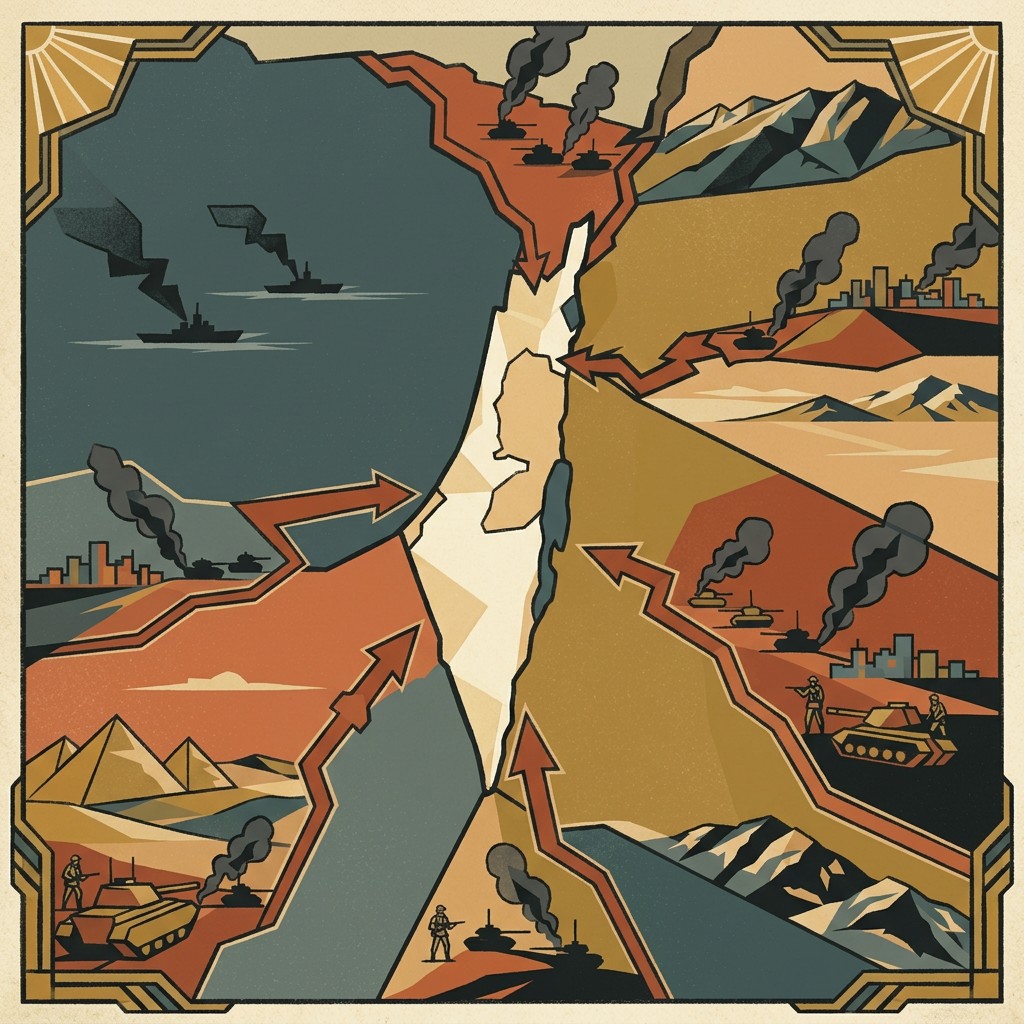
It is worth stopping here to say plainly how small the people at the center of all of this is. Before the Second World War there were roughly sixteen and a half million Jews alive on the earth, more than half of them living in Europe. The Holocaust murdered six million of them, well over a third of the whole. And here is the most quietly devastating fact in the modern Jewish story: eighty years later, the Jewish people have still not climbed back. There are today, depending on how one counts, somewhere between fifteen and a half and sixteen and a half million Jews in the entire world, still short of the figure the Jewish people stood at in nineteen thirty-nine. Eight decades after the gas chambers, the global Jewish population has not recovered its losses. Set that against the scale of the modern world. Sixteen million is about two-tenths of one percent of the human race, roughly one person in every five hundred. As of twenty twenty-six there are some two billion Muslims on the earth, very nearly a quarter of all humanity, and more than two billion Christians. For every single Jew alive there are something on the order of a hundred and twenty-five Muslims and a hundred and fifty Christians. And the Jews who remain are not spread across the world as they once were: close to half of them now live in the State of Israel, and around forty percent in the United States, which means that the whole of the rest of the two-thousand-year Diaspora, all of Europe, Britain, Latin America, the ancient communities of the Arab world, has dwindled to next to nothing. The Jewish people is, in the cold arithmetic of demography, statistically insignificant: a tiny, scattered, much-diminished people, five of every six of whom now live in just two countries on the earth. That smallness has a consequence that runs straight through the story this chapter is telling. A people that is two-tenths of one percent of humanity cannot out-shout a hostile narrative. There are more than fifty Muslim- majority states in the world and exactly one Jewish-majority state, and the voting blocs of the United Nations reflect that asymmetry year after year, which is why, as this chapter has already noted, a single small democracy can draw more condemnations from the UN General Assembly in a year than the rest of the planet's governments combined. The asymmetry is not a conspiracy. It is arithmetic. But its effect is that when a false account of the Jews and their state is set loose in the world's universities and parliaments and feeds, there is no comparably sized population to answer it. The most consequential of those false accounts is carried in a single word: colonial: the insistence that Israel is a "settler-colonial" implant, a piece of Europe parked on stolen land. It is a charge that requires one to forget two enormous things at once. The first is the unbroken physical presence of Jews in that land across three thousand years and every empire that ever ruled it. The second is the more than eight hundred thousand Jews, Gal Sharon's grandparents and his two eldest uncles among them, who were not shipped into Israel from Europe but driven out of the Arab and Muslim countries of the Middle East in the years after nineteen forty-eight, and who, together with the survivors of Europe and their children, make up the majority of Israel's Jews. A refugee is not a colonist. Israel is, in its demographic majority, a country built by refugees from the very region that calls it foreign. And there is one final turn of the screw, the oldest one. A tiny, hunted, much-murdered minority, two-tenths of one percent of the species, has lately been recast, in the vocabulary of Western progressive politics, as a privileged one. The phrase that performs the trick is "Jewish privilege," and its premise is that the educational and professional success of many Western Jews is the proof of some structural advantage, a quiet membership in the dominant caste. The history it depends on not knowing is very long. For the better part of a thousand years the Jews of Europe were forbidden to own land, shut out of the craft guilds, barred from the universities and most of the professions, and pressed into a narrow band of trades, moneylending, peddling, small commerce, for the precise reason that those were the only doors not nailed shut. What looks, in hindsight, like a head start was the scar tissue of exclusion: the survival adaptations of a people permitted to do almost nothing else. To read that history backward and name the survival "privilege" is to congratulate the prisoner on how well he knows the cell.
But "Jewish privilege" is more than a misreading of history. It is the newest costume of the single most distinctive idea in the long history of antisemitism. Most prejudice casts its target downward, as inferior, as primitive, as less than human. Antisemitism is the prejudice that casts its target both downward and upward. It says the Jew is beneath you, vermin, inferior, subhuman. It also says the Jew is above you, behind you, pulling the strings: too rich, too clever, too organized, secretly in command of the banks and the newspapers and the governments. It is the lie of the forged Protocols of the Elders of Zion. It is the accusation inside the chant that the Jews control everything, and it is, dressed now for the twenty-first- century seminar room, the accusation folded quietly inside the words "Jewish privilege." The function of the costume never changes. By reclassifying a minuscule and historically persecuted people as an all-powerful oppressor class, it makes the hatred of them feel, to the people doing the hating, like the opposite of hatred: like courage, like justice, like speaking truth to power. That is the rhetorical shield. That is what the autumn of twenty twenty-three lowered into place over the Jews of the world. The thing that distinguished the autumn of twenty twenty-three from previous autumns was that the Jews of the world, for the first time in two thousand years, had somewhere to go. The State of Israel existed. The Israel Defense Forces existed. The Jews of London who were having their synagogues defaced, the Jews of New York who were being chased off campuses, the Jews of Paris who were being told by their employers to remove the mezuzahs from their office doorframes: those Jews had, somewhere in the back of their minds, the knowledge that a state existed which would take them in. Israel exists, in the deepest historical sense, precisely so that a Jew who is being told to leave somewhere always has somewhere to go. The Israel Defense Forces was, in the autumn of twenty twenty-three and the years that followed, the army of every Jew on the planet. It was the army of the bar mitzvah boy in Pittsburgh whose synagogue had been the site of the worst antisemitic attack in American history five years earlier. It was the army of the elderly survivors of Bergen Belsen, the diminishing handful still alive, watching the seventh of October from their assisted-living facilities with deep sadness. Gal Sharon was, in that autumn, in a kibbutz in southern Israel walking through the houses of the dead. He was carrying, though he did not yet quite know it, on the seventh of October, the weight that all of those people had placed on his shoulders. He was, in the small handful of men and women whose job in the moment when the long Jewish history had again become acute, the one who went first when called upon.
Aharai. After me. The slogan was eighty years old. The Palmach had used it. The men and women of nineteen forty-eight had used it. Shlomo Lev had heard it shouted in a bonfire-lit kibbutz yard at his swearing-in ceremony in nineteen forty-three. It was now Gal Sharon's slogan, and he heard it, for the first time in his life, in the first days after the seventh of October, because it had never once been shouted in his hearing during his regular service. He used it going into the houses of Nahal Oz. He used it in the streets of Khan Younis, and in Nuseirat, and in Rafah. He used it in the cold and the fog of southern Syria and the hills above the Litani in twenty twenty-six. He used it for five hundred days as he led his men.
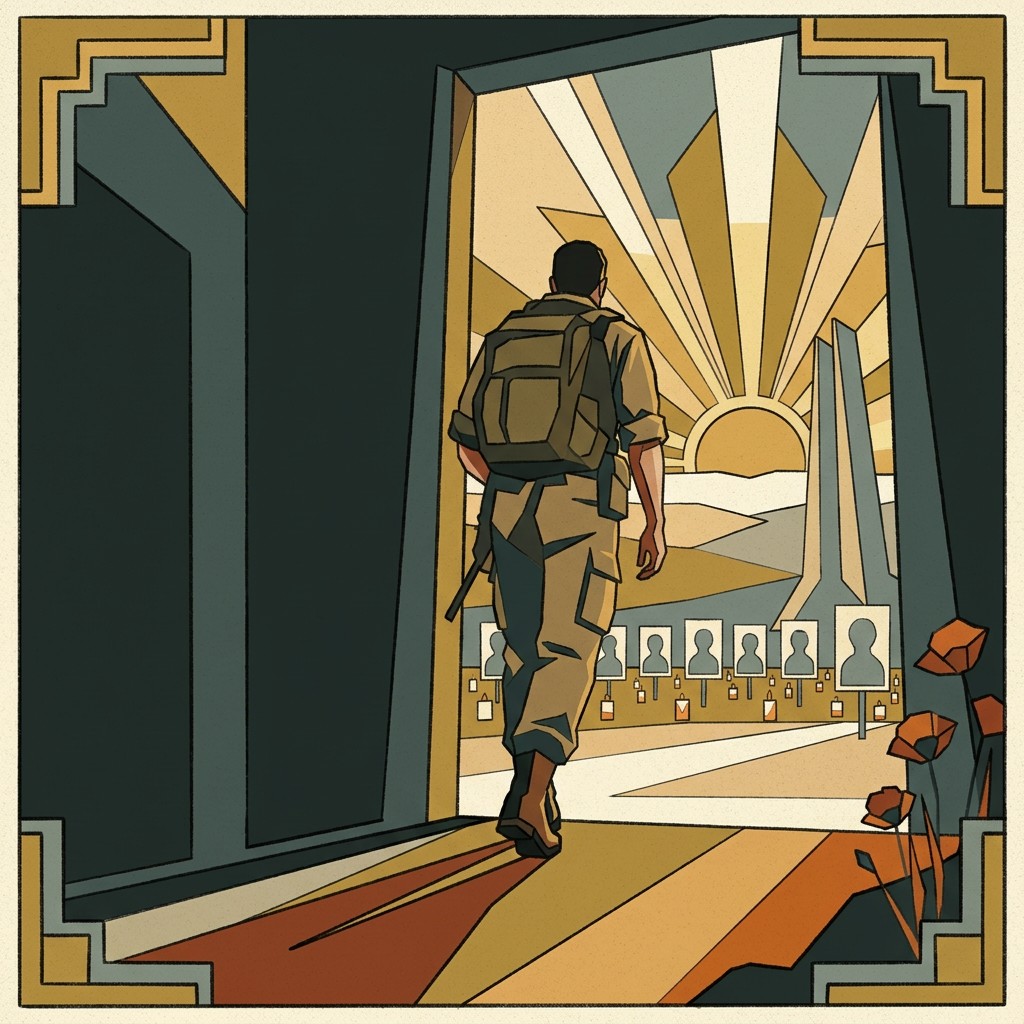
It is worth setting down, at the end of a chapter about how the word was heard in the world, what the word actually meant to the man carrying it. Not a slogan. Not an inheritance. A position in a stack of men at a doorway. "It means that I'm the first when we walk into a house or a tunnel," Gal said. "The team is following me." Everything in this book: Herzl in the cafe, the boy in the drawer, the mother on the platform at Lippstadt, the beach at Nahariya, the ninety-five days in the Cairo prison: arrives, eventually, at a man in his forties who goes through the door before the others do, because that is what officers in this particular army have done since a group of teenagers with borrowed rifles decided in the nineteen forties that it would be so.
A Mission Bigger Than
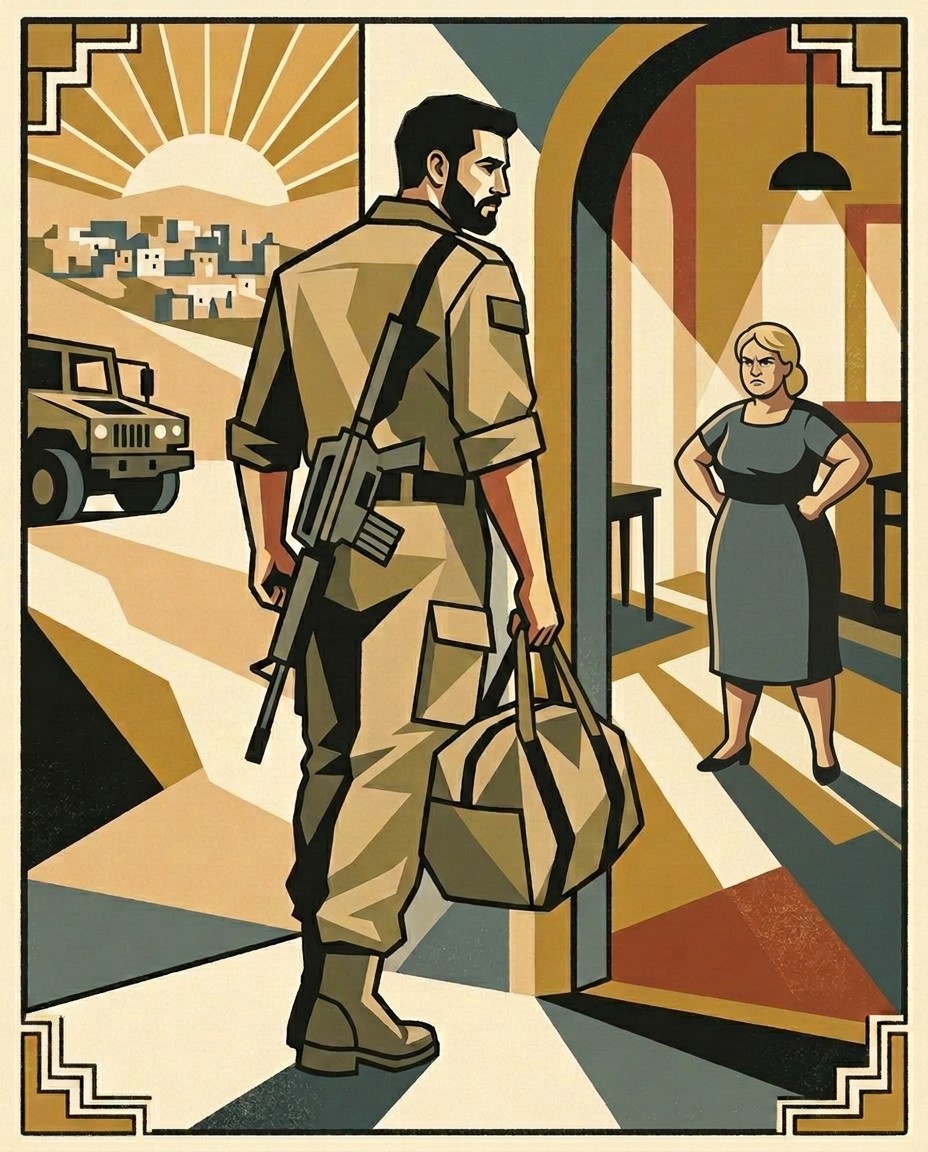
The hardest part of Gal Sharon's war was not the war. It was coming home from it.
This is one of the least understood facts about modern soldiering, and it is worth setting down plainly, because it nearly cost Gal everything, and because it is the reason this book exists in the form you are holding. A soldier can be trained for combat. No one is trained for the crossing back.
The geography did it. Every front Gal fought on was a couple of hours from his own kitchen: Gaza an hour, the Litani rather more, but all of them inside the distance a person drives on an ordinary weekend. There is no decompression built into a war fought that close to home. Armies that fight overseas get the troopship, the flight, the days in transit that used to be understood, without anyone naming it, as the thing that let a man put down what he had been carrying. Israeli reservists get a bus and a highway.
"We never had this luxury of processing stuff and talking to each other before going back home," Gal said. And then the sentence that this whole chapter is an attempt to explain: "For me I think it was harder than fighting. The transition was never easy. I was constantly thinking about the army. Even when you're physically home, you're mentally there."
He never got used to it. Not after the first rotation, and not after the tenth. It is worth underlining that, because the intuition of the civilian reader will be that a man adjusts, that the tenth crossing must be easier than the first. It is not. Gal's testimony on this is categorical and it matches what the clinical literature has found in every army that has ever measured it: the crossing does not soften with repetition. It hardens.
In combat, Gal's life had a meaning so total that it left no room for doubt. He was fighting for his own existence, and for the existence of his wife and his small sons, and for the existence of the Jewish people, and these were not abstractions to him. They were the literal stakes, established beyond argument on the seventh of October. Every hour in Gaza or in Lebanon was saturated with purpose. And, as the previous pages have said, the closeness of it made the saturation almost unbearable. He could be clearing a house on the edge of Khan Younis, and a rotation later be standing in his own kitchen in Tel Aviv, and the two places were near enough that the mind could not properly hold them apart.
Then he would be sent home, and the meaning would switch off like a light.
He has described himself, in those years, as being two men who did not entirely believe in each other. The man at the front was a commander: responsible for other men's lives, calm and energetic at the same time, operating at the top of his capacity for weeks on end. The man at home was soft, and was a father before he was anything else, and did not care about very much beyond his children.
Asked which of the two felt more real, he did not hesitate, and his answer is not the one the question is usually built to elicit. "I always felt like I'm the guy back home."
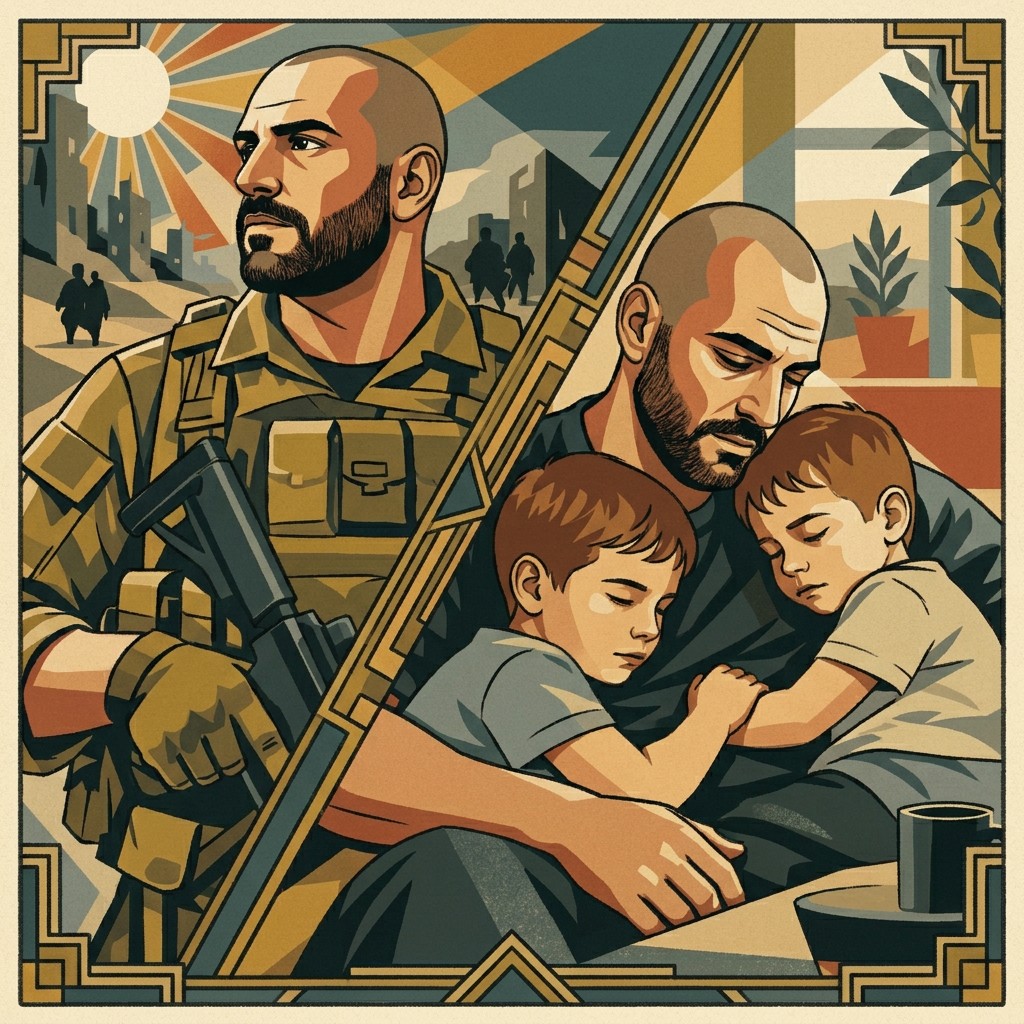
That is the whole tragedy of the crossing in a single line. It was not that the soldier was the real man and the father an interruption. It was the reverse. The father was the real man, and he could not get back into his own life.
He was expected to come back from months of combat, take a few days, and step back into ordinary civilian life: the nine-to-five job, six months of accumulated email, the bills, the errands, a spouse who had been holding the household and the children alone for half a year and who needed him present now in a way he no longer knew how to be. And it felt, after where he had been, empty. Mundane to the point of meaninglessness. A man who had spent the morning a year ago deciding which of his soldiers went first through a doorway could not find the thread of a life made of inboxes. He had also left something behind at the front that home could not replace: the bond with his unit, with the men who had been beside him in the worst places a person can stand. He came back to a country full of people who loved him, family, friends, a whole society grateful to him, and inside all of that warmth he was, somehow, lonely. He could not explain it and he could not fix it and he could not make it stop.
He put it, once, in a way that no professional writer would improve on, and it is reproduced here without adjustment because adjusting it would be vandalism.
"In the front you're a hero, surrounded by heroes. You're surrounded by people who are ready to die for you, and you know you're doing the most important thing in your life. In real life you're no one. You're meaningless, friendless, and pathetic. It feels very sad to do something so big and then walk around in the store choosing the best cucumbers."
That is what the absence of meaning feels like at ten o'clock on an ordinary Tuesday morning. Not anguish. Not flashbacks. A supermarket.
The children complicated it in both directions. Gal had left for the war when the twins were ten months old, which meant they had no version of him that predated it. For them, a father who disappears for months and then reappears is simply what a father is. They have grown up pointing at soldiers in the street and asking him, "Is that your friend?" He came home once and was sent out for diapers and bought size four, and the boys had moved to size four-plus while he was gone. It is the smallest possible detail and it is the one he tells. Children grow, he says, that is their feature. He missed a great deal of it. He also says, in the same breath and without any apparent contradiction, that he did it for them and would do it again.
About his wife he is unequivocal, and the book records it in his words rather than the author's because the author is a friend of both of them. "I think the wives, or any partner, actually, are the real heroes. While I was there I was with a lot of meaning and on a mission. The spouses that are left behind had sympathy at first, but then it was gone. Dealing with two babies all by herself is being a hero."
That middle sentence deserves to be looked at rather than passed over. The sympathy went away. In the first months of a national emergency a country wraps itself around the families of the men who are gone. By the second year, and the third, the casseroles stop and the phone calls thin out and the war becomes background noise to everyone except the people still inside it. The soldier at the front keeps his meaning. The woman at home loses her audience and keeps the twins.
His parents lived it the way the parents of soldiers have always lived it, with the particular complication that his father had been there first. Arie Shaharbani fought in Lebanon in nineteen eighty-two. His son fought in Lebanon in twenty twenty-six. "Feels like nothing changes," Gal said: a sentence that could stand as an epigraph over the whole northern border. The hard part was not their fear. It was that he could not lie to them convincingly. Telling a father that everything is fine is a manageable performance when the father has never been at the front, and an impossible one when he has. Gal says he tried his best. He does not claim it worked.
He was not alone in any of this, and that was the most frightening part. Across Israel, the men and women coming home from this war were carrying the same invisible wound, and some of them did not survive it. Gal told the author, at one point, about a close friend of his: a soldier, a man who had served as Gal had served. One ordinary morning the friend dropped his children at school, drove to an industrial park in Tel Aviv, and took his own life. He left the school, and the children, and the rest of his life, and he did not come back from the crossing.
What Gal wants understood about that death is not a diagnosis. It is a piece of arithmetic that the world gets backwards. "It's sad to think about how some men survived Gaza but didn't survive the coming back home part. The transition is as hard as the fighting: people should know that. War is not something that becomes easier over time. It becomes harder."
The numbers, so far as an army will release them, bear him out. In the two years before the seventh of October the Israel Defense Forces recorded something on the order of twenty-five suspected suicides across both years combined. In twenty twenty-three there were seventeen. In twenty twenty- four, twenty-one, and of the thirty-eight across those two years, half were reservists: a proportion with no precedent, and the direct consequence of a call-up that put close to three hundred thousand civilians into uniform and then kept many of them there. By twenty twenty-five the army had discharged more than a thousand soldiers with post-traumatic stress, had stood up a round-the-clock helpline that took thousands of calls, and had put more than eight hundred reservist mental-health officers into the field. Thousands of reservists had quietly stopped answering combat call-ups because they could no longer do it. These are the casualties that do not appear on the memorial wall, and Gal's friend is one of them.
It is important to be exact about what this was and what it was not, because Gal was exact about it, and the exactness matters. It was not guilt. Gal Sharon did not come home tormented by what he had done. He came home hollowed by the loss of why he had done it. He had no doubt, none, about the justness or the necessity of the fight. He had been defending his own family from an enemy that, one hour's drive away, had on the seventh of October raped and tortured and murdered and burned. He knew, from the inside, the lengths to which the Israeli army went to warn civilians before it struck and to reduce the harm to them, and he knew that it was doing so while fighting an enemy that deliberately embedded itself within its own civilian population, that fired from beside hospitals and schools and stored its weapons under apartment blocks, precisely so that the deaths it invited could be photographed and used to demonize the Jewish state. Gal had seen the tactic with his own eyes. He was clear-minded about all of it. His conscience was not the problem. The problem was a man who had been allowed, for a time, to live inside total meaning, and was now being asked to live without it, and could find, in the ordinary daylight of peace, nothing large enough to stand in its place.
So it is worth asking, before the author enters this chapter, what actually kept Gal Sharon on this side of it. He has thought about the question and his answer is unromantic and, on inspection, quite hard to argue with.
It was plans. Not therapy, not medication, not a breakthrough, plans. He always had something arranged for the next few months. He always had a thing on the far side of the calendar that he could aim himself at, and when one was used up he made another. He found ways to do meaningful work with his uniform off: speaking to Jewish communities abroad over video calls, meeting people, taking on projects. "I always had things coming up," he said, and then he offered the closest thing he has to a philosophy: "People with plans are happier people."
Read against everything else in this chapter, that sentence is less a piece of optimism than a piece of engineering. What the crossing home destroys is not happiness. It is forward motion: the sense that the next thing matters. A man who arranges, in advance, for the next thing to matter has built himself a handhold on the far wall before he starts the climb. Two of the things Gal named, when he listed what had kept him going, were meeting George and meeting the author of this book.
Which is the point at which those two things need explaining.
This is where the author of this book enters her own story.
She is a Zionist, and she is Gal Sharon's friend, and she had been watching him go in and out of combat since the seventh of October, twenty twenty- three: watching the cycle of it grind on, rotation after rotation, into twenty twenty-four and twenty twenty-five and twenty twenty-six. She understood what the danger was. She understood that what Gal needed was not rest, and not distraction, and not to be told how grateful everyone was. What he needed was a mission, something that was not the war, but that carried the war's weight of meaning. Something bigger than himself that he could stand inside the way he had stood inside the fight.
So she built him one. She made a project.
It began with George. The author knew George Levy Mueller, knew the whole of his story, the boy from Lippstadt, the Lost Transport, the survival, and she understood, with a clarity that became the organizing idea of everything that followed, that George and Gal were two ends of one cable. She introduced them. The first contact between the ninety-four-year-old survivor in Illinois and the young captain at the front was a series of short video messages, recorded and sent back and forth while Gal was still in uniform, still rotating in and out of Gaza: an old man who had been a child in Bergen- Belsen, and a young officer fighting so that no Jewish child would ever be in a Bergen-Belsen again, speaking to each other across eighty years and seven thousand miles. On Gal's breaks from combat, he and the author began to build the first real event around that connection.
It took shape, in January of twenty twenty-five, as a fundraiser for the Chicago Jewish Alliance. Gal flew to Chicago. He met George: sat with him, spent time in his company, the survivor and the soldier in the same room at last, the two ends of the cable touching. Together they presented a documentary film about George and Gal, built around the theme of Jewish resilience, and they took questions afterward as a panel, in front of a room packed to the walls. Gal had been looking forward to it for months, through the mud and the cold of his last rotations, this was the thing on the other side of the calendar that he could aim himself at. He stood up in that Chicago room and told his story, and the author, watching him, saw the thing she had built the whole project to produce. His heart was happy. He was doing important work. The meaning that the crossing home had stripped out of him, he had found again, and this time he had found it without a rifle in his hands.
And the project, having done its work once, immediately did something the author had not planned. One of the people who had helped organize that Chicago event, through the Chicago Jewish Alliance, was a man named Zach Glick. In the course of the work, Zach told the author about his grandfather: a man named Shlomo Lev, ninety-nine years old, a veteran of the Palmach, a sailor of the clandestine immigration ships, a survivor of an Egyptian prison. And there was the next project. They began to plan a second event and film screening, this one in New Jersey, where Shlomo lives. Gal and Shlomo spoke by telephone, the captain of the October generation and the Palmachnik of the founding generation, voice to voice, across the same line, and a meeting was arranged. Gal would fly to New Jersey and stand in a room with Shlomo Lev, the way he had stood in a room with George Mueller.
He did not get there on the day he was meant to. In March of twenty twenty-six, Gal was on his way to the airport, on his way to meet Shlomo at last, when the war with Iran broke out and Ben Gurion Airport closed behind him. The chain, reaching for its final link, was made to wait.

But the reaching is the point, and the reaching is what this chapter is here to record. The three lives at the center of this book, the founding generation, the Holocaust generation, the October generation, did not, for the better part of a hundred years, touch one another at all. They were brought into contact deliberately, recently, by hand, by one friend who refused to let a soldier come home from a just war into an empty life. The chain that this book keeps calling unbroken is not only a figure of speech and not only a fact of history. In the years twenty twenty-four and twenty twenty-five and twenty twenty-six, it was being forged again, link by link, in video messages and packed auditoriums and telephone calls, by people whose names are in these pages. Gal Sharon went looking for a mission bigger than himself. What the project showed him was that he had been standing inside one all along. He was a living link between George Levy Mueller, who had survived the world that had no Israel in it, and Shlomo Lev, who had helped build the Israel that George's grandchildren and Gal's children now get to be born into. He was the proof that the line still ran. And the book in your hands is what the project made: the three lives, set down side by side at last, in one place, so that the chain could be seen whole.
The Torch is Passed
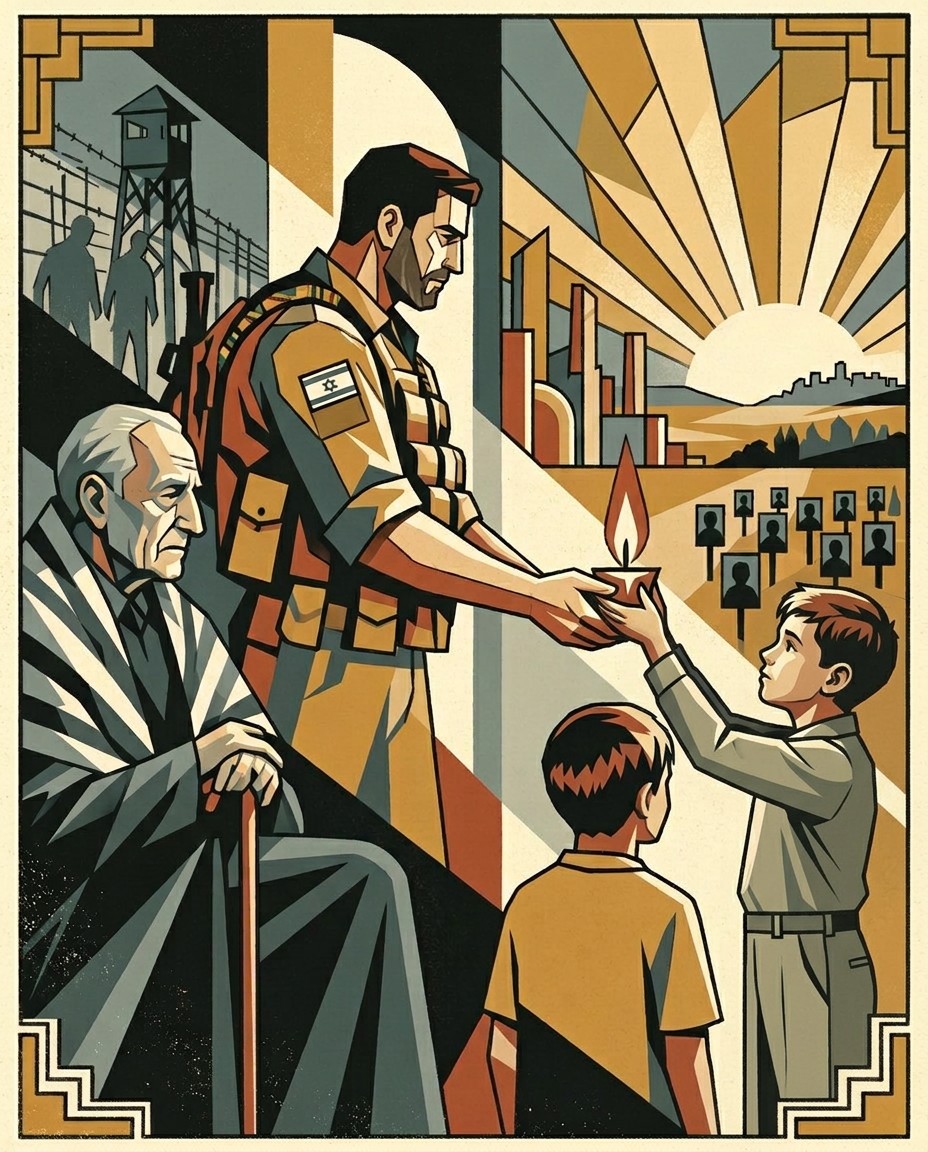
There is a particular quality to the men and women of Shlomo Lev's and George Mueller's generation, and it is worth trying to name it before this book closes. They are not Founding Fathers in the way the Americans use the term. There is no Mount Rushmore in Tel Aviv, no marble forehead overlooking the Negev. They are something rarer and more difficult to memorialize, and in some ways more important. They are the people who actually did it, and the people to whom it was actually done. That is the pairing this book has set side by side, chapter against chapter, for one reason: because you cannot understand either man alone. Shlomo Lev picked up a rifle bigger than himself at sixteen and spent his youth willing a state into existence. George Levy Mueller spent his childhood discovering, in three concentration camps, exactly what the world does to a Jewish child when no such state exists. They were the same generation. They were nearly the same boy. One of them got the homeland, and one of them got the proof of why the homeland was not optional, and between the two of them they hold the entire argument in their two pairs of hands. A Viennese journalist had written a book in eighteen ninety-six explaining that the Jews would have to build their own state, and the Jews of Vienna had laughed at him. Within two generations the joke was over. Within two generations one Jewish boy ran a kibbutz obstacle course with an Italian carbine on his back while the heads of the Haganah went silent on their benches, and another Jewish boy, three years younger, was loaded onto a train that wandered the broken rail lines of Germany with six hundred corpses and no country in the world that would receive it. The state Herzl described was built in time to save the first boy's people. It was built three years too late to save the second boy's mother. It is not a logical chain. It is a moral one. Each generation took the wager that the next one might carry the burden a little further than the last. Each generation paid, in its own coin, the price of the wager. Asked once, in his New Jersey apartment, why he thought a few thousand half-armed Jewish boys had been able to beat back five Arab armies in nineteen forty-eight, Shlomo Lev gave the only answer there was. "We had no alternative but to win." Asked, in his own old age, how he had endured what was done to him, the camps, the hunger, the Lost Transport, the loss of his entire world, George Levy Mueller gave an answer that is the same answer wearing different clothes. He had known, the whole way through, that he was going to live. He never had a doubt. All he had to do, he said, was stay alive. The rest would follow. Two old men on two sides of an ocean, describing the same refusal: the refusal to grant the people who wanted them gone the thing they wanted.
And that refusal did not retire when the two old men retired. It was inherited. On the morning of the seventh of October, twenty twenty-three, the State of Israel, seventy-five years old, in its fourth generation of citizenship, was attacked, and it was defended by the grandchildren of the Palmach generation, who at that moment were called up, and who in their tens of thousands did not wait to be called. Soldiers like Gal Sharon, who sat out an hour of sirens on a stairwell floor with his ten-month-old sons, saw a pickup truck full of gunmen driving through the streets of an Israeli town, packed a bag without waiting for an order, and drove to his base. The Druze fighters who died defending Jewish kibbutzim, because the Druze are part of Israel too. The Bedouin trackers who guided the rescue teams. The Ethiopian-born infantrymen whose families had walked across the Horn of Africa to reach Israel. The Mizrahi grandchildren of Yemen and the children of the Soviet aliyah and the Americans on kibbutz programs who picked up rifles instead of flying home, every shade of the Jewish people, fighting alongside one another.
They are facing what their grandparents faced: the simple, ancient claim that the Jewish people have no right to a state of their own, and no right, in the end, to safety anywhere. They are facing it with the same answer. Aharai. After me.
To them, to the men and women writing this chapter of Jewish history right now, the three lives in this book are the inheritance. They do not belong to Shlomo, or to George, or to Gal alone. They do not belong only to their families. They belong to everyone who carries the burden after them.
The boy in the drawer, in Ukraine, who was set aside as dead and breathed anyway, on sugar water and the inattention of luck.
The boy in the big house in Lippstadt, who was a regular little kid, who played soccer, until his own country and his own classroom decided he was not a boy at all.
The child who ran along the cemetery walls of Givat Ram and climbed the five-story water tower on a summer afternoon because the fear had been chased out of him and never came back.
The child who sat on a train with his little sister in Westphalia and watched his mother wave, and grow smaller, and grow smaller, and be gone, and who took his little sister by the hand, because he had been told to take care of her, and did, for six years, through three camps, sleeping feet to feet so each would know the other was there.
The teenager who walked down a rope with a rifle bigger than himself while the dignitaries on the benches went silent.
The teenager who, starving in Bergen-Belsen, was given one slice of bread by a guard not much older than himself, and carried it back through the dark and shared it with his sister, and who chose, for the rest of his long life, to remember that slice of bread alongside everything else, so that the account would be true.
The smuggler who carried other people's children on his shoulders through the dark of the Galilee so that they would not cry.
The boy on the Lost Transport who ate grass for thirteen days and never once believed he would die.
The porter who tied a charge of explosive to a British radar tower with his own belt.
The wounded soldier who walked five kilometers alone, bleeding through his trousers, through an orange grove, counting in Hebrew to keep his feet moving.
The boy who was handed a harmonica across a table by an uncle who would be murdered at Auschwitz, and took hold of it backwards, and played it that way for eighty years.
The captain who walked into a Cairo prison with his shoulders back, and walked out ninety-five days later with a pair of handsewn shorts and a single American dollar folded in the seam.
The survivor who kept his silence for fifty years, and then broke it, and spent his last thirty years standing in front of schoolchildren so that the warning would be carried.
The reserve officer who drove to his base on a Sabbath morning without waiting to be called, and went out of a bus into the bushes under fire at one in the morning, and led his men through the houses of a murdered kibbutz, and who came back, and came back, and came back, for five hundred days.
Three men. Three families. One chain.
The grandfather in New Jersey, who in his ninety-ninth year finds life a little slow. The great-grandfather in Illinois, who at ninety-five still plays the piano by ear as his murdered mother taught him, and still plays the harmonica backwards because that is how his murdered uncle handed it to him. The captain in Tel Aviv, who will one day be old too, and will still be telling it.
Never back down. Never give up. Because you have no alternative but to win impossible victories. The chain is unbroken. It runs through this book. It runs through history: past, present, and future. It runs into tomorrow, into hearts not yet born and events not yet imagined. It does not stop. It will not stop. Am Yisrael Chai: the People of Israel live.
A Note on Sources and Further Reading
`Am Yisrael Chai: the People of Israel live. A Note on Sources and Further Reading`
The biographical material on Shlomo Lev in this book comes principally from interviews with Shlomo himself, conducted in New Jersey, and from the recollections preserved by his three daughters Ava, Beverly, and Lily, his sisters and brothers, his nephews Noni and Kobi, and the wider circle of family that has carried the stories down.
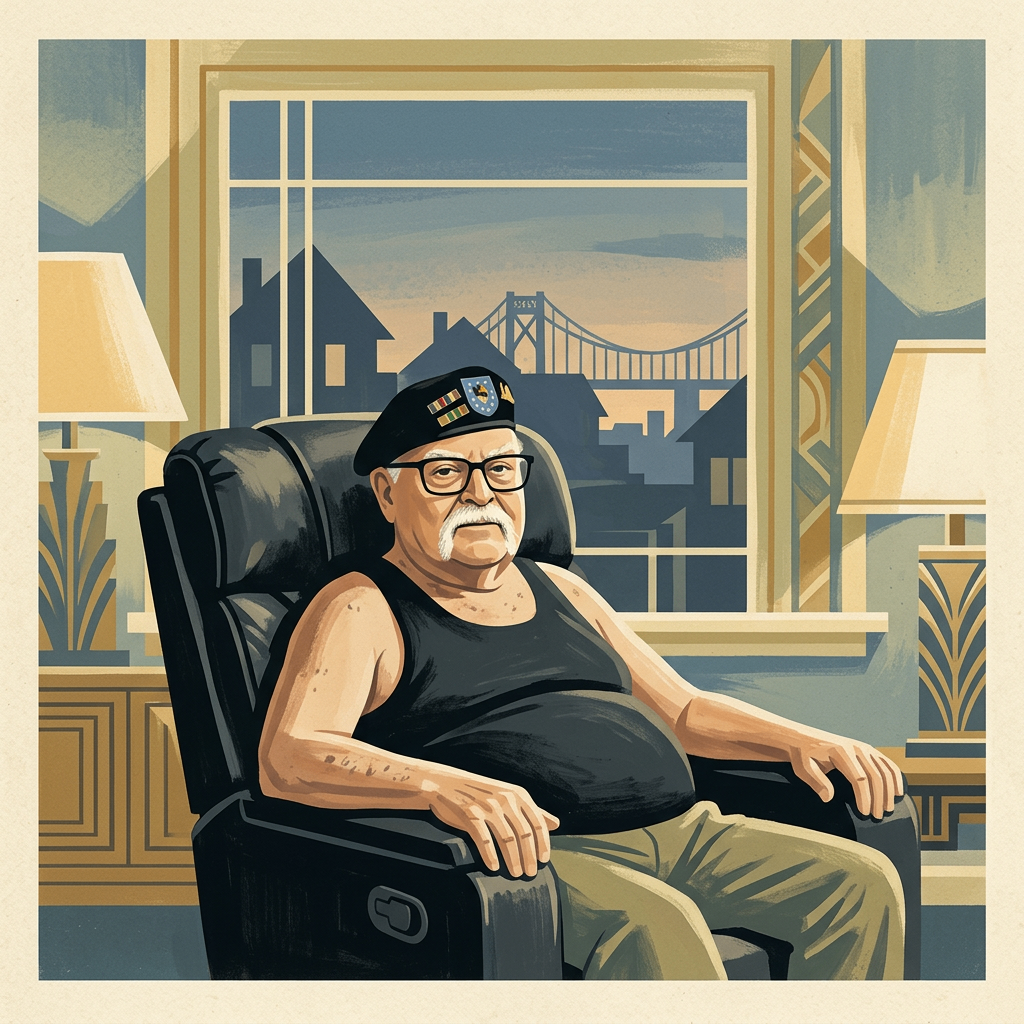
The biographical material on George Levy Mueller comes principally from George's own testimony, from the spoken account he gave of his life, and from his memoir, Lucie's Hope, named for his mother and for the hope that saved him and his sister Ursula. Where George's memory of a date or a place name was uncertain, as he himself was always the first to say, the text has quietly reconciled it with the documentary record. For the camps through which George passed, that record includes the standard scholarship and archival material on Camp Vught, the Herzogenbusch concentration camp, on the Westerbork transit camp, and on Bergen-Belsen and its Sternlager, the Star Camp for so-called exchange Jews. For Lucie Levy's deportation the text follows the documented record of the Jewish communities of Lippstadt and Oelde and of the transport of the thirteenth of December, nineteen forty- one, the erster Westfalenzug, from the Gertrudenhof assembly point in Münster to the Riga ghetto, together with the standard scholarship on the Riga ghetto, the Rumbula massacres, the Dünamünde Action, and the liquidation of the ghetto in late nineteen forty-three. Lucie's death at Stutthof in nineteen forty-four is taken from the documentary record, as is the route by which she reached it: Riga, then Kaiserwald, then the evacuation of the Baltic camps in the summer of that year. For the transport that carried George and Ursula out of Bergen-Belsen in April of nineteen forty-five, the text draws on the research compiled on the "Lost Train" to Tröbitz, including the work of Erika Arlt cataloguing the roughly six hundred people who died on the journey and were buried along its route.
The material on Gal Sharon comes from his own account, given directly to the author: first in conversation across the years of the war itself, and then in a long written interview conducted in twenty twenty-six, in which he answered, at length and in his own English, some ninety questions about his childhood, his service, the seventh of October, the fronts he fought on, and the years of coming home. Where his account bears on the particulars most easily got wrong at a distance: the events of the morning of the seventh of October, the hour and manner of his unit's arrival at Nahal Oz, the nature of his regular military service, and the fate of the promise he made at the perimeter: his account has been followed. Direct quotations attributed to him are given as he wrote them, with spelling and punctuation regularized and nothing else altered. Where he declined to answer: a combat decision whose outcome he will not describe, and the men he lost, whom he will speak of only face to face: the refusal has been left in the text rather than written around. For the events of the seventh of October itself, the text draws on the official Israel Defense Forces investigations, in particular the inquiry into the assault on Kibbutz Nahal Oz, and on contemporaneous reporting. The historical and contextual material surrounding his testimony, on the Israeli conscription and reserve systems, on Unit Eighty-Two Hundred, on the Hebraizing of names, on the identification of the dead at the Shura base, on the Nuseirat rescue of June twenty twenty-four, on the aid distribution mechanism of twenty twenty-five, on the Litani line and the resolutions that were meant to govern it, and on the figures for suicide and post-traumatic injury among Israeli reservists, is drawn from the public record and is the author's, not his.
The historical material draws on a number of standard sources. For the Palmach itself: Yoav Gelber's A Palmach Battalion and the official memorial site of the Palmach Veterans Association, which preserves detailed unit records and casualty lists. For Aliyah Bet: Ze'ev Venia Hadari's Second Exodus and the Palyam Veterans Association's online archives. For the war of independence: Benny Morris's 1948: A History of the First Arab-Israeli War and David Tal's War in Palestine, 1948. For the Bat Galim affair: the relevant United Nations Security Council documents, principally S/3287, the report of the United Nations Truce Supervision Organization S/3323 of the twenty-ninth of November, nineteen fifty-four, and contemporaneous reporting in The New York Times by Kathleen Teltsch.
For the broader history of Zionism and the Jewish people in the modern era, the standard accounts remain Walter Laqueur's A History of Zionism, Anita Shapira's Israel: A History, and Simon Schama's three-volume The Story of the Jews. For the destruction of European Jewry, the reader may turn to Lucy Dawidowicz's The War Against the Jews and Saul Friedländer's Nazi Germany and the Jews.
Where the family record and the documentary record diverged on small details, a date, a place name, the spelling of a foreign word, the text has generally followed the family record, on the principle that the people who lived a story are the most reliable witnesses to it, and that history, in the end, is what is remembered around the Friday-night table.
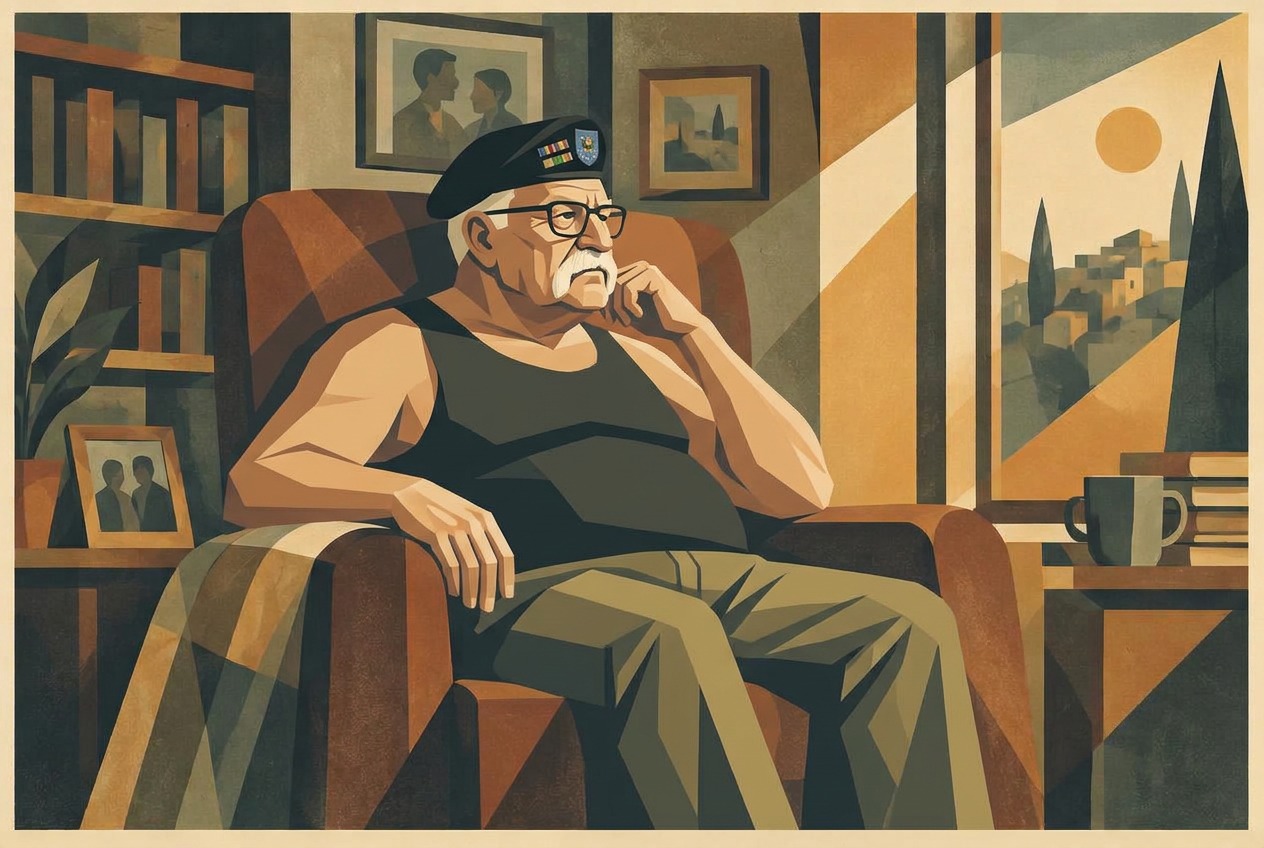
In Their Own Voices